
Your Partnership in Lifelong Health
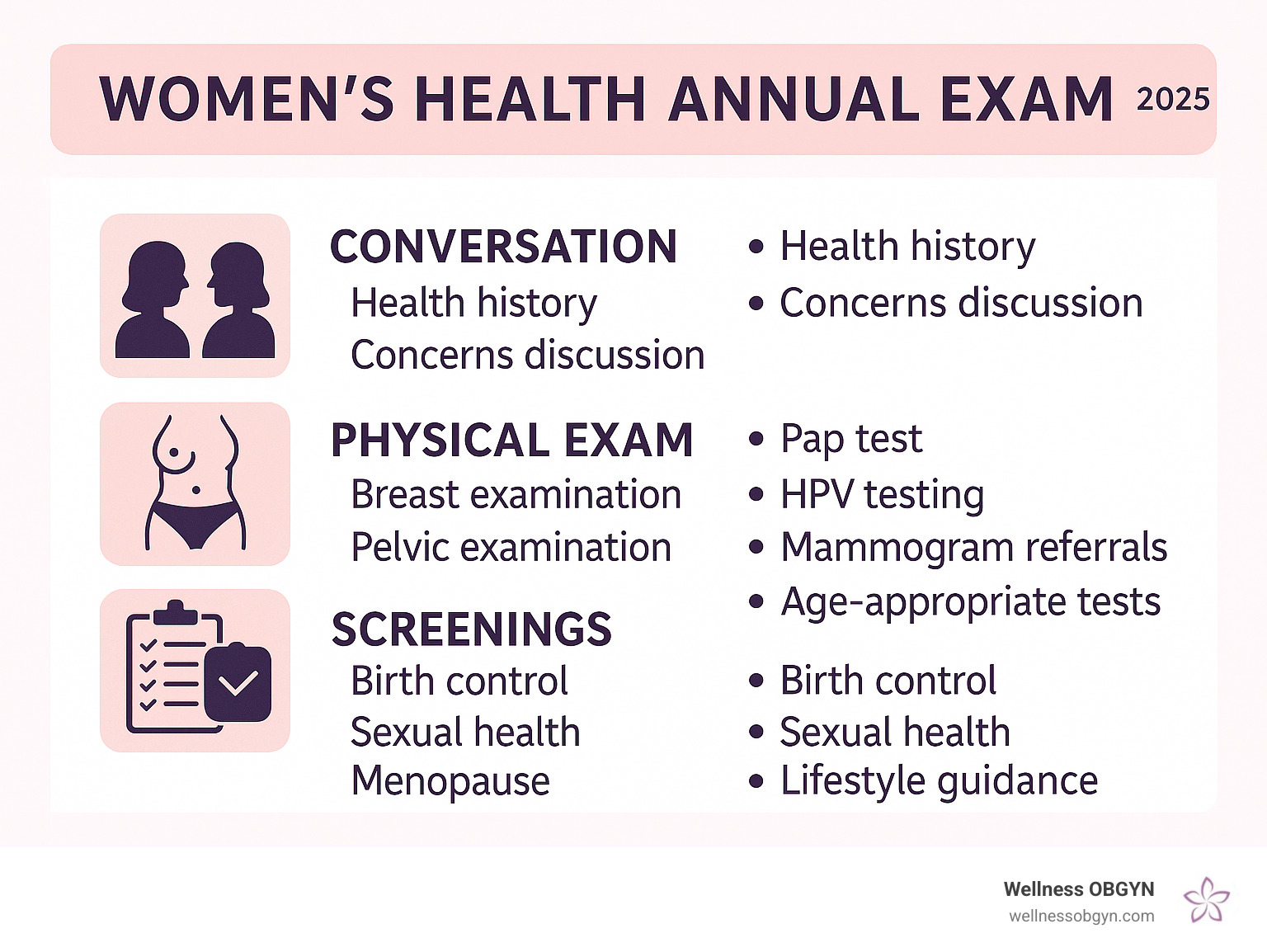
A Women’s health annual exam is your comprehensive yearly checkup with a gynecologist that goes far beyond a Pap smear. It’s a preventive care visit that includes:
- Physical examination – breast exam, pelvic exam, and overall health assessment
- Health screenings – Pap test, HPV testing, mammogram referrals, and other age-appropriate tests
- Health counseling – discussions about birth control, sexual health, menopause, and lifestyle
- Preventive care – vaccinations, bone density screening, and chronic disease prevention
Most women juggle countless responsibilities and may treat their annual exam as “just another skippable item on our to-do list.” But this yearly visit is actually one of the most important investments you can make in your health.
Your annual exam is different from a sick visit. It’s designed to catch health problems early when they’re easier to treat. It’s also your chance to discuss sensitive topics like irregular periods, painful sex, or changes in your body with someone who specializes in women’s health.
Studies show that many serious conditions affecting women can exist without symptoms. Regular screening through your annual exam allows for earlier detection and more effective treatment.
I’m Dr. Cheryl Twu, a board-certified obstetrician-gynecologist with over a decade of experience providing comprehensive Women’s health annual exam services in hospital and clinic settings. At Wellness OBGYN in Honolulu, I partner with women through every stage of life, from adolescence through menopause, combining evidence-based care with a holistic approach to your well-being.
What is a Well-Woman Exam and Why is it Crucial?
Your Women’s health annual exam is more than just a routine checkup – it’s your partnership in lifelong health. Think of it as your yearly health investment, designed to catch potential issues before they become problems and to keep you feeling your best at every stage of life.
The beauty of an annual visit lies in its preventive focus. Unlike those urgent visits when something’s wrong, your well-woman exam happens when you’re feeling fine. This gives us time to really talk, to understand your concerns, and to spot changes that might not be causing symptoms yet.
While your primary care provider takes excellent care of your overall health, your gynecologist brings specialized expertise to the table. We understand the intricate dance of hormones throughout your cycle, the changes that come with different life stages, and the unique health challenges women face. It’s truly a team effort – your PCP handles your general wellness while we focus on your reproductive and sexual health.
At our Center for Women’s Wellness, we believe in collaboration. We work closely with your primary care team to ensure you’re getting comprehensive care that addresses all aspects of your health, not just isolated pieces.
Your annual exam is also about building a relationship. Health isn’t just about numbers on a chart – it’s about understanding your lifestyle, your goals, and your concerns. This ongoing partnership allows us to provide truly personalized care that evolves with you.
The Difference Between an Annual Physical and a Women’s Health Annual Exam
Many women wonder if their annual physical covers everything they need. While both exams share some similarities, your Women’s health annual exam dives deeper into areas that affect you as a woman.
Here’s how they compare:
| Feature | General Physical Exam | Women’s Health Annual Exam |
|---|---|---|
| Primary Focus | Overall health, general systems, chronic disease screening | Reproductive and breast health, hormonal balance |
| Key Components | Vital signs, general physical exam (heart, lungs, abdomen), blood tests, vaccinations | General physical exam, breast exam, pelvic exam, Pap test, HPV test, birth control counseling, menopause care |
| Provider | Primary Care Physician (PCP), Family Doctor | Gynecologist, OB/GYN, Nurse Practitioner, Certified Nurse Midwife |
| Typical Screenings | Cholesterol, diabetes, blood pressure, general cancer screenings | Cervical cancer, breast cancer, STIs, bone density (age-dependent) |
| Specialized Training | Broad medical knowledge | Specialized training in female reproductive health |
Your gynecologist has spent years studying the complexities of women’s health. We understand how hormonal changes affect everything from your mood to your bone density. We know which symptoms warrant concern and which are normal variations. This specialized training means we can spot subtle changes that might be missed in a general exam.
The overlap between these visits is valuable – both providers are looking out for your wellbeing. But the focused expertise of your gynecologist ensures that your unique needs as a woman are thoroughly addressed.
What to Expect During Your Visit

Walking into your Women’s health annual exam should feel comfortable and welcoming. We start with conversation – updating your health history, discussing any changes since your last visit, and addressing your questions or concerns. This isn’t rushed; it’s an important part of understanding your complete health picture.
We’ll check your vital signs including blood pressure and weight, then move on to a general physical examination. This includes listening to your heart and lungs and checking your abdomen – all part of assessing your overall health alongside your reproductive wellness.
One of my favorite parts of the visit is our lifestyle discussion. We’ll talk about what’s working well in your life and where you might want to make changes. Whether it’s improving sleep, managing stress, or planning for pregnancy, we’ll work together to set realistic health goals that fit your life.
This is also your time to ask questions without feeling rushed. No concern is too small or too embarrassing – we’ve heard it all, and we’re here to help you understand your body better.
For more details about what to expect, you can explore our comprehensive guide to your Annual OBGYN Visit.
The Pelvic Exam and Breast Exam Explained
Let’s talk openly about the two components that often cause the most anxiety: the pelvic exam and breast exam. Understanding what happens can help ease your nerves and remind you why these exams are so valuable.
The pelvic exam allows us to assess your reproductive organs directly. We start with an external examination, simply looking at the vulva for any changes or concerns. Next comes the speculum exam – a speculum is gently inserted to allow us to see your cervix clearly. This is when we perform your Pap test if it’s due, collecting cells to screen for cervical cancer. You might feel some pressure, but it shouldn’t be painful.
The final part is the bimanual exam, where we use our hands to feel your uterus and ovaries. One hand is placed on your abdomen while fingers from the other hand are gently inserted into the vagina. This helps us check the size, shape, and position of your organs and identify any areas of tenderness or unusual findings.
The clinical breast exam involves carefully checking your breasts and the surrounding areas, including your armpits, for any lumps, changes in texture, or other abnormalities. While self-exams are important for staying familiar with your body, a clinical exam by a trained professional can detect changes you might miss.
I understand these exams can feel vulnerable or uncomfortable. Please know that your comfort is our priority. We can adjust positioning, take breaks if needed, or have a nurse present for support. If you have a history of trauma or significant anxiety, let us know – we can work together to make the experience as comfortable as possible.
The ACOG guidance on well-woman visits provides additional information about these important screenings and their role in maintaining your health.
A Guide to Health Screenings at Every Age
One of the most valuable aspects of your Women’s health annual exam is the opportunity for personalized health screenings. Recommendations for these screenings change based on your age, individual risk factors, and health history. Our approach emphasizes shared decision-making, ensuring that the screenings we recommend are custom specifically to you. Even if you feel perfectly healthy, regular screenings are vital for detecting potential issues early, when they are most treatable. This commitment to individualized care is at the heart of our Personalized Women’s Healthcare philosophy.
In Your 20s and 30s: Building a Foundation

Your 20s and 30s are a time for building a strong foundation for lifelong health. For most women in this age group, the primary focus of the Women’s health annual exam will be on reproductive health, STI prevention, and general wellness.
- Pap Test and HPV Testing: Women ages 21 to 29 should get a Pap test to screen for cervical cancer every three years. If you’re 30 or older, you may continue getting Pap tests every three years, or you may get a human papillomavirus (HPV) test every five years, or both tests together (called “cotesting”) every five years. It’s worth noting that the HPV vaccine, most effective before sexual exposure, is typically given starting at age 9, but if you haven’t had it, discuss it with your OB/GYN.
- STD Screening: If you are sexually active, annual testing for chlamydia and gonorrhea is recommended, especially for women under 25. Your provider may also recommend a one-time test for HIV for all people aged 15 to 65, and a one-time test for hepatitis C for all adults aged 18 to 79.
- Birth Control Counseling: If you are sexually active and do not wish to become pregnant, your annual exam is the perfect time to discuss birth control options that fit your lifestyle and health needs.
- Preconception Health: If you’re considering starting a family in the future, we can discuss preconception health, including lifestyle adjustments and necessary supplements.
- Vaccinations: Staying up-to-date on vaccinations is crucial. This includes your annual flu shot, a tetanus-diphtheria booster (Td or Tdap) every 10 years, and potentially the Varicella vaccine if you never had chickenpox or the vaccine and were born in 1980 or after. You can find comprehensive adult vaccination schedules on the CDC recommendations for vaccinations website.
In Your 40s and 50s: Navigating Changes
As you move into your 40s and 50s, your Women’s health annual exam begins to incorporate screenings for conditions that become more prevalent with age, as well as discussions around perimenopause and menopause.
- Mammogram Recommendations: Mammography is generally recommended for all women starting at age 40, repeated every one to two years. By age 50, all women should be having mammograms every one to two years. Your provider will discuss the benefits and risks with you, especially if you are between 40-49 years old.
- Perimenopause Discussion: Many women begin experiencing symptoms of perimenopause (the transition to menopause) in their 40s. These can include irregular periods, hot flashes, mood changes, and sleep disturbances. Your annual exam is the ideal time to discuss these symptoms and explore management strategies.
- Cholesterol Screening: Cholesterol screening should begin at age 45 for women with no known risk factors for coronary heart disease, and at age 20 for women with known risk factors. If your levels are normal, repeat screening every 5 years.
- Diabetes Screening: Most women should start regular diabetes screening at age 35. You should be screened for prediabetes and type 2 diabetes starting at age 35, and repeated every 3 years if you are overweight and have obesity.
- Colorectal Cancer Screening: Everyone should start colon cancer screening by age 45. If you are age 45 to 75, you should be screened for colorectal cancer. This can involve various tests, including stool tests or colonoscopies, with varying frequencies.
- Bone Density Baseline: While routine bone density scans typically start at age 65, if you have risk factors for osteoporosis (such as low body weight, long-term steroid use, heavy alcohol use, or a family history of hip fracture), your provider may recommend discussing screening in your 50s.
In Your 60s and Beyond: Healthy Aging
Your Women’s health annual exam remains incredibly important in your 60s and beyond, shifting focus to healthy aging, continued chronic disease management, and specialized screenings.
- Menopause Management: For women who have completed menopause, discussions will often focus on managing any lingering symptoms, addressing bone health, and maintaining overall well-being.
- Bone Density Screening (Osteoporosis): Most women need regular bone density scans starting at age 65. If you are age 50 to 64 and have risk factors for osteoporosis, you should discuss screening with your provider.
- Continued Cancer Screenings: Mammograms and colorectal cancer screenings continue as recommended by your provider, based on your individual health history and risk factors.
- Heart Health: As women age, the risk of cardiovascular disease increases. Your annual exam will include blood pressure checks and discussions about maintaining heart health through lifestyle and, if necessary, medication.
- Stopping Pap Tests: For low-risk women aged 66 and older, Pap smears may be discontinued if you’ve had 3 or more normal results in a row, no abnormal results in the last 10 years, and no history of cervical cancer. This is a decision we’ll make together after reviewing your comprehensive health history.
- Vaccinations: In addition to the annual flu shot and Tdap booster, we’ll discuss the shingles vaccine (2 doses at or after age 50) and potentially the Hepatitis B vaccine if you didn’t receive it earlier.
Our commitment is to support your health journey at every stage. You can learn more about our comprehensive approach to well-being on our page dedicated to a Holistic Approach to Women’s Health.
How to Make the Most of Your Women’s Health Annual Exam
Your Women’s health annual exam shouldn’t feel like something that happens to you – it should be a conversation with you. When you take an active role in your appointment, you transform what could be an anxious experience into an empowering step toward better health. Think of your gynecologist as your partner in wellness, not just someone who examines you once a year.
The key to getting the most from your visit lies in preparation, open communication, and remembering that no question is too small or too embarrassing. After all, we’ve heard it all before, and our job is to help you feel comfortable while addressing your health concerns.
How to Prepare for Your Appointment
A little preparation goes a long way in making your Women’s health annual exam both smooth and productive. Timing matters – if you need a Pap smear, try to schedule when you’re not menstruating, as blood can interfere with test results. For the best results, avoid vaginal products like creams, tampons, or douches for 24 to 48 hours before your visit, since these can affect screening accuracy.
Write down your questions before you arrive. It’s amazing how quickly concerns can slip your mind once you’re in the exam room. Whether you’re wondering about irregular periods, birth control options, or that new symptom you’ve been ignoring, jot it down.
Gather your health information beforehand. Bring a list of current medications (including vitamins and supplements), any allergies, and the names of other healthcare providers you see. Know your family history – your grandmother’s breast cancer or your mother’s early menopause could be relevant to your care.
Finally, dress comfortably since you’ll likely change into a gown for the physical exam. Layers make this easier, and comfortable shoes are always a good choice.
Key Questions to Ask Your Gynecologist
Your annual exam is your dedicated time with a women’s health specialist, so make it count. “What screenings do I need this year?” is always a great starting question, since recommendations change based on your age and health history.
Don’t hesitate to ask “Is this normal?” about any symptom that’s been bothering you – whether it’s irregular periods, pelvic pain, breast changes, or something else entirely. Birth control discussions are perfect for annual visits: “What are my options, and what would work best for my lifestyle?”
Lifestyle questions can be incredibly valuable too. Ask how you can improve your diet, exercise routine, or sleep habits for better health. If you have a family history of certain conditions, ask “What should I be watching for?” and “When should I schedule my next visit?”
Sexual health questions are completely appropriate during your gynecologic exam. These conversations can significantly impact your quality of life.
Discussing Sensitive Topics: Hormones, Pelvic and Sexual Health

Here’s the truth: discussing intimate health concerns can feel awkward, but your Women’s health annual exam is the safest, most confidential space to address these issues. We understand that talking about irregular periods, pelvic pain, low libido, painful intercourse, or vaginal dryness requires courage, but these conversations can be life-changing.
Hormonal changes affect every woman differently, and what’s normal for your friend might not be normal for you. Pelvic pain can significantly impact your daily life and deserves thorough investigation. Sexual health issues like decreased desire or discomfort during intimacy are more common than you might think – and often very treatable.
We provide specialized support through our Female Sexual Dysfunction Therapy and Female Pelvic Floor Therapy services. No topic is off-limits during your visit. We’re here to listen without judgment and help you find solutions that improve your quality of life.
Frequently Asked Questions about Annual GYN Exams
I hear these questions all the time in my practice, and they’re completely natural concerns to have. Let me address some of the most common questions women ask about their Women’s health annual exam.
Is a pelvic exam necessary every single year?
This is such a thoughtful question, and honestly, the answer isn’t a simple yes or no. The frequency of your pelvic exam really depends on several factors that are unique to you – your age, sexual history, and whether you’re experiencing any symptoms.
The American College of Obstetricians and Gynecologists (ACOG) still recommends pelvic exams as an important tool for assessing your gynecologic health. However, medical guidelines have evolved to recognize that a one-size-fits-all approach doesn’t always make sense for every woman.
What I love about modern women’s healthcare is that we make this decision together. During your Women’s health annual exam, we’ll discuss your individual health needs, risk factors, and comfort level. Some women benefit from annual pelvic exams, while others might need them less frequently. It’s truly a shared decision between you and me, based on what makes the most sense for your specific situation.
When should a young woman have her first GYN visit?
I recommend that young women have their first gynecologic visit between ages 13 and 15. But here’s what might surprise you – this first visit is typically just a conversation, not a full exam.
Think of it as a “getting to know you” appointment. We’ll talk about normal body changes during puberty, discuss menstrual cycles, and cover important topics like healthy relationships and body awareness. The goal is to build trust and create a comfortable space where she can ask questions without judgment.
A pelvic exam is usually not performed during this first visit unless there’s a specific medical concern that needs to be addressed. Most young women won’t need their first Pap test until age 21, regardless of when they become sexually active. This initial visit is really about education, establishing a healthcare relationship, and making sure she feels comfortable coming to me with any questions or concerns as she grows up.
Can I stop getting Pap smears after a certain age?
Yes, many women can stop getting Pap tests around age 65, but this decision should always be made together after reviewing your complete health history.
You may be able to discontinue Pap testing if you meet specific criteria: you’ve had three or more normal Pap test results in a row, no abnormal results in the last 10 years, and no personal history of cervical cancer or high-grade precancerous lesions.
But here’s the important part – even if we decide you no longer need Pap tests, your Women’s health annual exam remains incredibly valuable. We’ll still focus on other age-appropriate screenings, discuss menopause management, check your bone health, and address any concerns you might have.
Every woman’s situation is different, which is why I always take time to review your individual health history before making this recommendation. Some women with certain risk factors may need to continue cervical cancer screening beyond age 65. It’s all about what’s right for you specifically.
Conclusion: Taking Charge of Your Health in Honolulu
Your Women’s health annual exam represents so much more than checking items off a medical to-do list. It’s truly a cornerstone of your long-term wellness journey and one of the most empowering steps you can take for yourself.
Think of your annual exam as an investment in your future self. It’s your dedicated time to focus on prevention, catch potential concerns before they become bigger problems, and receive personalized guidance that’s custom specifically to where you are in life. Whether you’re navigating your reproductive years, experiencing the changes of perimenopause, or embracing the wisdom that comes with aging, your annual exam evolves with you.
At Wellness OBGYN here in beautiful Honolulu, we understand that every woman’s health journey is unique. That’s why we’re committed to being your partner through every stage of life – from those first conversations about menstrual health in your teens to supporting you through menopause and beyond.
Our approach goes beyond just performing examinations and running tests. We believe in creating a comfortable space where you feel heard, respected, and empowered to make informed decisions about your health. When you walk into our office, you’re not just another appointment – you’re a whole person with individual concerns, goals, and dreams for your health and well-being.
The truth is, taking charge of your health doesn’t have to feel overwhelming or scary. With the right partnership and support, it can actually be one of the most empowering things you do for yourself. Your Women’s health annual exam is your opportunity to be proactive, ask questions, and ensure you’re getting the personalized care you deserve.
Don’t wait another day to prioritize your well-being. We’re here and ready to support you on this important journey. Schedule your appointment with an OBGYN in Honolulu, Hawaii today and experience what it feels like to have a healthcare partner who truly understands and values your individual needs.
Your health is worth investing in, and we’re honored to be part of that investment with you.