
Why Holistic Women’s Health Is the Missing Piece in Your Wellness Puzzle
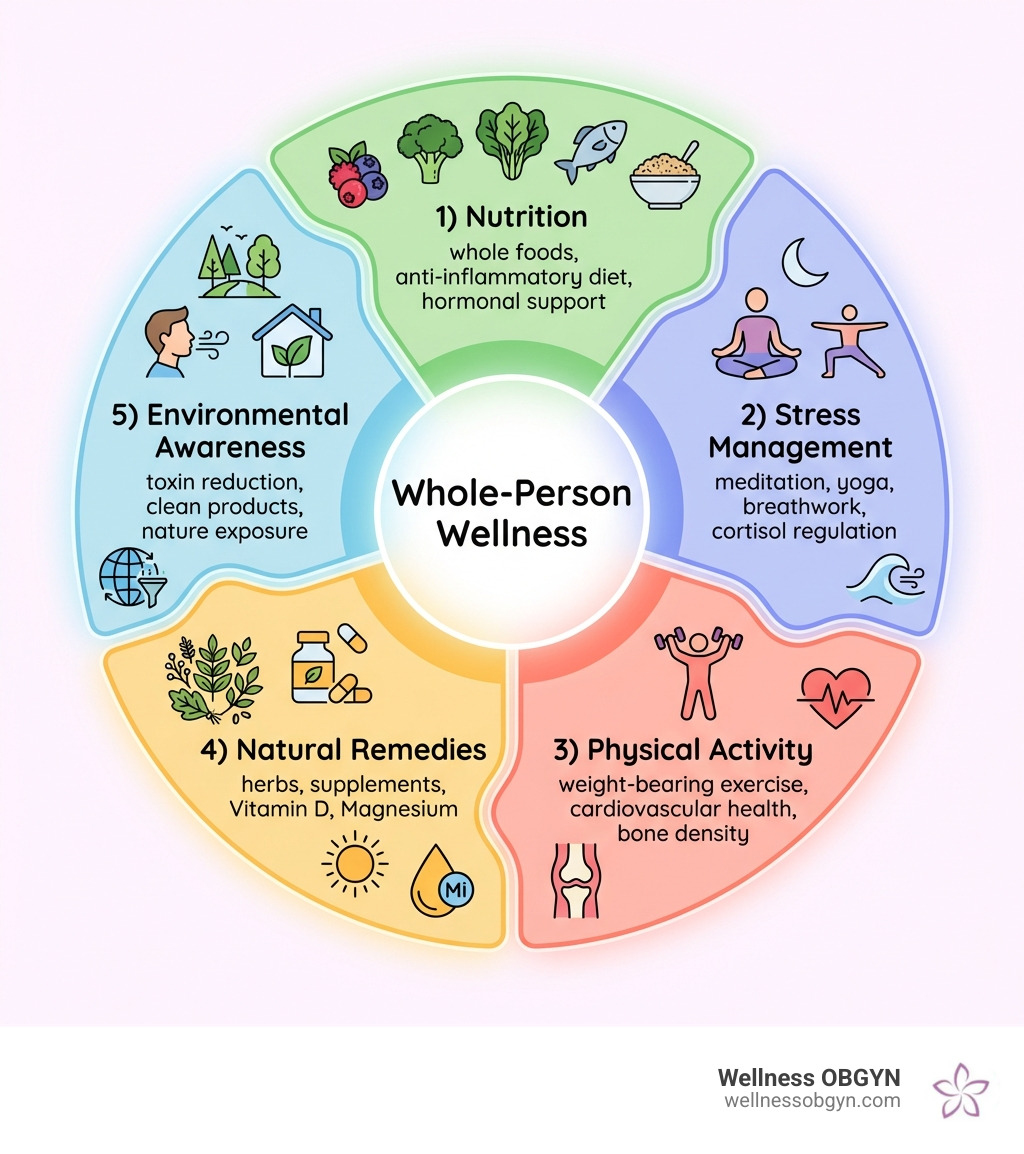
Holistic women’s health is a whole-person approach to care that addresses the physical, emotional, and spiritual dimensions of well-being — not just isolated symptoms. Here is a quick overview of what it involves:
- Nutrition: Eating whole, nutrient-dense foods to support hormonal balance and energy
- Stress management: Using practices like meditation, breathwork, and yoga to reduce cortisol and support mental health
- Physical activity: Moving regularly to protect bone density, heart health, and hormonal regulation
- Natural remedies: Using evidence-informed herbs and supplements for issues like PMS, PCOS, and menopause
- Environmental awareness: Reducing exposure to toxins in everyday products
- Personalized care: Working with a provider who treats you, not just your diagnosis
Most women are used to healthcare that reacts to problems. Something hurts, you get a prescription. A number is off, you get a referral. But that model often misses the bigger picture.
Consider this: up to 80% of menstruating women experience premenstrual symptoms, and yet many never get to the root of why. Or that 1 in 6 Canadian women face infertility — a statistic tied to hormonal, nutritional, and lifestyle factors that are rarely all addressed at once.
Holistic care asks a different question: What is driving this in the first place?
It connects the dots between your gut health and your mood, your stress levels and your cycle, your diet and your bone density. That interconnected view is what makes it so powerful — and why more women are seeking it out.
I’m Dr. Cheryl Twu, a board-certified OB-GYN and founder of Wellness OBGYN in Honolulu, and my training in both Western medicine and Eastern medicine has shaped my deeply integrative approach to holistic women’s health. From managing complex reproductive conditions to supporting women through menopause, I partner with my patients at every stage of life.
Easy holistic women’s health word list:
- breast cancer screening
- comprehensive wellness exam
- difference between a wellness exam and a comprehensive exam
Defining a Holistic Women’s Health Approach
When we talk about a holistic women’s health approach, we aren’t just talking about “alternative” medicine. We are talking about a comprehensive framework that views the female body as a complex, integrated system. Research has long suggested that gender matters in health, and an integrated model is essential for understanding how social, biological, and environmental factors intersect to influence a woman’s well-being.
At its core, this approach moves away from “sick care”—where we only see a doctor when something is wrong—and toward true health optimization. By understanding the holistic approach to women’s health, we can begin to see how a skin breakout might be linked to gut inflammation, or how chronic work stress might be the silent culprit behind a stalled weight loss journey or irregular periods.
The Core Pillars of Holistic Wellness
To achieve lasting vitality, we focus on several foundational pillars. First and foremost is nutrition; the fuel you provide your body dictates the quality of your hormones and cellular repair. We also look closely at stress management, as chronically high cortisol can wreck havoc on everything from sleep to fertility.
Environmental factors are equally critical. We live in a world filled with endocrine disruptors—chemicals in our plastics, beauty products, and even household cleaners that mimic estrogen and confuse our internal signaling. By shifting toward personalized healthcare, we can identify which of these pillars needs the most attention in your specific life stage, whether you are a teenager navigating your first cycles or a woman transitioning through perimenopause.
Integrating Conventional and Natural Medicine
One of the biggest misconceptions is that you have to choose between “natural” and “medical” care. In our practice, we believe the best results come from integrating both. We use high-tech diagnostics—like advanced imaging or liquid biopsies—alongside ancient wisdom like herbal support and mindfulness.
This is the essence of patient-centered care. We practice shared decision-making, meaning we provide you with the evidence for both conventional treatments (like minimally invasive surgery) and natural strategies, allowing you to choose the path that aligns with your values and lifestyle.
Addressing Hormonal and Reproductive Issues Naturally
Hormonal imbalances are perhaps the most common reason women seek out a holistic path. Conditions like Polycystic Ovary Syndrome (PCOS) and endometriosis are often managed conventionally with birth control to mask symptoms, but a holistic lens looks deeper at metabolic health and inflammation.
For instance, research on PCOS shows that it carries long-term cardiometabolic risks, including increased chances of type 2 diabetes and heart disease. Simply “fixing” the period isn’t enough; we must address the underlying insulin resistance and systemic inflammation to protect a woman’s future health. Understanding these female reproductive health issues allows us to create more robust, long-term wellness plans.
| Symptom/Issue | Conventional Management | Holistic/Integrative Approach |
|---|---|---|
| PCOS | Birth control, Metformin | Anti-inflammatory diet, Inositol, Strength training |
| Endometriosis | Surgery, Hormonal suppressants | Liver support for estrogen metabolism, Omega-3s |
| PMS | NSAIDs (Ibuprofen), Antidepressants | Magnesium, Vitex, Stress reduction, Seed cycling |
| Menopause | Standard HRT | Bioidentical hormones, Black Cohosh, Weight-bearing exercise |
Holistic Nutrition for PCOS and Endometriosis
Nutrition is often the most powerful tool in our kit for managing hormone therapy options. For women with PCOS, a low-glycemic index, high-fiber diet is non-negotiable. Fiber helps “sweep” excess hormones out of the body, while a low-sugar approach prevents the insulin spikes that trigger the ovaries to produce excess testosterone.
In the case of endometriosis, the goal is to lower the “inflammatory bucket.” This means prioritizing anti-inflammatory fats like those found in wild-caught fish and walnuts, while reducing pro-inflammatory triggers like refined vegetable oils and excessive dairy. By supporting the liver’s ability to detoxify estrogen, we can often see a significant reduction in the pain and heavy bleeding associated with this condition.
Natural Remedies for PMS and Menopause
When it comes to the monthly “rollercoaster” of PMS or the “heat waves” of menopause, nature offers incredible support. Chaste Tree (Vitex) is one of the most well-researched herbs for balancing the progesterone-estrogen ratio, helping to alleviate breast tenderness and irritability.
Additionally, we often find that simple nutrient deficiencies are at the root of many symptoms. Magnesium is “nature’s relaxant,” vital for both muscle cramps and sleep, while Vitamin D acts more like a hormone than a vitamin, supporting everything from mood to bone density. For those in the islands, even with our beautiful sun, we often see deficiencies that require targeted holistic menopause treatment to resolve.
Preventive Strategies for Long-Term Bone and Cardiovascular Health
As we move through different life stages, our health priorities shift. After age 50, bone health becomes a major concern. Statistics show that 1 in 3 women in Canada (and similar numbers in the US) will experience an osteoporotic fracture. Similarly, cardiovascular disease remains the leading cause of death for women, yet many symptoms go unrecognized because they differ from those in men.
A well-woman annual OBGYN visit is about more than just a Pap smear; it is a time to screen for these silent risks and implement preventive strategies that will keep you active and independent for decades.
The Role of Physical Activity and Stress Management
Movement is medicine. Weight-bearing exercise—like walking, hiking our beautiful Oahu trails, or weight training—is the single most effective way to signal your bones to stay dense and strong. Beyond bones, exercise is a powerful regulator of insulin and cortisol.
Chronic stress is a major contributor to heart disease in women. When we are constantly in “fight or flight” mode, our blood pressure rises and our arteries can become inflamed. Integrating menopause lifestyle changes like daily meditation or even just five minutes of deep belly breathing can significantly lower your cardiovascular risk profile.
Environmental Factors and Detoxification
We are constantly exposed to “xenohormones”—foreign substances that act like hormones in our bodies. These are often found in parabens in makeup, phthalates in fragrances, and BPA in plastics. Over time, this “toxic load” can contribute to estrogen dominance, which is linked to fibroids, endometriosis, and even certain cancers.
A holistic approach emphasizes “clean beauty” and reducing plastic use. We also encourage spending time in nature; the practice of “forest bathing” or simply being near the ocean has been shown to lower blood pressure and improve immune function. Pairing these habits with a menopause-friendly diet rich in cruciferous vegetables (like broccoli and kale) helps the liver process and eliminate these environmental toxins more efficiently.
Frequently Asked Questions about Holistic Women’s Health
What are the most common issues addressed by a holistic approach?
We address everything from reproductive issues (PCOS, endometriosis, fibroids) and hormonal transitions (PMS, perimenopause, menopause) to sexual dysfunction, bone density concerns, and mental well-being. By looking at the root cause, we can often help with “vague” symptoms like chronic fatigue, bloating, and brain fog that conventional labs might miss.
How can I reduce environmental toxins in my daily life?
Start small! Switch to glass containers for food storage, choose fragrance-free laundry detergents, and look for “paraben-free” and “phthalate-free” labels on your skincare. Supporting your body’s natural detox pathways by drinking plenty of filtered water and eating high-fiber foods is also key.
Can holistic practices help with infertility and preconception?
Absolutely. Holistic preconception care focuses on optimizing the “soil” before the “seed” is planted. This includes reducing inflammation, balancing hormones, and ensuring you have the nutrient stores (like folate and iron) needed for a healthy pregnancy. We often work alongside couples to improve both partners’ health to increase the chances of a successful conception.
Conclusion
At Wellness OBGYN in Honolulu, we believe that your healthcare should be as unique as you are. Whether you are navigating the challenges of adolescence, the complexities of fertility, or the transition into menopause, our goal is to provide expert, compassionate care that honors your body’s innate wisdom.
Your body does so much for you every single day. Isn’t it time you thanked it with the comprehensive care it deserves?
Schedule your annual OBGYN visit today and take the first step toward a healthier, more vibrant you.