
Why Minimally Invasive Gynecology Is Changing Women’s Healthcare
Minimally invasive gynecology is a modern surgical approach that treats common gynecologic conditions — like fibroids, endometriosis, and ovarian cysts — through tiny incisions (usually less than an inch) or no incisions at all, instead of one large abdominal cut.
Here’s what makes it different at a glance:
| Feature | Traditional Open Surgery | Minimally Invasive Gynecology |
|---|---|---|
| Incision size | Large (several inches) | Small (under 1 inch) or none |
| Hospital stay | Several days | Often same-day discharge |
| Recovery time | 6-8 weeks | As little as 2-4 weeks |
| Pain level | Higher | Significantly lower |
| Infection risk | Higher | Lower |
| Scarring | More visible | Minimal |
It’s not just a technical upgrade. For many women, it means getting back to everyday life faster, with less pain, and fewer complications.
Facing a gynecologic condition that might need surgery can feel overwhelming. But the field has shifted dramatically — and the majority of common procedures can now be done with far less physical trauma than most people expect.
I’m Dr. Cheryl Twu, founder of Wellness OBGYN in Honolulu, and I’ve spent over a decade specializing in minimally invasive gynecology, including da Vinci® robotic surgery, across high-volume hospital settings before bringing that expertise to my own practice. In this guide, I’ll walk you through everything you need to know to feel confident and informed about your options.
Glossary for minimally invasive gynecology:
Understanding Minimally Invasive Gynecology
At its core, minimally invasive gynecology (MIGS) is about achieving the same surgical goals as traditional “open” surgery but with significantly less impact on your body. In the past, if a woman needed a hysterectomy or had a large fibroid removed, a surgeon would make a large horizontal or vertical incision across the abdomen. This required cutting through layers of skin, fat, and muscle, leading to a long hospital stay and a painful recovery.
Today, we use advanced technology to avoid that “big cut.” By utilizing specialized tools, we can perform complex operations through incisions that are often smaller than a dime. In some cases, such as hysteroscopy, we don’t make any incisions at all, accessing the reproductive organs through the body’s natural openings.
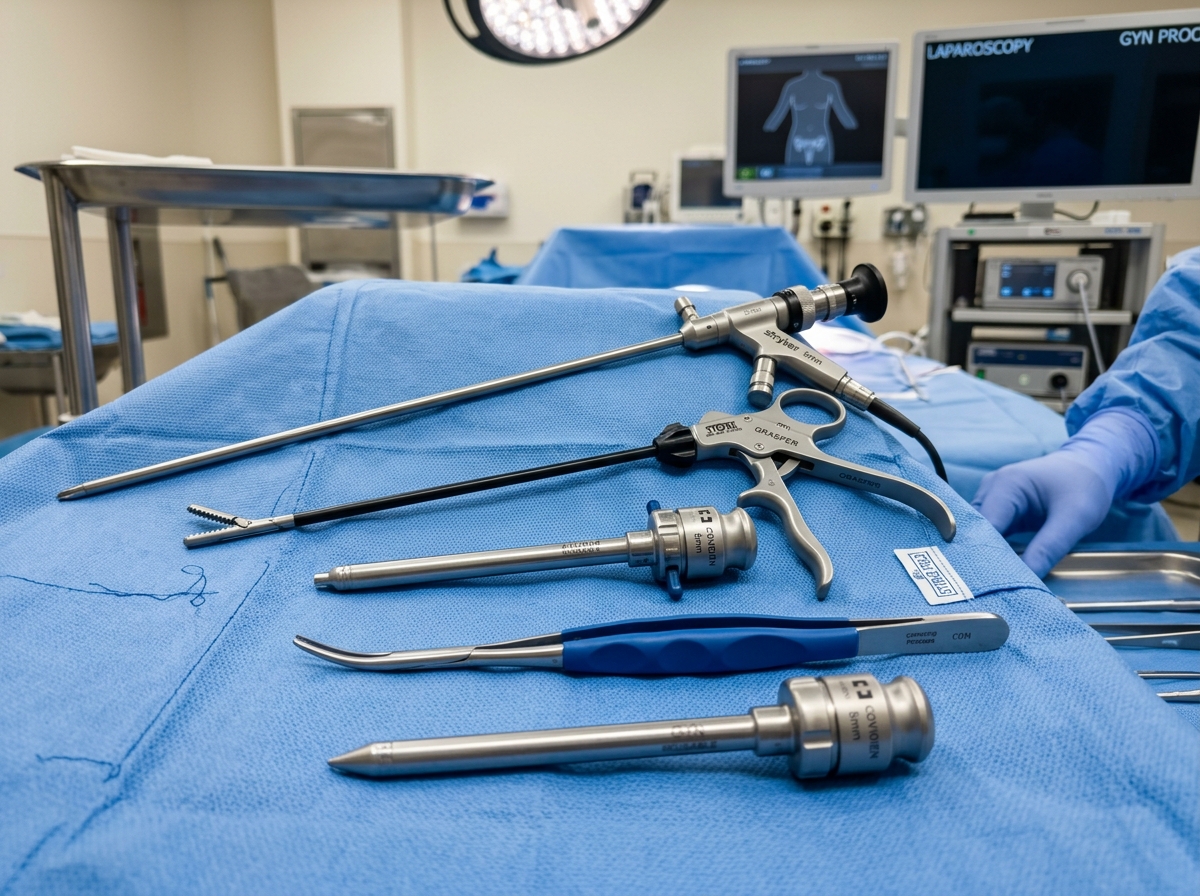
The shift toward these techniques is driven by a simple philosophy: if we can fix the problem with less trauma, we should. This approach is now the preferred choice for both surgeons and patients due to the superior outcomes and faster return to daily life. You can learn more about how we implement these techniques by visiting our page on Minimally invasive gynecologic surgery overview or exploring our specific services for minimally invasive surgery.
How Minimally Invasive Gynecology Works
You might wonder, “How can a surgeon see what they are doing through such a tiny hole?” The answer lies in high-definition telescope technology.
During a laparoscopic procedure, we insert a laparoscope—a thin, lighted tube with a digital camera at the tip—into the abdomen. This camera transmits a high-resolution, magnified image of your internal organs onto a monitor in the operating room. This gives us a view that is often clearer and more detailed than what a surgeon sees during open surgery.
There are two primary ways we access the area:
- Abdominal Access (Laparoscopy): We make 3 to 5 small incisions (usually about 1 cm each) to insert the camera and miniature surgical instruments.
- Cervical Access (Hysteroscopy): For issues inside the uterus, such as polyps or certain fibroids, we insert a hysteroscope through the vagina and cervix. This requires no external incisions and offers a very quick recovery.
Our team of minimally invasive surgery specialists uses these tools to navigate the delicate anatomy of the pelvis with extreme precision.
The Role of Robotic and Vaginal Approaches
Innovation doesn’t stop at standard laparoscopy. We also utilize the da Vinci® surgical system, a robotic-assisted platform that acts as an extension of the surgeon’s hands.
Contrary to popular belief, the robot doesn’t perform the surgery; the surgeon is in full control at all times. The system provides 3D magnification and “wristed” instruments that can rotate further than the human hand, allowing for incredible precision in tight spaces. This is particularly helpful for complex cases like advanced endometriosis or fertility-sparing myomectomies.
We also prioritize vaginal approaches, such as vNOTES (Vaginal Natural Orifice Transluminal Endoscopic Surgery). This “incisionless” technique allows us to perform hysterectomies or gall bladder removals through the vaginal path, leaving no visible scars. For some patients, we even offer “belly button surgery,” where a single small incision is hidden inside the navel for a virtually scar-free result. These OBGYN surgical procedures represent the pinnacle of patient-centered surgical care.
Conditions Treated and Surgical Options
We use minimally invasive gynecology to treat a wide range of benign (non-cancerous) conditions that affect a woman’s quality of life. These include:
- Uterine Fibroids: Non-cancerous growths that can cause heavy bleeding and pelvic pressure.
- Endometriosis: A condition where tissue similar to the uterine lining grows outside the uterus, affecting roughly 10% of women and often causing severe pain or infertility.
- Ovarian Cysts: Fluid-filled sacs that may need removal if they become large or painful.
- Pelvic Organ Prolapse: When pelvic organs drop from their normal position.
- Abnormal Uterine Bleeding: Periods that are excessively heavy or irregular.
- Adenomyosis: When the uterine lining grows into the muscular wall of the uterus.
For those dealing with complex issues, such as advanced endometriosis surgery, a minimally invasive approach is often the most effective way to remove diseased tissue while preserving healthy organs.
Advanced Solutions for Minimally Invasive Gynecology
When conservative treatments like medication or lifestyle changes aren’t enough, we offer advanced surgical solutions tailored to your goals. Whether you want to preserve your fertility or are seeking a permanent solution like a hysterectomy, we have options:
- Laparoscopic Myomectomy: Removing fibroids while leaving the uterus intact to preserve childbearing potential.
- Hysteroscopic Ablation: A quick, often office-based procedure to treat heavy periods by thinning the uterine lining.
- Excision of Endometriosis: We prefer excision (cutting out) over ablation (burning) for endometriosis to ensure complete removal and accurate diagnosis.
The protocol involves focused shockwave therapy with REGENwave® technology, laser treatment with the REGENlase® device, tissue regenerative factors (TRF), and hormone replacement therapy (HRT). It is a powerful tool for minimally invasive surgery OBGYN patients looking to restore sensitivity and function after surgery or childbirth.
Key Benefits: Why Patients Prefer MIGS
The move toward minimally invasive gynecology isn’t just about the “cool” technology—it’s about the tangible benefits for the patient.
When we compare traditional open surgery to MIGS, the advantages are clear:
| Benefit | Why It Matters |
|---|---|
| Less Pain | Smaller incisions mean less trauma to the nerves and muscles, reducing the need for heavy narcotic pain medication. |
| Faster Recovery | Most women are back to normal activity within 2 to 4 weeks, compared to 6 to 8 weeks for open surgery. |
| Shorter Hospital Stays | Many procedures are performed as outpatient surgery, meaning you go home the same day. |
| Minimal Scarring | Tiny incisions heal quickly and are often barely visible after a few months. |
| Lower Infection Risk | Smaller wounds are less likely to become infected than large abdominal incisions. |
| Reduced Blood Loss | Precision tools allow for much less bleeding during the procedure. |
Statistics show that for procedures like laparoscopic radiofrequency ablation for fibroids, most women are back to their normal routine within just seven days. This efficiency allows you to focus on your life, not your recovery.
The MIGS Journey: Preparation and Recovery
At Wellness OBGYN, we believe in shared decision-making. Your journey begins with a comprehensive consultation where we review your medical records, imaging, and personal health goals.
Before Surgery: We recommend gathering all past medical records and imaging studies (like ultrasounds or MRIs). You’ll have an anesthesia consultation to ensure you are cleared for the procedure. We will discuss exactly what to expect, from the moment you arrive at the surgical center to the time you go home.
During the Procedure: Most MIGS procedures are performed under general anesthesia. Because the incisions are so small, the actual time spent in the operating room is often shorter than traditional surgery.
After Surgery: The hallmark of minimally invasive gynecology is a swift recovery.
- The First 24 Hours: Most patients go home a few hours after surgery. You’ll need a friend or family member to drive you.
- The First Week: You should rest and avoid heavy lifting. Some moderate discomfort is normal, but it is usually manageable with over-the-counter pain relief.
- Weeks 2-4: You can typically resume light activities and work.
- Full Recovery: By six weeks, most patients are cleared for all activities, including exercise and intimacy.
We pride ourselves on being a top-tier gynecologist in Honolulu, providing the personalized follow-up care you need to feel supported every step of the way.
Frequently Asked Questions about MIGS
Who is a good candidate for minimally invasive procedures?
The majority of women with benign gynecologic conditions are excellent candidates for MIGS. Whether you have had previous surgeries (which can cause scar tissue) or are hoping for fertility preservation, a minimally invasive approach is often possible. We conduct a thorough health evaluation to ensure that this is the safest and most effective path for you.
What are the potential risks and complications?
While MIGS is generally safer than open surgery, no procedure is without risk. Potential complications include surgical injury to nearby organs (like the bladder or bowel), infection, bleeding, or reactions to anesthesia. However, because the incisions are smaller and the visualization is so clear, these risks are significantly lower than in traditional surgery.
How long is the typical recovery period?
Every patient is unique, but the general timeline is:
- Initial Rest: 3 to 7 days.
- Light Activity: 2 weeks.
- Full Recovery: 4 to 6 weeks. Compared to the two-month recovery often required for open abdominal surgery, MIGS is a true “game changer.”
Conclusion
At Wellness OBGYN, we are dedicated to providing the women of Honolulu with the highest standard of healthcare. We understand that the thought of surgery can be daunting, which is why we emphasize a compassionate, patient-centered approach.
Your health and well-being are our priority. We invite you to learn more about our services and schedule a consultation to see how we can help you live your life to the fullest. Together, we can create a treatment plan that fits your lifestyle and your needs.