
Why Women’s Health Care Specialists Matter at Every Life Stage
Women’s health care specialists are medical providers trained to address the unique physical, hormonal, and reproductive needs of women from adolescence through menopause and beyond. These specialists include obstetricians, gynecologists, reproductive endocrinologists, urogynecologists, and advanced practice providers such as nurse practitioners and physician assistants with expertise in women’s health.
Quick Guide to Women’s Health Care Specialists:
| Life Stage | Common Specialists | Key Services |
|---|---|---|
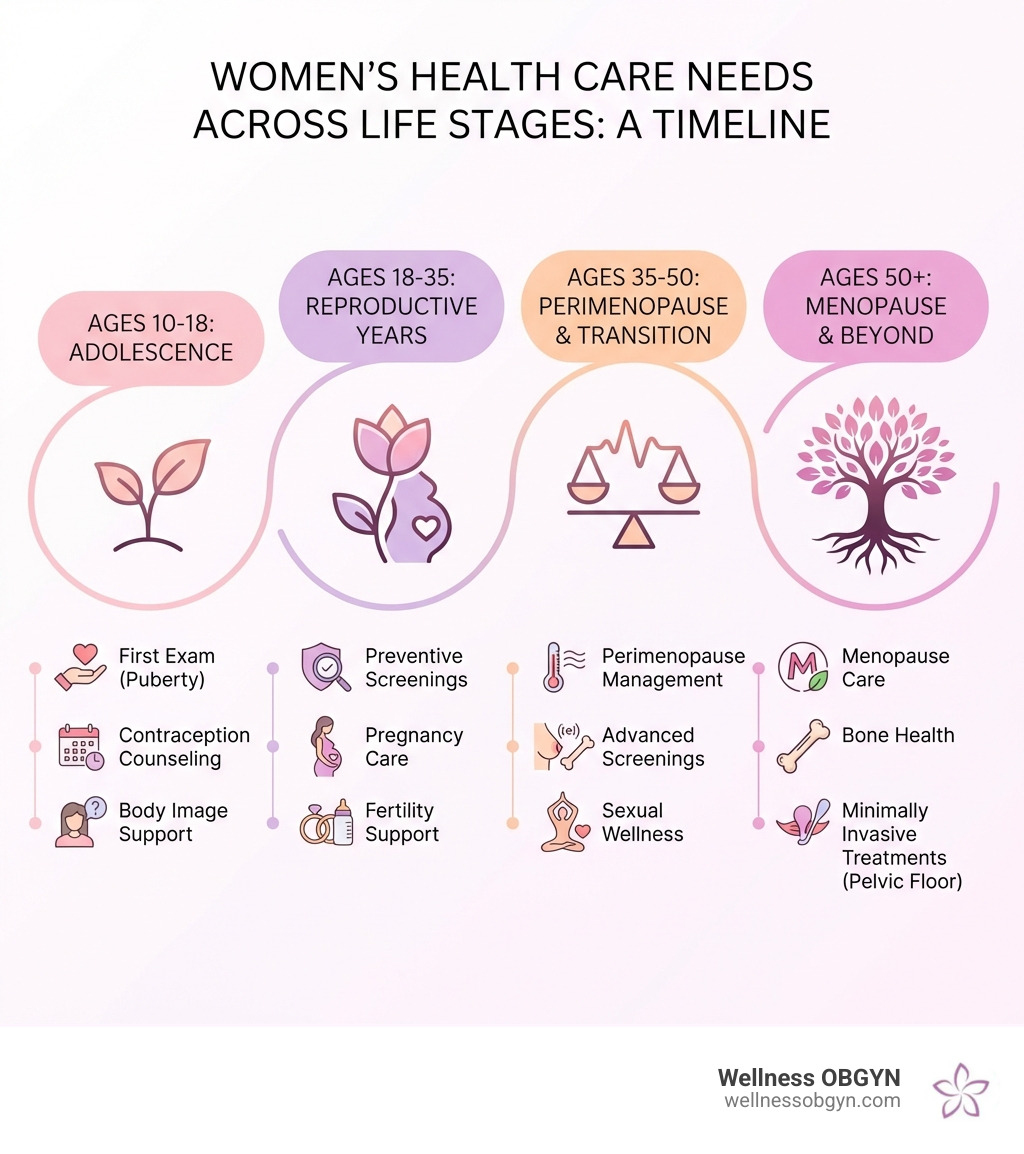
| Adolescence | Pediatric/Adolescent Gynecologist | First exams, contraception counseling, body image support |
| Reproductive Years | OB/GYN, Reproductive Endocrinologist | Pregnancy care, fertility management, preventive screenings |
| Perimenopause & Menopause | Menopause Specialist, Gynecologist | Hormone therapy, symptom management, sexual wellness |
| High-Risk Needs | Maternal-Fetal Medicine, Gynecologic Oncologist | Complex pregnancy care, cancer treatment |
Your health needs change dramatically across your lifetime. A condition like painful periods at age 15 requires different expertise than managing hot flashes at 50 or addressing pelvic floor concerns at 70. That’s why choosing the right specialist—and building a relationship that lasts—matters so much.
Unlike primary care doctors who treat a broad range of conditions, women’s health care specialists focus exclusively on reproductive organs, hormonal health, pregnancy, sexual function, and conditions that disproportionately affect women. They’re trained in both preventive care (like cancer screenings and bone health monitoring) and advanced treatments (including minimally invasive surgery and hormone optimization).
I’m Dr. Cheryl Twu, a board-certified obstetrician-gynecologist with more than a decade of experience caring for women’s health care specialists’ patients across all life stages, from adolescence through menopause, using both advanced surgical techniques and holistic wellness approaches. My training in minimally invasive and robotic surgery, combined with osteopathic principles, allows me to provide comprehensive, whole-person care tailored to each woman’s unique needs.
Basic women’s health care specialists terms:
The Role of Women’s Health Care Specialists Across Life Stages

In our practice, we believe that health is not a static state but a continuous journey. As you move through different life chapters, your medical needs evolve. Women’s health care specialists act as your navigators, ensuring that transitions—whether it’s the onset of puberty or the shift into post-menopause—are managed with expertise and compassion.
Personalized women’s healthcare is the cornerstone of effective treatment. It means we don’t just look at a chart; we look at the person. This is particularly vital when dealing with female reproductive health issues such as endometriosis, polycystic ovary syndrome (PCOS), or uterine fibroids. These conditions can impact your quality of life for decades, and having a specialist who understands your history ensures more accurate diagnoses and better long-term outcomes.
From the first prenatal visit through the postpartum period, and even into geriatric gynecology, the goal is “Care for Life.” In Honolulu, we see many patients who value this lifelong relationship. Whether we are helping you manage a high-risk pregnancy or assisting with the unique needs of older age—such as using pessaries for vaginal prolapse—our focus remains on maintaining your dignity and vitality.
Pediatric and Adolescent Women’s Health Care Specialists
The first visit to a gynecologist can be a source of anxiety for many young women. However, establishing care early—typically between the ages of 13 and 15—is essential. Adolescent gynecology in Honolulu focuses on education and comfort rather than just clinical exams.
Key topics during these early years include:
- Puberty Onset: Research shows that factors like body fat percentage can influence when a girl starts her period. We help parents and teens understand what is “normal” and what might require investigation.
- Contraception Counseling: Providing non-judgmental, evidence-based advice on birth control options.
- Body Image: Addressing the relationship between physical health and self-esteem.
By creating a safe space for questions about periods, acne, and sexual health, we build a foundation of trust that carries into adulthood.
Navigating Menopause with Women’s Health Care Specialists
Menopause is not an “end,” but a transition that deserves specialized attention. Many women suffer through hot flashes, night sweats, and mood changes, thinking it’s just something they have to endure. As menopause specialists, we offer a variety of tools to manage these symptoms.
Hormone Replacement Therapy (HRT) remains a highly effective option for many, but we also explore non-hormonal treatments and lifestyle adjustments. For women experiencing changes in sexual function or vaginal health, we offer advanced solutions. This treatment revitalizes internal tissues without surgery, helping to restore intimate pleasure and relieve symptoms like urinary incontinence.
Furthermore, maintaining bone health is a priority during this stage. We follow trusted ob-gyn guidance to monitor bone density and prevent osteoporosis, ensuring you stay active and independent.
Common Specialties and Subspecialties in Women’s Health
When you search for women’s health care specialists, you might encounter several different titles. Understanding these can help you find the right provider for your specific needs.
| Specialty | Focus Area | When to See Them |
|---|---|---|
| Obstetrician (OB) | Pregnancy, childbirth, and postpartum care. | If you are pregnant or planning to become pregnant. |
| Gynecologist (GYN) | General female reproductive health. | For annual exams, gynecologist services, and pelvic pain. |
| Maternal-Fetal Medicine (MFM) | High-risk pregnancies. | If you have a chronic condition or pregnancy complications. |
| Reproductive Endocrinologist | Infertility and hormonal imbalances. | If you are struggling to conceive or have PCOS. |
| Urogynecologist | Pelvic floor and urinary tract disorders. | For bladder control issues or pelvic organ prolapse. |
| Gynecologic Oncologist | Cancers of the reproductive system. | For treatment of uterine, ovarian, or cervical cancers. |
In addition to these, many women seek a holistic obgyn in Honolulu who can integrate traditional medicine with wellness strategies. We also specialize in minimally invasive surgery, which uses smaller incisions to allow for faster recovery times and less postoperative pain.
Advanced Solutions for Sexual Wellness and Vitality
Sexual wellness is a vital part of “total health,” yet it is often overlooked in traditional medical settings. At our center for women’s wellness, we prioritize your intimate health through innovative, non-surgical treatments.
How to Choose the Right Women’s Health Specialist
Selecting a provider is a deeply personal decision. You want someone who is not only highly qualified but also someone you feel comfortable talking to about intimate concerns.
- Check Board Certification: Ensure your doctor is board-certified by the American Board of Obstetrics and Gynecology (ABOG). This indicates they have met rigorous national standards for education and clinical expertise.
- Verify Insurance: Before booking, confirm that the practice is accepting new patients and takes your specific insurance plan. You can also use the Medicare website to compare providers near you.
- Read Testimonials: Patient reviews can give you insight into the clinic’s atmosphere and the provider’s bedside manner. Look for mentions of “listening,” “compassion,” and “efficiency.”
- Consider Shared Decision-Making: A good specialist doesn’t just tell you what to do; they present options and work with you to choose the best path forward.
- Look for Telehealth Options: Especially in Hawaii, virtual consultations can make care more accessible for follow-ups or initial discussions.
The Importance of Preventive Care and Early Detection
The best way to treat a health problem is to prevent it from starting. This is why the annual obgyn visit is so critical. These exams are more than just a Pap smear; they are a comprehensive check-in on your total health.
During a women’s health annual exam, we focus on:
- Cancer Screenings: Following well-woman health care guidelines for cervical, breast, and colon cancer.
- HPV Vaccination: A vital tool in preventing cervical dysplasia and cancer.
- Breast Care: Clinical exams and referrals for mammograms based on your risk profile.
- Diagnostic Methods: Using advanced technology like ultrasound or colposcopy for early detection of abnormalities.
By staying consistent with these visits, we can catch issues like high blood pressure, thyroid imbalances, or early-stage cancers when they are most treatable.
Frequently Asked Questions about Women’s Health Care Specialists
What is the difference between an OB/GYN and a midwife?
An OB/GYN is a medical doctor (MD or DO) who has completed medical school and a four-year residency. They are trained to handle high-risk pregnancies and perform surgeries. A Certified Nurse-Midwife (CNM) is an advanced practice nurse who specializes in low-risk pregnancy, birth, and well-woman care. Many practices use a collaborative model where midwives and doctors work together.
How often should I see a women’s health specialist for a check-up?
Most major organizations, including ACOG, recommend an annual well-woman visit. While you may not need a Pap smear every year (depending on your age and history), the annual visit covers many other vital screenings, including breast exams, pelvic exams, and discussions about mental health and contraception.
What role do nurse practitioners and PAs play in my care?
Advanced practice providers (APPs), such as Nurse Practitioners (NPs) and Physician Assistants (PAs), are essential members of the care team. They are highly trained to perform exams, diagnose conditions, and prescribe medications. Many patients find that APPs can offer more time for education and preventive counseling.
Conclusion
At Wellness OBGYN in Honolulu, we are dedicated to providing the highest standard of care for women at every stage of life. Whether you are seeking a first gynecological exam for your daughter, navigating the complexities of pregnancy, or looking for advanced solutions for menopause and sexual wellness, our team is here to support you. We combine clinical expertise in minimally invasive surgery with a patient-centered approach that prioritizes your unique needs and well-being.
Ready to take the next step in your health journey? Schedule a consultation for women’s health services today and experience compassionate, expert care tailored just for you.