
Why Family Planning Services Programs Matter for Your Health
What is the family planning services program? It’s a government-funded initiative providing low-cost or free reproductive health services to individuals who meet certain income and residency requirements. These programs are crucial for preventing unplanned pregnancies, accessing contraception, and receiving essential reproductive healthcare.
Quick Answer:
- Purpose: Provide affordable family planning and reproductive health services
- Who qualifies: Individuals with limited income (typically based on the Federal Poverty Level)
- Key services: Birth control, STI testing, pregnancy testing, counseling, cancer screenings
- Cost: Free or low-cost based on income
- How to apply: Through local providers, online portals, or health departments
Family planning services programs exist at federal and state levels. The Title X Family Planning Program, created in 1970, is the only federal program dedicated solely to these services. State programs often supplement them through Medicaid and other initiatives.
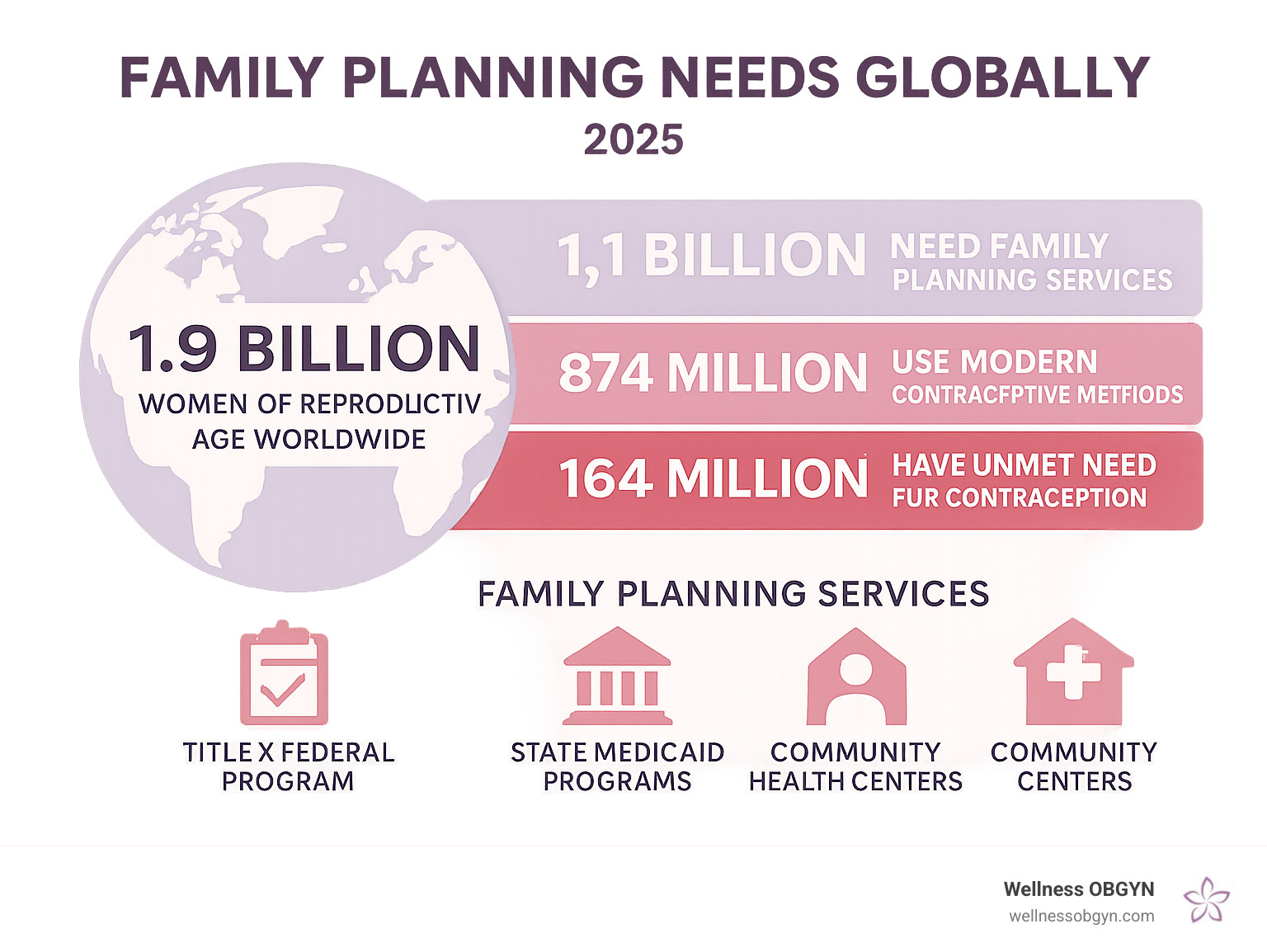
The need is significant: of the 1.9 billion women of reproductive age worldwide, 1.1 billion need family planning, and 164 million have an unmet need for contraception. These programs empower individuals to make informed decisions about their reproductive health, ensuring confidential, comprehensive care regardless of age or financial status.
What is the Family Planning Services Program?
Think of what is the family planning services program as a community safety net ensuring everyone has access to quality reproductive healthcare, regardless of their financial situation. These programs provide low-cost or free services to prevent unplanned pregnancies and improve overall health for women, men, and adolescents.
The cornerstone of these efforts is the federal Title X Family Planning Program, established in 1970 as the only federal grant program dedicated solely to comprehensive family planning. The need is clear: globally, 164 million women have an unmet need for contraception, underscoring the importance of these programs. You can find more global statistics here: Global family planning statistics.
Understanding Different Program Types
A network of different programs works together to provide care. This includes:
- Title X Programs: Federally funded clinics and health centers nationwide.
- State Medicaid Waivers: State-level expansions of family planning services to more residents.
- State-Specific & Non-Profit Programs: Initiatives that complement federal funding and fill local coverage gaps.
- Community Health Centers & Local Health Departments: Vital hubs that often integrate family planning with primary care, serving as a first point of contact for many.
The Core Goals of Family Planning Initiatives
These programs are built on goals that empower and support every individual. The primary objectives are:
- Empowerment: Giving people the knowledge and resources to make informed decisions about their reproductive health and future.
- Health Equity: Eliminating financial, geographic, and cultural barriers to quality reproductive healthcare.
- Reducing Maternal Mortality: Helping individuals plan and space pregnancies to reduce health risks.
- STI Prevention: Protecting individual and community health through testing, treatment, and education.
At Wellness OBGYN, we share this philosophy through our Personalized Women’s Healthcare approach. We believe that access to comprehensive information and compassionate care empowers you to make the best decisions for your health.
Eligibility and Application: How to Access Services
Now that you understand what is the family planning services program, let’s discuss how to access these valuable services. The process is designed to be accessible, not intimidating.
Who is Eligible for the Family Planning Services Program?
These programs are created for people who might otherwise struggle to afford reproductive healthcare. While specific rules vary by state, the core eligibility criteria are generally consistent.
- Income: Eligibility is typically based on income, using the Federal Poverty Level (FPL) as a benchmark. Many programs serve individuals with incomes up to 200-300% of the FPL, making them accessible to many working people.
- Residency and Citizenship: You generally must be a resident of the state where you apply and be a U.S. citizen or have a qualifying immigration status.
- Age: Age is rarely a barrier, as programs serve people throughout their reproductive years. Importantly, minors can often receive confidential care without parental consent.
- Insurance Status: These programs primarily serve the uninsured and underinsured. However, you might still qualify if you have insurance that doesn’t cover family planning or if you need confidential care.
- Pregnancy Status: You must not currently be pregnant, as these programs focus on pregnancy prevention, not prenatal care.
How to Apply for a Family Planning Program
Applying for these services is more straightforward than you might think.

- Find a Provider: Start with your local health department, community health centers, or family planning clinics. They have staff who can guide you through the application.
- Gather Your Documents: Having your paperwork ready will save time. We detail what you’ll need in the next section.
- Choose Your Application Method:
- Online: Many states have online portals for convenient application.
- Paper: Applications are often available to download from program websites or can be picked up at clinics.
- In-Person: This is a great option if you want face-to-face assistance. Many clinics offer “Presumptive Eligibility,” which can provide temporary coverage while your full application is processed, so you can get care right away.
What Documentation is Required to Apply?
Gathering your documents is a key step. While exact requirements vary, most programs ask for similar information to verify your identity, residency, and income.
- Proof of Identity: A photo ID like a driver’s license, state ID, or school ID.
- Proof of Residency: A recent utility bill, lease agreement, or official mail with your current address.
- Social Security Number: Your Social Security card or an official document listing your SSN.
- Proof of Income: Recent pay stubs, an employer letter, or a tax return. If married, you may need your spouse’s income information as well.
- Proof of Citizenship/Immigration Status: A U.S. birth certificate, passport, or permanent resident card.
Covered Services: What’s Included and What’s Not
One of the most common questions is, “Okay, I understand what is the family planning services program, but what exactly does it cover?” You might be surprised by how comprehensive these services are, creating a safety net for your essential reproductive health needs.
What Specific Services are Covered Under the Family Planning Services Program?
These programs are designed to be a one-stop resource for preventing unintended pregnancies and maintaining sexual health.

Coverage typically includes:
- Contraceptive Counseling and Methods: You’ll receive counseling to find the best method for you. A full range of birth control methods is usually covered, from oral contraceptives (the pill), patches, and rings to long-acting reversible contraception (LARC) like IUDs and implants. At Wellness OBGYN, we can help you explore the Best Hormonal Birth Control for your needs. The Effectiveness of contraceptive methods varies, and these programs ensure you have access to highly effective options.
- Emergency Contraception: The “morning-after pill” and follow-up care are included.
- Pregnancy Testing and Counseling: Confidential testing and guidance on your next steps.
- STI/STD Services: Comprehensive testing, including HIV screening, and treatment for sexually transmitted infections.
- Cancer Screenings: Routine preventive care like Pap tests, pelvic exams, and breast and testicular cancer screening education.
- HPV Vaccine: Coverage for the vaccine that protects against the human papillomavirus, which causes most cervical cancers.
- Sterilization: For individuals 21 and older who have decided their family is complete, vasectomy and tubal ligation are typically covered.
- Other Services: Some programs may also cover preconception counseling, smoking cessation, and other related vaccines or services.
What Services Are NOT Covered?
While comprehensive, these programs have specific limitations. Understanding them helps set realistic expectations.
- Abortion Services: Programs receiving federal funds, like Title X, are prohibited from providing abortion services.
- Infertility Treatments: Advanced fertility treatments like IVF are not covered, though some basic counseling may be available. We can help you explore Female Reproductive Health Issues and discuss other options.
- General Healthcare: These programs are focused on reproductive health and do not cover primary care needs like treating a cold or managing chronic conditions.
- Other Exclusions: Diagnostic mammograms, most hysterectomies, and inpatient hospital services are generally not included.
Think of these programs as specialized resources that excel at providing preventive reproductive care.
Benefits, Privacy, and Finding a Provider
Beyond the services, it’s important to understand the life-changing benefits of these programs and how they protect what matters most: your privacy and peace of mind.
Key Benefits of Program Participation
Participating in a family planning program offers more than just financial savings. Key benefits include:
- Affordable Care: Removes the financial stress that can be a barrier to receiving essential reproductive healthcare.
- Confidentiality: Creates a safe, private space to make decisions about your body without judgment, which is crucial for teens and adults in sensitive situations.
- Health Empowerment: Provides education and counseling, allowing you to be an active partner in your healthcare. This aligns with our Holistic Approach to Women’s Health.
- Control Over Your Future: Preventing unintended pregnancy allows you to pursue education, career, and relationship goals on your own terms.
- Improved Public Health: Reduces the spread of STIs and leads to healthier, better-planned pregnancies.
How Your Privacy is Protected
These programs take confidentiality seriously. Your personal health information stays personal. This is especially important for minors’ rights, as teens can typically receive services without parental notification. For those experiencing domestic violence, these programs offer a safe way to get care without it appearing on a partner’s insurance statement. You can also request that mail be sent to a safe address in plain envelopes.
How to Find a Local Provider
Finding a participating provider is easier than you might think.

- Start Local: Your local health department is the best starting point. They either provide services or have a list of local clinics.
- Check Online: State Medicaid websites and the websites of family planning organizations often have provider search tools. A search for “community health center near me” is also a great way to find options.
- Call for Information: If you’re unsure, call your state’s health department. They have phone lines staffed to help you find resources.
At Wellness OBGYN, we believe in empowering you with knowledge about all available resources. While we provide comprehensive Clinic Women’s Health services, we want you to know about every option that supports your health journey.
Enhancing Sexual Wellness Beyond Basic Care
While what is the family planning services program covers is essential, many individuals want to improve their intimate wellness beyond foundational care. At Wellness OBGYN, we understand that sexual health is a multifaceted cornerstone of your overall well-being, impacting your confidence and relationships.
Our Female Sexual Health Clinic recognizes that concerns like decreased sensation or discomfort deserve expert attention. We’re here to help you not just maintain your sexual health, but truly improve it.
Understanding what is the family planning services program is the first step toward taking control of your reproductive health. These programs are lifelines that ensure everyone, regardless of income or background, has access to essential, confidential care like contraceptive counseling and STI testing.
At Wellness OBGYN, we’ve seen how empowering it is when individuals have the resources to make informed health decisions. Our commitment is to support your entire health journey with comprehensive and compassionate care here in Honolulu.
Whether you use a community program or a specialized clinic like ours, the goal is the same: empowering you to live your healthiest, most confident life. Seeking care is a responsible, self-caring act. To learn more, explore our resources on managing your health.
Learn more about managing your reproductive health