
Why the Birth Control Implant May Be Right for You
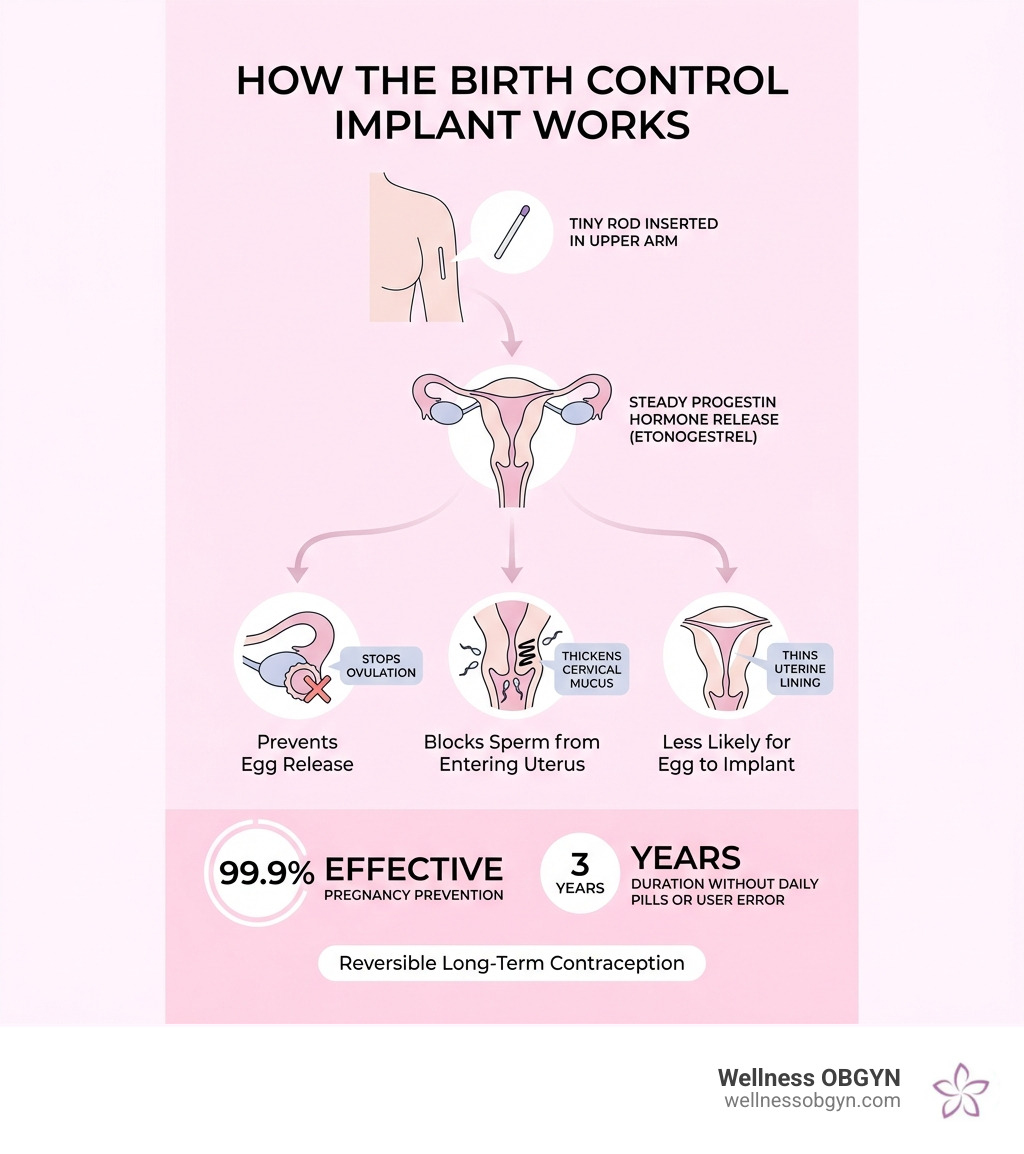
A birth control implant is a small, flexible plastic rod about the size of a matchstick that a healthcare provider inserts under the skin of your upper arm to prevent pregnancy for up to three years.
Quick Facts About the Birth Control Implant:
- What it is: A 4cm rod containing the hormone progestin (etonogestrel)
- How it works: Prevents ovulation, thickens cervical mucus, and thins the uterine lining
- Effectiveness: More than 99% effective—one of the most reliable contraceptive methods available
- Duration: Protects against pregnancy for up to 3 years (some research shows effectiveness up to 5 years)
- Insertion: Quick office procedure with local anesthetic, takes about one minute
- Removal: Simple procedure that takes less than five minutes; fertility returns immediately
- Ideal for: Women who want long-term, reversible contraception without daily pills or partner involvement
- STI protection: None—use condoms for STI prevention
If you’re searching for a long-acting, highly effective contraceptive method that doesn’t require daily attention, the birth control implant might be exactly what you need. It’s particularly appealing if you can’t use estrogen-based methods, are breastfeeding, or simply want a “set-it-and-forget-it” approach to pregnancy prevention.
The most common concern? Changes to your menstrual cycle. About one in three users experience lighter or no periods, while some have irregular spotting—especially in the first few months. These changes aren’t harmful, but understanding what to expect helps you make an informed decision.
I’m Dr. Cheryl Twu, founder of Wellness OBGYN in Honolulu, and I’ve spent over a decade helping women steer their contraceptive options, including thousands of birth control implant insertions and removals. My approach combines evidence-based medicine with personalized care to ensure you choose the method that fits your life, your body, and your goals.
Birth control implant vocab explained:
Understanding the Birth Control Implant: A Long-Term Solution
The birth control implant, often known by its brand name Nexplanon in the United States, is a tiny, flexible rod that acts as a powerful ally in preventing unintended pregnancies. It’s a type of long-acting reversible contraception (LARC), meaning once it’s in place, you don’t have to think about it daily, and you can reverse its effects by simply having it removed by a healthcare provider.
So, what exactly is this tiny rod, and how does it perform such a big job? The implant is made of a flexible plastic tube, approximately 4 cm long by 2mm wide, about the size of a matchstick. It’s designed to continuously release a low, steady dose of a synthetic hormone called progestin, specifically etonogestrel. This progestin is the secret ingredient behind its incredible effectiveness.
Here’s how the birth control implant works to prevent pregnancy:
- Stops Ovulation: The primary way the implant prevents pregnancy is by stopping your ovaries from releasing an egg each month. Without an egg to fertilize, pregnancy cannot occur. It essentially puts your ovulation cycle on a temporary pause.
- Thickens Cervical Mucus: The progestin causes the mucus in your cervix (the opening to your uterus) to become much thicker and stickier. This thickened mucus acts like a barrier, making it extremely difficult for sperm to travel through and reach any potential eggs.
- Thins the Uterine Lining: It also thins the lining of your uterus. If, by some rare chance, an egg were to be released and fertilized, this thinner lining would make it very difficult for the fertilized egg to implant and grow.
This triple-action mechanism makes the birth control implant an incredibly reliable method of contraception. Unlike birth control pills, which rely on consistent daily intake, the implant works continuously once inserted, eliminating the risk of user error. This continuous, low-dose hormone release is a key reason for its high success rate.
For more detailed scientific research on how contraceptive implants work, you can refer to resources like the Mayo Clinic’s guide on contraceptive implants. At Wellness OBGYN in Honolulu, we believe in providing personalized women’s healthcare that empowers you with knowledge about all your options, ensuring you make the best choice for your unique health journey.
The birth control implant is designed to last for up to three years, providing continuous protection against pregnancy. However, some studies suggest that its effectiveness can extend up to five years, depending on individual factors. We can discuss the optimal timing for replacement during your consultation.
How Effective is the Birth Control Implant?
When it comes to preventing pregnancy, the birth control implant is a superstar. It is one of the most effective forms of contraception available, boasting an effectiveness rate of more than 99%. To put that into perspective, fewer than 1 in 100 women who use the contraceptive implant for one year will get pregnant. This remarkable efficacy is largely due to its “set-it-and-forget-it” nature. Once it’s inserted, you don’t need to remember to take a pill daily, change a patch weekly, or insert a ring monthly. This eliminates the potential for user error, which is a common reason for lower effectiveness rates in other methods.
This high level of effectiveness means you can enjoy spontaneity and peace of mind without constant worry about pregnancy. For those looking for the best hormonal birth control that offers maximal pregnancy prevention with minimal effort, the implant is often a top recommendation.
Who is a Good Candidate for the Birth Control Implant?
The birth control implant is an excellent option for many women, but it’s not suitable for everyone. We believe in personalized women’s healthcare, which means we’ll thoroughly assess your medical history and lifestyle to determine if it’s the right choice for you.
Here’s who might be a good candidate:
- Those who want a highly effective, long-term method: If you’re looking for contraception that lasts for years and doesn’t require daily attention, the implant is ideal.
- Individuals who cannot use estrogen: Since the implant is progestin-only, it’s a safe and effective option for women who need to avoid estrogen, such as those with a history of blood clots, certain types of migraines (migraine with aura), or those who are breastfeeding.
- Breastfeeding parents: The implant is safe to use while breastfeeding, as the progestin hormone does not negatively impact milk supply or baby’s health.
- Women who experience heavy periods or anemia: Some women find that the implant helps to lighten their periods, and in some cases, can even stop them entirely, which can be beneficial for those suffering from heavy menstrual bleeding or iron-deficiency anemia.
- Individuals with certain health conditions: It can be a good option for women with conditions like high blood pressure, diabetes, or those who are overweight, as long as there are no specific contraindications.
However, there are certain situations where the birth control implant might not be recommended. You should avoid it if you:
- Are pregnant or suspect you might be.
- Have a history of breast cancer.
- Have severe liver disease or liver tumors.
- Have unexplained vaginal bleeding.
- Are allergic to any components of the implant.
- Have a history of serious blood clots, heart attack, or stroke (though the estrogen-free nature generally makes it safer regarding blood clot risk compared to combined hormonal methods, caution is still advised based on individual history).
- Are taking certain medications or herbal products (like St. John’s wort) that can interfere with the implant’s effectiveness.
During your consultation at Wellness OBGYN in Honolulu, we will carefully review your medical history, including any current medications or existing health conditions, to ensure the birth control implant is a safe and appropriate choice for you.
The Procedure: Insertion and Removal
One of the great advantages of the birth control implant is how quick and straightforward both its insertion and removal procedures are. These are minor, in-office procedures performed by a trained healthcare provider.
Insertion
Getting the implant is usually a breeze! Here’s what you can expect:
- Consultation: First, we’ll have a thorough discussion about your health history and ensure the implant is the right choice for you. We’ll answer all your questions and address any concerns.
- Preparation: You’ll lie comfortably on an exam table. We’ll clean a small area on the inner side of your upper arm (usually your non-dominant arm) with an antiseptic.
- Local Anesthetic: We’ll inject a local anesthetic to numb the area. This might feel like a small pinch or sting for a moment, but it ensures you won’t feel pain during the insertion itself. Some people say the numbing medication feels like a pinch.
- Insertion: Once the area is numb, your provider will use a special applicator device to insert the tiny, flexible birth control implant just beneath the skin. This takes about a minute. You might feel a sensation of pressure, but no sharp pain.
- Confirmation & Dressing: After insertion, we’ll gently feel your arm to confirm the implant is in the correct position. The implant contains barium sulfate, which makes it visible on X-rays, allowing us to confirm its location if needed. We’ll then cover the site with a small bandage, and often a pressure bandage to minimize bruising.
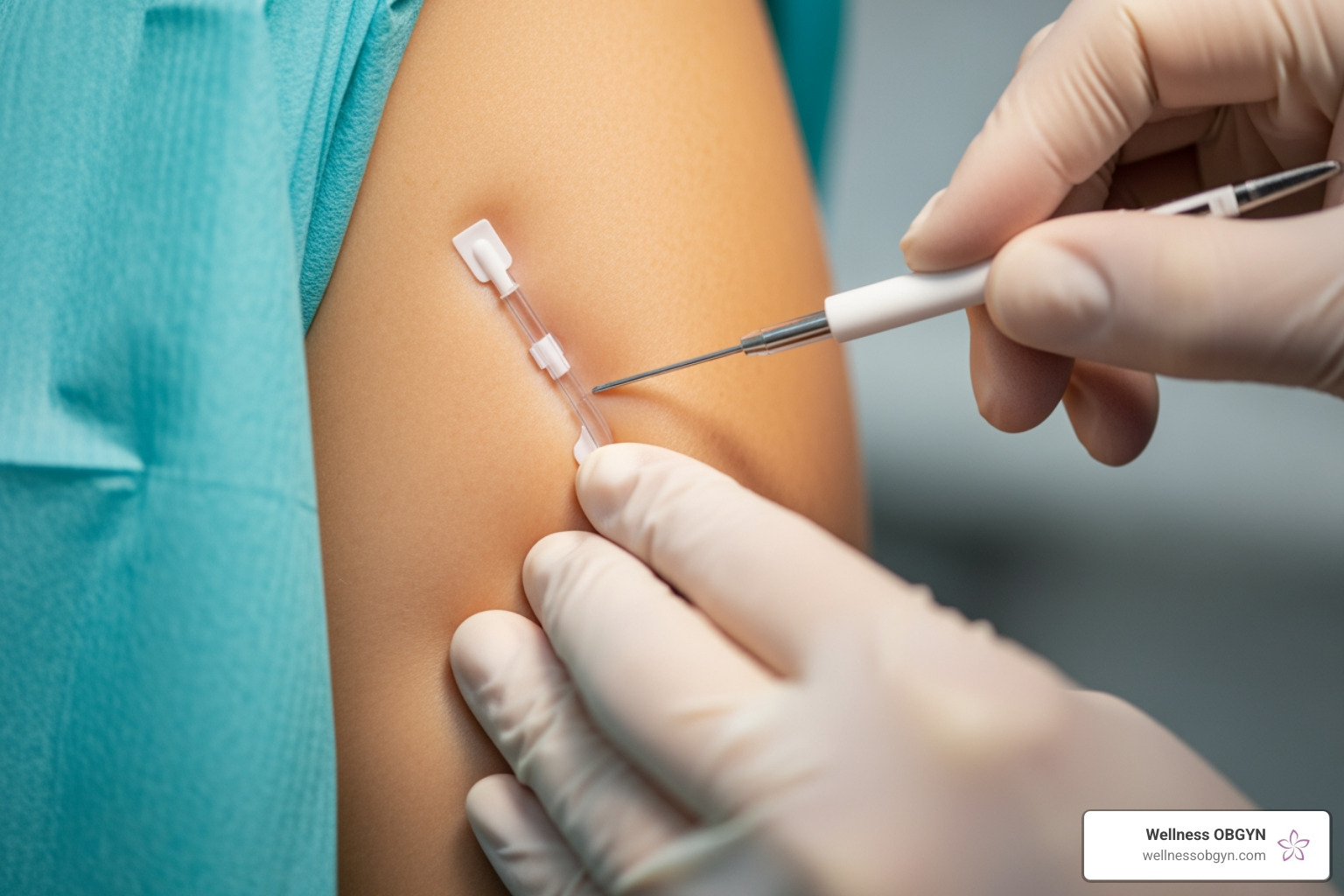
You’ll typically keep the pressure bandage on for 24 hours and the small bandage for 3-5 days. Some bruising, mild pain, or tenderness at the site is normal after insertion.
When can you get the implant? It can be inserted at any point in your menstrual cycle. If it’s inserted within the first five days of your period, it’s effective immediately. If inserted on any other day, we recommend using a backup contraception method (like condoms) for seven days to ensure full protection.
Removal
When it’s time to remove the implant—either because it’s reached its three-year lifespan, you want to get pregnant, or you simply wish to switch methods—the process is just as simple:
- Consultation: We’ll discuss your reasons for removal and your plans for future contraception.
- Local Anesthetic: Similar to insertion, we’ll numb the area where the implant was placed.
- Small Incision: Your provider will make a tiny incision (about 2-3 mm) at the end of the implant.
- Extraction: Using specialized forceps or tweezers, the implant is gently pushed towards the incision and then grasped and removed. This procedure typically takes less than five minutes.
- Dressing: The small incision will be covered with a bandage.
It’s rare for the implant to break or get lost in your arm. However, trauma to the arm could potentially shift it, and sometimes tissue thickening around it can make removal a little more challenging, but trained providers are skilled in these situations. Never attempt to remove your implant yourself; only trained healthcare professionals should perform this procedure.
A new implant can be inserted immediately after the old one is removed if you wish to continue with this method. Otherwise, we’ll discuss other birth control options or your plans for fertility.
Managing Side Effects and Enhancing Sexual Wellness
Like any medication or medical device, the birth control implant can come with potential side effects. The most common and often discussed side effect is changes to your menstrual bleeding patterns.
Many people experience:
- Irregular Bleeding: This can include spotting between periods, longer or shorter periods, or unpredictable bleeding. This is most common in the first 3-6 months as your body adjusts to the hormone.
- Amenorrhea (No Periods): About one-third of users find their periods stop entirely, which many consider a benefit! This is not harmful and simply means the progestin is effectively thinning your uterine lining.
- Infrequent or Lighter Periods: Some users experience fewer periods or significantly lighter bleeding.
While these bleeding changes are not harmful, they can sometimes be a nuisance. If you experience persistent or heavy irregular bleeding, please contact us. We can discuss options to manage it, such as short courses of NSAIDs (like ibuprofen) or even a brief course of estrogen, to help stabilize the uterine lining.
Other potential side effects, often similar to those experienced with other hormonal birth control methods, can include:
- Headaches
- Acne (which may worsen or improve)
- Breast tenderness
- Mood changes or mood swings
- Bloating or mild weight gain (research indicates weight gain is not a direct side effect, though some users report bloating or weight gain. It’s often due to other lifestyle factors, but we understand the concern).
- Decreased libido or interest in sex
- Ovarian cysts (usually benign and resolve on their own)
Most of these side effects tend to lessen or disappear within the first few months as your body adjusts to the implant. If side effects persist or are significantly bothersome, please don’t hesitate to reach out to us at Wellness OBGYN in Honolulu. We’re here to help you find solutions and ensure your comfort and well-being.
Comparing the Implant to Other Contraceptive Methods
Choosing the right birth control method is a very personal decision. While the birth control implant offers many compelling benefits, it’s helpful to understand how it stacks up against other popular methods like the birth control pill and the intrauterine device (IUD). Both the implant and IUD are considered Long-Acting Reversible Contraceptives (LARCs) due to their high effectiveness and duration. For more information on LARCs, you can consult resources like the American College of Obstetricians and Gynecologists (ACOG).
Here’s a quick comparison:
| Feature | Birth Control Implant (e.g., Nexplanon) | Birth Control Pill | Intrauterine Device (IUD) |
|---|---|---|---|
| Type | Progestin-only hormonal LARC | Combined (estrogen + progestin) or Progestin-only hormonal | Hormonal (progestin) or Non-hormonal (copper) LARC |
| Mechanism | Stops ovulation, thickens cervical mucus, thins uterine lining | Stops ovulation, thickens cervical mucus | Hormonal: thickens cervical mucus, thins uterine lining; Copper: creates inflammatory reaction toxic to sperm |
| Effectiveness | >99% effective (very low user error) | 91-99% effective (effectiveness depends on perfect use) | >99% effective (very low user error) |
| Duration | Up to 3 years (some studies show up to 5 years) | Daily | Hormonal: 3-8 years; Copper: up to 10-12 years |
| User Effort | “Set it and forget it” after insertion | Daily pill-taking at the same time | “Set it and forget it” after insertion |
| Return to Fertility | Immediate upon removal | Quick after stopping | Immediate upon removal |
| Side Effects (Common) | Irregular bleeding, amenorrhea, headaches, mood changes, acne | Nausea, breast tenderness, headaches, mood changes, weight changes, breakthrough bleeding | Hormonal: irregular bleeding, lighter periods; Copper: heavier periods, more cramps |
| STI Protection | None | None | None |
| Insertion/Removal | Minor office procedure by provider | Self-administered (daily) | Office procedure by provider |
| Estrogen-Free? | Yes | Combined pills contain estrogen | Hormonal: Yes; Copper: Yes |
As you can see, both the birth control implant and IUDs offer excellent effectiveness due to their long-acting nature, removing the element of user error that can impact the pill’s effectiveness. The choice between an implant and an IUD often comes down to individual preference regarding hormones, desired duration, and potential menstrual changes. For example, some IUDs (like the copper IUD) are entirely hormone-free, while hormonal IUDs can also lighten or stop periods, similar to the implant.
The convenience of the implant is a major draw for many. No need to remember anything daily, weekly, or monthly—just peace of mind for years.
Frequently Asked Questions about the Birth Control Implant
We often hear similar questions from our patients in Honolulu about the birth control implant. Here are some of the most common ones, answered with clarity and care:
Can the implant break or get lost in the arm?
It is extremely rare for the birth control implant to break or get lost in your arm. The implant is designed to be flexible and durable. While it’s possible for severe trauma or a direct impact to the arm to potentially bend or displace the implant, this is not a common occurrence. Your provider will ensure it’s correctly placed just under the skin.
If you ever cannot feel your implant, or if you suspect it has shifted or been damaged due to an accident or trauma, it’s important to contact your healthcare provider immediately. We can perform an exam and, if necessary, use imaging techniques like X-rays (since the implant contains barium sulfate) to confirm its location and integrity. In the meantime, we recommend using a backup method of contraception, like condoms, to ensure you remain protected against pregnancy.
Does the birth control implant protect against STDs?
No, the birth control implant does not protect against sexually transmitted diseases (STDs) or HIV. This is a crucial piece of information for all contraception methods that are not barrier methods. While the implant is highly effective at preventing pregnancy, it offers no barrier against infections.
To reduce your risk of contracting or spreading STDs, we strongly recommend using condoms every time you have sex (oral, vaginal, or anal). For comprehensive sexual health, regular STD testing is also important, especially if you have multiple partners or are starting a new relationship. Your sexual health is just as important as your reproductive health, and we can discuss PrEP (HIV prevention) and other prevention strategies during your visit.
Can I get pregnant immediately after the implant is removed?
Yes, you can get pregnant very quickly after the birth control implant is removed. One of the significant advantages of the implant is its rapid reversibility. Once the implant is out, the progestin hormone levels in your body drop quickly, and your fertility can return almost immediately. Some individuals may ovulate within weeks of removal.
If you are planning to become pregnant, this quick return to fertility is a major benefit. If you are having the implant removed but do not wish to become pregnant, it is essential to have another form of birth control ready to start immediately after removal, or to begin using a barrier method like condoms right away. We can help you plan your contraception transition during your removal appointment.
Conclusion
Choosing a birth control method is one of the most personal and impactful decisions you can make for your health and future. The birth control implant stands out as a highly effective, long-lasting, and convenient option for many women, particularly those seeking an estrogen-free alternative or a method that requires minimal daily effort. Its “set-it-and-forget-it” nature provides unparalleled peace of mind, allowing you to focus on living your life without the constant worry of unintended pregnancy.
At Wellness OBGYN in Honolulu, we are dedicated to providing personalized women’s healthcare custom to your unique needs. We understand that every woman’s body and lifestyle are different, and what works for one may not work for another. That’s why we emphasize shared decision-making, ensuring you are fully informed and comfortable with your chosen contraceptive method.
Whether you’re considering the birth control implant, exploring other options, or simply need an annual check-up, our compassionate team is here to support you. We believe in a holistic approach to women’s health and are committed to helping you steer your reproductive health journey with confidence. For more information on family planning made easy tips for conception and reproductive health, or to schedule a consultation, please reach out to us. We’re here to help you make the best choices for your well-being.
What are the costs associated with the birth control implant?
The cost of the birth control implant can vary depending on your insurance coverage and where you receive the service. Generally, the device itself can be several hundred dollars, with additional costs for the insertion and removal procedures. For example, in some regions, the Nexplanon device might cost around $350 plus pharmacy fees.
However, under the Affordable Care Act (ACA) in the United States, most private insurance plans are required to cover approved birth control methods, including the birth control implant, without any out-of-pocket cost (like co-pays or deductibles). This means that for many patients in Honolulu, the implant, insertion, and removal may be fully covered by their insurance.
It’s always best to contact your insurance provider directly to confirm your specific coverage details. Our team at Wellness OBGYN can also assist you with understanding your benefits and discussing payment options to ensure access to the care you need.