
Why Self Injectable Contraceptive Methods Are Changing Family Planning
Self injectable contraceptive methods like DMPA-SC (subcutaneous depot medroxyprogesterone acetate) give you the power to manage your birth control at home. Here’s what you need to know:
Quick Facts:
- What it is: A shot you give yourself every 12-14 weeks
- Effectiveness: 96% with typical use (4 pregnancies per 100 women per year)
- How it works: Progestin-only hormone delivered under your skin
- Where to inject: Abdomen or front of thigh at a 45-degree angle
- Key benefit: No clinic visits needed for repeat injections
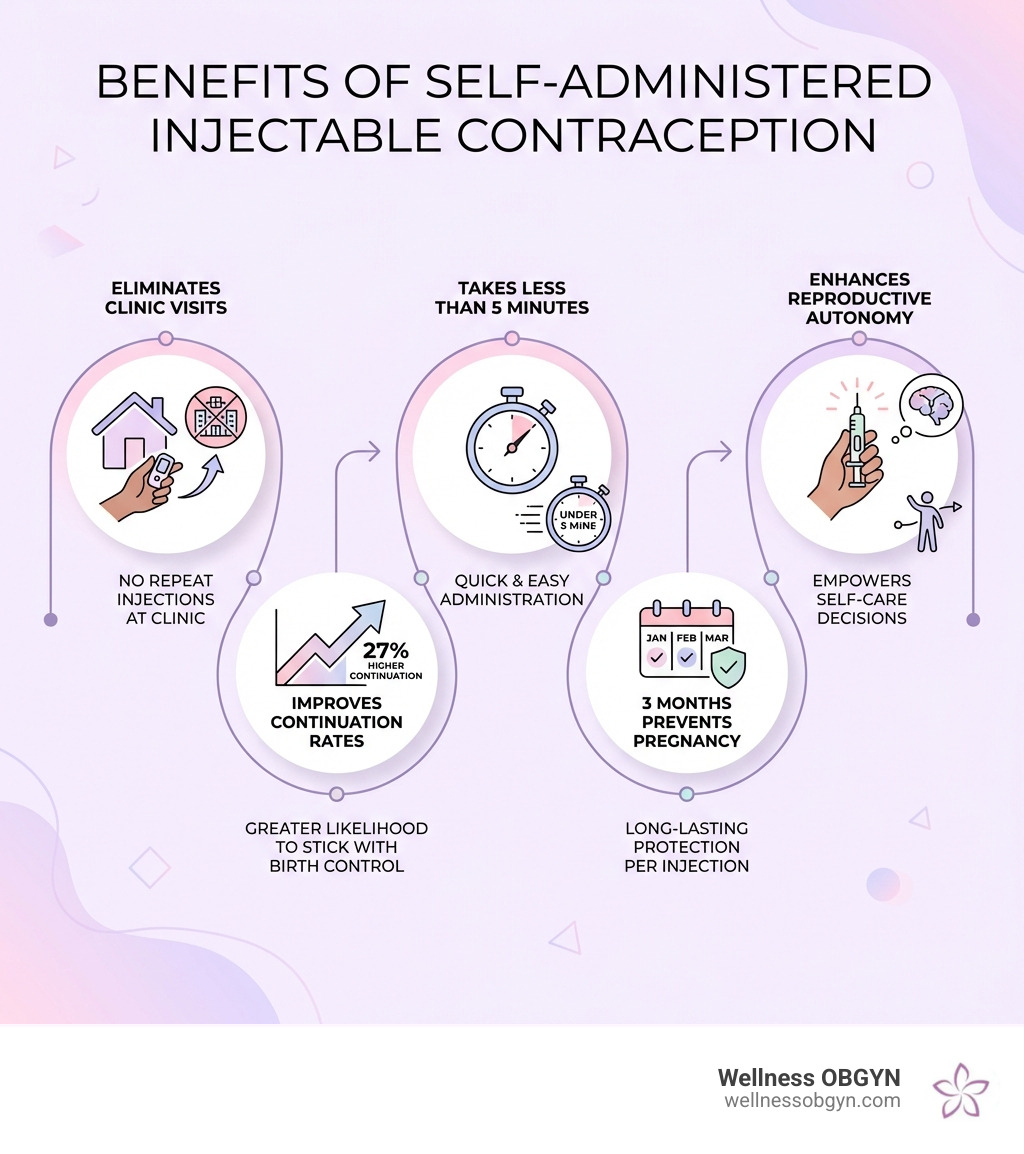
Modern contraceptives prevented an estimated 308 million unintended pregnancies in 2017. Research shows that women who self-inject have 27% higher continuation rates compared to those who receive provider-administered shots. This means you’re more likely to stick with birth control when you control the schedule.
Self-injection eliminates unnecessary clinic visits, saves time, and puts reproductive decisions directly in your hands. The World Health Organization now recommends making self-administered injectable contraception available as a standard option for all individuals of reproductive age.
I’m Dr. Cheryl Twu, a board-certified obstetrician-gynecologist with over a decade of experience helping women steer their contraceptive options, including self injectable contraceptive methods. At Wellness OBGYN in Honolulu, I combine evidence-based medicine with personalized guidance to support your reproductive autonomy.
Simple guide to self injectable contraceptive terms:
Understanding the Self Injectable Contraceptive (DMPA-SC)
A self injectable contraceptive empowers individuals to take control of their reproductive health with an easy-to-use, long-acting method. Specifically, we’re talking about subcutaneous depot medroxyprogesterone acetate, or DMPA-SC. You might know it by its brand name, Sayana® Press, which comes in a convenient pre-filled syringe or Uniject™ system. Unlike its intramuscular (DMPA-IM) counterpart, which requires a deeper injection into muscle, DMPA-SC is delivered just under the skin – a subcutaneous injection. This makes it much simpler to administer yourself, changing how we approach contraception.
DMPA-SC is a progestin-only hormonal contraceptive. This means it contains a synthetic form of the hormone progesterone, which works by preventing ovulation, thickening cervical mucus to block sperm, and thinning the uterine lining to prevent implantation. Each dose contains 104mg of medroxyprogesterone acetate, providing effective contraception for an extended period. The beauty of this method lies in its schedule: a single injection offers protection for 12 to 14 weeks, or roughly three months. Imagine the freedom of not thinking about contraception daily or monthly!
The global health community recognizes the immense potential of self injectable contraceptive options. The World Health Organization (WHO) explicitly recommends that self-administered injectable contraception, particularly DMPA-SC, “should be made available as an additional approach to deliver injectable contraception for individuals of reproductive age.” This recommendation underscores its role in enhancing access and choice for individuals worldwide.
At Wellness OBGYN in Honolulu, we believe in offering you the full spectrum of modern contraceptive options. We can discuss if DMPA-SC aligns with your health needs and lifestyle. For those interested in understanding more about how different hormones influence contraception, we invite you to explore More info about hormonal birth control.
You can find further details on the global perspective and recommendations for self-administration here: WHO recommendations on self-administration.
Preparing Your Self Injectable Contraceptive
Getting ready to administer your self injectable contraceptive is a straightforward process, designed to be as simple and safe as possible. The DMPA-SC comes in a compact, all-in-one device, making preparation minimal.
First things first, hygiene is paramount. Always start by thoroughly washing your hands with soap and water. This simple step significantly reduces the risk of infection at the injection site.
Next, take your DMPA-SC device. It’s crucial to “activate” it by shaking the syringe for at least one minute until the medication is thoroughly mixed. You’ll notice the liquid inside transform into a uniform, milky white suspension. This ensures you’re getting the correct and effective dose.
Proper storage of your DMPA-SC before use is also important. It should be kept at a controlled room temperature, ideally between 68°F and 77°F (20°C to 25°C). Avoid refrigerating it or exposing it to extreme temperatures, such as leaving it in a hot car. Consistency in storage helps maintain the medication’s integrity and effectiveness.
It’s worth noting a point about regulatory language. While DMPA-SC was approved by the FDA in 2004, its current labeling specifies administration by a healthcare professional. However, extensive studies have demonstrated its safety and feasibility for self-administration. Based on this robust evidence and clinical judgment, healthcare providers often prescribe DMPA-SC for self-injection, considering it a safe and effective ‘off-label’ use that significantly expands access to contraception. We ensure you receive comprehensive training and support to confidently manage this aspect of your care. For more technical insights into FDA labeling, you can refer to FDA labeling insights.
Safety and Efficacy of a Self Injectable Contraceptive
When considering any contraceptive method, safety and efficacy are naturally top concerns. We want to assure you that a self injectable contraceptive like DMPA-SC is both highly effective and safe, offering peace of mind alongside convenience.
DMPA-SC is remarkably effective, boasting a 96% success rate with typical use. This means that, on average, only 4 pregnancies occur per 100 women per year when using this method. For comparison, DMPA-SC and its intramuscular counterpart, DMPA-IM, are equally effective in preventing pregnancy. This high level of protection is a cornerstone of its appeal.
Beyond preventing pregnancy, self-administration of DMPA-SC has shown a significant positive impact on continuation rates. Studies consistently demonstrate that individuals who self-inject are more likely to continue using their chosen contraceptive method for longer periods compared to those who rely on provider-administered injections. For instance, in one study, 69% of people in the self-administration group continued using the shot continuously for one year, a notable 15% difference compared to 54% in the clinic-administered group. A comprehensive meta-analysis further supported this, finding significantly higher rates of continuation with self-administered DMPA-SC across various studies. This evidence highlights how empowering you with self-management can lead to more consistent and effective contraception. For a deeper dive into the scientific research on continuation rates, explore this resource: Scientific research on continuation rates.
In terms of safety, the profile of self-administered DMPA-SC is comparable to provider-administered injections. Side effects are generally similar. While some studies have noted a slight increase in injection site reactions (like redness, swelling, or tenderness) with self-administered DMPA-SC compared to DMPA-IM, overall rates of other side effects and adverse events are not increased. These injection site reactions are typically mild and temporary. We will thoroughly discuss all potential side effects with you, ensuring you know what to expect and how to manage them.
For more information on broader topics related to women’s health and potential reproductive health issues, we encourage you to visit More info about reproductive health issues. Our team at Wellness OBGYN is always here to answer your questions and provide personalized guidance.
A Step-by-Step Guide to Self-Injection
Administering your self injectable contraceptive is designed to be a simple, quick, and comfortable process. We’ll guide you through each step, ensuring you feel confident and prepared.
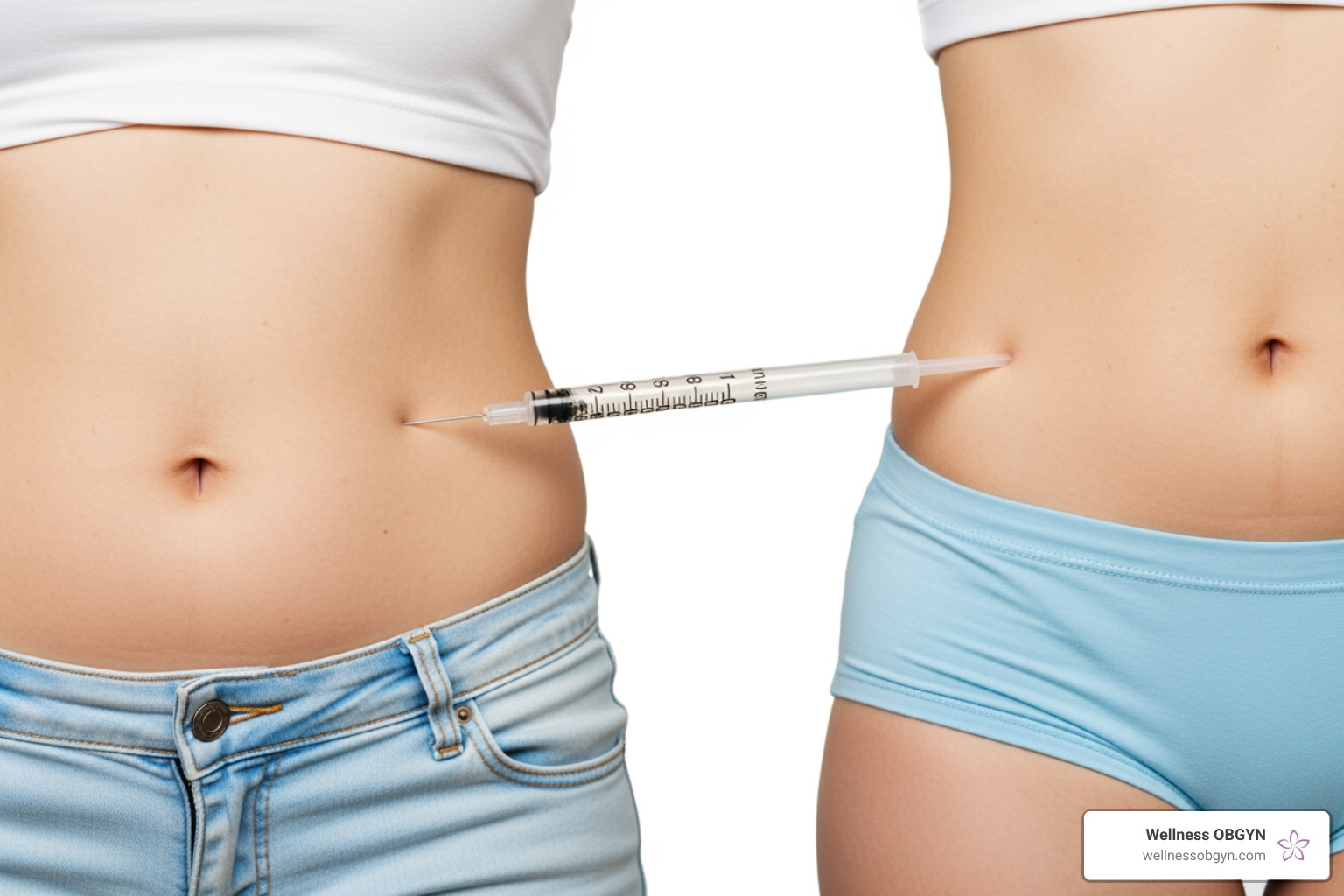
First, choose your injection site. The most common and accessible areas for subcutaneous injection are the fatty tissue on your abdomen (avoiding the navel area) or the front of your thigh. It’s a good practice to rotate your injection site with each dose to prevent localized skin irritation and ensure optimal absorption.
Before injecting, clean the chosen area thoroughly with an alcohol swab and allow it to air dry completely. This crucial step minimizes the risk of infection.
Now, let’s look at the device. DMPA-SC (subcutaneous) is specifically designed for ease of self-administration, differing from the traditional DMPA-IM (intramuscular) shot in a few key ways:
| Feature | DMPA-SC (Subcutaneous) | DMPA-IM (Intramuscular) |
|---|---|---|
| Dose | 104 mg / 0.65 mL | 150 mg / 1 mL |
| Needle Size | 26-gauge x 3/8-inch (smaller, shorter) | 22-gauge x 1 1/2-inch (larger, longer) |
| Injection Type | Subcutaneous (just under the skin) | Intramuscular (deep into muscle) |
| Pain Level | Often reported as less painful | Can be more painful |
| Administration | Self-administered or by healthcare professional | Administered by healthcare professional only |
Once your skin is clean and dry, gently pinch a fold of skin at your chosen site. With your other hand, hold the DMPA-SC device like a dart. Insert the needle completely into the pinched skin at a 45-degree angle. Don’t be shy – a firm, quick motion is usually less uncomfortable than a slow poke.
Once the needle is in, slowly depress the plunger, pushing all the medication into the subcutaneous tissue. It’s helpful to count to five slowly while doing this to ensure the full dose is delivered. After the plunger is fully depressed, wait a few more seconds before carefully withdrawing the needle at the same 45-degree angle. Release the pinched skin and apply gentle pressure to the injection site with a clean cotton ball or gauze, but do not rub the area.
Finally, and this is extremely important, immediately dispose of the used device. Never recap the needle. Place the entire used syringe, needle first, into a designated sharps container. These are specially designed, puncture-proof containers that ensure safe disposal of medical waste. We’ll provide you with detailed instructions on obtaining and managing a sharps container through our clinic in Honolulu.
For official guidance and further information on self-injection practices, we recommend reviewing the CDC guidance on self-injection. Our team at Wellness OBGYN is always here to provide hands-on training and support for your first few injections, ensuring you gain confidence in this empowering method.
Frequently Asked Questions
We understand that adopting a new method like a self injectable contraceptive might come with questions. Here, we address some of the most common concerns our patients in Honolulu have.
What should I do if I am late for my injection?
Life happens! We all have busy schedules, and sometimes remembering a precise date can be a challenge. The good news is that there’s a bit of flexibility with your self injectable contraceptive. While the recommended injection interval for DMPA-SC is every 12 to 14 weeks, you have a grace period. According to current guidelines, a repeat DMPA injection can be given up to two weeks late (meaning up to 15 weeks from your last injection) without needing additional contraceptive protection.
However, if you’ve missed your injection by more than 15 weeks, we strongly recommend using a backup contraceptive method, such as condoms, until you can receive your next dose. It’s always best to consult with us at Wellness OBGYN if you are unsure or have exceeded this grace period. We can help assess your situation, perform a pregnancy test if needed, and ensure you get back on track safely. For more detailed clinical recommendations, you can refer to the CDC Selected Practice Recommendations.
Is self-injection difficult to learn?
One of the most common concerns we hear is about the perceived difficulty of self-injection. We’re happy to tell you that the vast majority of individuals find it surprisingly easy! Numerous studies have highlighted high satisfaction and ease-of-use. For example, in a large randomized controlled trial, a remarkable 97% of participants reported that self-administration was “very or somewhat easy,” and 87% confidently stated they would recommend it to a friend.
Our experience in Honolulu mirrors these findings. With proper training and a little practice, most people quickly become proficient. Key components of effective training include a clear demonstration by a healthcare provider, the use of job aids (simple instruction sheets) that you can take home, and the opportunity to practice on a model. Studies, including those from real-world settings like Uganda, have shown that nearly three-quarters of new self-injection clients were able to demonstrate injection proficiency without needing extra instruction. In fact, 93% of trained clients went on to reinject independently just three months after training.
We understand that needle anxiety can be a barrier for some. It’s a common fear, and you’re not alone. In some studies, “fear of injecting and/or lack of confidence” was cited by 90% of those who opted not to self-inject after training. We’re here to provide empathetic support and techniques to help you overcome this. Our personalized training sessions at Wellness OBGYN are designed to build your confidence, allowing you to practice in a supportive environment until you feel comfortable. The ease of learning truly contributes to the higher continuation rates we see with this method. You can learn more about the findings from various studies on proficiency and acceptance here: Ugandan study findings on proficiency.
How do I safely dispose of the used device?
Safe disposal of your used self injectable contraceptive device is a critical step in preventing accidental needle sticks and protecting our community and environment. It’s simpler than you might think, and we’ll ensure you have the resources you need in Honolulu.
The most important rule is to never recap the needle after use. Immediately after injection, place the entire used syringe (needle first) into a designated sharps container. These containers are specifically designed to be puncture-proof and clearly labeled for medical waste. You can often obtain a sharps container from our clinic, a local pharmacy, or through medical supply companies.
If a sharps container isn’t immediately available, a sturdy, puncture-proof plastic bottle with a tight-fitting, screw-on lid (like a heavy-duty laundry detergent bottle) can serve as a temporary solution. Just make sure to label it clearly as “sharps” or “biohazard” and keep it out of reach of children and pets.
Once your sharps container is full (usually about three-quarters of the way), it’s time for proper disposal. In Honolulu, we can guide you on local regulations and collection points. Many communities offer specific drop-off locations for sharps waste, and some pharmacies or waste management services provide mail-back programs. The goal is to ensure these devices are handled safely and responsibly. In some settings, local community health workers play a vital role in collecting used devices, and while our system in Honolulu might differ, the principle of accessible and safe disposal support remains the same. Many clients prefer to return their used units to the place where they received their training and resupply, and we are happy to facilitate this at our Wellness OBGYN clinic.
For more information about our clinic and services in Honolulu, please visit More info about our Honolulu clinic. We’re here to support you every step of the way.
Conclusion
Embracing a self injectable contraceptive like DMPA-SC represents a significant step forward in personalized women’s healthcare. It’s a method that champions your reproductive autonomy, reduces barriers to consistent contraception, and fits seamlessly into your busy life here in Honolulu. The evidence is clear: self-administration is safe, effective, and leads to higher continuation rates, empowering you to manage your family planning with confidence and convenience.
At Wellness OBGYN, we are dedicated to providing expert, compassionate care that is custom to your individual needs, from adolescence through menopause. We believe in shared decision-making, ensuring you are fully informed and comfortable with your choices.
We are proud to serve the women of Honolulu, offering a space where your health concerns are heard, and your choices are respected. We invite you to learn more about how we support your overall health by visiting Learn more about female reproductive health issues. Your path to convenient, confident, and personalized birth control starts here with us.