
Why Menopause and Sleep Problems Are So Common — And What You Can Do
Menopause and sleep are deeply connected, and if you’re waking up at 2 a.m., soaked in sweat and staring at the ceiling, you are far from alone. Here’s a quick overview of what’s happening and what helps:
The essentials at a glance:
- What it is: Menopause is confirmed after 12 consecutive months without a menstrual period, typically around age 51 — though sleep problems often begin years earlier, during perimenopause
- How common it is: Between 40% and 69% of women across the menopause transition report sleep disturbances
- Main culprits: Hot flashes, night sweats, hormonal shifts (estrogen and progesterone decline), mood changes, and secondary sleep disorders like sleep apnea
- What actually helps: Sleep hygiene improvements, cognitive behavioral therapy for insomnia (CBT-I), hormone therapy, and non-hormonal medical options — often in combination
- When to get help: If sleep problems persist for more than a few months and affect your daily life, it’s time to talk to a provider
The good news? These sleep disruptions are treatable. You don’t have to just push through them.
As women approach their mid-40s, the hormonal shifts of perimenopause begin quietly disrupting sleep — sometimes years before the last menstrual period arrives. By the time menopause is official, many women have already spent months, or even years, running on fragmented, unrefreshing rest. In April 2026, this remains one of the most underaddressed quality-of-life issues in women’s midlife health.
I’m Dr. Cheryl Twu, a board-certified OB-GYN and founder of Wellness OBGYN in Honolulu, and over more than a decade of clinical practice I’ve helped hundreds of women in Hawaiʻi navigate the intersection of menopause and sleep — from identifying the root causes to building personalized, evidence-based treatment plans. In the sections ahead, I’ll walk you through exactly what’s disrupting your sleep and the most effective strategies to reclaim it.
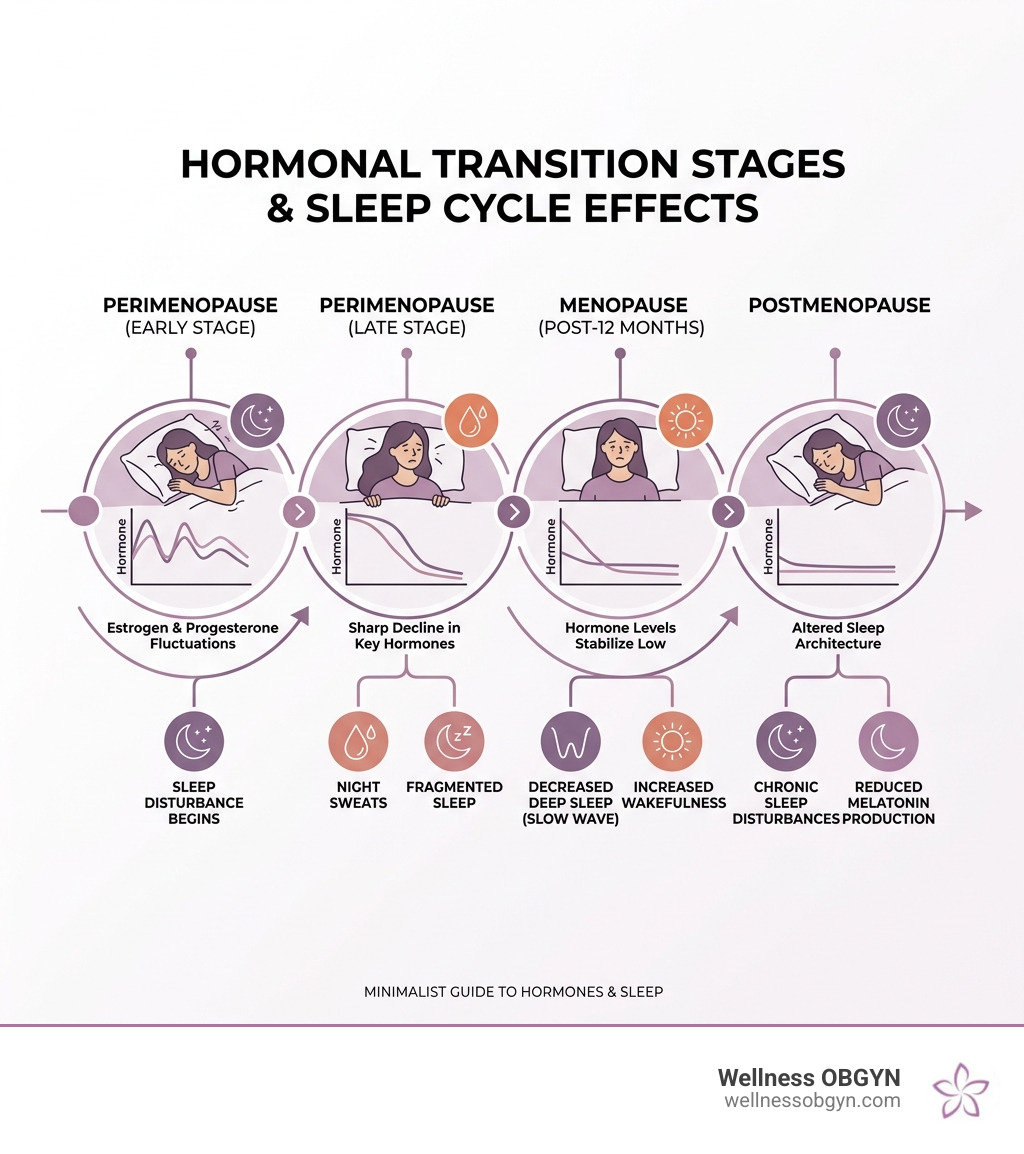
Simple guide to Menopause and sleep terms:
Understanding the Connection Between Menopause and Sleep

When we talk about menopause and sleep, we are really talking about a massive biological recalibration. The transition isn’t just about the end of fertility; it’s a systemic shift that impacts the brain’s “sleep-wake” architecture.
The primary drivers of this disruption are hormonal. As we approach menopause, our ovaries produce less estrogen and progesterone. Estrogen plays a supportive role in how our bodies use serotonin and other neurotransmitters that influence the sleep cycle. When estrogen levels drop, it can trigger those infamous “night awakenings.”
Progesterone is often called the “relaxing hormone” because it has a natural sedative effect. As it fluctuates and eventually declines, many of us find it much harder to fall asleep or stay asleep throughout the night. Compounding this is a rise in cortisol—our primary stress hormone—which tends to spike more easily during the menopausal transition, keeping the brain in a state of “high alert” even when we are exhausted.
According to research on How Menopause Affects Sleep, these changes also weaken our circadian rhythms. This internal clock regulates everything from body temperature to hunger, and when it loses its “strength,” our sleep becomes lighter and more fragmented.
Why Menopause and Sleep Disturbances Often Go Hand-in-Hand
The statistics are eye-opening. Data from the SWAN (Study of Women’s Health Across the Nation) indicates that 40% to 69% of midlife women report sleep disturbances. The most common complaint is Wake After Sleep Onset (WASO)—a fancy medical term for waking up in the middle of the night and struggling to get back to sleep.
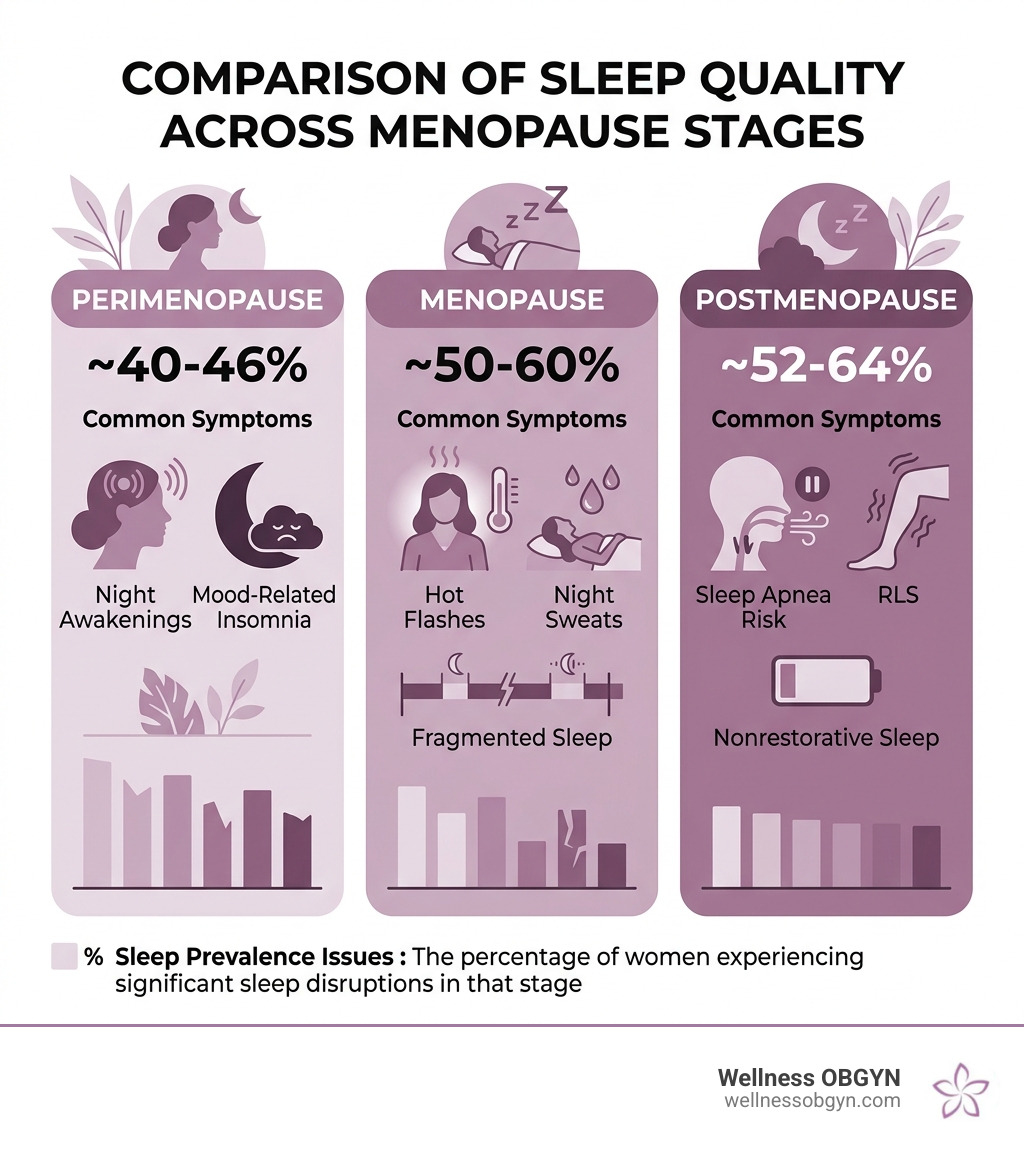
| Stage | Sleep Prevalence Issues | Common Symptoms |
|---|---|---|
| Perimenopause | ~40-46% | Night awakenings, mood-related insomnia |
| Menopause | ~50-60% | Hot flashes, night sweats, fragmented sleep |
| Postmenopause | ~52-64% | Sleep apnea risk, RLS, nonrestorative sleep |
As noted in the study on Optimizing Sleep across the Menopausal Transition, many women describe their sleep as “nonrestorative.” You might technically be in bed for eight hours, but you wake up feeling as though you haven’t slept at all.
The Impact of Poor Sleep on Long-term Health
At Wellness OBGYN, we emphasize that sleep isn’t a luxury; it’s a vital pillar of health. Chronic sleep deprivation during the menopause years can have a domino effect on your well-being. Physically, poor sleep is linked to an increased risk of cardiovascular disease and weight gain. Because sleep is when our brains “clear out” metabolic waste, long-term disruption is also being studied for its links to cognitive decline and “brain fog.”
Emotionally, the lack of rest exacerbates irritability, anxiety, and depression. It’s a vicious cycle: menopause causes poor sleep, and poor sleep makes menopause symptoms feel twice as heavy. This can lead to reduced productivity at work and strained relationships at home, ultimately diminishing your overall quality of life.
Common Disruptors: Hot Flashes, Night Sweats, and Beyond
The most “famous” disruptors are vasomotor symptoms (VMS)—better known as hot flashes and night sweats. More than 80% of women experience these, and they are a primary reason for disrupted menopause and sleep.
Interestingly, research suggests that women often awaken just before a hot flash occurs. This indicates that the brain’s internal temperature regulation center (involving KNDy neurons) triggers an arousal in the brain before the physical heat is even felt. When the sweat follows, it often soaks through pajamas and sheets, forcing you to wake up fully to change.

To manage this, many of our patients in Honolulu find success by “layering” their environment. This includes using breathable bamboo or moisture-wicking bedding and keeping a fan nearby. For more detailed insights, you can read How Does Menopause Affect My Sleep? to understand the physiological “why” behind the heat.
Identifying Menopause and Sleep Disorders Like Apnea and RLS
It is a common misconception that all sleep issues in midlife are just “hormones.” In reality, menopause can unmask or worsen specific sleep disorders:
- Sleep Apnea: Postmenopausal women are 2 to 3 times more likely to develop sleep apnea compared to premenopausal women. As estrogen drops, the upper airway becomes more “collapsible,” and the protective effect hormones had on breathing disappears. Symptoms in women are often subtler than the classic “loud snoring” seen in men; women often report morning headaches or insomnia instead.
- Restless Legs Syndrome (RLS): Affecting more than 50% of postmenopausal women, RLS creates an irresistible urge to move the legs, usually in the evening. This is often linked to iron deficiency or the shift in estrogen levels.
If you suspect these issues, we recommend seeking more info about hormone management and specialized diagnostics.
Bladder Health and Nocturia
Another major sleep thief is “nocturia”—the need to get up and pee multiple times a night. Estrogen is vital for maintaining the strength and elasticity of the pelvic floor and bladder tissues. When levels decline, the bladder can become “irritable,” leading to frequent nighttime trips to the bathroom.
Evidence-Based Strategies for Better Rest
Reclaiming your night starts with a multi-pronged approach. We always begin with “sleep hygiene”—the habits that set the stage for rest.
- The 7.5-8.5 Hour Goal: Aim for this window of quality sleep nightly.
- Consistency is Key: Go to bed and wake up at the same time every day, even on weekends.
- Cool Your Core: Keep your bedroom between 60-67 degrees Fahrenheit.
- Wind Down: Avoid screens (blue light) at least one hour before bed.
For more practical tips, the National Institute on Aging offers a great guide: Sleep Problems and Menopause: What Can I Do?.
Medical Treatments and Emerging Research
If lifestyle changes aren’t enough, medical interventions can be life-changing.
- Hormone Therapy (HT): This is often the most effective treatment for VMS-related sleep issues. Options like Prometrium (progesterone) can have a sedative effect when taken at bedtime.
- Non-Hormonal Medications: For those who cannot or choose not to use hormones, certain SSRIs or newer medications like NK3 receptor antagonists (e.g., Fezolinetant) target the brain’s “thermostat” to stop hot flashes at the source.
- Expert Guidance: You can find more clinical perspectives on Help for Menopausal Insomnia.
Behavioral Interventions and CBT-I
Cognitive Behavioral Therapy for Insomnia (CBT-I) is considered the “gold standard” for chronic sleep issues. Unlike sleeping pills, which are a short-term fix, CBT-I addresses the thoughts and behaviors that keep you awake. Techniques include “stimulus control” (only using the bed for sleep and intimacy) and “sleep restriction” to help consolidate your rest.
We often recommend combining these behavioral shifts with holistic hormone balance to ensure the body and mind are working together toward better rest.
Frequently Asked Questions about Menopause and Sleep
When should I see a professional for sleep issues?
You should seek help if you experience “the rule of threes”: sleep issues occurring at least three nights a week, for more than three months, and impacting your daytime functioning. If you find yourself gasping for air at night or feeling excessively sleepy during the day, a diagnostic sleep study may be necessary to rule out sleep apnea.
Are natural remedies like melatonin or black cohosh effective?
Melatonin can help some women with mood and falling asleep, but it isn’t a “cure” for menopausal insomnia. Magnesium glycinate is another popular supplement that can help relax muscles. Black cohosh has mixed results in clinical studies for hot flashes. Always consult with us before starting supplements to ensure they don’t interfere with other treatments.
How long do menopause-related sleep problems last?
Perimenopause can last up to 10 years, and the median duration for hot flashes is about 7.4 years. While sleep often stabilizes post-menopause, the risk for other issues like sleep apnea increases with age. Early intervention is the best way to ensure these “temporary” issues don’t become permanent habits.
Conclusion
At Wellness OBGYN in Honolulu, we believe that every woman deserves to feel vibrant and well-rested. Menopause and sleep challenges are a natural part of life, but they don’t have to be your “new normal.” Our practice specializes in personalized, patient-centered care, emphasizing shared decision-making to find the right path for you.
If you’re ready to move from “tossing and turning” to “sweet dreams,” we are here to help. Our team provides expert, compassionate care tailored to your unique needs right here in Hawaiʻi.
Request an Appointment with us today and let’s start building your personalized sleep solution.