
Why Finding the Right Fibroid Treatment Matters
Uterine fibroids treatment depends on your symptoms, age, fertility goals, and how the fibroids affect your daily life. Here are your main options:
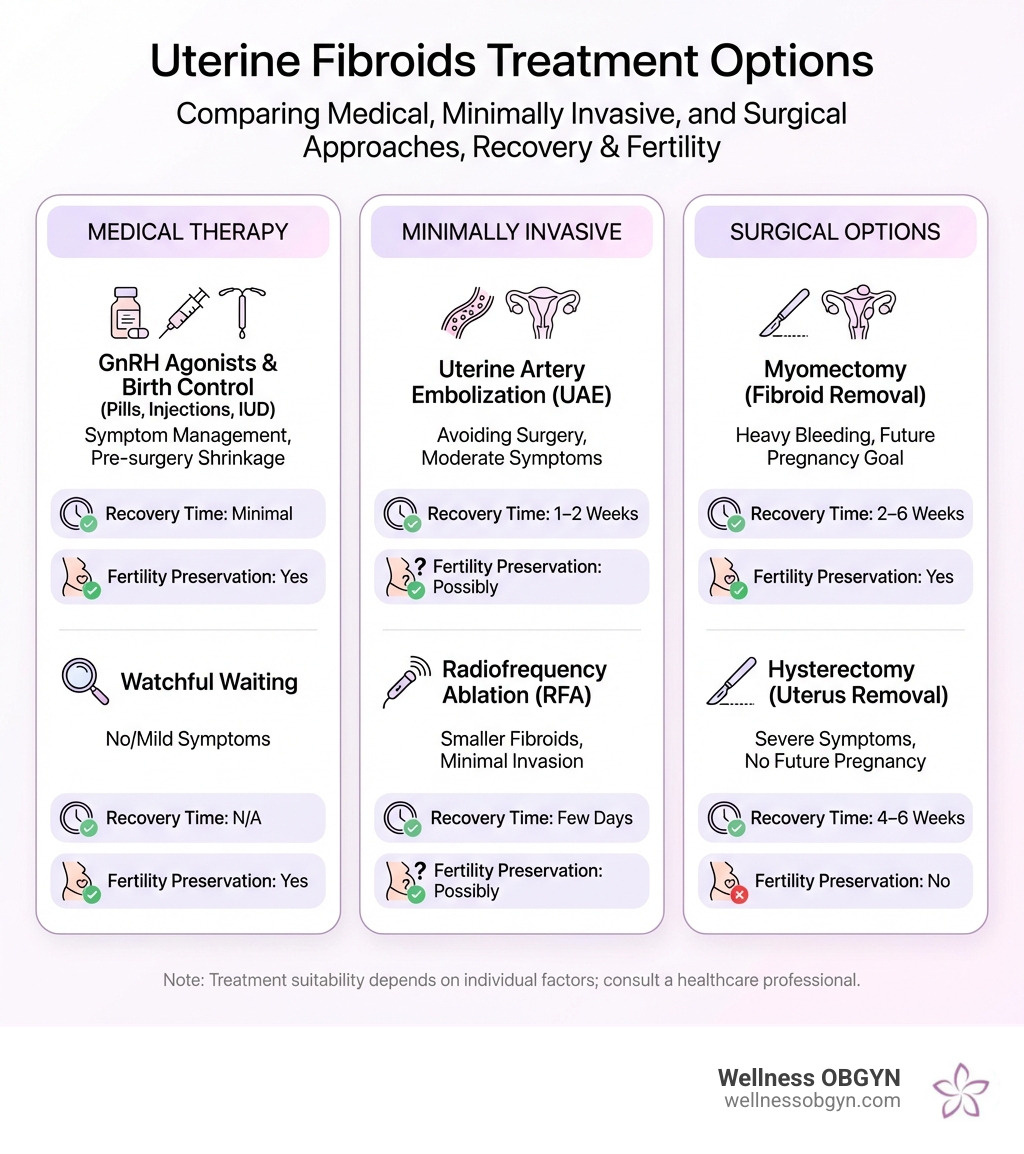
| Treatment Type | Best For | Preserves Fertility | Recovery Time |
|---|---|---|---|
| Watchful Waiting | No symptoms or mild symptoms | Yes | N/A |
| Medical Therapy (GnRH agonists, birth control, IUD) | Symptom management, pre-surgery shrinkage | Yes | Minimal |
| Myomectomy (fibroid removal) | Heavy bleeding, wanting future pregnancy | Yes | 2–6 weeks |
| Uterine Artery Embolization (UAE) | Avoiding surgery, moderate symptoms | Possibly | 1–2 weeks |
| Radiofrequency Ablation (RFA) | Smaller fibroids, minimal invasion | Possibly | Few days |
| Hysterectomy (uterus removal) | Severe symptoms, no future pregnancy desired | No | 4–6 weeks |
Uterine fibroids—also called leiomyomas or myomas—are benign tumors that grow in or around the muscular wall of the uterus. Research shows that 80% of women will develop fibroids during their lifetime, and about 60% of reproductive-aged women are affected at any given time. While many fibroids cause no symptoms at all, others can lead to heavy menstrual bleeding, pelvic pain or pressure, frequent urination, and even fertility challenges.
The good news? You have more treatment choices than ever before. From hormonal medications that shrink fibroids and control bleeding, to minimally invasive procedures that preserve your uterus, to definitive surgical options—each approach has specific benefits, risks, and recovery timelines. Your ideal treatment depends on factors like the size and location of your fibroids, whether you want to have children in the future, and how much your symptoms interfere with your life.
As Dr. Cheryl Twu, a board-certified obstetrician-gynecologist with over a decade of experience in minimally invasive and robotic gynecologic surgery, I’ve guided countless women through the decision-making process for uterine fibroids treatment. My goal is to help you understand all your options so you can choose the path that aligns with your health, lifestyle, and future plans.
Uterine fibroids treatment further reading:
Understanding Uterine Fibroids and Diagnosis
Before we dive into the best Uterine fibroids treatment options, it is important to understand what these growths are and how we identify them. Fibroids are monoclonal tumors arising from the smooth muscle tissue of the uterus. They can range in size from a tiny apple seed to a large grapefruit (or even a softball!).
Prevalence and Symptoms
As mentioned, the lifetime risk of developing fibroids is a staggering 80%. However, many women remain unaware they have them until a routine pelvic exam reveals an enlarged or irregularly shaped uterus. Common symptoms that lead women to seek help include:
- Heavy menstrual bleeding (often leading to anemia)
- Periods lasting longer than a week
- Pelvic pressure or pain
- Frequent urination or difficulty emptying the bladder
- Constipation
- Backache or leg pains
Risk Factors
Why do some women get them while others don’t? While the exact cause is unknown, several factors increase your risk:
- Age: Risk typically peaks around age 50 and decreases after menopause.
- Race: Black women are 2-3 times more likely to develop fibroids and often develop them at younger ages.
- Heredity: Having a family member with fibroids increases your likelihood.
- Lifestyle: Obesity, Vitamin D deficiency, and a diet high in red meat are linked to higher risks.
- Hypertension: There is a documented link between high blood pressure and an increased risk of leiomyomas.
How We Diagnose Fibroids
At Wellness OBGYN in Honolulu, we use a combination of physical exams and advanced imaging to get a clear picture of your uterine health.
- Ultrasound: This is usually the first step. We can use transabdominal or transvaginal ultrasound to map the fibroids.
- MRI: For complex cases or when planning minimally invasive surgery, an MRI provides the most detail regarding fibroid size and location.
- Hysterosonography: Also called a saline infusion sonogram, this uses sterile saline to expand the uterine cavity, making it easier to see submucosal fibroids.

Comparing Uterine Fibroids Treatment Options
Choosing the right Uterine fibroids treatment is a collaborative process. We believe in shared decision-making, where your personal goals—especially regarding future pregnancy—are the top priority.
Factors Guided by the Choice of Treatment
- Symptom Severity: If you aren’t in pain and aren’t bleeding heavily, “watchful waiting” might be the best approach.
- Fertility Desires: Some treatments, like hysterectomy or endometrial ablation, are not compatible with future pregnancy.
- Fibroid Location: Submucosal fibroids (inside the cavity) often require different approaches than subserosal fibroids (on the outer surface).
- Nearness to Menopause: Since fibroids often shrink after menopause, we might opt for medical management to “bridge” the time until hormones naturally decline.
Non-Surgical Uterine Fibroids Treatment
Many women prefer to avoid the operating room if possible. Non-surgical options have become highly effective at managing symptoms and even shrinking the tumors.
GnRH Agonists and Antagonists
Medicines like leuprolide acetate (a GnRH agonist) create a temporary menopause-like state by blocking estrogen and progesterone.
- Benefits: They significantly reduce uterine and fibroid volume. This is often used preoperatively to make a myomectomy safer and easier.
- Side Effects: Because they lower estrogen, they can cause hot flashes and bone density loss. To mitigate this, we often use “add-back therapy” (low-dose hormones).
Selective Progesterone Receptor Modulators (SPRMs)
Progesterone is essential for fibroid growth, and SPRMs like ulipristal acetate (UPA) target these receptors directly.
- Efficacy: In the PEARL II trial, UPA controlled bleeding in nearly 100% of women.
- Volume Reduction: Repeated courses can reduce fibroid volume by 54% to 72%. It also achieves amenorrhea (stopping the period) much faster than other medications.
Hormonal Contraceptives
While they don’t shrink fibroids, birth control pills, rings, and the LNG-IUS (Mirena) are excellent for controlling heavy bleeding. The LNG-IUS is particularly effective at increasing hematocrit levels in women suffering from fibroid-related anemia.
Surgical Uterine Fibroids Treatment
When medications aren’t enough, we specialize in minimally invasive surgery OBGYN techniques to provide lasting relief.
Myomectomy: The Fertility-Preserving Choice
A myomectomy removes the fibroids while leaving the healthy tissue of the uterus intact. This is the gold standard for women who want to preserve their fertility. We can often perform this laparoscopically or robotically, which means smaller incisions and a faster return to your life in Honolulu.
Hysterectomy: The Only Permanent Cure
A hysterectomy—removing the entire uterus—is the only way to ensure fibroids never return. We follow ACOG guidelines to explore all alternatives first, but for women who are done having children and have severe symptoms, this can be a life-changing solution. Whenever possible, we perform minimally invasive hysterectomies (vaginal or laparoscopic) to minimize recovery time.
Uterine Artery Embolization (UAE)
This is a non-surgical interventional procedure where tiny particles are injected into the uterine arteries to block blood flow to the fibroids. Without blood, the fibroids shrink. It’s a great option for avoiding major surgery, though about one-third of women may need retreatment within five years.
Radiofrequency Ablation (RFA)
Using heat (radiofrequency energy), we can destroy fibroid tissue. Procedures like Sonata (transcervical) or Acessa (laparoscopic) allow for quick recovery—often just a few days—and continue to shrink the fibroids for up to 12 months after the procedure.
Impact on Fertility and Sexual Wellness
Fibroids can do more than just cause pain; they can impact your female reproductive health. They are linked to recurrent miscarriages, early labor, and difficulty conceiving if they distort the uterine cavity.
Beyond fertility, fibroids and their treatments can impact your quality of life and intimate health. Symptoms like pelvic pressure can lead to urinary incontinence, while the emotional toll of chronic pain can decrease libido.
Frequently Asked Questions
Can fibroids be treated without surgery?
Yes! Many women find relief through hormonal management. Options like birth control pills, the Mirena IUD, and SPRMs like UPA are highly effective at controlling symptoms. UPA, in particular, has shown significant success in reducing fibroid volume and stopping heavy bleeding without the need for an incision.
Do uterine fibroids affect pregnancy?
They can. Depending on their size and location, fibroids may increase the risk of miscarriage, breech positioning, and the need for a C-section. If you are planning a pregnancy, a myomectomy is often the preferred treatment to improve your outcomes.
What are the side effects of GnRH agonists?
The most common side effects are vasomotor symptoms (hot flashes and night sweats) and a decrease in bone density. However, we can manage these effectively with “add-back therapy,” allowing you to benefit from the fibroid-shrinking properties of the medication while maintaining your comfort and bone health.
Conclusion
At Wellness OBGYN, we know that every woman’s journey with fibroids is unique. Whether you are looking for a non-surgical way to manage heavy periods or you need expert minimally invasive surgery in Honolulu, we are here to provide compassionate, personalized care.
We prioritize shared decision-making, ensuring that your Uterine fibroids treatment plan fits your life, your goals, and your future. Don’t let fibroids hold you back from living your best life.
If you’re ready to explore your options, contact our Honolulu clinic today for a consultation. Let’s work together to find the relief you deserve.