
When the Itch Won’t Stop: What a Vaginal Infection Specialist Can Do for You
A vaginal infection specialist is a medical professional — typically a board-certified gynecologist, infectious disease specialist, or urogynecologist — trained to diagnose and treat vaginal infections like bacterial vaginosis, yeast infections, and sexually transmitted infections (STIs).
Here’s a quick overview of what they do:
| What You’re Dealing With | Who Can Help |
|---|---|
| Yeast infection (Candida) | Gynecologist |
| Bacterial vaginosis (BV) | Gynecologist or Infectious Disease Specialist |
| Trichomoniasis, Chlamydia, Gonorrhea | Gynecologist or STI/GUM Clinic |
| Recurrent or chronic infections | Specialist Vaginitis Clinic |
| Atrophic vaginitis (menopause-related) | Gynecologist or Urogynecologist |
Vaginal infections are incredibly common. In fact, about one-third of women will experience symptoms of vaginitis at some point in their lives — and they’re one of the top reasons women visit their doctor each year in the US.
Bacterial vaginosis is the most common type. But yeast infections, trichomoniasis, and STIs like chlamydia are also frequent culprits. The frustrating part? Their symptoms — itching, burning, unusual discharge, and odor — can overlap, making self-diagnosis unreliable and sometimes risky.
Seeing the right specialist early means faster relief, accurate diagnosis, and a plan to prevent it from coming back.
I’m Dr. Cheryl Twu, founder of Wellness OBGYN in Honolulu, and as a board-certified OB-GYN with over a decade of experience in women’s health, I’ve helped many patients find real answers and lasting relief as their vaginal infection specialist. In this guide, I’ll walk you through everything you need to know — from identifying your symptoms to the most effective treatments available today.
Vaginal infection specialist terms made easy:
Common Types of Vaginal Infections and Their Causes
Understanding what is happening “down there” starts with identifying the culprit. While many women assume every itch is a yeast infection, the reality is often more complex. Vaginal infections, or vaginitis, are typically caused by a shift in the delicate ecosystem of the vagina.
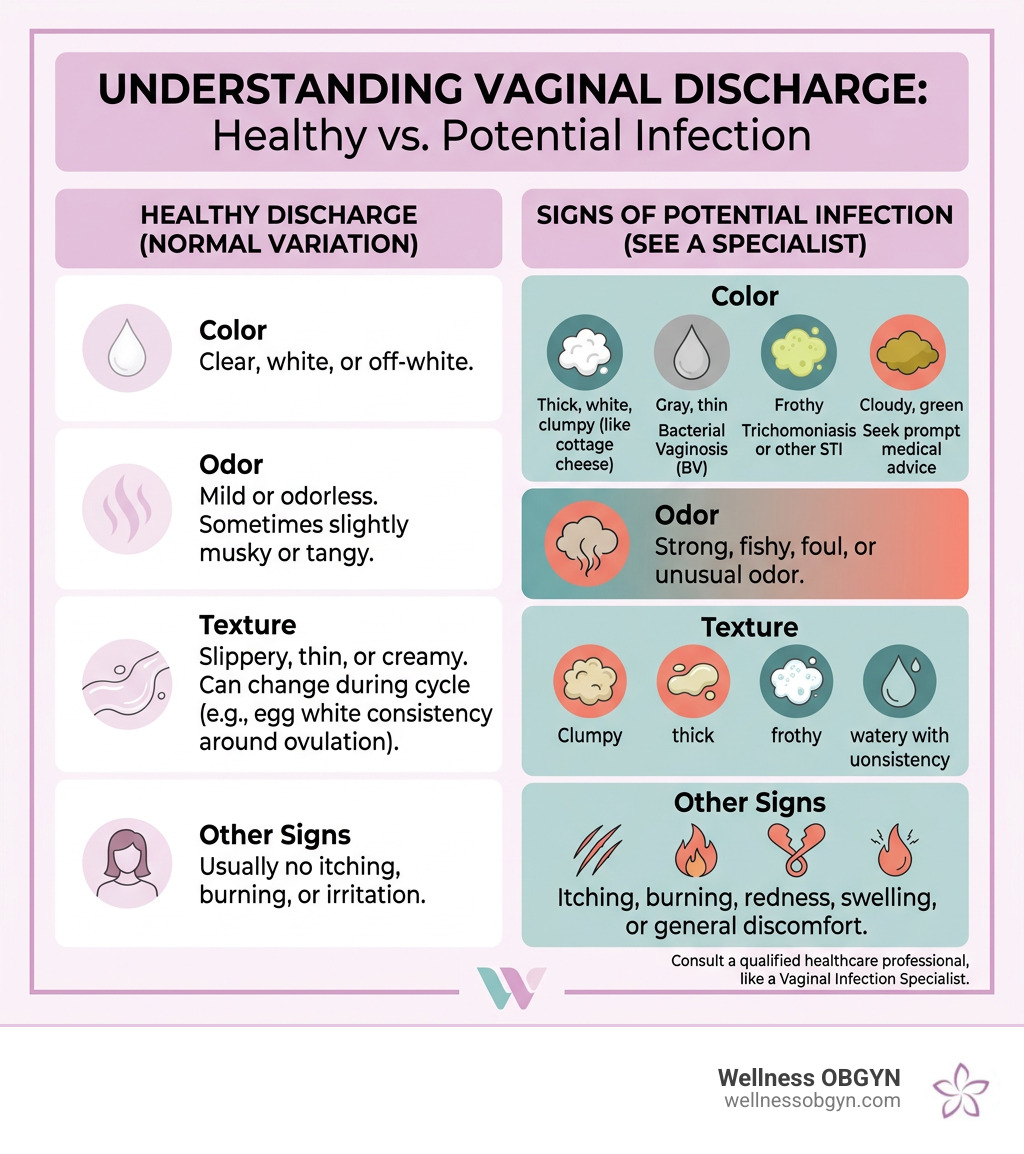
- Bacterial Vaginosis (BV): This is the most common vaginal infection. It isn’t necessarily an “infection” you catch from someone else, but rather an imbalance where “bad” bacteria outnumber the “good” lactobacilli. It often results in a thin, gray or white discharge with a distinct fishy odor.
- Yeast Infections (Candidiasis): Caused by an overgrowth of Candida albicans, a fungus that naturally lives in the body. When the environment changes—due to antibiotics, high blood sugar, or hormonal shifts—the yeast multiplies, causing intense itching and a thick, cottage-cheese-like discharge.
- Trichomoniasis: This is a common STI caused by a tiny parasite. While men often have no symptoms, women may experience a yellow-green, frothy discharge and significant irritation.
- Chlamydia and Gonorrhea: These STIs can cause inflammation and unusual discharge. In the UK, chlamydia is noted as the most common STI, and it is equally prevalent in the US. If left untreated, these can lead to serious female reproductive health issues like pelvic inflammatory disease (PID).
Several factors can trigger these imbalances. Antibiotics are a major culprit because they kill off the protective bacteria that keep yeast in check. Hormonal changes during pregnancy, the menstrual cycle, or menopause also play a significant role. For those interested in deeper clinical insights, you can find Scientific research on women’s health topics through major medical centers like the Mayo Clinic.
The Role of a Vaginal Infection Specialist
When an over-the-counter cream doesn’t do the trick, it’s time to call in a pro. A vaginal infection specialist offers more than just a prescription; they provide a comprehensive evaluation of your pelvic health.
At Wellness OBGYN in Honolulu, we focus on the whole person. Sometimes, what feels like a simple infection is actually related to non-ob-gynecologist services such as pelvic floor dysfunction or skin conditions like lichen sclerosus.
Specialists in this field often include:
- Board-Certified Gynecologists: Experts in the female reproductive system.
- Urogynecologists: Specialists who handle complex cases involving both the reproductive and urinary tracts, such as recurrent UTIs or pelvic organ prolapse.
- Infectious Disease Specialists: Doctors who step in when infections are resistant to standard treatments or are particularly rare.
Why Consult a Vaginal Infection Specialist for Recurrence?
If you find yourself dealing with five or more infections in a single year, you aren’t just “prone” to them—you have a chronic condition that requires specialized care. Chronic BV or persistent yeast infections can be incredibly draining, both physically and emotionally.
In these cases, a specialist may recommend suppression therapy. This involves a long-term, low-dose medication plan (sometimes lasting six months or more) to reset your vaginal microbiome and prevent the “revolving door” of infections. We also look for underlying causes like undiagnosed diabetes or immune system suppression that might be fueling the cycle.
What to Expect During Your Visit with a Vaginal Infection Specialist
We know that talking about vaginal health can feel a bit awkward, but for us, it’s a routine part of ensuring your well-being. During your visit, we will:
- Review your symptom history: When did it start? What does the discharge look like? Does it happen after your period or after sex?
- Perform a pelvic examination: A gentle physical check to look for inflammation or visible signs of infection.
- Conduct vaginal swabs and pH testing: We take a small sample of discharge to look at under a microscope (a “wet mount”) or send it to a lab for culture. This ensures we are treating a fungus with an antifungal and a bacteria with an antibiotic—no guesswork involved.
- Provide shared decision-making: We explain your results and discuss treatment options that fit your lifestyle. This is also a great time to ensure you are up to date on your abnormal pap follow-up if you’ve had irregular results in the past.
Prevention Strategies to Stop the Itch
As your vaginal infection specialist, our goal is to see you less often for infections and more often for your happy, healthy annual check-ups. Prevention is all about maintaining the “good” bacteria.
- Breathable Fabrics: Stick to cotton underwear. Synthetic fabrics like polyester trap heat and moisture, creating a “greenhouse” for yeast to grow.
- No Douching: Your vagina is a self-cleaning oven. Douching washes away the protective bacteria and changes the pH, making you more likely to get BV.
- Probiotics and Diet: Eating yogurt with live cultures or taking a high-quality vaginal probiotic can help maintain a healthy bacterial balance.
- Barrier Contraception: Using condoms protects against STIs and can also prevent the pH shifts that occur when semen (which is alkaline) enters the vagina (which is acidic).
Education starts early, and we are proud to offer adolescent gynecology in Honolulu to help young women understand their bodies and establish healthy habits from the start.
Frequently Asked Questions about Vaginal Health
How do I know if I have BV or a yeast infection?
Bacterial vaginosis typically presents with a thin, gray discharge and a fishy odor, while yeast infections cause thick, white, “cottage cheese” discharge and intense itching. BV often feels “messy,” while yeast infections feel “itchy and sore.” However, because you can actually have both at the same time, a professional test is the only way to be sure.
Are vaginal infections contagious to my partner?
While yeast infections and BV are generally not considered STIs, they can sometimes be triggered by sexual activity due to changes in pH. However, trichomoniasis, chlamydia, and gonorrhea are highly contagious and require partner treatment to prevent you from being reinfected immediately after you finish your own medication.
How long does it take for treatment to work?
Most bacterial infections clear within seven days of starting antibiotics. Yeast infections can feel better within 24 to 48 hours of starting treatment, but it may take one to two weeks for the tissue to fully heal and for all symptoms to resolve. If you aren’t feeling better after three days, call your vaginal infection specialist.
Conclusion
You don’t have to “just live” with discomfort. Whether it’s a one-time annoyance or a recurring battle, the right care makes all the difference. At Wellness OBGYN, we provide personalized care and shared decision-making to ensure every woman in Honolulu feels heard and helped.
Our compassionate specialists are here to guide you through diagnosis, treatment, and long-term prevention. Let’s stop the itch and get you back to feeling like yourself.