
Senior Women Still Need Gynecological Care — Here’s Why It Matters
OBGYN for seniors is not just relevant — it’s essential. Many women assume that once menopause is behind them, gynecological visits become optional. That’s a common and potentially dangerous misconception.
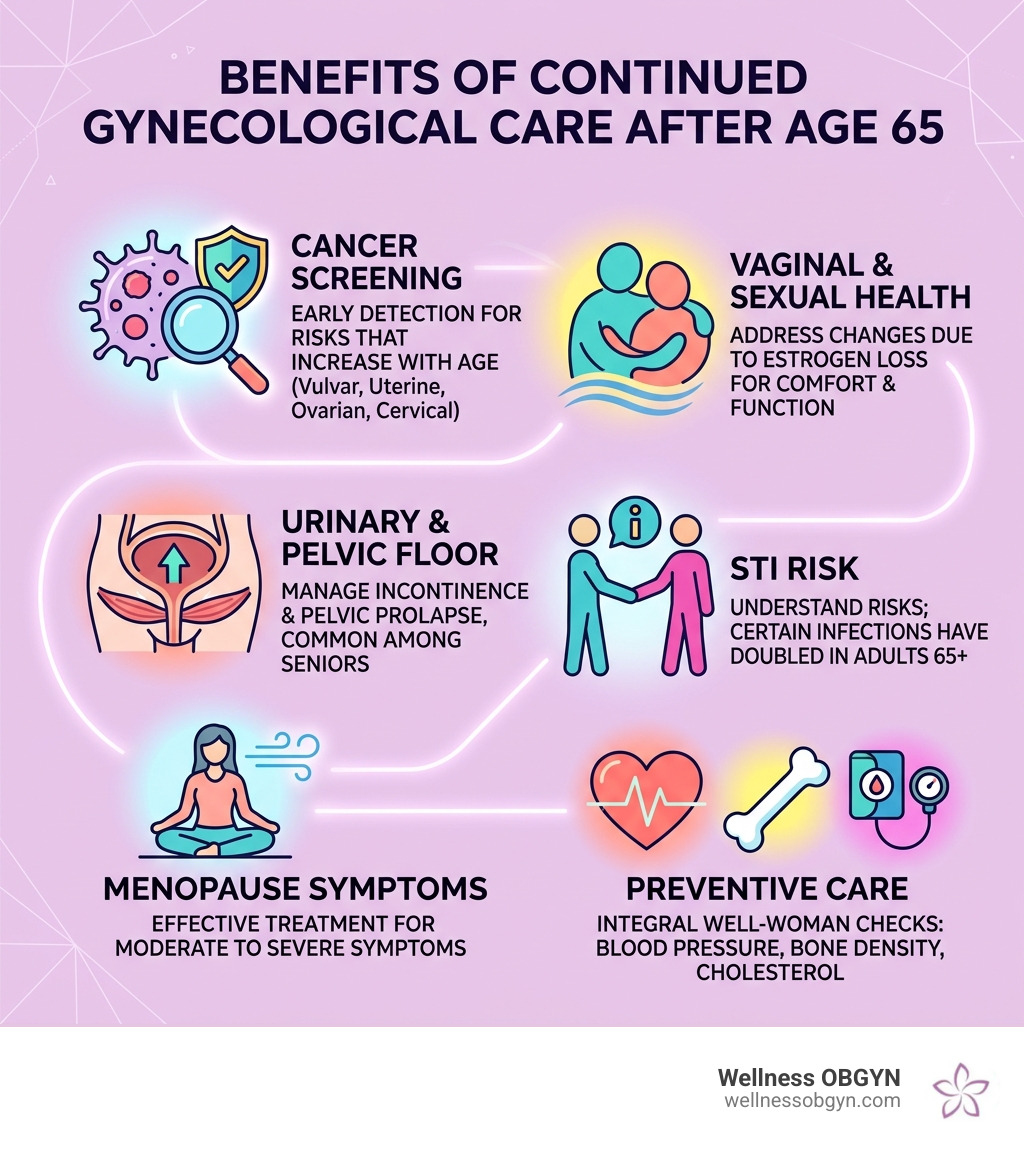
Here’s a quick summary of why senior women should keep seeing an OBGYN:
- Cancer screening — Vulvar, uterine, ovarian, and cervical cancers become more common with age, not less
- Vaginal and sexual health — Estrogen loss causes real, treatable changes to vaginal tissue and sexual comfort
- Urinary and pelvic floor issues — Incontinence and pelvic prolapse affect a large share of older women
- STI risk — Certain sexually transmitted infections have doubled in adults 65 and older over the past decade
- Menopause symptom management — Over 62% of women with moderate to severe menopause symptoms receive no treatment at all
- Preventive care — Blood pressure, bone density, and cholesterol checks are often part of a well-woman OBGYN visit
The risks don’t disappear after your last period. In fact, some of the most serious gynecological conditions — like vulvar cancer, which strikes over 7,500 women in the U.S. each year and occurs most often in women over 70 — become more likely as you age.
I’m Dr. Cheryl Twu, founder of Wellness OBGYN in Honolulu, and over more than a decade of clinical practice, I’ve provided dedicated OBGYN care for seniors navigating post-menopausal health, hormone changes, and age-related gynecological concerns. This guide walks you through everything you need to know to protect your health in your senior years.
Relevant articles related to obgyn for seniors:
Why an OBGYN for Seniors is Essential Post-Menopause

As we transition into our 60s, 70s, and 80s, our healthcare needs shift. While your primary care physician is excellent for managing general health, they may not provide the specialized pelvic and vulvar assessments that a gynecologist performs. In fact, many internists and family doctors do not routinely perform vulvar, vaginal, or pelvic exams on senior patients unless a specific problem is reported.
At Wellness OBGYN, we believe the Annual Obgyn Visit is a cornerstone of healthy aging. These visits are about more than just a Pap smear (which you may or may not still need). They are a comprehensive look at your pelvic health, including screening for skin changes on the vulva and checking the integrity of your pelvic floor.
Maintaining gynecological health is vital for quality of life. An Womens Health Annual Exam allows us to catch issues like Genitourinary Syndrome of Menopause (GSM) before they lead to chronic pain or recurrent infections. For a general overview of postmenopausal health changes, the National Institute on Aging offers helpful educational information.
Specialized OBGYN for Seniors: Beyond Reproductive Years
When you visit our Obgyn Clinic, the focus shifts from fertility and contraception to managing the effects of long-term estrogen deficiency. Estrogen is the “glue” that keeps vaginal and urethral tissues thick, elastic, and lubricated. Without it, these tissues thin out, a condition known as atrophy.
Our Center For Womens Health specializes in geriatric gynecology, which recognizes that a 75-year-old woman has different physiological needs than a 35-year-old. We take a “no-rush” approach, ensuring that exams are comfortable and that every question about your changing body is answered with compassion.
Managing Post-Menopausal Changes and Menopause Symptoms
Menopause doesn’t always “end” once the hot flashes stop. For many women, the symptoms of estrogen loss—such as vaginal dryness, itching, and painful intercourse—can persist or even worsen decades after their last period.
As an Obgyn Menopause Specialist, we often see patients who have suffered in silence for years. Statistics show that 62.4% of individuals with moderate to severe menopause symptoms are not receiving any therapy. Often, this is because a provider never recommended it or because of outdated fears regarding safety.
Holistic Menopause Treatment and Lifestyle
Managing your “second act” involves more than just medicine. We advocate for Menopause Lifestyle Changes that support bone density and heart health. Our approach to Holistic Menopause Treatment includes:
- Menopause and Diet: Focusing on calcium-rich and anti-inflammatory foods to protect your joints and bones. Menopause And Diet plays a huge role in how you feel daily.
- Support Systems: Whether you are seeking Early Menopause Support or navigating health in your 80s, having a team that listens is essential.
- Sleep and Mental Health: Hormonal shifts can impact sleep patterns and cognitive clarity. We address these as part of your total wellness.
Cancer Screenings and Preventive Care for Older Women
One of the most critical reasons to maintain a relationship with an obgyn for seniors is cancer prevention. The risk of several gynecological cancers actually increases as we age.
| Cancer Type | Senior Risk Factors | Screening Method |
|---|---|---|
| Vulvar Cancer | Over 50% of cases occur in women over 70 | Visual exam and biopsy of suspicious lumps |
| Uterine Cancer | Increased risk with age and obesity | Evaluation of any post-menopausal bleeding |
| Ovarian Cancer | Often diagnosed at later stages in seniors | Pelvic exam and symptom review |
| Cervical Cancer | 1 in 20 women ages 66-70 have never been tested | Pap smear/HPV test (based on history) |
Vulvar cancer is rare, striking about 7,500 women each year in the U.S., but it is a “senior” cancer—fewer than 20% of cases occur in women under 50. Regular exams at our Clinic Womens Health or Center For Womens Wellness allow us to spot dermatological changes early.
It is also important to consider genetic testing for those with a strong family history, even in later life. Our Honolulu community has access to essential resources for advanced screenings to ensure early detection and peace of mind.
Screening for Vulvar and Uterine Cancers
The most important rule of post-menopausal health is this: Any bleeding after menopause is abnormal and must be evaluated. Even a tiny amount of spotting should prompt a visit to your gynecologist. We use minimally invasive diagnostics, such as endometrial biopsies, to rule out uterine cancer quickly and efficiently.
Addressing Sexual Health and STI Risks in the Golden Years
It is a myth that seniors are not sexually active. Many older adults enjoy vibrant intimate lives. However, this also means they remain at risk for sexually transmitted infections (STIs). In fact, certain STIs have doubled in adults ages 65 and up in the last decade.
Sexual health is a vital part of your overall well-being. If you are experiencing low libido or painful intercourse, you don’t have to “just live with it.” Intimacy can be comfortable and rewarding at any age with the right care.
Urinary Health and Pelvic Floor Management
Urinary incontinence and pelvic organ prolapse are incredibly common, affecting more than half of women as they age. However, “common” does not mean “normal.” You shouldn’t have to plan your life around the nearest restroom.
At our Womens Wellness Clinic, we assess the strength of your pelvic floor. Issues like leaking when you sneeze or a feeling of heaviness in the pelvis are often treatable with pelvic floor physical therapy, pessaries, or minimally invasive procedures.
We advocate for a comprehensive approach to these issues, recognizing that urinary health deeply impacts a woman’s confidence and social engagement.
Finding an OBGYN for Seniors in Honolulu
If you are looking for a Gynecologist Honolulu, it is important to choose a practice that understands the nuances of senior care. Our team at Wellness OBGYN provides Obgyn Honolulu Hawaii services that prioritize your comfort and long-term health.
Whether you visit us at the Womens Health Center Honolulu, ensure your provider is someone who values shared decision-making. You are the expert on your own body; we are here to provide the medical expertise to help you navigate it.
Frequently Asked Questions about Senior Gynecological Care
Do I still need a Pap smear after age 65?
According to ACOG guidelines, women 65 and older may be able to stop cervical cancer screenings if they have had three consecutive negative Pap tests or two negative HPV tests within the last 10 years, and no history of high-grade abnormalities. However, this is a “shared decision.” If you have a new sexual partner or a history of abnormal tests, we may recommend continuing.
How often should senior women see a gynecologist?
We recommend an annual visit. Even if you no longer need a Pap smear, the annual exam is necessary to check for vulvar skin cancers, pelvic organ prolapse, and to discuss bone density and heart health.
Can a gynecologist help with painful intercourse in my 70s?
Absolutely. This is often caused by vaginal atrophy (thinning of the walls). Treatments range from over-the-counter moisturizers and lubricants to topical vaginal estrogen. Specialized counseling can also help couples navigate these changes.
Conclusion
At Wellness OBGYN, we believe that senior women’s health is a priority that deserves specialized attention. Aging is a natural progression, but it shouldn’t come at the cost of your comfort, your confidence, or your sexual well-being.