
The Mind-Body Connection: Understanding Performance Anxiety ED
Overcoming performance anxiety ed involves a clear understanding of its causes and a multi-faceted approach to regain confidence and intimacy. Here’s a quick look at key strategies:
- Openly communicate with your partner about your feelings and worries.
- Practice relaxation techniques like deep breathing and mindfulness.
- Seek professional support from therapists specializing in sexual health.
- Consider medical evaluation to rule out or treat underlying physical causes.
- Adopt healthy lifestyle habits to support overall well-being.
The lights are low. The mood should be right. But instead of connection, you feel worry. Your mind races, and you just can’t get into it. This feeling, where sex becomes a source of stress rather than joy, is known as sexual performance anxiety.
It’s more common than you might think. Research shows that up to 25% of men and 16% of women are affected by sexual performance anxiety. For men, this anxiety can directly lead to or worsen erectile dysfunction (ED), creating a frustrating cycle. In fact, psychological factors are estimated to contribute to 40-50% of ED cases.
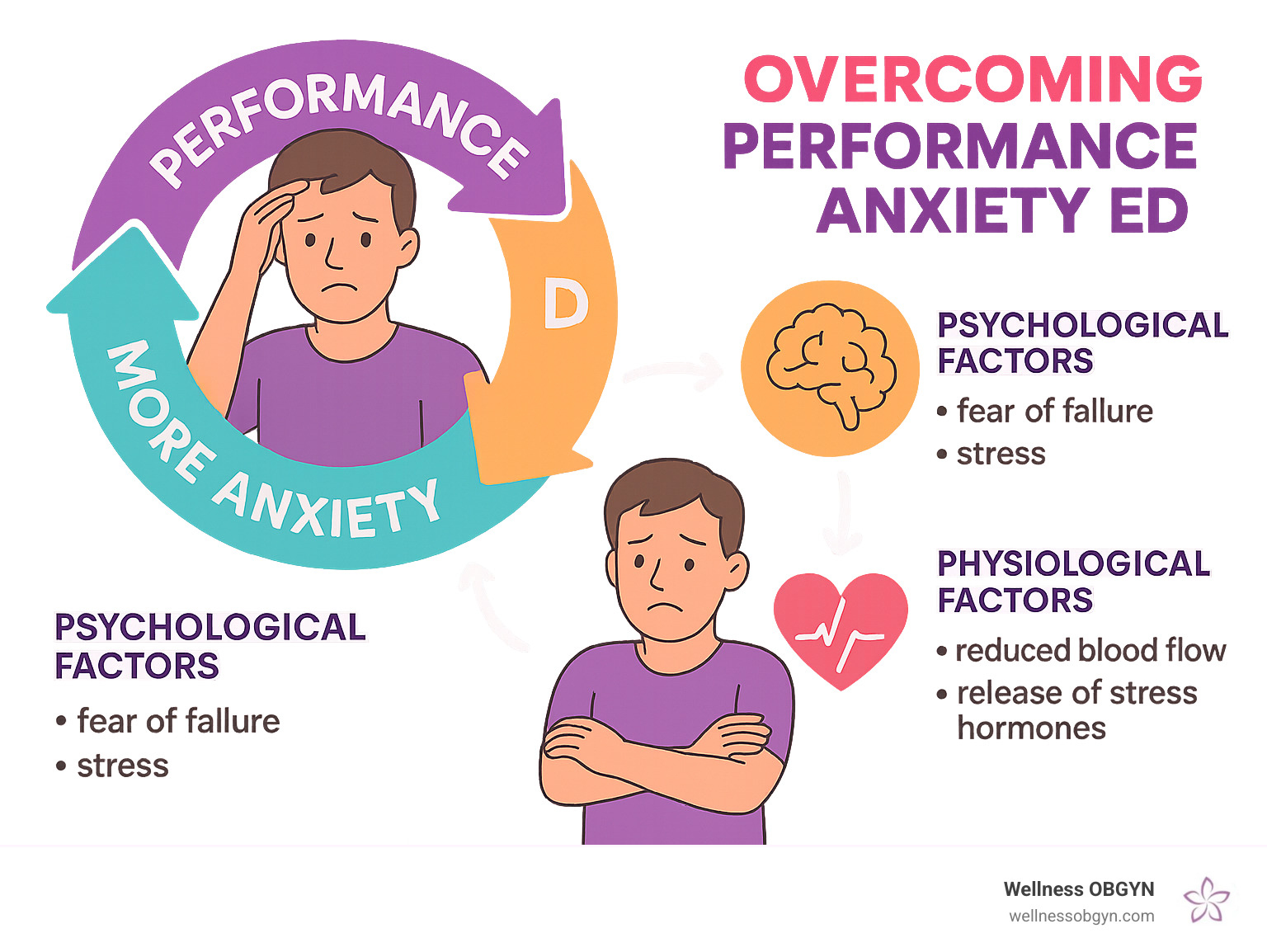
Anxiety causes your body to release stress hormones, which can narrow blood vessels and reduce blood flow, making erections difficult. For women, anxiety can prevent natural lubrication and reduce desire. This mind-body link means that feeling anxious about “performing” can directly sabotage your ability to do so, leading to a vicious cycle of worry and difficulty.
As a board-certified OB/GYN and founder of Wellness OBGYN in Honolulu, Hawaiʻi, I’m Dr. Cheryl Twu. My integrative approach, blending Western medicine with holistic guidance, often involves helping patients with overcoming performance anxiety ed and reclaiming their sexual well-being. This article will help you understand this complex connection and provide actionable steps to move from nervous to confident.
Related content about overcoming performance anxiety ed:
Understanding the Vicious Cycle of Anxiety and ED
Sexual performance anxiety is a persistent fear about your ability to “perform” sexually. Unlike other types of anxiety, it specifically targets your sexual confidence. The worry often centers on a fear of failure, concerns about body image, or measuring up to unrealistic standards. This pressure can turn an intimate experience into a high-stakes test.
Relationship stress can worsen things, whether it’s worry about disappointing a partner or existing tensions. The harder you try to perform, the more difficult it becomes, creating a self-fulfilling prophecy where the fear of ED causes the very problem you’re trying to avoid. Psychological factors are a major cause of ED, contributing to nearly half of all cases.
When anxiety takes hold, your body enters a fight-or-flight response, flooding your system with stress hormones like cortisol and adrenaline. These hormones cause blood vessels to tighten, restricting blood flow to the penis. This makes overcoming performance anxiety ed more challenging because your body is physically working against you.
How Anxiety Physically Causes Erectile Dysfunction
When anxiety strikes, stress hormones cause vasoconstriction (narrowing of blood vessels), limiting the blood flow needed for an erection. Anxiety also disrupts the parasympathetic nervous system, which controls sexual arousal, preventing the relaxed state needed for intimacy.
The brain’s role in arousal is also sabotaged. Instead of focusing on pleasure, your mind gets stuck on worry and self-monitoring. This is why a single instance of ED can trigger anxiety about future encounters. A single bad night due to stress or alcohol can create a fear of it happening again, causing ongoing issues even without a physical cause. Statistics on psychological ED confirm this is common, with psychological factors contributing to 40-50% of ED cases. You are not alone.
Common Triggers for Sexual Performance Anxiety
Understanding the specific triggers for sexual performance anxiety is the first step in overcoming performance anxiety ed.

Common triggers include:
- New relationships: The pressure to impress a new partner can create anxiety about their expectations.
- Past negative sexual experiences: A previous issue with ED or another sexual problem can create fear of it happening again.
- Societal pressure and porn influence: Unrealistic media portrayals of sex can lead to feelings of inadequacy about body image, penis size, or stamina.
- General life stress: Worries about work, finances, or family can follow you into the bedroom, making it hard to relax.
- Low self-esteem: Feelings of inadequacy in other areas of life can transfer to sexual situations.
Mind and Body: Psychological Strategies to Break Free
To break free from sexual performance anxiety, you need to work on both your mind and body. Psychological strategies are powerful tools to manage stress and shift your focus from “performing” to enjoying pleasure and connection.

Adopting a Mindfulness Practice
Mindfulness means being fully present without judgment. For overcoming performance anxiety ed, it involves shifting attention from anxious “what if” thoughts to the sensory experiences of intimacy. Key techniques include:
- Deep breathing exercises: Slow, deep belly breaths calm your nervous system and reduce physical anxiety.
- Grounding: When your mind races, focus on your physical senses—what you feel, smell, or hear—to anchor yourself in the present.
- Sensate focus: This sex therapy exercise involves partners exploring touch and pleasure without pressure for intercourse or orgasm. The goal is to focus on sensation, not performance, which allows natural arousal to build.
Using Cognitive Behavioral Therapy (CBT) to Reframe Thoughts
Cognitive Behavioral Therapy (CBT) is a proven method for breaking negative thought loops. When it comes to sexual performance anxiety, CBT can be a game-changer. It involves a few key steps:
- Identify negative thought patterns: Recognize specific worries like “I won’t get an erection” or “My partner will be disappointed.”
- Challenge irrational beliefs: Question unrealistic ideas about sex, often influenced by media. Ask yourself if your fears are truly accurate. Your partner likely values connection over a flawless “performance.”
- Replace self-criticism with positive self-talk: Shift your focus from potential failure to the desire for pleasure and intimacy.
- Create realistic expectations: Accept that sexual response can vary. Not every encounter will be “perfect.” Focus on connection and enjoying the moment.
CBT is a gold standard for anxiety and can be incredibly effective in changing your mindset and breaking the anxiety cycle.
How to Overcome Performance Anxiety ED Through Lifestyle and Communication
While psychological strategies are key, overcoming performance anxiety ed requires a holistic approach. Nurturing your physical health and strengthening your relationship through open communication builds a foundation of wellness that supports your sexual health.

Strengthening Your Connection: The Power of Open Communication
Open communication is one of the most powerful tools against sexual performance anxiety. Hiding anxieties only amplifies them.
- Choose the Right Moment: Pick a calm, private time to talk, not in the heat of the moment.
- Use “I” Statements: Express your feelings without blame, like “I’ve been feeling anxious about our intimacy.”
- Express Vulnerability: Share your worries to foster intimacy. Reassure your partner it’s not their fault and that you desire them.
- Explore Non-Intercourse Intimacy: Try sensual massage, oral sex, or cuddling to reduce pressure and reconnect emotionally and physically.
- Rebuilding Trust and Safety: Open communication and exploring intimacy without pressure rebuilds trust and strengthens your bond.
For women, understanding and supporting a partner is crucial. Our Female Sexual Health Clinic can provide resources for partners navigating these challenges together.
Building a Foundation of Wellness for Overcoming Performance Anxiety ED
Your overall health significantly impacts sexual function. Healthy habits can reduce anxiety, improve blood flow, and boost confidence, all vital for overcoming performance anxiety ed.
- Benefits of Regular Exercise: Physical activity improves cardiovascular health and blood flow, essential for erections. It also boosts mood, reduces stress, and improves body image.
- Diet and Vascular Health: A balanced, whole-food diet supports vascular health. Limit processed foods, sugar, and unhealthy fats to improve circulation.
- Limiting Alcohol and Substance Use: Alcohol is a depressant that can impair erectile function. Excessive substance use has long-term negative impacts on sexual health.
- Prioritizing Sleep: Quality sleep is vital for hormone regulation, including testosterone. Lack of sleep increases stress and anxiety.
Frequently Asked Questions about Performance Anxiety and ED
It’s completely normal to have questions when you’re navigating the challenges of sexual performance anxiety and ED. We’re here to provide clear, compassionate answers to some of the most common questions we hear.
Can performance anxiety cause permanent erectile dysfunction?
This is a great question, and it’s one that causes a lot of worry! The good news is that overcoming performance anxiety ed typically involves understanding that the ED it causes is usually situational, not permanent. What does that mean? It means your body’s ability to achieve an erection is often fine in other situations, like during sleep or when you’re on your own. The issue arises specifically when anxiety is high during intimate moments.
The ED caused by performance anxiety is mostly psychological and physiological in response to stress, rather than a lasting physical change to your body. When you address the anxiety, the ED often resolves. However, it’s important to know that ongoing, chronic stress and anxiety can contribute to other long-term health issues over time, like cardiovascular problems or hormonal imbalances. These underlying health issues could then affect erectile function more persistently. So, while performance anxiety itself isn’t “permanent ED,” neglecting it can lead to health concerns that do contribute to physical ED down the road.
How do I start the conversation with my partner about this?
Starting this kind of conversation can feel incredibly daunting, but it’s such a vital step in overcoming performance anxiety ed. We recommend choosing a calm, private moment when you can both talk without feeling rushed or pressured. This could be during a quiet walk, over a cup of coffee, or just relaxing at home.
When you begin, focus on expressing your own feelings using “I” statements. This helps you own your anxiety without making your partner feel blamed. For example, instead of saying “You make me feel pressured,” try something like, “I’ve been feeling some anxiety lately about our intimacy, and I really want to talk about it because it’s affecting me, and I value our connection so much.” Reassure your partner that it’s not their fault and that your attraction to them is strong. Sharing your vulnerability can truly open the door for a supportive and understanding conversation, strengthening your bond even more.
Is performance anxiety ED more common in younger men?
You might be surprised to hear this, but yes, it’s actually quite common, and we’re seeing it on the rise in younger men! While many people think of ED as something that only affects older men with physical health conditions, a significant number of new ED diagnoses are now occurring in men under 40.
Research shows that up to 30% of new ED cases are in men under 40. For this younger age group, psychological factors like stress, anxiety, and intense performance pressure are often the biggest culprits. This can stem from a mix of societal expectations, unrealistic portrayals of sex in media and pornography, insecurities in new or existing relationships, or even just the general stresses of modern life. For younger men especially, the ED is frequently more about what’s going on in the mind than a purely physical problem.
Conclusion: Reclaim Your Confidence and Intimacy
Overcoming performance anxiety ED is truly a journey, not a sprint. It takes kindness to yourself, a bit of patience, and a willingness to look closely at both your mind and your body when it comes to your sexual health. As we’ve explored, this is a complex dance between your thoughts and your physical reactions. When psychological stress kicks in, it can directly affect your body, creating a frustrating cycle that feels hard to break.
The most effective way forward is a well-rounded approach that nurtures your mental well-being, physical health, and your relationships. This means learning to be more mindful, gently challenging those negative thoughts with tools like CBT, opening up and talking honestly with your partner, and embracing healthy lifestyle choices. These foundational steps can work wonders in easing anxiety and boosting your overall well-being.
Sometimes, even with the best mental strategies, the physical symptoms of ED can feel like a big hurdle. When anxiety leads to physical challenges, and those challenges then feed more anxiety, an advanced solution can offer that much-needed confidence boost to truly break the cycle.
At Wellness OBGYN in Honolulu, we’re all about providing personalized, compassionate care. Our dedicated team is here to help you steer the often-complex world of sexual health. We want to ensure you get custom guidance and support every step of the way. Our goal is to help you transform nervousness into confidence, so you can reclaim a healthy, enjoyable, and truly intimate sex life.