
Understanding the Healing Power of Hands-On Medicine
Osteopathic omt therapy is a hands-on medical treatment that uses gentle touch, pressure, and movement to diagnose and treat health conditions throughout the body. This approach focuses on restoring balance to your musculoskeletal system to improve overall health and well-being.
What is Osteopathic OMT Therapy?
- A medical procedure performed by licensed Doctors of Osteopathic Medicine (DOs)
- Uses manual techniques to treat dysfunction in muscles, bones, joints, and tissues
- Addresses the root cause of pain rather than just symptoms
- Safe for patients of all ages, from infants to elderly adults
- Complements traditional medical treatments without relying on medication
Key Benefits:
- Natural pain relief without medication
- Improved circulation and mobility
- Improved body function and healing
- Treatment for conditions like back pain, headaches, and pregnancy discomfort
- Preventive care to maintain optimal health
The foundation of this therapy rests on four core principles: the body works as one connected unit, it has natural self-healing abilities, structure affects function, and treatment should address the whole person – not just isolated symptoms.
As a Doctor of Osteopathic Medicine with extensive training in both traditional medicine and osteopathic omt therapy, I’ve witnessed how this gentle approach can transform patients’ lives by addressing underlying structural imbalances. My experience combining Western medical practices with holistic osteopathic principles allows me to offer comprehensive care that treats the whole person.
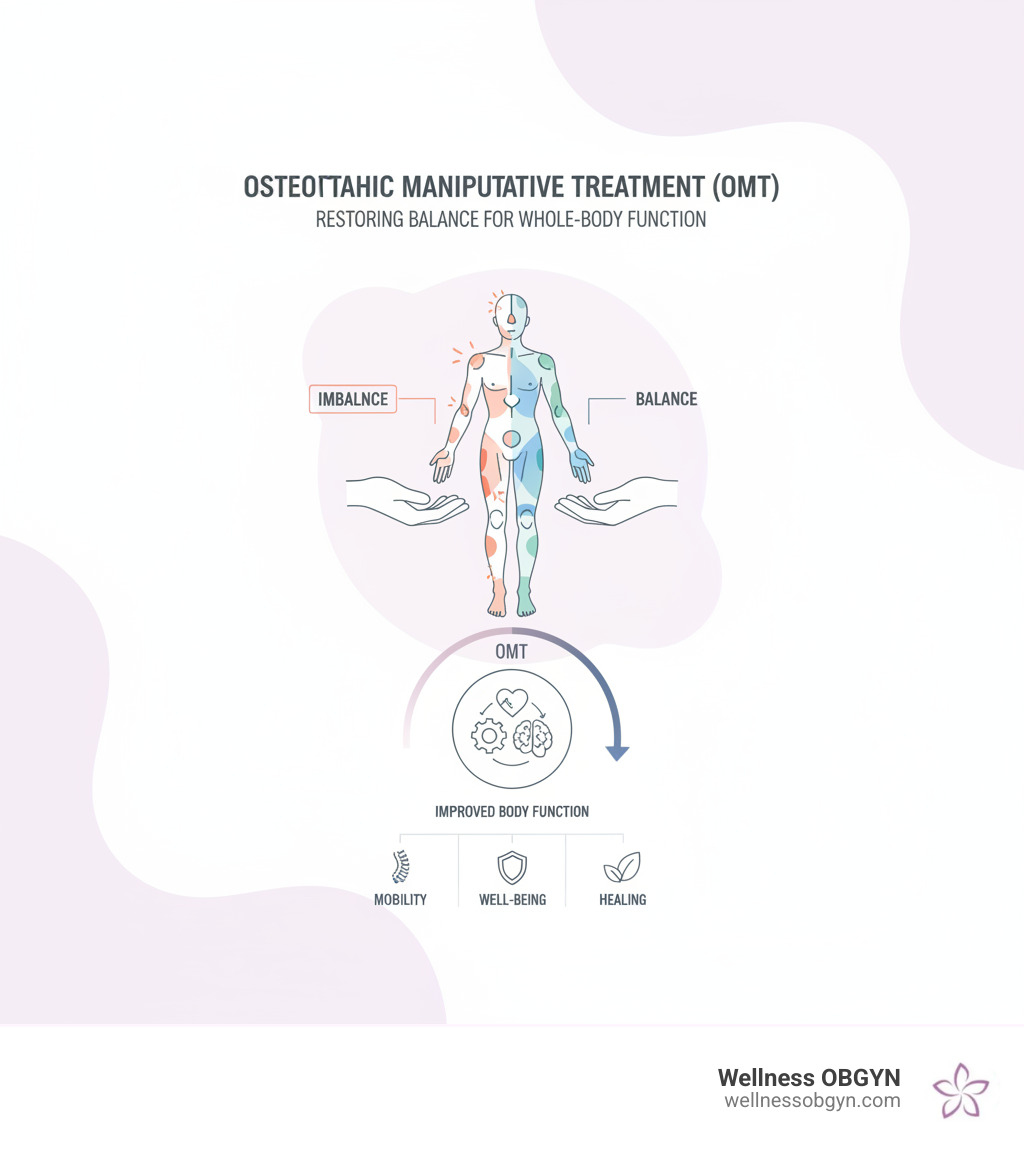
Understanding Osteopathic Manipulative Treatment (OMT)
Osteopathic omt therapy is far more than just hands-on treatment—it’s a complete philosophy of healing that views your body as an amazing, interconnected system. When you receive OMT from a Doctor of Osteopathic Medicine (DO), you’re experiencing care that’s built on understanding how every part of your body works together in harmony.
Think of your body like a symphony orchestra. When one musician is out of tune, it affects the entire performance. That’s exactly how we approach osteopathic omt therapy—we look for the “out-of-tune” areas that might be causing problems throughout your system.
The foundation of our approach rests on four powerful principles that guide everything we do. The body as a unit means we understand that your ankle pain might actually be connected to how you’re carrying your shoulders or even how stress is affecting your breathing patterns. We don’t just treat the part that hurts—we look at the whole picture.
Self-regulation and self-healing is perhaps the most beautiful aspect of osteopathic care. Your body already knows how to heal itself—it’s been doing it your entire life. Every cut that closes, every bruise that fades, every cold you recover from proves this incredible ability. Our job is to remove the roadblocks that might be preventing your natural healing processes from working at their best.
The principle that structure and function are connected is where the magic really happens. When your spine is properly aligned, your nervous system can communicate more effectively. When your ribcage moves freely, your breathing improves and your heart doesn’t have to work as hard. It’s all connected in ways that continue to amaze us.
When we identify areas that need attention, we’re looking for what we call “somatic dysfunction.” This simply means parts of your musculoskeletal system—your muscles, joints, nerves, or circulation—aren’t working as smoothly as they should be. These dysfunctions can create a ripple effect throughout your body, which is why addressing them can lead to improvements you might not have expected.
For a deeper understanding of how osteopathic manipulative treatment works, we use specific diagnostic approaches to pinpoint exactly where your body needs support.
The TART Model for Diagnosis
Our diagnostic process follows a systematic approach called the TART model. This framework helps us “listen” to your body through our hands, identifying subtle changes that indicate areas needing attention.
Tissue texture changes are one of the first things we notice. Your tissues tell a story—tight, ropy muscles might suggest chronic stress or overuse, while boggy, swollen areas could indicate inflammation or poor circulation. Our highly trained sense of touch can detect these variations, even when they’re not obvious to you yet.
Asymmetry reveals itself when we observe how your body is positioned. Perhaps one shoulder sits higher than the other, or your pelvis tilts slightly to one side. These asymmetries aren’t just cosmetic—they can indicate underlying imbalances that are forcing some parts of your body to work harder than others.
Restriction of motion becomes apparent when we gently test how your joints and tissues move. A healthy joint should glide smoothly through its full range of motion. When we find restrictions, it’s like finding a door that’s stuck—we need to find out why it won’t open freely and help restore that natural movement.
Tenderness often points us toward areas of irritation or inflammation. Sometimes you’re already aware of these tender spots, but other times we find sensitive areas you didn’t even know existed. These findings help us understand where your body is working overtime to compensate for problems elsewhere.
This diagnostic framework requires years of training to master. DOs spend hundreds of additional hours learning to feel these subtle changes, developing what we call “palpation skills”—essentially learning to see with our hands.
The Holistic Philosophy in Practice
What makes osteopathic omt therapy truly special is how we consider your whole life, not just your symptoms. When you come to us with lower back pain, we don’t just look at your back. We want to understand your work setup, your exercise habits, your stress levels, and even how you sleep.
This mind-body-spirit connection isn’t just philosophical—it’s practical medicine. We’ve seen how emotional stress can manifest as physical tension in your neck and shoulders. We’ve watched how improving someone’s posture can boost their confidence and energy levels. We understand that true healing happens when we address all aspects of your well-being.
During your consultation, we’ll ask about lifestyle factors that might seem unrelated to your main concern. Your sleep quality affects how well your tissues recover overnight. Your hydration habits influence how well your muscles and joints function. Even your breathing patterns can impact everything from your posture to your stress levels.
This whole-person approach means we’re not just treating symptoms—we’re empowering your body’s natural healing abilities and helping you make choices that support long-term wellness. It’s healthcare that looks at the big picture, understanding that true healing involves treating the person, not just the problem.
The Gentle Power of Touch: Common OMT Techniques and How They Work
Think of osteopathic omt therapy as your body’s personal tune-up service. Just as a skilled mechanic knows exactly which tools to use for different car problems, we use a variety of hands-on techniques custom to your specific needs. Each technique works like a gentle key, open uping your body’s natural healing potential.
When we apply these techniques, several wonderful things happen in your body. We’re promoting healing by removing the roadblocks that prevent your natural repair systems from working at their best. Improved circulation becomes a game-changer – imagine your blood flow as a river that’s been dammed up. OMT helps remove those dams, allowing fresh oxygen and nutrients to reach hungry tissues while washing away waste products that cause discomfort.
Restoring motion is another beautiful aspect of this work. Tight muscles begin to relax, stiff joints regain their freedom, and suddenly movements that once caused pain become fluid and natural again. Most importantly, we’re reducing pain by addressing what’s actually causing it, not just masking symptoms.
With over 40 different techniques in our toolkit, we can customize your treatment perfectly. Some techniques are as gentle as a whisper, while others involve quick, precise movements. The beauty lies in finding exactly what your body needs.
Soft Tissue and Myofascial Release
Imagine your body wrapped in a continuous web of tissue called fascia – think of it like a bodysuit made of stretchy fabric that covers every muscle, organ, and bone. When this fascia gets tight or “stuck,” it’s like wearing a shirt that’s too small. Everything feels restricted and uncomfortable.
Soft tissue techniques involve gentle pressure, kneading, and stretching applied directly to your muscles. It might remind you of a therapeutic massage, but with a specific medical purpose. We’re working to relax overly tight muscles, boost circulation, and reduce any swelling that might be causing discomfort.
Myofascial release takes this a step further, focusing specifically on that fascial web. Using gentle, sustained pressure or stretching, we help release those “sticky” areas where fascia has become restricted. It’s incredibly effective for chronic pain and stiffness that seems to linger no matter what you try.
Many patients describe the sensation as deeply satisfying – like finally being able to stretch in exactly the right way after sitting too long.
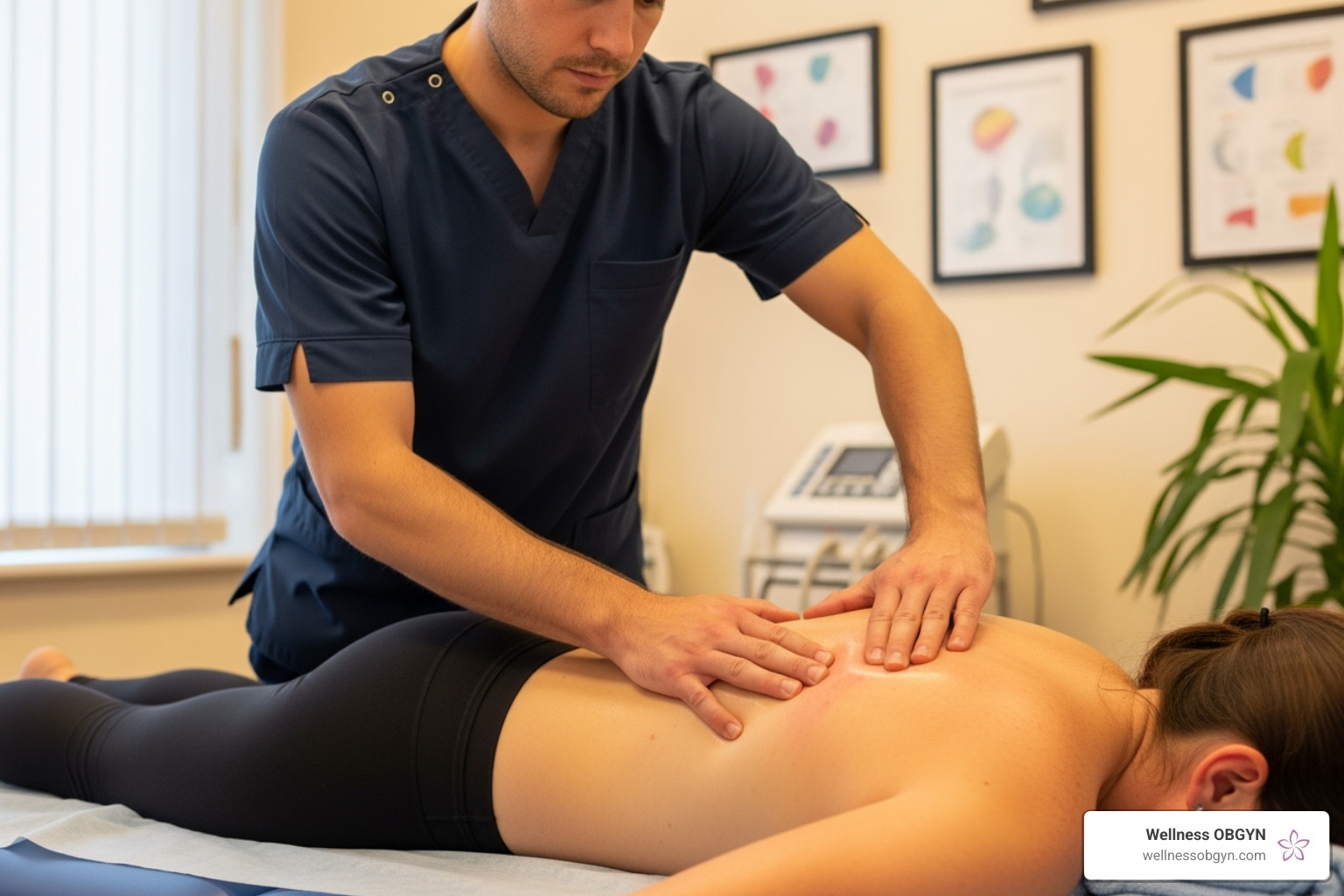
Muscle Energy Technique (MET)
Here’s where you become an active partner in your healing. Muscle Energy Technique is like a gentle dance between you and your doctor. Instead of being passive during treatment, you’ll participate by contracting specific muscles while we provide just the right amount of resistance.
Picture this: we’ll position your joint at the edge of its comfortable range of motion, then ask you to gently push against our hand for about 3-5 seconds. After you relax, we’ll gently guide that joint a little further into its new, improved range. It’s remarkably effective and surprisingly gentle.
This technique works wonders for restoring joint mobility by coaxing shortened muscles to lengthen naturally. Your muscles essentially “learn” to let go of unnecessary tension. We’re also strengthening weakened muscles in some variations, helping create better balance throughout your body.
Patients often find MET empowering because they can feel themselves actively participating in their recovery. There’s something deeply satisfying about feeling a tight area suddenly release during the technique.
High-Velocity, Low-Amplitude (HVLA)
You’ve probably heard that distinctive “pop” sound during joint adjustments – that’s often HVLA in action. But here’s what might surprise you: that sound isn’t what makes the technique work! It’s simply gas bubbles being released from the joint fluid, like opening a bottle of soda.
HVLA involves applying a very quick but tiny therapeutic force within your joint’s normal range of motion. Think of it as giving a stuck door a precise, gentle nudge to help it swing freely again. We’re addressing joint restriction that’s keeping your body from moving the way it should.
The fascinating part is how this affects your nervous system. The neurophysiological effects of HVLA involve complex reflex mechanisms that can help muscles relax and improve overall joint function. It’s like pressing a reset button for that area of your body.
Not everyone needs or is suitable for HVLA, and we’ll always assess carefully before using this technique. When appropriate, though, patients often experience immediate relief and improved mobility.
Other Gentle Techniques
Our osteopathic omt therapy toolkit includes several other remarkable techniques, each with its own special purpose. Counterstrain is wonderfully gentle – we simply position your body to shorten a problematic muscle and hold it there until the muscle decides to relax on its own. It’s like giving your muscle permission to let go of tension it’s been holding onto.
Balanced Ligamentous Tension works with the ligaments around your joints, helping restore natural balance. Think of it as fine-tuning the guy-wires on a tent to ensure everything sits just right.
Cranial osteopathy addresses the subtle movements of skull bones and membranes. It’s incredibly gentle yet surprisingly effective for headaches, jaw problems, and various infant conditions. Many patients find it deeply relaxing.
Lymphatic pump techniques help your body’s natural drainage system work better. Your lymphatic system is like your body’s cleanup crew, and sometimes it needs a little encouragement to do its job effectively.
Finally, rib raising uses rhythmic techniques applied to your ribs to improve breathing and calm your nervous system. It’s particularly helpful for respiratory issues and can be wonderfully soothing for anxiety.
Each technique serves a purpose, and together they form a comprehensive approach to helping your body heal and function at its best.
Who Can Benefit from Osteopathic OMT Therapy?
One of the most wonderful things about osteopathic omt therapy is how it truly serves everyone. From tiny newborns to our most experienced seniors, this gentle approach to healing has something to offer at every stage of life. Whether you’re dealing with sudden pain from an injury or managing a condition that’s been bothering you for years, OMT can help your body find its way back to balance.
The research backs this up beautifully. Studies have shown that osteopathic omt therapy doesn’t just make people feel better – it actually helps them get back to their lives faster. For instance, research on OMT for low back pain found that patients needed less pain medication and missed fewer days of work. That’s the kind of real-world difference we love to see.
What makes OMT special is how it works with your body’s natural healing abilities. Instead of masking symptoms, we’re addressing the root causes of dysfunction. This means whether you’re coming to us for acute pain from a recent injury or chronic conditions that have been affecting your quality of life, we can help. Many of our patients also find the benefits of preventive care – regular OMT sessions that keep their bodies functioning optimally before problems arise.
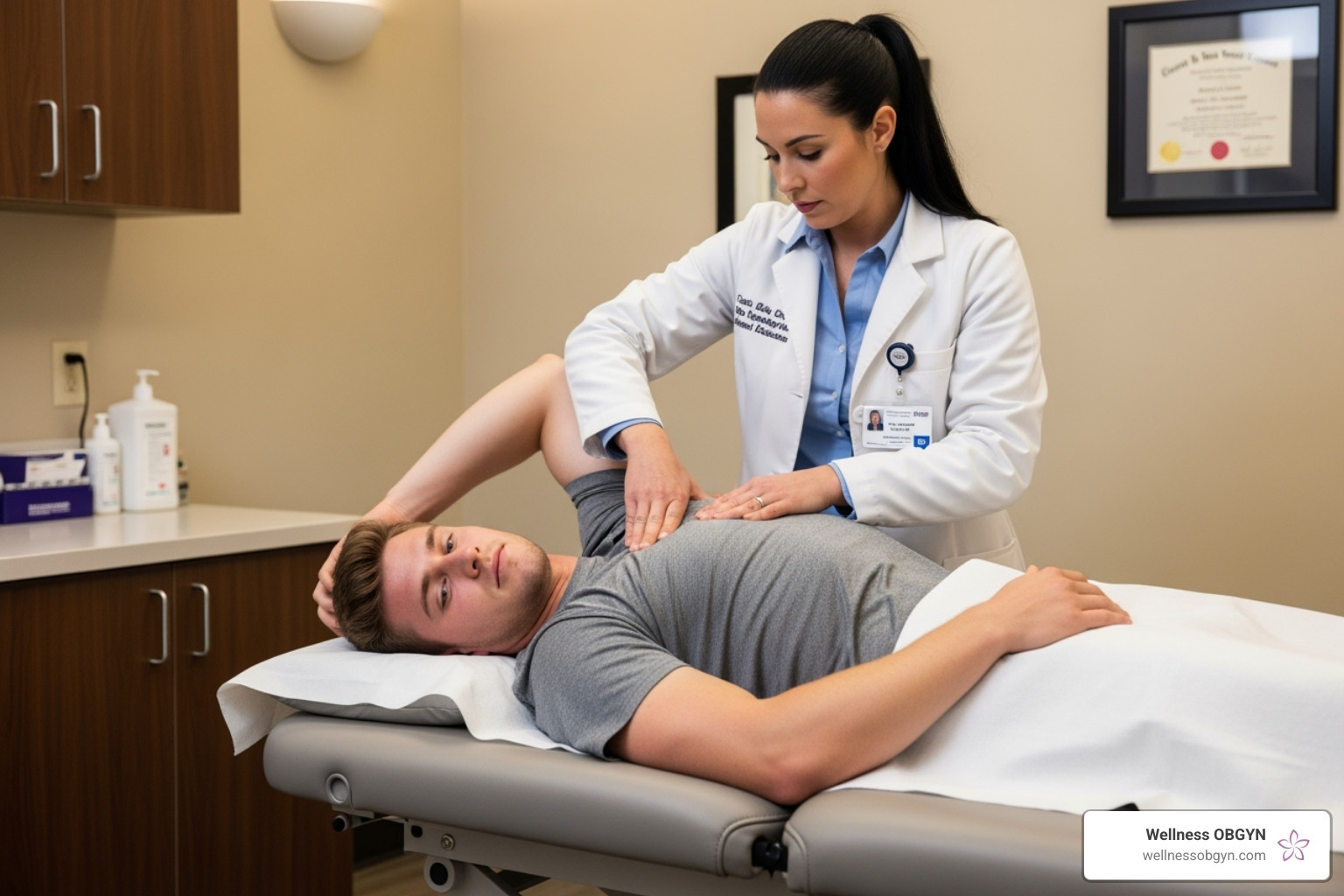
The Role of Osteopathic OMT Therapy in Women’s Health
As specialists in women’s health at Wellness OBGYN, we see how osteopathic omt therapy can transform the female experience at every life stage. Women’s bodies are remarkable – they adapt, change, and grow throughout life in ways that can sometimes create unique physical challenges. That’s where OMT becomes invaluable.
Pregnancy brings some of the most dramatic changes a woman’s body will ever experience. As your baby grows and your center of gravity shifts, you might develop back pain that makes it hard to sleep, or sciatica that shoots down your leg when you try to get out of bed. The ligaments supporting your pelvis stretch and soften, sometimes leading to pelvic pain that makes walking uncomfortable. OMT offers safe, gentle relief for these common pregnancy discomforts, helping you feel more comfortable as your body does the incredible work of growing a new life.
But pregnancy isn’t the only time women benefit from this therapy. Menstrual pain that used to keep you home from work or school can often be significantly reduced through OMT. By improving circulation in the pelvic area and addressing any structural imbalances, many women find their monthly cycles become much more manageable.
Coccydynia – that nagging tailbone pain that makes sitting uncomfortable – is another area where we see excellent results. This condition can develop after childbirth, from a fall, or sometimes for no obvious reason at all. OMT can help restore proper alignment and reduce the inflammation that’s causing your discomfort.
Osteopathic OMT Therapy for Infants and Children
It might surprise you to learn that some of our tiniest patients benefit tremendously from osteopathic omt therapy. The techniques we use with infants and children are incredibly gentle and safe – often so subtle that it looks like we’re simply holding the baby in our hands.
Birth is a natural process, but it’s also quite a journey for a baby. Sometimes, the pressures of delivery can leave subtle imbalances in a newborn’s delicate system. Birth trauma doesn’t have to be dramatic to affect a baby – even normal deliveries can create minor restrictions that benefit from gentle correction.
Colic is one of the most heartbreaking conditions for new parents to witness. When your baby cries inconsolably for hours, and nothing seems to help, it’s exhausting for the whole family. OMT can often help by gently releasing tension in the diaphragm and digestive system, giving both baby and parents some much-needed relief.
Breastfeeding difficulties can sometimes stem from structural issues rather than technique problems. If your baby has trouble latching or seems to prefer one side over the other, gentle OMT can address any restrictions in the jaw, neck, or skull that might be interfering with comfortable feeding.
Torticollis, where a baby consistently turns their head to one side, often responds beautifully to OMT. By gently releasing muscle tension and improving mobility in the neck, we can help your baby develop normal head and neck movement patterns.
For children who seem to get recurrent ear infections, OMT can be a valuable supportive therapy. By improving drainage around the ears and addressing any structural factors that might be contributing to fluid buildup, we may help reduce the frequency of these painful episodes.
How Osteopathic OMT Therapy Supports Athletes
Whether you’re training for your first 5K or competing at the professional level, osteopathic omt therapy can be a game-changer for your athletic performance and longevity. Athletes push their bodies in amazing ways, but this intensity also means that small imbalances can quickly become bigger problems.
Sports injuries are often the result of accumulated stress rather than single traumatic events. That slight hip imbalance from an old ankle sprain might eventually lead to knee pain, which could progress to back problems. OMT helps us catch and correct these patterns before they sideline you from the activities you love.
But we’re not just about injury prevention – though that’s certainly important. Enhancing performance is where OMT really shines for athletes. When your joints move freely, your muscles work efficiently, and your body mechanics are optimized, you simply perform better. We’ve worked with local professional athletes who come in before games specifically to optimize their bodies for peak performance.
Improving range of motion is crucial for almost every sport. Whether you need better shoulder mobility for swimming, hip flexibility for running, or spinal rotation for golf, OMT can help you achieve and maintain the movement quality your sport demands.
After intense training or competition, faster recovery becomes essential. OMT supports your body’s natural healing processes by improving circulation, reducing inflammation, and helping your nervous system shift from the stress of competition back into recovery mode.
Repetitive stress injuries are the bane of many athletes’ existence. Tennis elbow, runner’s knee, swimmer’s shoulder – these conditions develop when the same movements are repeated thousands of times. OMT addresses not just the painful area, but the entire chain of movement that contributes to these overuse patterns.
How Osteopathic OMT Therapy Differs from Other Approaches
While osteopathic omt therapy shares some similarities with other manual therapies, its distinct philosophy, comprehensive practitioner training, and broad scope of practice set it apart. Understanding these differences helps you make informed decisions about your healthcare and find the approach that best meets your needs.
The most significant difference lies in the practitioner training and credentials. Doctors of Osteopathic Medicine (DOs) who provide osteopathic omt therapy complete four years of medical school, just like MDs, followed by residency training in their chosen specialty. What sets them apart is an additional 200-500 hours of specialized training in osteopathic manipulative medicine during medical school. This extensive education means your DO is fully licensed to practice all aspects of medicine – from prescribing medications to performing surgery – while also being expertly trained in hands-on manual therapy.
The treatment philosophy represents another key distinction. While other manual therapies may focus primarily on the musculoskeletal system or specific symptoms, osteopathic omt therapy accepts a whole-person approach. We don’t just treat your back pain; we consider how your entire body system might be contributing to that pain and how addressing it can improve your overall health and well-being.
The scope of practice is uniquely comprehensive. Because DOs are fully licensed physicians, we can integrate OMT with conventional medical treatments seamlessly. This means we can prescribe medications if needed, order diagnostic tests, coordinate with other specialists, and provide complete medical care – all while incorporating the gentle, hands-on healing of osteopathic manipulation.
When it comes to techniques used, osteopathic omt therapy employs over 40 different manual techniques, ranging from very gentle approaches suitable for newborns to more direct methods for specific conditions. This extensive toolkit allows us to customize treatment precisely to your body’s needs and comfort level.
| Aspect | Osteopathic Manipulative Treatment (OMT) |
|---|---|
| Practitioner | Doctor of Osteopathic Medicine (DO) with full medical training plus 200-500 hours of OMT education |
| Philosophy | Whole-body, holistic approach treating the person, not just symptoms |
| Scope | Complete medical care integrated with manual therapy |
| Focus | Body as interconnected unit; structure-function relationship |
| Techniques | 40+ specialized techniques from gentle touch to direct manipulation |
| Patient Care | Comprehensive medical evaluation combined with hands-on treatment |
What truly distinguishes osteopathic omt therapy is our ability to provide this specialized manual treatment within the context of complete medical care. We can address your immediate pain while also considering underlying health conditions, medications you’re taking, and how your treatment plan fits into your broader healthcare needs. This integrated approach often leads to more effective, lasting results because we’re addressing both the symptoms and the underlying causes within the framework of your overall health.