
Understanding Emergency Contraception When You Need It Most
Plan B information is essential knowledge for anyone who wants to be prepared for unexpected situations. Here’s what you need to know right away:
Quick Facts About Plan B:
- What it is: A single pill containing 1.5mg of levonorgestrel that prevents pregnancy before it starts
- When to take it: Within 72 hours (3 days) after unprotected sex—sooner is better
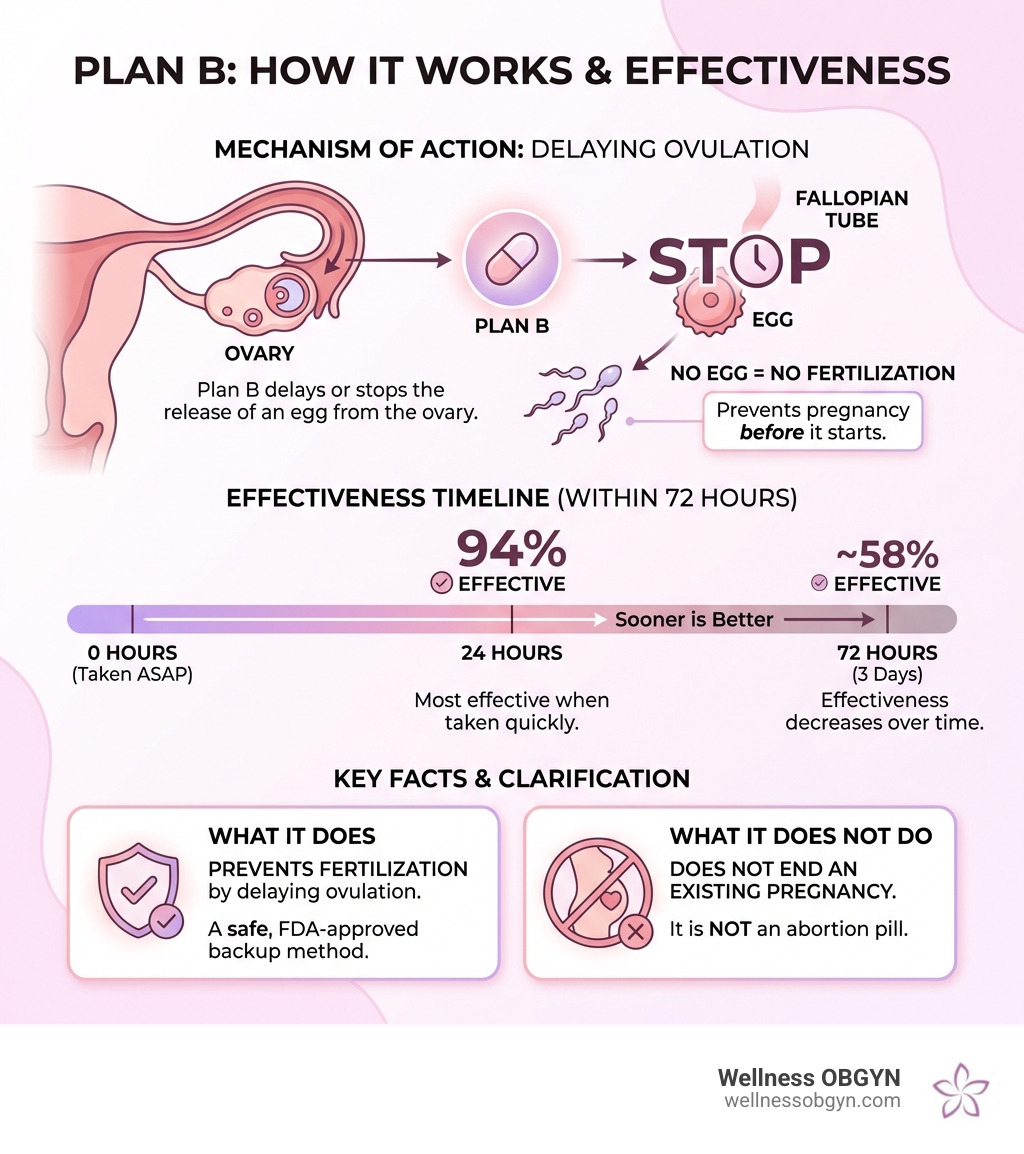
- How effective: 94% effective if taken within 24 hours; about 58% effective at 72 hours
- Where to get it: Available over-the-counter at pharmacies without a prescription, regardless of age
- Cost: Brand-name Plan B costs $40-$50; generic versions cost $11-$45
- How it works: Delays or stops ovulation (the release of an egg)—it does not end an existing pregnancy
Whether a condom broke, you missed birth control pills, or another contraceptive accident happened, understanding your options helps you make informed decisions quickly. Plan B has been used by millions of people and and is a safe, FDA-approved backup method when your regular birth control fails or isn’t used.
As Dr. Cheryl Twu at Wellness OBGYN in Honolulu, we have spent over a decade helping women steer reproductive health decisions, including providing accurate Plan B information and emergency contraception counseling. Our goal is to ensure you have clear, judgment-free guidance when you need it most.
Plan B information terms you need:
- different birth control methods
- family planning benefit program
- what is the family planning services program
What is Plan B and How Does It Work?
When we talk about Plan B, we’re referring to a specific type of emergency contraception (EC) known as a “morning-after pill.” It’s a backup method of birth control designed to be used after unprotected sex or a contraceptive failure. Think of it as your safety net, not your primary plan!
The active ingredient in Plan B One-Step and its generic equivalents is 1.5mg of levonorgestrel, a synthetic hormone that has been safely used in birth control pills for over 35 years. This progestin-only hormone works primarily by preventing pregnancy before it starts.
So, how does it work its magic? Plan B’s main mechanism of action is to temporarily stop or delay ovulation – the release of an egg from the ovary. If no egg is released, there’s nothing for sperm to fertilize, preventing pregnancy. It can also prevent fertilization if ovulation has already occurred.
It’s crucial to understand what Plan B does not do. Plan B is not an abortion pill. It will not work if you are already pregnant, and it will not affect an existing pregnancy. The FDA has clarified that scientific evidence supports that Plan B works by inhibiting or delaying ovulation and midcycle hormonal changes, with no direct effect on fertilization or implantation. This means it acts very early in the reproductive cycle, well before a pregnancy is established. For more detailed scientific research on how Plan B works, you can refer to the FDA’s information on levonorgestrel.
Essential Plan B Information: Timing and Effectiveness
Timing is everything when it comes to emergency contraception. The sooner you take Plan B after unprotected sex, the more effective it will be. We often hear it called the “morning-after pill,” but that name can be a bit misleading because you don’t have to wait until the morning—you should take it as soon as possible!
Levonorgestrel-based pills like Plan B One-Step, Take Action, My Way, and others can significantly lower your chance of getting pregnant. Studies show they can be around 94% effective if taken within the first 24 hours after unprotected sex. This effectiveness decreases over time, dropping to about 58% if taken within 72 hours (three days). While it can still offer some protection up to 120 hours (five days) after unprotected sex, its efficacy is greatly reduced. Our best advice is always: act fast!
How Effective Is Plan B Compared to Other Emergency Contraception Methods?
While Plan B is a highly accessible and effective option, it’s important to know that it’s not the only emergency contraception available, nor is it the most effective overall.
- Levonorgestrel pills (like Plan B One-Step): These are the most common and widely available, working best within 72 hours.
- Ulipristal acetate (ella®): This is another type of morning-after pill that requires a prescription. It can be as high as 98% effective if taken within the first 24 hours and remains highly effective for up to 120 hours (five days) after unprotected sex. It may be a better option if more than 72 hours have passed or if you have certain weight considerations.
- Copper IUD (intrauterine device): This is the most effective form of emergency contraception. If inserted within five days of unprotected sex, it can be more than 99% effective and can then serve as a highly reliable form of ongoing birth control for many years.
Are There Any Weight Considerations for the Effectiveness of Plan B?
Yes, this is an important piece of Plan B information. Research suggests that levonorgestrel emergency contraceptive pills, including Plan B, may be less effective for individuals weighing over 75kg (165lbs) or with a Body Mass Index (BMI) greater than 25 kg/m2.
If you fall into this category, we encourage you to speak with a healthcare provider, like us at Wellness OBGYN in Honolulu, or a pharmacist. They can discuss alternative emergency contraception methods, such as ulipristal acetate (ella®) or the copper IUD, which may be more effective for you. It’s vital to ensure you’re getting the most effective protection possible.
Accessing Plan B Information and Options
One of the great advantages of Plan B and its generic versions is their accessibility.
Where Can Plan B Be Purchased, and Is a Prescription Required?
Good news! Plan B One-Step and its generic equivalents are available over-the-counter (OTC) at most drugstores and pharmacies. You do not need a prescription, and there are no age or gender restrictions to purchase it. Sometimes, these pills might be kept behind the pharmacy counter, so don’t hesitate to ask a pharmacist or store clerk for assistance. They are there to help you.
What Are the Different Types of Morning-After Pills Available?
As we mentioned, there are two main FDA-approved types of morning-after pills:
- Levonorgestrel-based pills: These include brand names like Plan B One-Step, and generic versions such as Take Action, My Way, Option 2, Preventeza, AfterPill, My Choice, Aftera, and EContra. They all contain 1.5mg of levonorgestrel and work in the same way.
- Ulipristal acetate (ella®): This is a different medication that requires a prescription. It’s effective for a longer window (up to 120 hours or 5 days) and may be more effective for individuals with higher body weights.
How Much Does Plan B Typically Cost, and Are There More Affordable Generic Options?
The cost of emergency contraception can vary, but there are definitely more affordable options. Plan B One-Step usually costs about $40–$50. However, generic levonorgestrel pills generally cost less, ranging from about $11–$45. These generic versions are just as effective as the brand-name Plan B because they contain the exact same active ingredient and dosage. You can also order some generic brands like AfterPill online for about $20 plus $5 shipping, though this isn’t suitable for immediate use if you need it right away.
Can Health Insurance Cover the Cost of Plan B?
Yes, potentially! Even though levonorgestrel emergency contraception is available over-the-counter, if you get a prescription for it from a healthcare provider, your health insurance may cover the cost. This can make a big difference in affordability. We encourage you to speak with us at Wellness OBGYN or your primary care provider about obtaining a prescription to explore this option. Additionally, family planning clinics or local health departments in Honolulu may offer Plan B or other emergency contraception at a free or reduced cost.
Side Effects and Safety Precautions
When considering any medication, it’s natural to wonder about side effects and safety. Rest assured, levonorgestrel emergency contraception is considered very safe, and millions of people have used it without reports of serious problems.
What Are the Potential Side Effects of Taking Plan B?
Most side effects are mild and typically subside within a day or two. Common side effects include:
- Nausea or upset stomach
- Headache
- Dizziness or lightheadedness
- Fatigue
- Tender breasts
- Abdominal pain or cramps
One of the most noticeable effects can be changes to your menstrual cycle. Your next period might be earlier, later, heavier, lighter, or involve some spotting. If your period is delayed by more than a week after taking Plan B, or if it’s unusually light, we recommend taking a pregnancy test.
What if you vomit after taking Plan B? If you throw up within two hours of taking the pill, it may not have been absorbed effectively. In this case, you should contact a healthcare professional or pharmacist to ask if you should take another dose.
Who Should Not Take Plan B, and Are There Any Contraindications?
Plan B is safe for most women, but there are a few situations where it might not be appropriate or effective:
- If you are already pregnant: Plan B will not work if you are already pregnant and will not harm an existing pregnancy. It’s designed to prevent pregnancy, not end one.
- Allergy to ingredients: If you have a known allergy to levonorgestrel or any other ingredients in the pill.
- Not for routine use: Plan B is not meant to be a primary method of birth control. It’s less effective than regular contraception and should only be used in emergencies.
- Severe liver problems: If you have severe liver disease, discuss with your doctor.
For more information on risks associated with emergency contraception, the Mayo Clinic provides comprehensive research.
What Medications or Supplements Can Interfere with the Effectiveness of Plan B?
Certain medications and herbal supplements can unfortunately reduce the effectiveness of levonorgestrel emergency contraception. It’s always a good idea to discuss any medications you are taking with a pharmacist or healthcare provider before taking Plan B. Some common culprits include:
- The antibiotic Rifampin
- The antifungal Griseofulvin
- Certain HIV medicines
- Certain anti-seizure medicines
- The herbal supplement St. John’s Wort
If you are taking any of these, or are unsure, please consult with a healthcare professional to ensure you choose the most effective emergency contraception method for your situation.
Does Plan B Protect Against STIs?
This is a critical piece of Plan B information: No, Plan B does not protect against sexually transmitted infections (STIs), including HIV/AIDS. Emergency contraception only helps prevent pregnancy.
To protect yourself from STIs, we always recommend using barrier methods like condoms consistently and correctly during every sexual encounter. Regular STI testing is also a vital part of maintaining your sexual health, especially if you have new partners or multiple partners.
How Does Plan B Fit Into a Regular Birth Control Regimen?
Plan B is an emergency measure, a backup plan for when your primary birth control fails or isn’t used. It is not designed to be used as a regular form of birth control because it is not as effective as consistent, daily methods.
If you find yourself needing to use Plan B frequently, it’s a clear sign that your current birth control method isn’t meeting your needs, or you might not be using it correctly. In such cases, we strongly encourage you to talk to us at Wellness OBGYN about finding a more reliable “Plan A” that fits your lifestyle. This could include daily pills, patches, rings, implants, or IUDs, which offer much higher efficacy rates for preventing pregnancy.
Beyond contraception, we understand that sexual wellness encompasses a broader spectrum of physical and emotional well-being. Many women experience issues that can impact their intimate lives, such as decreased sensation, pain during intercourse, or urinary incontinence. For those seeking to improve their sexual health and overall quality of life, we offer advanced, non-surgical solutions.
Frequently Asked Questions
We know you might have more questions, and we’re here to provide clear, straightforward answers.
Where Can I Find Reliable Plan B Information?
Finding accurate and reliable Plan B information is crucial. We always recommend consulting trusted medical sources and healthcare professionals. You can get comprehensive information from:
- Your local pharmacist, who can answer questions about dosage, side effects, and interactions.
- Healthcare providers like us at Wellness OBGYN in Honolulu. We are dedicated to providing personalized guidance.
- Official sources like the FDA website or Planned Parenthood.
- The manufacturer’s website for Plan B One-Step, which often includes extensive FAQs.
Is Plan B the same as the abortion pill?
No, Plan B is absolutely not the same as the abortion pill. This is a common misconception that often causes confusion and distress.
- Plan B (levonorgestrel) works to prevent pregnancy before it starts, primarily by delaying or stopping ovulation. It prevents fertilization. If an egg has already been fertilized and implanted, Plan B will not work and will not affect the pregnancy.
- The abortion pill (which typically involves medications like mifepristone and misoprostol) works to terminate an existing pregnancy. These are entirely different medications with different mechanisms of action and purposes.
Plan B does not cause an abortion and will not harm an established pregnancy.
Does Plan B protect against STIs?
To reiterate, no, Plan B does not protect against sexually transmitted infections (STIs). Emergency contraception is solely for preventing pregnancy. To protect yourself from STIs, we strongly recommend using condoms consistently and correctly every time you have sex. Regular STI testing is also important for your health and the health of your partners.
What should someone do if they take Plan B and still get their period within 3 weeks?
If you take Plan B and then get your period within three weeks, it is generally a good sign that the emergency contraception was successful and you are not pregnant. However, Plan B can affect the timing and characteristics of your menstrual cycle. Your period might come earlier or later than expected, or it might be lighter or heavier than usual.
If your period is significantly different from your normal cycle, or if you have any doubts, it’s always a good idea to take a pregnancy test. A pregnancy test should be accurate if taken at least one week after your missed period, or about three weeks after the unprotected sex. If you do not get your period within three weeks of taking Plan B, or if you have concerns about your period or any other symptoms, we recommend contacting us at Wellness OBGYN for advice and possibly a follow-up appointment.
Conclusion
Navigating unexpected situations can be stressful, but having accurate Plan B information empowers you to make informed decisions about your reproductive health. Plan B is a safe and effective emergency contraceptive that works by preventing pregnancy before it starts, offering a crucial backup when other methods fail or are forgotten. It’s not a substitute for regular birth control and provides no protection against STIs.
For more information about female reproductive health services and to explore all your options, please visit our website: More info about female reproductive health services. We’re here to help you feel informed, in control, and well-cared for.