
Why Women Are Turning to Natural Birth Control
5 natural methods of contraception offer hormone-free alternatives for pregnancy prevention. These approaches work by helping you identify your fertile window and either abstaining from sex or using barrier protection during those days.
The five core natural methods include:
- Basal Body Temperature (BBT) Tracking – Monitor your morning temperature to detect the post-ovulation rise
- Cervical Mucus Method – Observe daily changes in vaginal discharge to identify fertile days
- Calendar-Based Methods – Track cycle length to predict when ovulation will occur
- Lactational Amenorrhea Method (LAM) – Use exclusive breastfeeding as temporary contraception for up to 6 months postpartum
- Symptothermal Method – Combine temperature, mucus, and calendar tracking for increased accuracy
These methods range from 76% to 99% effective depending on which approach you use and how consistently you follow the guidelines. Perfect use requires daily tracking, partner cooperation, and a solid understanding of your menstrual cycle.
Growing skepticism around hormonal birth control has led many women to explore these body-literacy approaches. Rather than suppressing your natural cycle, these methods teach you to work with it. You’ll gain deep knowledge of your fertility patterns, avoid synthetic hormones, and maintain full control over your reproductive health.
That said, natural methods demand motivation and discipline. They offer no protection against STIs, work best with regular cycles, and require both partners to be fully committed. For some women, the trade-off is worth it. For others, more reliable options may be a better fit.
I’m Dr. Cheryl Twu, a board-certified OB-GYN who has spent over a decade helping women steer contraceptive choices, including 5 natural methods of contraception, through personalized counseling that honors both your values and your health goals. At Wellness OBGYN in Honolulu, I support patients in finding the family planning approach that truly fits their lives—whether that’s fertility awareness, hormonal options, or a combination of methods.
Must-know 5 natural methods of contraception terms:
Understanding the 5 natural methods of contraception
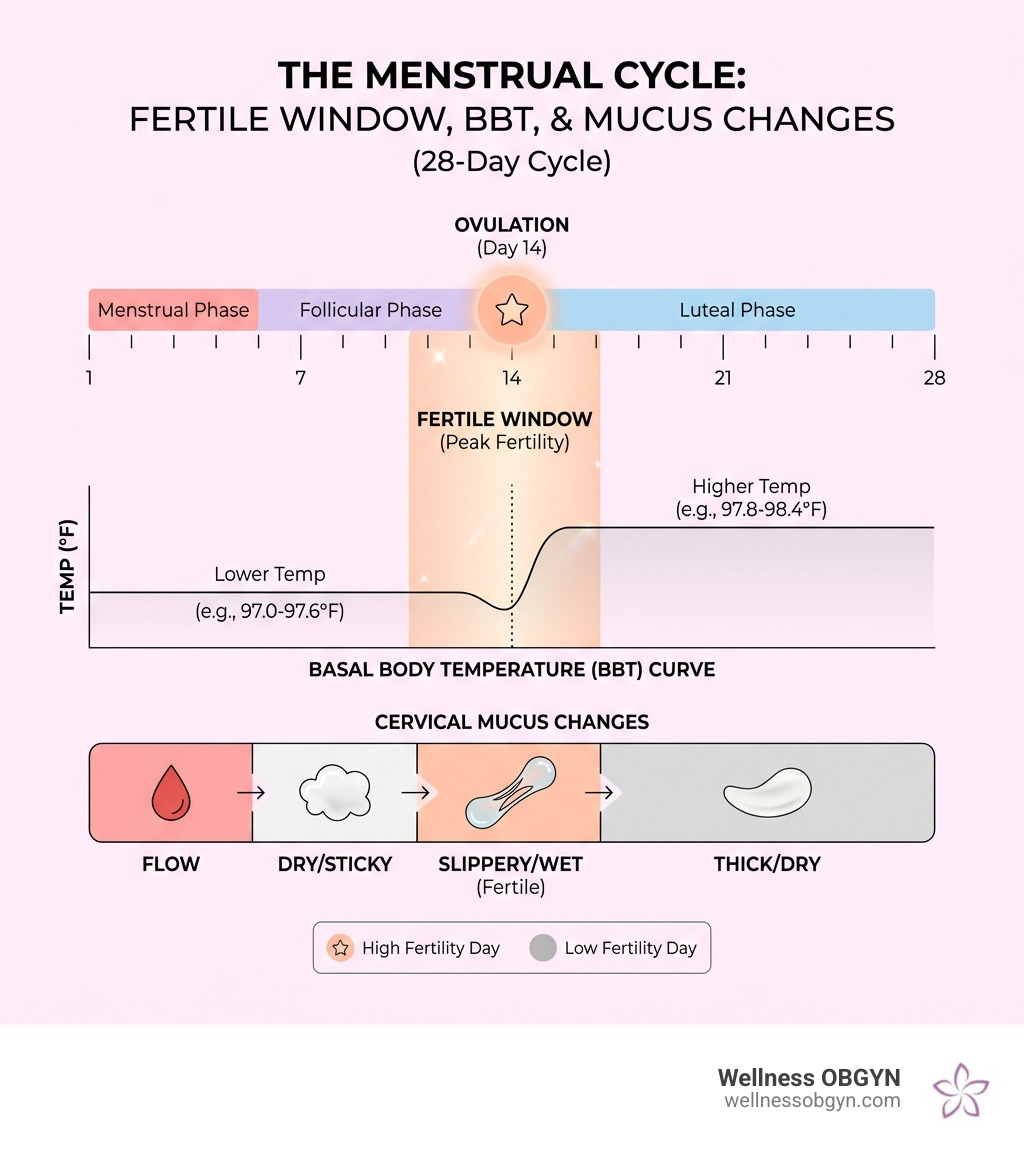
Natural family planning, often referred to as fertility awareness methods (FAMs), is a way of preventing pregnancy by understanding and tracking your menstrual cycle to identify fertile and infertile periods. The core principle is simple: avoid unprotected sex during your fertile window. This window is when you are most likely to conceive, typically lasting about seven days each cycle, encompassing the five days leading up to ovulation, the day of ovulation itself, and possibly a day or two after. This is because sperm can survive in the reproductive tract for up to six days, and an egg is viable for fertilization for 12-24 hours after it’s released.
These methods empower you to become intimately familiar with your body’s natural rhythms. They don’t involve invasive procedures, barrier methods, creams, or hormones. However, they do require daily dedication, meticulous observation, and a solid understanding of your body’s signals.
The effectiveness of natural family planning can vary significantly between “perfect use” and “typical use.” Perfect use means following the instructions exactly, every single time. Typical use reflects how people use the method in real life, which can include occasional mistakes or inconsistencies. When used correctly all the time, fertility awareness methods are between 91% and 99% effective at preventing pregnancy. However, if you do not follow the instructions exactly, their effectiveness drops to about 76%, meaning 24 out of 100 women could get pregnant within a year. This highlights the crucial role of diligence and accuracy.
We believe in providing you with all the information you need to make informed choices about your reproductive health. Let’s dig into the specific techniques involved in the 5 natural methods of contraception.
1. Basal Body Temperature (BBT) Tracking
The Basal Body Temperature (BBT) method relies on detecting a subtle rise in your body’s resting temperature after ovulation. This thermal shift, typically around 0.5 to 1.0 degree Fahrenheit, is triggered by the increase in progesterone levels that occurs after an egg has been released.
To use this method effectively, you’ll need a special basal body thermometer, which is more sensitive than a regular fever thermometer. Each morning, before you get out of bed, eat, drink, or engage in any activity, you take your temperature. It’s crucial to do this at the same time every day, or as close as possible, for consistent readings. We then chart these daily temperatures. After ovulation, you’ll observe a sustained rise in temperature for at least three consecutive days, confirming that ovulation has occurred. The fertile window is considered closed after this sustained temperature rise.
While this method helps confirm ovulation, it doesn’t predict it in advance. Therefore, to prevent pregnancy, you must avoid unprotected sex from the first day of your period until the third day after your temperature has consistently risen. Factors like illness, stress, alcohol consumption, and irregular sleep patterns can all affect your BBT readings, making accurate interpretation challenging.
At Wellness OBGYN, we provide personalized women’s healthcare to help you understand your unique cycle and how various factors might influence your fertility tracking.
2. The Cervical Mucus Method (Billings Method)
The Cervical Mucus Method, also known as the Ovulation Method or Billings Method, involves observing changes in your vaginal discharge throughout your menstrual cycle. These changes are influenced by fluctuating estrogen levels and provide crucial clues about your fertility.
After your period, you’ll typically have a few “dry” days with little to no mucus. As ovulation approaches, your body produces more estrogen, leading to an increase in cervical mucus. This mucus will become progressively wetter, clearer, and more stretchy, often resembling raw egg whites. This “egg white cervical mucus” (EWCM) is the most fertile type, as it helps sperm travel through the cervix and survive longer. This stretchy quality is sometimes called “spinnbarkeit.”
To use this method, you check your cervical mucus several times a day, typically before and after using the restroom. You observe its color, consistency, and how it feels (e.g., sticky, creamy, watery, slippery). You chart these observations daily. The fertile window begins when you first notice any mucus and continues through the last day you observe the clear, stretchy, “egg white” mucus. To avoid pregnancy, you abstain from unprotected sex during this entire fertile period.
Understanding and interpreting cervical mucus requires careful observation and practice. Lube, vaginal sex, douching, breastfeeding, and certain medications can all affect cervical mucus, making interpretation more complex. Our holistic approach to women’s health emphasizes understanding these bodily cues and how they relate to your overall well-being.
3. Calendar-Based Tracking and Standard Days
Calendar-based methods involve tracking your menstrual cycle length over several months to predict your fertile window. The most common calendar method is the Standard Days Method (SDM).
The Standard Days Method is specifically designed for women with regular menstrual cycles that typically range between 26 and 32 days long. For these individuals, the method identifies days 8 through 19 of the cycle as the most fertile. To prevent pregnancy, you would avoid unprotected sex during these “fixed fertile days.” This means that if your period starts on Day 1, you would use a backup method or abstain from unprotected sex from Day 8 until Day 19.
This method requires consistent cycle length. If your cycle length varies significantly, or if it falls outside the 26-32 day range, the Standard Days Method may not be suitable for you. Irregular periods can be caused by various factors, including stress, illness, weight changes, and certain medical conditions like polycystic ovary syndrome (PCOS). It’s generally recommended to track your cycle for at least 6-12 months before relying on calendar-based methods to ensure you have a consistent pattern.
While simpler to learn than daily temperature or mucus tracking, calendar methods are generally less effective than methods that rely on real-time body signs, especially if there’s any variability in your cycle. With perfect use, the Standard Days Method is about 95% effective, but with typical use, its effectiveness can drop to 88%. This means 12 out of 100 women might get pregnant in a year with typical use.
Postpartum Protection: The Lactational Amenorrhea Method (LAM)

The Lactational Amenorrhea Method (LAM) is a temporary, natural method of contraception that can be highly effective for new mothers who are exclusively breastfeeding. Its effectiveness relies on the hormonal changes induced by frequent and intense breastfeeding. The hormone prolactin, which is stimulated by suckling, suppresses the release of hormones necessary for ovulation. Essentially, breastfeeding signals your body to delay the return of fertility.
For LAM to be effective as contraception, three strict conditions must be met:
- You must be exclusively or nearly exclusively breastfeeding. This means feeding your baby only breast milk, directly from the breast, on demand, and frequently. Gaps between feeds should be no longer than four hours during the day and six hours at night. Pumping breast milk, or supplementing with formula or solid foods, can reduce prolactin levels and therefore reduce LAM’s effectiveness.
- Your baby must be less than six months old. After six months, even with exclusive breastfeeding, your fertility is more likely to return, and the method becomes less reliable.
- Your menstrual period must not have returned. The return of menstruation indicates that your ovaries are likely beginning to ovulate again, even if you are still breastfeeding. Since ovulation typically occurs before your first period, you could become pregnant before noticing menstruation.
When all three conditions are followed perfectly, LAM is more than 99% effective at preventing pregnancy. However, if these instructions are not followed exactly, its effectiveness drops to 98%, meaning 2 out of 100 women might get pregnant within six months of giving birth. This is why it’s considered a temporary option, and we recommend discussing other birth control options with us as your baby approaches six months or if any of the conditions are no longer met. You can find more detailed information on Fertility UK: breastfeeding – lactational amenorrhoea method.
The Withdrawal Method: Risks and Realities
The withdrawal method, often referred to as “pulling out,” is one of the oldest forms of contraception. It involves the male partner withdrawing his penis from the vagina before ejaculation occurs, aiming to prevent sperm from entering the female reproductive tract.
While it might seem straightforward, the withdrawal method comes with significant risks and is generally not recommended as a primary form of contraception. The main reason for its unreliability is the presence of pre-ejaculate fluid. This fluid, which is released before full ejaculation, can contain sperm. Even a small amount of sperm entering the vagina can lead to pregnancy, as sperm can remain viable for up to six days. Additionally, successful withdrawal requires a high degree of self-control, experience, and perfect timing, which can be difficult to achieve consistently during sexual arousal.
With perfect use, the withdrawal method is estimated to be about 96% effective, meaning 4 out of 100 couples would get pregnant in a year. However, with typical use, its effectiveness drops considerably to around 80%. This means that 20 out of 100 couples using the pull-out method will get pregnant within a year. This high failure rate makes it one of the least effective birth control methods.
Why Withdrawal is Often Excluded from 5 natural methods of contraception Lists
When we discuss 5 natural methods of contraception, we typically focus on Fertility Awareness Methods (FAMs) and the Lactational Amenorrhea Method (LAM) because these strategies involve a deeper understanding of the female reproductive cycle and, when used diligently, can offer a more predictable level of effectiveness. The withdrawal method, while natural in the sense that it doesn’t use devices or hormones, is primarily a behavioral technique that doesn’t rely on tracking fertility signs.
The key reasons it’s often excluded from lists of reliable natural family planning techniques include:
- High Failure Rates with Typical Use: As noted, the typical use failure rate of 20% is significantly higher than most other natural methods when used correctly. This makes it a less dependable option for those actively trying to prevent pregnancy.
- Lack of Control Over Fertility: Unlike FAMs, which empower individuals with knowledge of their fertile window, the withdrawal method doesn’t offer any insights into a woman’s cycle. It places the entire responsibility on the male partner’s ability to withdraw in time, which can be unpredictable.
- Pre-ejaculate Risk: The involuntary release of sperm-containing fluid before ejaculation is a biological reality that undermines the method’s efficacy.
- No STI Protection: Like all natural methods, withdrawal offers absolutely no protection against sexually transmitted infections (STIs).
For individuals or couples seeking reliable contraception, we often recommend exploring other options. For those considering a different approach, we can discuss alternatives, including best hormonal birth control methods, which offer much higher efficacy rates.
Maximizing Success with Natural Family Planning
The effectiveness of natural family planning methods hinges on diligent tracking, consistent practice, and a deep understanding of your body. To maximize your success, we often recommend combining multiple fertility awareness techniques, known as the Symptothermal Method.
The Symptothermal Method integrates:
- Basal Body Temperature (BBT) Tracking: To confirm ovulation has occurred.
- Cervical Mucus Observation: To identify the onset and peak of fertility.
- Calendar Tracking: To provide a general prediction of your cycle and identify patterns.
- Cervical Position Changes: Some women also track changes in their cervix (softness, openness, height) as an additional indicator.
By cross-referencing these different signs, you gain a more accurate picture of your fertile window, reducing the risk of error that can come from relying on a single indicator. This comprehensive approach significantly increases the perfect-use effectiveness of FAMs.
Key considerations for maximizing success:
- Daily Diligence: Consistency is paramount. Missing days of tracking or making inconsistent observations can compromise accuracy.
- Partner Support: Natural family planning is most successful when both partners are committed and educated about the method. Open communication and shared responsibility are essential.
- Backup Barrier Methods: During your identified fertile window, you must either abstain from vaginal intercourse or use a reliable barrier method, such as condoms, to prevent pregnancy.
- STI Protection Limitations: It’s critical to remember that natural family planning offers no protection against sexually transmitted infections. If STI protection is a concern, condoms are necessary, regardless of the contraceptive method you choose.
When to Seek Professional Guidance for 5 natural methods of contraception
Learning and effectively using 5 natural methods of contraception can be complex, especially in the initial stages. We strongly recommend seeking professional guidance to ensure you are using these methods correctly and safely.
- Expert Training: A fertility awareness practitioner or a midwife can provide personalized instruction on how to accurately track your fertility signs, interpret your charts, and understand the nuances of your unique cycle. They can help you identify your fertile window with greater confidence.
- Irregular Periods: If you have irregular periods, natural family planning methods that rely on predictable cycles (like calendar methods) may not be suitable. A healthcare provider can help determine if FAMs are still an option for you, perhaps by focusing more on real-time body signs like BBT and cervical mucus, or suggest alternative contraceptive options.
- Learning Period: It can take 2 to 3 menstrual cycles to truly understand and feel confident in using the fertility awareness method properly. During this learning period, it’s advisable to use additional contraception or abstain from sex to avoid unintended pregnancy.
- Health Conditions & Medications: Certain health conditions or medications can affect your fertility signs (e.g., fever impacting BBT, vaginal infections altering cervical mucus). We can help you steer these complexities and determine if natural family planning remains a viable option.
At Wellness OBGYN in Honolulu, we are here to support you in exploring all your family planning options. We can connect you with resources and provide the guidance needed to master these natural methods or help you find other solutions that align with your health goals and lifestyle.
Frequently Asked Questions about Natural Birth Control
We understand that choosing a birth control method is a very personal decision, and you likely have many questions. Here are some of the most common inquiries we receive about natural birth control:
How effective are natural methods compared to the copper IUD?
When we compare the effectiveness of 5 natural methods of contraception to highly effective medical options, it’s important to look at both perfect and typical use.
- Natural Family Planning (FAMs): With perfect use (meaning instructions are followed exactly every time), FAMs can be between 91% and 99% effective. However, with typical use (real-world application, allowing for mistakes), their effectiveness drops to about 76%–93%. This means that between 7 and 24 out of 100 women using FAMs typically get pregnant each year.
- Lactational Amenorrhea Method (LAM): When used perfectly under strict conditions (exclusive breastfeeding, baby under 6 months, no period returned), LAM is more than 99% effective. Typical use reduces this slightly to 98% within the first 6 months.
- Copper IUD: The copper IUD (intrauterine device) is one of the most effective forms of contraception available. It is more than 99% effective with both typical and perfect use. This means less than 1 in 100 women will get pregnant each year. Its high effectiveness is largely due to its “set-it-and-forget-it” nature, requiring no daily action from the user after insertion.
As you can see, while some natural methods can be highly effective with perfect use, their typical use effectiveness is generally lower than that of the copper IUD. The copper IUD also offers long-term protection, lasting for up to 10 years.
Do natural methods protect against STIs?
No, this is a crucial point to understand: none of the 5 natural methods of contraception offer any protection against sexually transmitted infections (STIs). Natural family planning methods are designed solely to prevent pregnancy by identifying and avoiding intercourse during the fertile window. They do not create a physical barrier or use any substances that can prevent the transmission of bacteria or viruses.
If you are concerned about STIs, or if you have multiple partners, it is essential to use barrier methods like condoms (male or female) consistently and correctly. Condoms are the only form of contraception that protects against both pregnancy and STIs. If you are using natural family planning to prevent pregnancy, and you also need STI protection, we recommend using condoms during your fertile window or whenever there’s a risk of STI exposure.
Can I use apps to track my fertility?
Yes, many individuals use apps and digital tools to help track their fertility signs. These apps can be quite helpful for charting Basal Body Temperature (BBT), cervical mucus observations, and cycle length. Some apps, like Natural Cycles (which is FDA-cleared), use algorithms to predict fertile windows based on your daily temperature data and other inputs.
Pros of using fertility apps:
- Convenience: Digital tracking can be easier than manual charting.
- Data Analysis: Apps can help identify patterns and predict ovulation.
- Reminders: Many apps offer reminders for taking temperature or making observations.
- Educational Resources: Some provide valuable information about your cycle.
Cons and important considerations:
- Not a Substitute for Learning: While apps are helpful tools, they are not a substitute for understanding your body’s signs yourself. It’s crucial to learn how to interpret your fertility indicators independently.
- Accuracy Varies: The accuracy of apps can vary. Some are more rigorously tested and regulated (like FDA-cleared apps) than others.
- User Error: Apps still rely on accurate input from the user. Mistakes in temperature taking or mucus observation can lead to incorrect fertility predictions.
- Irregular Cycles: Apps may struggle to accurately predict fertility for individuals with highly irregular cycles.
- No Official Recommendation (for all apps): While some apps are clinically validated, health organizations may not officially recommend all fertility tracking apps as primary birth control methods without proper training and understanding of the underlying physiological signs.
We advise discussing any fertility tracking apps you plan to use with your healthcare provider. We can help you understand their limitations and ensure you are using them effectively as part of your overall natural family planning strategy.
Conclusion
Exploring 5 natural methods of contraception offers a unique path to family planning, aligning with a desire for hormone-free living and a deeper connection to your body’s rhythms. From the diligent daily tracking of Basal Body Temperature and Cervical Mucus, to the pattern recognition of Calendar-Based methods, the temporary protection of Lactational Amenorrhea, and the combined power of the Symptothermal Method, each option comes with its own requirements for success.
While these methods provide empowering insights into your fertility and avoid synthetic hormones, they demand commitment, discipline, and often, partner involvement. Their effectiveness, particularly with typical use, can be lower than other contraceptive options, and remember they offer no protection against STIs.
At Wellness OBGYN in Honolulu, our approach to women’s health is patient-centered, emphasizing shared decision-making. We believe in providing you with comprehensive information and support to choose the family planning method that best suits your lifestyle, health goals, and personal values. Whether you’re considering natural methods, hormonal options, or a combination, we’re here to guide you every step of the way.
We encourage you to schedule a consultation with us to discuss your options and create a personalized plan for your reproductive health. Together, we can ensure you feel confident and empowered in your choices.
Family Planning Made Easy: Tips for Conception and Reproductive Health