
What’s the Go-To Choice for Birth Control?
When it comes to the most popular birth control method, the answer isn’t straightforward – it depends on your age, lifestyle, and personal needs. However, recent data from the National Survey of Family Growth reveals clear favorites among American women:
Top 4 Most Popular Birth Control Methods:
- Female sterilization – 18.1% of women aged 15-49
- The birth control pill – 14.0% of women aged 15-49
- Long-acting reversible contraceptives (LARCs) – 10.4% of women aged 15-49
- Male condoms – 8.4% of women aged 15-49
The landscape of contraception has shifted significantly over the past two decades. While female sterilization and the pill have remained the two most popular methods since 1982, we’ve seen notable increases in LARC methods (IUDs and implants) and decreases in permanent methods among younger women.
Age matters tremendously in method choice. Women in their 40s gravitate toward sterilization, while those in their 20s and 30s prefer reversible options like the pill and LARCs. Education level also plays a role – pill use increases with higher education, while sterilization decreases.
As Dr. Cheryl Twu, board-certified OB-GYN and founder of Wellness OBGYN in Honolulu, I’ve guided thousands of women through contraceptive decisions over my decade-plus career in women’s health. Understanding the most popular birth control method trends helps inform personalized care, but the best choice is always the one that fits your unique life circumstances and health needs.
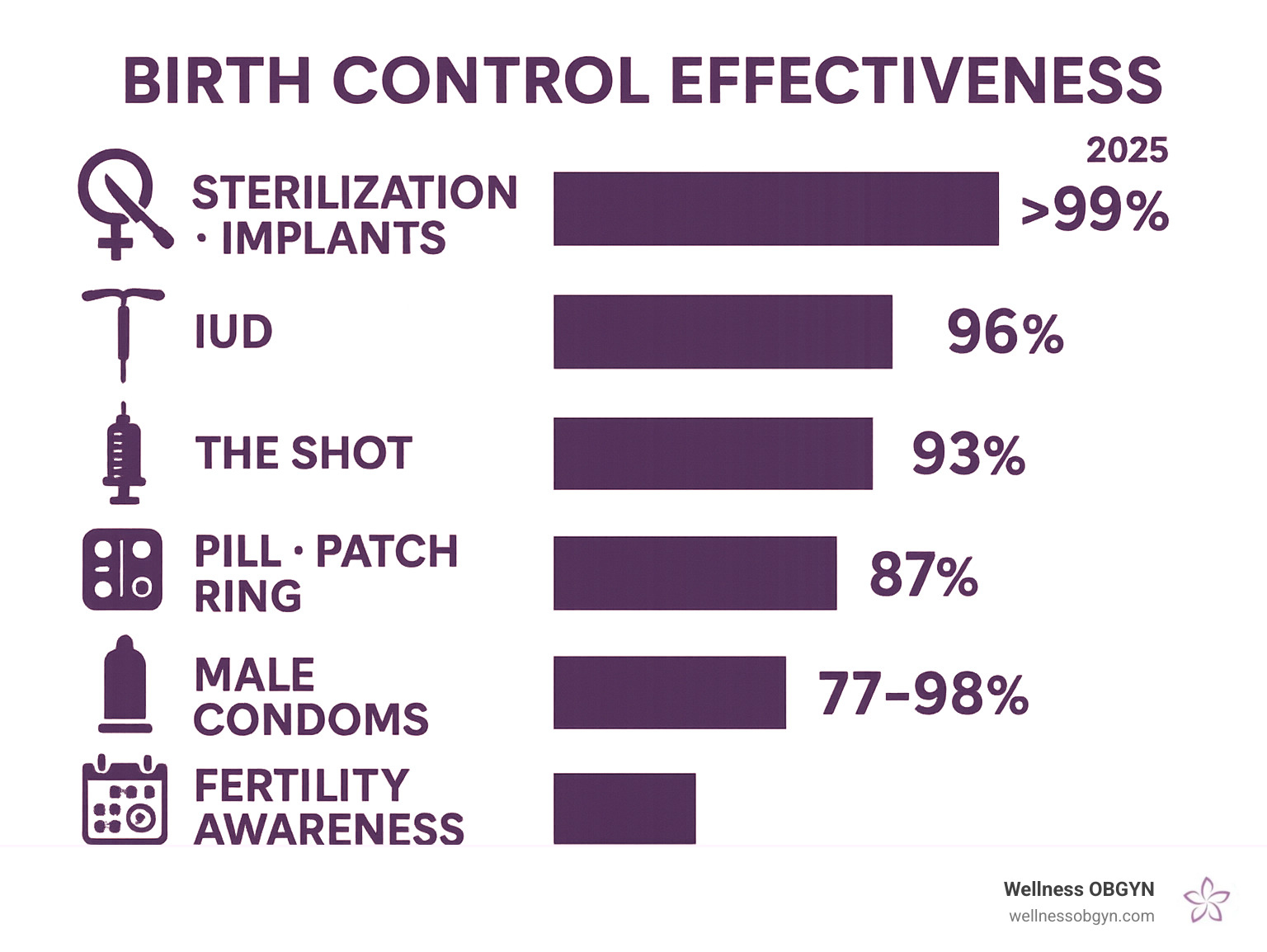
The Top 4 Most Popular Birth Control Methods in the U.S.
When we look at the most popular birth control method choices across America, we see fascinating patterns that tell the story of women’s evolving needs. The CDC’s National Survey of Family Growth reveals how age, education, and lifestyle shape these deeply personal decisions.
What’s really interesting is how dramatically preferences shift with life stages. A 25-year-old might swear by the pill, while her 45-year-old sister has chosen sterilization. Understanding these trends helps us see the bigger picture of women’s reproductive health choices.
The data shows clear winners, but remember – popularity doesn’t automatically mean “best for you.” Let’s explore what makes each of these methods so appealing to different groups of women, drawing from ACOG’s effectiveness guidelines to give you the complete picture.
1. Female Sterilization (Tubal Ligation)
Female sterilization consistently ranks as America’s most popular birth control method overall, chosen by 18.1% of women aged 15-49. This surgical procedure – often called “getting your tubes tied” – blocks or seals the fallopian tubes permanently.
The numbers tell a compelling story about life stages. Among women in their 40s, nearly half choose sterilization, jumping to 61% for those 45-49. It makes sense when you think about it – these women have often completed their families and want the peace of mind that comes with permanent protection.
The biggest advantage? It’s incredibly effective at over 99% and requires zero daily thought once it’s done. You’ll never worry about forgetting a pill or running out of condoms again.
The trade-offs are significant though. This is permanent – while reversal is possible, it’s complex surgery with no guarantee of restored fertility. Like any surgery, there are risks including infection and bleeding, though serious complications are rare. Plus, it offers no STI protection.
2. The Birth Control Pill (Oral Contraceptives)

The pill remains a beloved choice, especially for younger women, with 14.0% of women aged 15-49 relying on it. Among women actually using contraception, about 25% choose the pill – making it clear why it’s considered a most popular birth control method.
What makes the pill so appealing goes way beyond pregnancy prevention. Many women love how it regulates their periods, making them lighter and less painful. It often clears up acne and actually reduces your risk of ovarian and endometrial cancers. For more details about different hormonal options, check out our guide on hormonal birth control options.
The pill works by preventing ovulation (no egg released), thickening cervical mucus to block sperm, and thinning the uterine lining. You’ll find combined pills (with estrogen and progestin) and progestin-only pills – each with slightly different benefits and side effects.
Here’s the catch – the pill’s effectiveness depends entirely on you taking it consistently. With typical use, it’s 93% effective, but with perfect daily use, that jumps to over 99%. Miss pills regularly, and you’re looking at higher pregnancy risk. Some women experience mood changes, nausea, or breakthrough bleeding, and there’s no STI protection.
3. Long-Acting Reversible Contraceptives (LARCs): IUDs & Implants
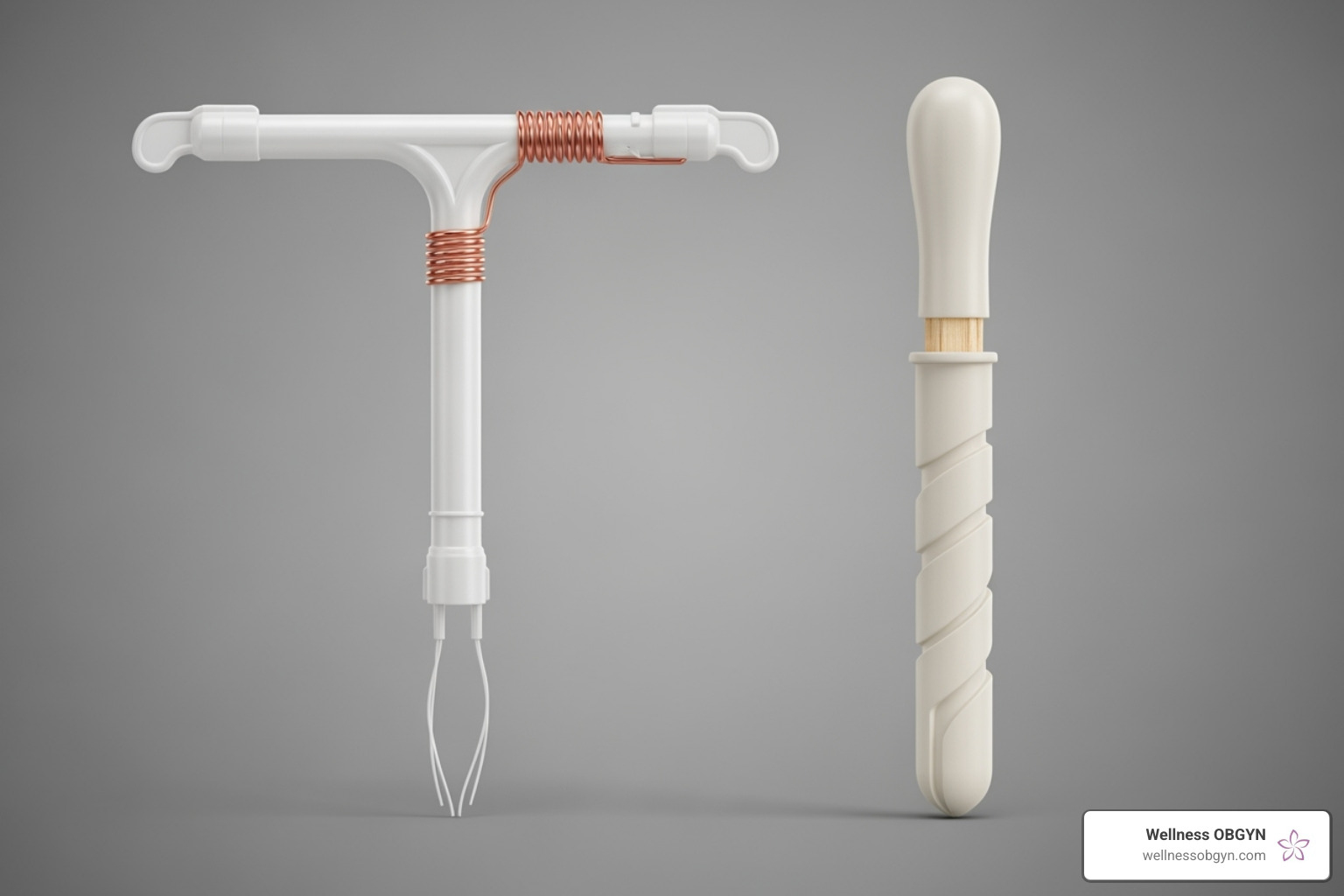
LARCs have become the darling of contraception, and honestly, it’s easy to see why. Usage jumped from just 2.4% in 2002 to 10.4% by 2017-2019 – that’s a revolution in birth control preferences! These “set-it-and-forget-it” methods offer the holy grail: incredible effectiveness with minimal effort.
IUDs come in two flavors. Hormonal IUDs release progestin, which can dramatically lighten or even stop your periods while lasting 3-8 years depending on the brand. The copper IUD (Paragard) is completely hormone-free and can protect you for up to 12 years – it works by creating an environment that’s toxic to sperm.
The contraceptive implant (Nexplanon) is a small rod placed under your upper arm skin that prevents pregnancy for up to 5 years. It’s actually the most effective hormonal method available.
Why women love LARCs: They’re over 99% effective, last for years, and you literally cannot mess them up with user error. Hormonal versions often make periods much lighter and less painful.
The downsides? You need a healthcare provider for insertion and removal, which can be uncomfortable. About 5% of women experience pain during these procedures. Irregular bleeding is common initially with hormonal options, while the copper IUD might make periods heavier. And like most methods, there’s no STI protection.
LARC duration breakdown: Hormonal IUDs last 3-8 years, copper IUDs up to 12 years, and implants up to 5 years.
4. The Male Condom
The trusty condom rounds out our top four, used by 8.4% of women aged 15-49. It’s the classic barrier method that physically prevents sperm from reaching an egg, and it deserves respect for one huge advantage: it’s the only method that prevents both pregnancy and STIs.
Condoms shine because they’re non-hormonal, completely user-controlled, and available anywhere without a prescription. If you have multiple partners or prioritize STI prevention, condoms are essential. They’re also perfect for women who can’t or don’t want to use hormonal methods.
The effectiveness reality check: With typical use, condoms are 87% effective – meaning 13 out of 100 women using them will get pregnant within a year. That jumps to 98% with perfect use, but let’s be honest – perfect use every single time is challenging. Condoms can break, slip, or be forgotten in the heat of the moment.
The key insight here is that many couples use condoms alongside more effective methods like the pill or IUDs for dual protection – pregnancy prevention plus STI protection. It’s a smart strategy that gives you the best of both worlds.
How to Choose Your Most Popular Birth Control Method
Finding the right birth control isn’t about picking the most popular birth control method – it’s about finding what works best for your unique life. At Wellness OBGYN, we believe in shared decision-making, where your voice matters just as much as our medical expertise. Together, we’ll explore your options considering everything from your daily routine to your dreams for the future.
Your Annual OBGYN Visit is the perfect time to have this important conversation. We’ll sit down and really talk about what matters most to you – no rushing, no judgment, just honest discussion about your needs and concerns.
Key Differences: Hormonal vs. Non-Hormonal
One of the biggest decisions you’ll face is whether to go hormonal or stay hormone-free. Both paths have their merits, and understanding the differences helps you make the choice that feels right.
Hormonal methods work by introducing synthetic hormones (estrogen, progestin, or both) into your body. Think of them as your body’s fertility control center – they stop ovulation so no egg gets released, thicken your cervical mucus to block sperm, and thin your uterine lining to prevent implantation. The pill, patch, ring, shot, hormonal IUDs, and implant all fall into this category.
The upside? They’re incredibly effective and often come with bonus benefits like lighter periods and clearer skin. The downside? Some women experience mood changes, weight fluctuations, or other side effects. If you have certain risk factors like a history of blood clots or migraines with aura, hormonal methods might not be your best bet.
Non-hormonal methods take a different approach entirely. They either physically block sperm from reaching an egg (like condoms and diaphragms) or create an environment hostile to sperm (like the copper IUD). These include male and female condoms, the copper IUD, diaphragms, and fertility awareness methods.
The beauty of non-hormonal methods? Zero hormonal side effects and they’re perfect if you can’t or don’t want to use hormones. The trade-off is that most are less effective than hormonal options (except that copper IUD – it’s a superstar at over 99% effective).
Factors That Influence Your Choice
Choosing birth control is deeply personal, and what works for your best friend might be completely wrong for you. That’s why we take time to understand your whole picture.
Your age plays a huge role in what might work best. According to Current Contraceptive Use data from the CDC, younger women often gravitate toward implants and pills, while those in their late twenties and thirties frequently choose IUDs. Women in their forties tend toward permanent solutions like sterilization. But remember – these are just trends, not rules!
Your relationship status and family plans matter enormously. Are you in a committed relationship or dating around? Planning kids next year or never? These answers help guide whether a permanent method, long-acting option, or something more flexible makes sense.
Cost and insurance coverage shouldn’t be barriers to good contraception. Most insurance plans now cover birth control, but we’ll work with you to find affordable options if needed. Your health is too important to compromise over cost.
Non-contraceptive benefits can be game-changers. Struggling with painful periods? The pill or hormonal IUD might help. Dealing with acne? Certain hormonal methods can clear your skin. We’ll explore all the ways your birth control can improve your life beyond pregnancy prevention.
Side effect tolerance varies wildly from person to person. Some women are super sensitive to hormonal changes, while others prefer methods they don’t have to think about daily, even if insertion is uncomfortable. We’ll be honest about what to expect and how to manage any bumps along the way.
Your lifestyle matters too. Travel frequently? A daily pill might be tricky. Prefer set-it-and-forget-it? LARCs could be perfect. We’ll match your method to how you actually live your life.
For comprehensive information about Female Reproductive Health Issues, we have extensive resources to help you understand your options.
What is the most popular birth control method for different groups?
Demographics tell fascinating stories about contraceptive choices, reflecting everything from healthcare access to cultural preferences.
Age creates clear patterns. Female sterilization dominates among women in their forties and beyond – it makes sense when you’re done having kids! The pill and LARCs shine in the twenties and thirties. Interestingly, implant use peaks among teenagers at 16%, while IUD use hits its stride among women aged 25-29 at 19%.
Education levels show striking differences. Pill use jumps dramatically with higher education – from just 5.7% for women without high school diplomas to 18.1% for those with bachelor’s degrees or higher. Meanwhile, sterilization rates flip the opposite direction, dropping from 39.9% to 12.1% as education increases. LARC use stays surprisingly consistent across education levels.
Healthcare access makes a real difference. Women without recent access to reproductive healthcare rely more heavily on condoms (23% vs. 15%) and withdrawal (13% vs. 7%). This suggests many turn to less effective but more accessible methods when professional guidance isn’t available – which is exactly why we’re passionate about making quality care accessible to everyone in our Honolulu community.
The data reminds us that the most popular birth control method isn’t just about preference – it’s about access, education, and having a healthcare provider who listens to your needs and helps you steer your options with confidence.
Beyond Pregnancy Prevention: The Added Perks of Birth Control
Here’s something that might surprise you: most popular birth control methods offer way more than just pregnancy prevention! While keeping you baby-free is their main job, many contraceptive methods come with a treasure trove of health benefits that can genuinely transform how you feel every month.
Menstrual cycle regulation is often the first bonus women notice. If your periods show up whenever they please (thanks for nothing, unpredictable cycle!), hormonal birth control like the pill, patch, or ring can bring some much-needed order to the chaos. Suddenly, you can actually plan that beach vacation without crossing your fingers.
For those dealing with heavy periods, hormonal methods can be absolute game-changers. We’re talking about going from changing super tampons every hour to having manageable, lighter flows. This isn’t just about convenience – it can prevent anemia and give you back energy you didn’t even realize you’d lost.
Reduced cramps might be the benefit that gets the biggest celebration. If you’re one of those women who used to curl up in bed with a heating pad every month, hormonal birth control can often dial down that pain significantly. Your monthly cycle becomes something you barely notice instead of something that derails your entire week.
Acne improvement is another welcome surprise for many women. By regulating hormone levels, birth control can help clear up those frustrating hormonal breakouts, leading to smoother, clearer skin. It’s like getting a skincare routine and contraception rolled into one!
Perhaps most importantly, there are significant long-term cancer risk reductions. Combined hormonal contraceptives have been shown to lower the risk of both ovarian and endometrial cancers. We’re talking about a 50% reduction in endometrial cancer risk and a 27% reduction in ovarian cancer risk – that’s pretty incredible protection.
These methods can also help manage conditions like endometriosis by reducing pain and slowing tissue growth, PCOS symptoms, and even fibroids. It’s like your birth control is multitasking behind the scenes.
If you’re curious about how we can help with comprehensive sexual wellness, we encourage you to learn about our Female Sexual Health Clinic to explore all your options.
Frequently Asked Questions About Contraception
When you’re choosing the most popular birth control method for your life, questions naturally come up. During my years of practice at Wellness OBGYN, I’ve noticed certain questions come up again and again in our consultations. Let me share the answers to the most common ones:
How effective are withdrawal and fertility awareness for birth control?
Let’s be honest – these methods get a lot of attention, but the effectiveness numbers might surprise you.
Withdrawal (the pull-out method) involves your partner withdrawing before ejaculation. Sounds simple, right? In reality, it’s only about 80% effective with typical use. That means roughly 20 out of 100 people relying on this method will get pregnant each year.
The main culprits behind its lower effectiveness? Pre-ejaculate can contain sperm, and timing can be tricky in the heat of the moment. Plus, it offers zero protection against STIs.
Fertility Awareness Methods (FAMs) involve tracking your menstrual cycle to identify fertile and infertile days. You might monitor your basal body temperature, check cervical mucus changes, or use ovulation predictor kits. These methods have a wide effectiveness range – 77-98% with typical use.
Here’s the catch: achieving that higher effectiveness requires incredibly diligent, consistent tracking every single day. Between 2 and 23 out of 100 people using FAMs will get pregnant each year. Like withdrawal, these methods don’t protect against STIs either.
What is the most effective form of birth control?
When we look at real-world effectiveness (accounting for human error), three methods stand out as the clear winners:
The implant (Nexplanon) tops the list at over 99% effective. It’s actually the most effective hormonal birth control available. IUDs – both hormonal and copper also achieve over 99% effectiveness, with less than 1 pregnancy per 100 women in the first year. Sterilization methods (tubal ligation and vasectomy) round out the top tier at over 99% effective.
These methods earn their “set-it-and-forget-it” nickname because they require minimal user action after the initial procedure or insertion. That’s exactly why they maintain such high real-world effectiveness – there’s no daily pill to remember or barrier to use correctly every time.
What is the best birth control method for preventing STIs?
This is such an important distinction that often gets overlooked. While many methods excel at preventing pregnancy, condoms are the only birth control method that protects against both pregnancy and sexually transmitted infections.
Condoms work as a physical barrier, preventing the exchange of bodily fluids that can transmit STIs. Male condoms are 87% effective at preventing pregnancy with typical use, while also providing STI protection.
For maximum protection against both pregnancy and STIs, many of our patients choose what we call “dual protection” – pairing condoms with a highly effective hormonal or long-acting method like the pill or an IUD. This approach gives you the best of both worlds: excellent pregnancy prevention plus STI protection.
Your Path to the Right Birth Control

Choosing the most popular birth control method for your unique situation doesn’t have to feel overwhelming. Think of it as finding the perfect pair of shoes – what works beautifully for your friend might not fit your lifestyle at all! As we’ve explored together, the top contenders each shine in different circumstances: female sterilization offers permanent peace of mind for those done building their families, the birth control pill provides daily control plus bonus health perks, LARCs deliver “set it and forget it” convenience, and male condoms offer dual protection against pregnancy and STIs.
The beauty lies in having options that can grow and change with you. Maybe you start with the pill in your twenties, switch to an IUD when life gets busier, and eventually consider sterilization once your family is complete. There’s no “wrong” path – only what feels right for you at each stage of your journey.
At Wellness OBGYN, we believe your birth control choice should improve your life, not complicate it. That’s why we take a holistic approach to women’s health, looking at everything from your career demands to your relationship status to your health history. We’re not here to push you toward any particular method – we’re here to listen, educate, and support whatever decision feels right for you.
Shared decision-making is at the heart of what we do. You bring the expertise about your own life and preferences, and we bring the medical knowledge to help you understand how each option might fit. Together, we’ll find something that works so well for your lifestyle that you barely have to think about it.
Ready to explore your options or thinking about making a change? Our compassionate team is here to help with all your family planning needs. Whether you’re 16 or 46, single or partnered, planning a family or preventing one, we’ll guide you toward the choice that feels perfectly custom to your life. Because when it comes to your reproductive health, you deserve nothing less than expert, personalized care that puts your needs first.