
Your Sexual Health Doesn’t Have to Suffer Through Menopause
Menopause and sexual health are deeply connected — and for millions of women, the changes that come with this transition can feel isolating, frustrating, or simply confusing.
Here’s a quick snapshot of what you need to know:
| What Changes | How Common | What Helps |
|---|---|---|
| Low sex drive | 40–55% of menopausal women | HRT, testosterone, lifestyle |
| Vaginal dryness | 25–30% of menopausal women | Lubricants, local estrogen |
| Painful intercourse | 12–45% of menopausal women | GSM treatments, ospemifene, DHEA |
| Arousal difficulties | Very common | Pelvic floor therapy, hormone therapy |
| Orgasm changes | Common | Stimulation techniques, medication |
The good news? Every one of these changes is treatable. You don’t have to accept them as just “part of getting older.”
Some women actually report enjoying sex more after menopause — freed from pregnancy concerns and more in tune with their bodies. Others experience real, disruptive symptoms that deserve real medical attention.
There is no single “normal.” But there are answers.
I’m Dr. Cheryl Twu, a board-certified OB-GYN and founder of Wellness OBGYN in Honolulu, Hawaiʻi, with over a decade of experience helping women navigate menopause and sexual health through an integrative, whole-person approach. In this guide, I’ll walk you through exactly what’s happening in your body — and what you can do about it.
Must-know Menopause and sexual health terms:
Understanding Menopause and Sexual Health
At Wellness OBGYN, we often see patients who feel like their bodies have betrayed them. One day everything is fine, and the next, intimacy feels like a chore or, worse, a source of pain. To reclaim your spark, we first need to understand the biological shift occurring.
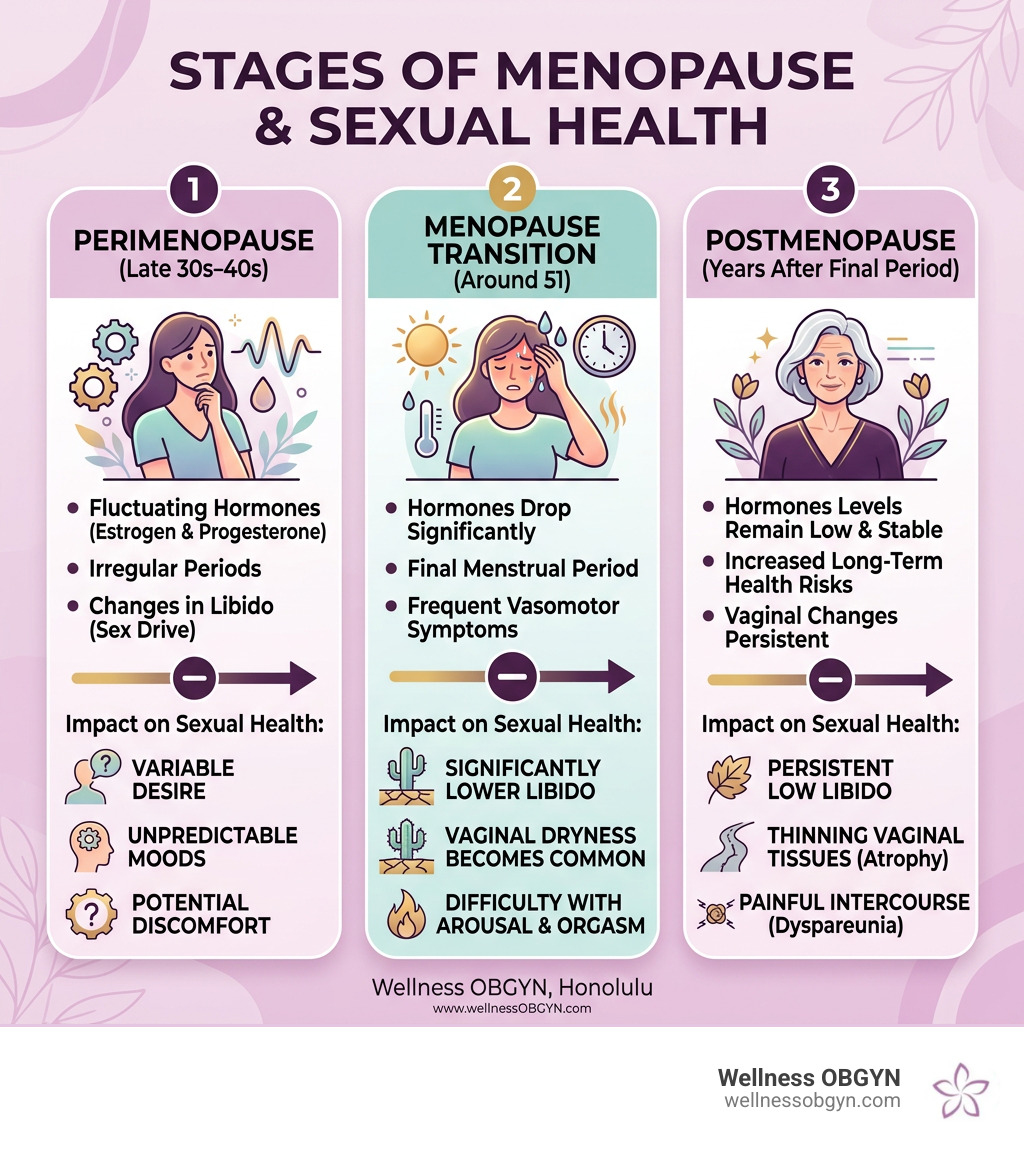
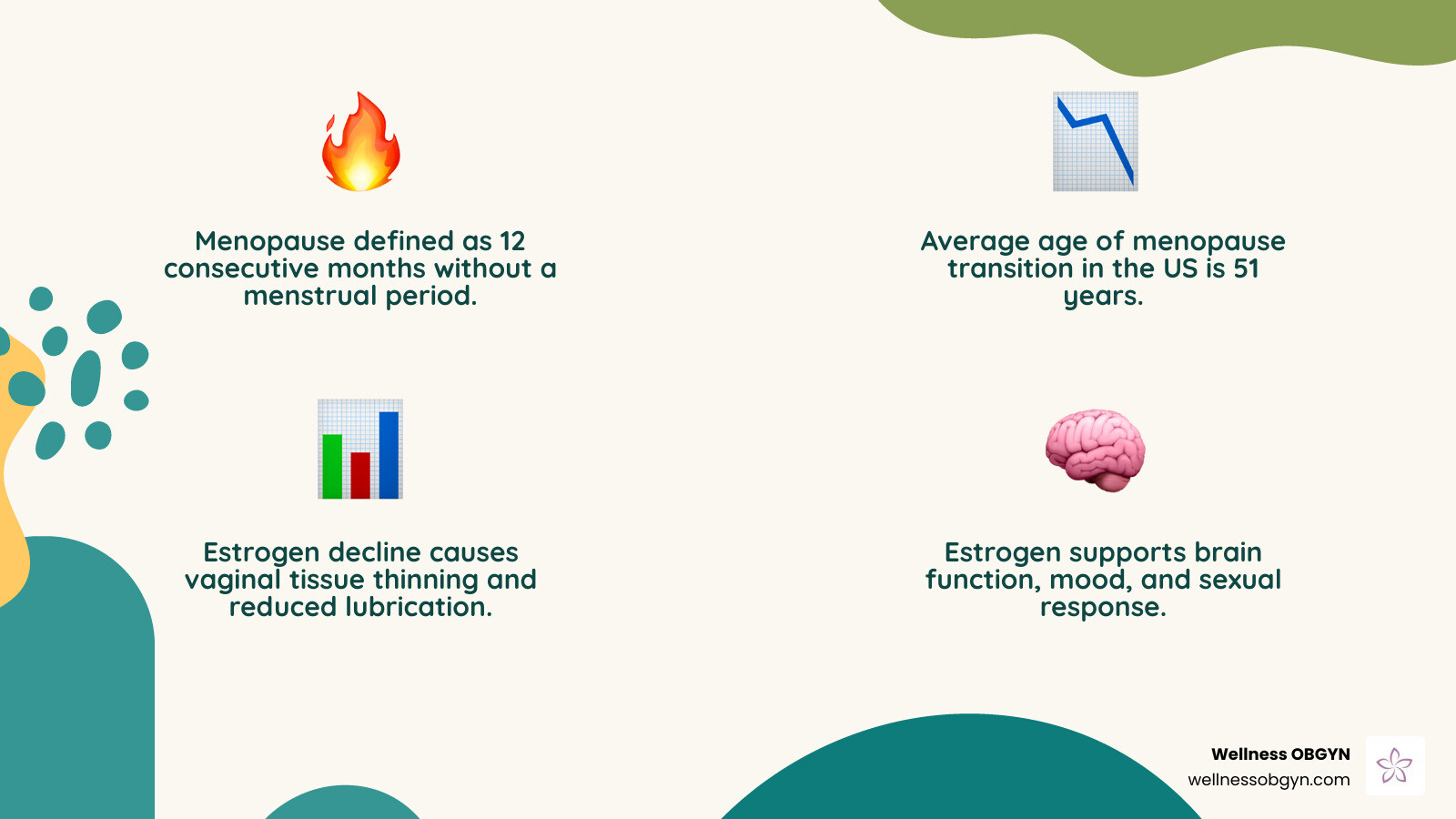
Menopause is officially defined as the point in time when you haven’t experienced a menstrual period for 12 consecutive months. In the United States, the average age for this transition is 51, though it can happen much earlier or later. However, the years leading up to that point — known as perimenopause — are often when the most dramatic fluctuations in Menopause and sexual health begin.
The primary driver of these changes is the decline of estrogen. Produced by the ovaries, estrogen is a “multitasking” hormone. It regulates the menstrual cycle, but it also maintains the health of vaginal tissues, supports bone density, and even influences brain function and mood. When estrogen levels drop, the biological “infrastructure” of your sexual response changes.
Navigating Changes in Menopause and Sexual Health
Sexual health isn’t just about what happens in the bedroom; it’s a complex interplay of hormones, brain chemistry, and emotions. During the menopause years, many women notice a shift in several key areas:
- Libido (Desire): Low sexual desire is reported by 40–55% of menopausal women. While estrogen plays a role, the decline in androgens (like testosterone) is also significant. Testosterone helps drive the “seeking” aspect of desire.
- HSDD: When low desire causes significant personal distress, it is clinically termed Hypoactive Sexual Desire Disorder (HSDD). Research shows that while nearly 70% of midlife women may have low desire, about 32.2% meet the criteria for HSDD.
- Arousal and Orgasm: With lower estrogen, blood flow to the pelvic region decreases. This can mean it takes longer to become aroused, or orgasms may feel less intense than they once were.
It’s important to remember that there is no “standard” to meet. Some women feel a sense of sexual liberation after menopause, while others feel a loss. Both experiences are valid. If you feel you’ve lost your “spark” and want it back, we are here to help you find it.
Overcoming Pain and Dryness in Menopause and Sexual Health
Perhaps the most tangible change is what happens to the vaginal environment. As estrogen levels fall, the vaginal walls become thinner, drier, and less elastic. This condition was formerly called “atrophic vaginitis,” but the medical community now uses a more comprehensive term: Genitourinary Syndrome of Menopause (GSM).
GSM affects approximately 50% of postmenopausal women and includes symptoms like:
- Vaginal dryness and burning.
- Lack of lubrication during activity.
- Dyspareunia: This is the medical term for painful intercourse. It affects between 12% and 45% of menopausal women.
- Urinary urgency or frequent “UTI-like” symptoms without an actual infection.
Unlike hot flashes, which often fade over time, GSM symptoms tend to persist or even worsen if left untreated. If sex has become painful, it’s natural for your brain to start avoiding it, which further lowers desire. Breaking this cycle is a top priority in our Female Sexual Health Clinic.
Lifestyle and Psychological Strategies for Intimacy
Medical treatments work best when supported by menopause lifestyle changes. Intimacy is a “use it or lose it” system — regular sexual activity (whether with a partner or solo) helps maintain vaginal health by increasing blood flow to the area.
- Pelvic Floor Health: Exercises like Kegels can strengthen the muscles involved in orgasm and help manage urinary incontinence. Some women benefit from specialized pelvic floor physical therapy.
- Diet and Nutrition: A menopause-friendly diet rich in phytoestrogens (found in soy, flaxseed, and whole grains) may provide mild support for hormonal balance.
- Prioritize Sleep: A recent study found that women who get enough sleep are significantly more likely to experience sexual interest and pleasure. If night sweats are keeping you up, treating them is a step toward better sex.
- The “Couplepause”: If you have a partner, they may be going through their own age-related changes. Open communication about what feels good now (and what doesn’t) is essential. Sometimes, shifting the focus to non-penetrative intimacy or using lubricants and moisturizers is all it takes to lower the pressure and bring back the fun.
Sexual Wellness After Breast Cancer
For breast cancer survivors, managing Menopause and sexual health requires extra care. Many survivors experience “induced menopause” due to chemotherapy or hormone-blocking medications (aromatase inhibitors), which can lead to severe vaginal dryness and pain.
Because many breast cancers are estrogen-sensitive, traditional HRT is often off the table. However, you are not without options:
- Non-Hormonal Moisturizers: Products like hyaluronic acid gels can be used every few days to keep tissues hydrated.
- Low-Dose Local Estrogen: In some cases, and only after close consultation with an oncologist, very low-dose local estrogen may be considered if other options fail.
Research shows that sexual dysfunction prevalence is as high as 73.4% in breast cancer survivors. We are committed to helping you navigate these challenges with the highest level of safety and compassion.
Frequently Asked Questions about Menopause and Sexual Health
Is there a ‘normal’ level of sexual desire after menopause?
No. Satisfaction is subjective. If you and your partner are happy with your level of intimacy, then it is “normal.” However, if you are bothered by a lack of desire or if it’s causing tension in your life, that is when you should seek help. You deserve to feel like yourself again.
Are STIs still a risk for postmenopausal women?
Yes, absolutely. In fact, because menopausal tissues are thinner and more prone to “micro-tears” from dryness, the risk of contracting an infection can actually increase. Unless you are in a long-term, monogamous relationship where both partners have been tested, condoms are still necessary.
How do I find a menopause specialist?
It is important to work with a provider who understands the nuances of midlife health. You can find a Menopause Society Certified Healthcare Practitioner through the Menopause Society directory, or visit us at Wellness OBGYN for a consultation with an Obgyn Menopause Specialist.
Conclusion
Your sexual well-being is a vital part of your overall health. If you’re ready to reclaim your spark and enjoy a fulfilling intimate life, we invite you to reach out to our menopause treatment Honolulu office. Let’s work together to ensure your best years are still ahead of you.