
When Midlife Changes the Bedroom: What Couples Need to Know
Menopause and erectile dysfunction are two of the most common — and most quietly suffered — sexual health challenges couples face in midlife. They often arrive around the same time, and they can make each other worse.
Here’s a quick summary of the connection:
| Factor | How It Affects Both Partners |
|---|---|
| Hormonal shifts | Lower estrogen in women, lower testosterone in men — both reduce sexual desire and function |
| Age overlap | Menopause typically occurs around age 51; ED rises sharply in men over 50 |
| Vaginal dryness | Makes sex painful for women, creating anxiety and avoidance that can trigger ED in partners |
| Mood and fatigue | Menopause-related sleep disruption and stress reduce intimacy for both |
| Shared risk factors | Cardiovascular disease, diabetes, and obesity worsen both conditions |
The numbers tell a striking story. Studies show that 68% to 86.5% of menopausal women experience some form of sexual dysfunction. At the same time, roughly 37% of men between ages 57 and 85 report difficulty getting or maintaining an erection. When both happen in the same relationship, the effects compound.
The good news? Both are treatable — together.
I’m Dr. Cheryl Twu, a board-certified OB-GYN and founder of Wellness OBGYN in Honolulu, and I’ve spent over a decade helping women and couples navigate the intersection of menopause and erectile dysfunction through hormone optimization, integrative care, and advanced regenerative treatments. In this guide, I’ll walk you through exactly what’s happening, why, and what you can do about it.
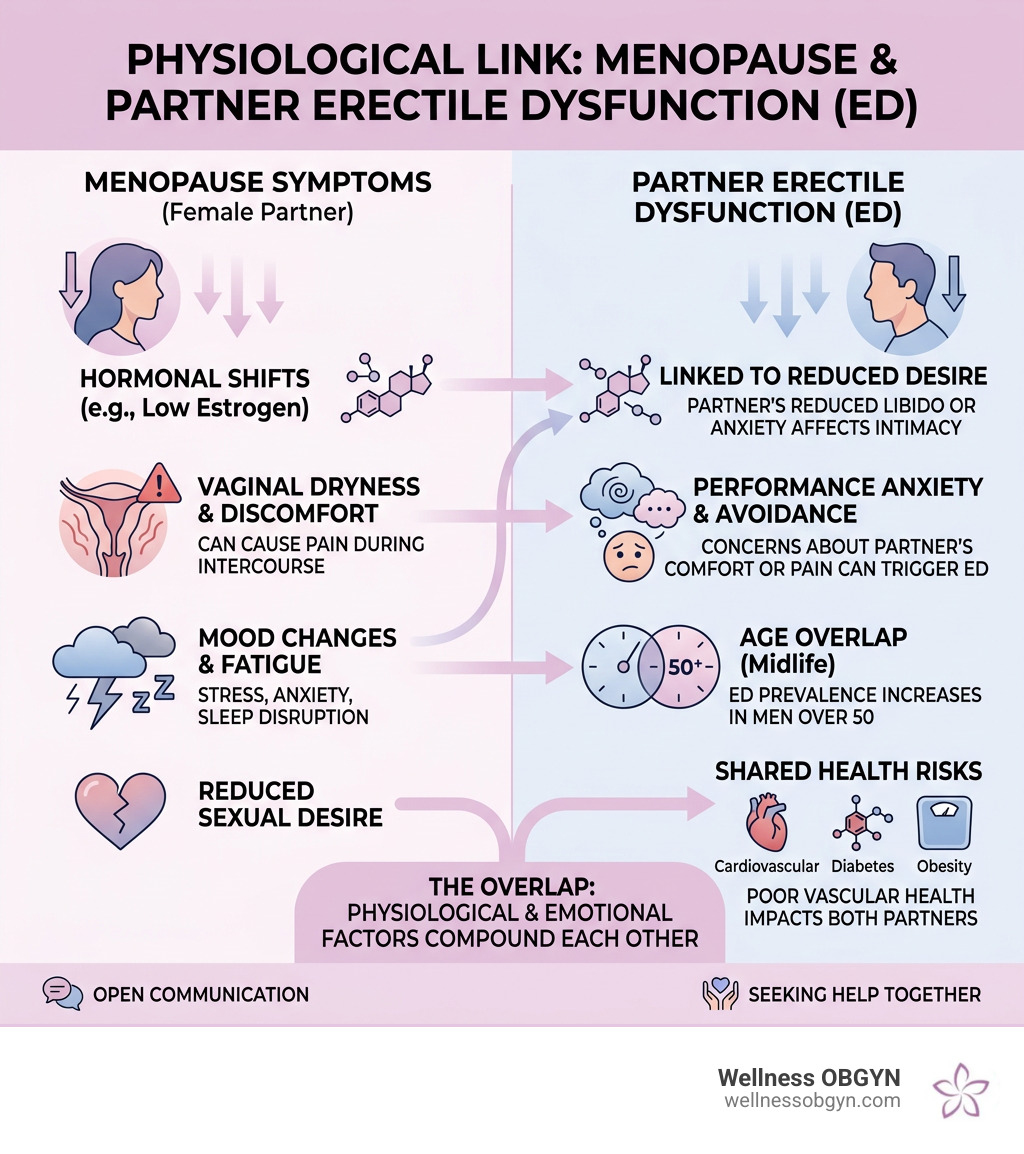
Basic menopause and erectile dysfunction terms:
The Connection Between Menopause and Erectile Dysfunction
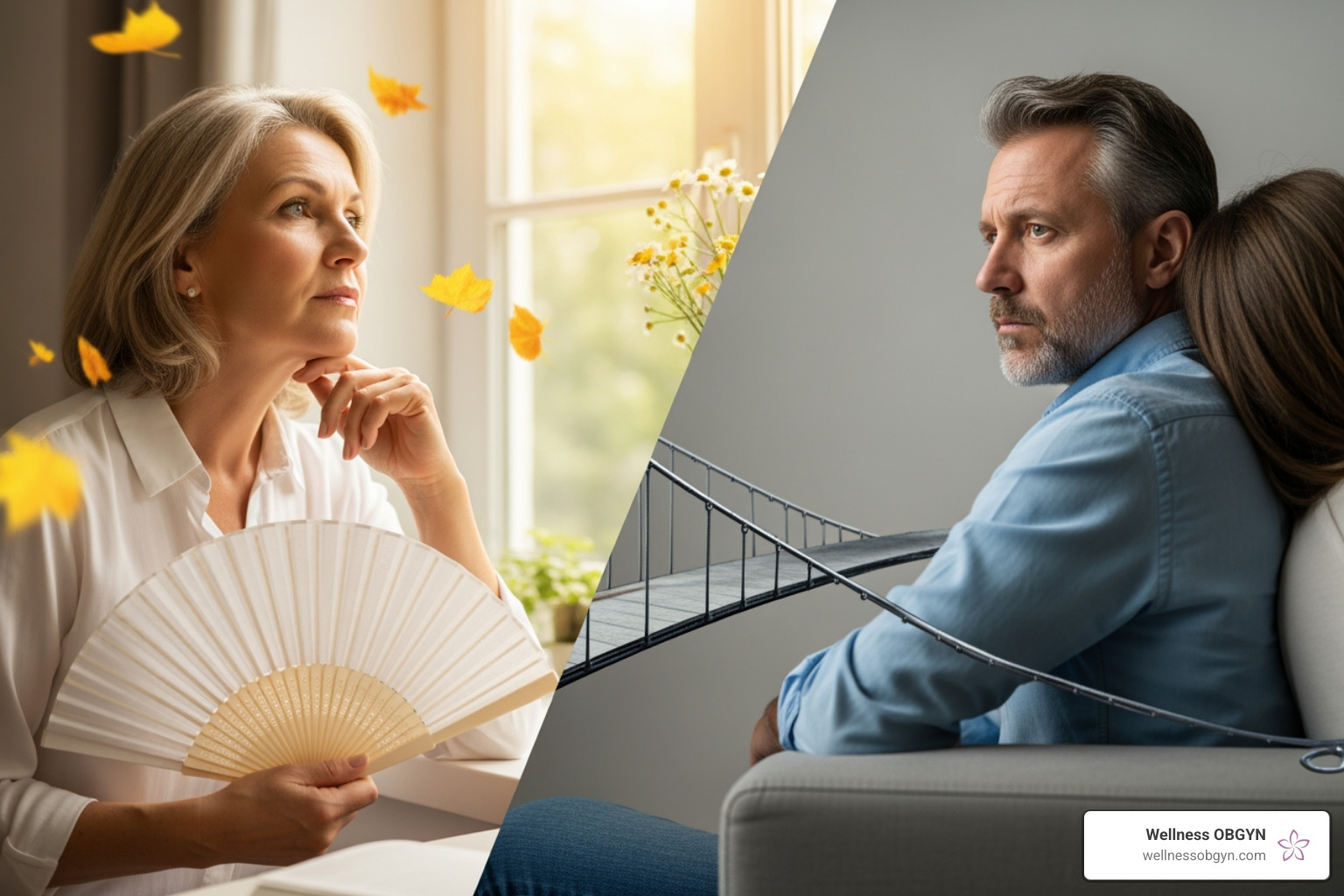
When we discuss menopause and erectile dysfunction, we are often looking at two sides of the same biological coin. While menopause is a specific milestone—the cessation of a woman’s menstrual cycle for 12 consecutive months—it triggers a cascade of hormonal shifts that ripple through the relationship.
The primary driver is the decline in estrogen. As ovaries stop producing this vital hormone, vaginal tissues become thinner, drier, and less elastic—a condition known as Genitourinary Syndrome of Menopause (GSM). This can make intercourse uncomfortable or even painful. When a female partner experiences pain, she may naturally avoid intimacy. For the male partner, this perceived “rejection” or the fear of causing his partner pain can lead to performance anxiety, which is a leading psychological trigger for erectile dysfunction symptoms.
Hormones don’t just change for women. Men also experience a gradual decline in testosterone, sometimes referred to as “andropause.” Research indicates that testosterone deficiency in the aging male contributes significantly to reduced libido and weaker erections.
Furthermore, there is a strong link between vascular aging and ED. The same vascular issues that lead to heart disease often manifest first in the smaller arteries of the penis. Interestingly, women in menopause also face increased cardiovascular risks due to the loss of estrogen’s protective effects. This means that shared risk factors like high blood pressure, diabetes, and high cholesterol are often working against both partners simultaneously.
Recent data published in Menopause highlights that Female Sexual Dysfunction (FSD) is just as prevalent in midlife women (ages 50–64) as it is in older women. This suggests that the transition itself is a high-stress period for sexual health that requires proactive management.
How Menopausal Symptoms Indirectly Trigger ED
The physical symptoms of menopause can create a “perfect storm” that indirectly leads to erectile dysfunction. If intercourse becomes a source of stress rather than pleasure, the natural flow of arousal is broken.
| Menopausal Symptom | Impact on Partner’s Sexual Function |
|---|---|
| Vaginal Dryness | Leads to “stop-start” sex, which can cause a man to lose his erection |
| Genital Pain | Causes the man to worry about hurting his partner, leading to performance anxiety |
| Low Libido | Reduced initiation can make the partner feel unattractive or pressured |
| Night Sweats | Results in poor sleep for both, lowering energy for intimacy |
Vaginal atrophy and dryness are perhaps the most direct “indirect” triggers. When the vagina lacks lubrication, the friction of intercourse can be abrasive. For a man, sensing his partner’s discomfort often leads to a sympathetic “shutdown” of his own arousal. This is a common reason why many couples seek ed treatment options together. To learn more about the transition, you can find more info about perimenopause on WebMD.
Indirect Triggers: Mood Swings and Fatigue
It isn’t just the physical changes; the emotional toll of menopause is significant. Fluctuating hormones can lead to irritability, anxiety, and depression. When a woman is dealing with mood swings, she may feel less “connected” to her body or her partner.
Chronic fatigue, often caused by night sweats and sleep deprivation, further depletes the desire for intimacy. When we are tired, our bodies produce more cortisol—the stress hormone—which is a known “boner killer” because it constricts blood vessels and inhibits the relaxation needed for an erection. Research on menopause and mood shows that sexual self-concept is deeply tied to mental health during this stage. If a woman feels less attractive or “old” due to these changes, the lack of confidence can dampen the sexual energy of the entire couple.
Managing Menopause and Erectile Dysfunction Through Lifestyle
At Wellness OBGYN, we believe that the first line of defense is a healthy lifestyle. What is good for the heart is almost always good for the bedroom.
- Diet: A Mediterranean-style diet rich in leafy greens, healthy fats (like those found in Honolulu’s fresh fish), and antioxidants supports vascular health. This helps maintain blood flow to both the vaginal tissues and the penis.
- Exercise: Regular aerobic exercise improves circulation and boosts mood. Strength training can help maintain bone density for women and support natural testosterone production in men.
- Pelvic Floor Health: For women, pelvic floor physical therapy can help manage GSM and improve sensation.
- Smoking Cessation: Smoking is a major cause of what causes erectile dysfunction because it damages the lining of the blood vessels.
- Alcohol Reduction: While a glass of wine might seem like it helps with “mood,” alcohol is a central nervous system depressant that can interfere with both arousal and the ability to maintain an erection.
Improving Communication and Intimacy for Couples
We often tell our patients in Honolulu that the most important “sex organ” is the brain. If communication breaks down, no amount of medical treatment can fully restore a couple’s connection.
- Open Dialogue: Talk about the changes. Instead of saying “I’m not in the mood,” try “I’m feeling very tired and my body feels a bit sensitive today; can we just cuddle?”
- Non-Sexual Touch: Re-establish intimacy through massages, holding hands, or long walks on the beach. This reduces the “performance pressure” that often leads to ED.
- Shared Decision-Making: Come to your appointments at Wellness OBGYN together. When both partners understand the physiological reasons behind menopause and erectile dysfunction, the blame and shame disappear.
- Redefining Satisfaction: Sexual satisfaction doesn’t always have to mean intercourse. Exploring different types of stimulation can keep the spark alive while you are undergoing ed-treatment.
Frequently Asked Questions about Midlife Sexual Health
Is HRT safe for addressing both partners’ sexual health?
For the vast majority of people, yes. Modern hormone optimization is personalized. We look at your specific health history, including cardiovascular health and cancer risks. For women, we often use holistic-menopause-treatment approaches that include bioidentical hormones. For men, testosterone therapy is safe when monitored by a professional to ensure levels stay within a healthy, optimized range.
Conclusion
Navigating menopause and erectile dysfunction can be challenging, but it is also an opportunity for couples to grow closer by facing these changes together. At Wellness OBGYN in Honolulu, we are dedicated to providing patient-centered care that respects the individual needs of every woman and her partner.
You can find more info about women’s health services and how we can support your journey into this next chapter of life. Don’t let midlife changes silence your intimacy—reach out to us today to start your customized survival plan.