Understanding How Lifestyle Changes Can Transform Your Sexual Health
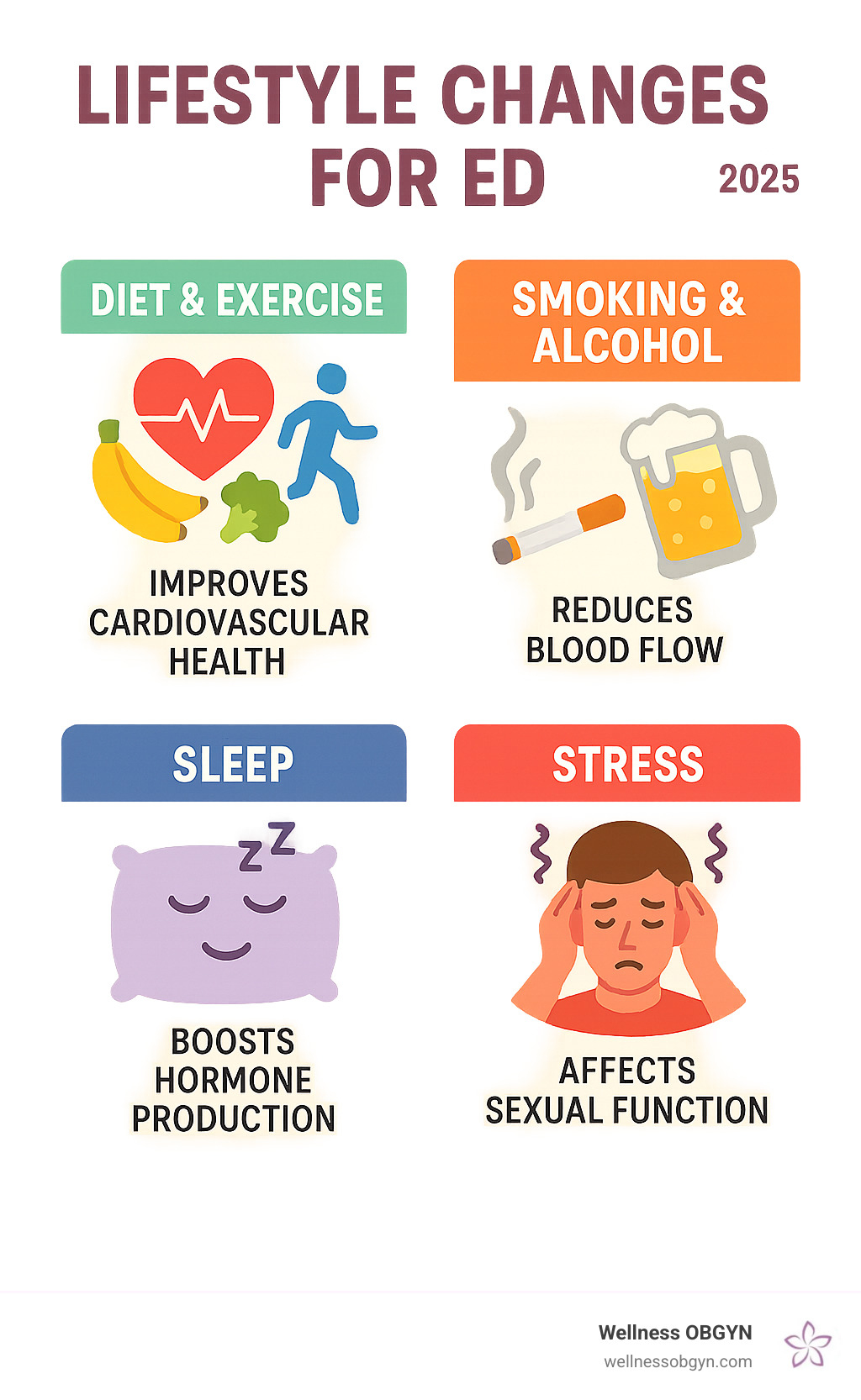
Lifestyle changes for ed can be incredibly effective in restoring sexual function and confidence. Here are the most impactful changes you can make:
Diet & Exercise:
- Follow a Mediterranean diet rich in fruits, vegetables, and whole grains
- Get 30 minutes of walking daily (reduces ED risk by 41%)
- Maintain a healthy weight (42-inch waist = 50% higher ED risk)
Daily Habits:
- Quit smoking to improve blood flow
- Limit alcohol to 1-2 drinks per day
- Get 7-9 hours of quality sleep nightly
Mental Health:
- Practice stress management techniques
- Consider couples counseling for communication
- Address anxiety and depression
Erectile dysfunction affects nearly 30 million men in the United States, with more than 50% of men over 40 experiencing symptoms to some degree. While ED becomes more common with age, it’s not an inevitable part of getting older.
The good news? ED is highly treatable through lifestyle modifications. Research shows that men who make consistent changes to their diet, exercise routine, and daily habits often see significant improvements in sexual function – sometimes without needing medication at all.
What causes ED in the first place? Most cases stem from physical issues like poor blood flow, diabetes, high blood pressure, or obesity. Psychological factors like stress and anxiety also play a major role. Since erections depend on healthy blood vessels, a strong heart, and balanced hormones, the same habits that boost overall health often restore sexual function too.
I’m Dr. Cheryl Twu, a board-certified obstetrician-gynecologist with over a decade of experience helping patients optimize their sexual health through both traditional and integrative approaches. Throughout my practice, I’ve seen how targeted lifestyle changes for ed can transform not just sexual function, but overall quality of life and relationship satisfaction.
Lifestyle changes for ed basics:
The Foundation: Diet, Exercise, and Weight Management
Think of your body as a high-performance car. Just like that car needs quality fuel, regular maintenance, and proper care to run smoothly, your sexual health depends on the same foundational elements: what you eat, how you move, and maintaining a healthy weight. These aren’t just general health tips – they’re the lifestyle changes for ed that can make the biggest difference in your life.
The connection is actually quite simple: healthy erections depend entirely on good blood flow, and good blood flow starts with a healthy cardiovascular system. When you take care of your heart and blood vessels, you’re directly investing in your sexual health too.
Fueling Your Body: Dietary Changes to Improve Blood Flow
Here’s something that might surprise you: the same foods that protect your heart can dramatically improve your sexual function. It’s not magic – it’s science.
The Mediterranean diet has earned its reputation as the gold standard for heart health, and research shows it’s equally powerful for erectile function. A review of diet and ED confirms that men following this eating pattern have significantly lower rates of ED.
What makes this diet so effective? It’s rich in flavonoids – powerful compounds found in colorful fruits and vegetables that act like natural medicine for your blood vessels. When you eat foods high in flavonoids, you’re essentially giving your circulatory system a tune-up.
Dark berries, citrus fruits, and even dark chocolate (yes, really!) contain these circulation-boosting compounds. Research shows that men who consume at least 50mg of flavonoids daily have a 32% lower risk of ED. These foods work by increasing nitric oxide production, which helps blood vessels relax and allows for better blood flow where you need it most.
Whole grains, fish, and plenty of fresh vegetables form the backbone of this approach. Meanwhile, limiting processed foods and red meat helps prevent the artery-clogging plaque that can interfere with circulation. It’s not about perfect eating – it’s about making consistently better choices that support your vascular health.

Get Moving: The Best Exercises for Erectile Function
If good nutrition is the fuel, then exercise is the engine that drives better sexual health. Among all lifestyle changes for ed, regular physical activity might be the most powerful single intervention you can make.
Aerobic exercise like brisk walking, swimming, or cycling works wonders for your cardiovascular system. A Harvard study found something remarkable: just 30 minutes of walking daily reduced ED risk by 41%. That’s nearly cutting your risk in half with something as simple as a daily walk around your neighborhood.
Brisk walking is particularly accessible – you don’t need a gym membership or special equipment. The key is consistency rather than intensity. When you get your heart pumping regularly, you’re training your entire circulatory system to work more efficiently.
Swimming offers a full-body workout that’s easy on the joints while providing excellent cardiovascular benefits. The rhythmic nature of swimming also helps reduce stress, which can be a significant factor in ED.
Pelvic floor exercises, often called Kegels, deserve special mention. These aren’t just for women – they can significantly improve erectile function in men by strengthening the muscles that help maintain erections. The technique is simple: contract the muscles you’d use to stop urination mid-stream, hold for a few seconds, then release.
Regular exercise doesn’t just improve blood flow and nitric oxide production – it also boosts testosterone levels, reduces stress, and improves self-confidence. It’s a complete package for better sexual health.

Why a Healthy Weight is Crucial for Managing ED
Here’s a statistic that really drives the point home: a man with a 42-inch waist is 50% more likely to have ED than someone with a 32-inch waist. That’s not just about appearance – it’s about what excess weight does to your body’s systems.
Obesity creates a perfect storm for erectile dysfunction. Extra weight, especially around the midsection, leads to hormonal imbalances that can lower testosterone while raising cortisol levels. It also promotes chronic inflammation throughout the body, which damages the delicate blood vessels needed for healthy erections.
The metabolic effects are equally concerning. Excess weight increases your risk of diabetes, high blood pressure, and high cholesterol – all conditions that can directly impact erectile function by damaging blood vessels and reducing circulation.
But here’s the encouraging news: even modest weight loss can lead to dramatic improvements. Losing just 5-10% of your body weight can significantly improve erectile function in a relatively short time. Beyond the physical benefits, achieving a healthier weight often leads to improved self-esteem and body confidence, addressing some of the psychological aspects of ED as well.
Other Key Lifestyle Factors: Smoking, Alcohol, and Sleep
Beyond diet and exercise, there are three other daily habits that can make or break your progress with lifestyle changes for ed. The good news? These are all within your control, and even small adjustments can lead to remarkable improvements in your sexual health.
Quitting Smoking for Better Erections
If you’re a smoker dealing with ED, here’s some motivation that might finally help you quit: smoking is one of the worst things you can do for your erections. Every cigarette you smoke is literally choking off the blood flow your penis needs to function properly.
Here’s what happens when you smoke. The chemicals in cigarettes attack the delicate lining of your blood vessels, causing them to narrow and become less flexible. This process, called vasoconstriction, directly reduces blood flow to your penis. It’s like trying to water your garden with a kinked hose – the water just can’t get through effectively.
Smoking also sabotages your body’s production of nitric oxide, a crucial chemical that helps blood vessels relax and expand during arousal. Without enough nitric oxide, achieving an erection becomes much more difficult, even if you’re mentally ready and willing.
The damage doesn’t stop there. Chronic smoking leads to long-term vascular problems that affect your entire circulatory system, putting you at higher risk for heart disease and stroke. When your heart isn’t healthy, your sexual function suffers too.
But here’s the encouraging part: quitting smoking can significantly improve both the physical and emotional aspects of your sexual health. While some arterial damage might be permanent, many men notice improvements in their erectile function within weeks or months of quitting. Your body has an amazing ability to heal itself when you give it the chance.
Alcohol’s Impact: Finding the Right Balance
The relationship between alcohol and erectile function is complicated – and probably not what you’d expect. We’ve all heard of “brewer’s droop,” that frustrating inability to perform after a night of heavy drinking. But when it comes to long-term effects, the picture is more nuanced.
Moderate drinking might actually have some benefits for erectile function. The CDC alcohol guidelines define moderate consumption as up to two drinks per day for men. Some studies suggest that men who drink moderately may have a lower risk of ED compared to those who don’t drink at all. This could be because moderate alcohol consumption may improve your good cholesterol levels and help your blood vessels produce more nitric oxide.
However, heavy drinking is a different story entirely. When you regularly consume more than two drinks per day, alcohol starts working against your sexual health in several ways. It can damage the nerves that control erections, disrupt your hormone balance (including lowering testosterone), and cause liver problems that affect your overall health.
Chronic heavy drinking can also lead to long-term nerve damage that makes it harder for your brain to communicate with your penis during arousal. Plus, alcohol affects your sleep quality, which we’ll discuss next, creating a cascade of problems for your sexual function.
The key is finding that sweet spot. If you enjoy alcohol, stick to moderate amounts and pay attention to how it affects your sexual performance. If you’re drinking heavily and experiencing ED, cutting back could be one of the most effective lifestyle changes for ed you can make.
The Role of Quality Sleep in Sexual Health
Here’s something that might surprise you: what happens in your bedroom while you’re sleeping is just as important for your sex life as what happens when you’re awake. Sleep isn’t just about feeling rested – it’s when your body produces many of the hormones that keep your sexual function running smoothly.
During deep sleep, your body produces testosterone, the hormone that fuels your sex drive and helps maintain erectile function. When you consistently get less than seven hours of sleep, your testosterone levels can drop significantly. Low testosterone doesn’t just affect your desire for sex; it can make it physically harder to achieve and maintain erections.
Sleep deprivation also increases your levels of cortisol, your body’s main stress hormone. High cortisol levels suppress the production of sex hormones and can make you feel anxious and overwhelmed – not exactly the mindset that promotes good sexual function.
Aim for 7-9 hours of quality sleep every night. This isn’t just a nice-to-have; it’s essential for maintaining healthy hormone levels and managing stress. Good sleep hygiene – like keeping your bedroom cool and dark, avoiding screens before bed, and maintaining a consistent sleep schedule – can make a real difference in how you feel and perform.
There’s another important connection to consider: sleep apnea. This condition, where your breathing repeatedly stops and starts during sleep, is strongly linked to ED. The interrupted sleep and reduced oxygen levels can damage blood vessels and disrupt hormone production. If you snore loudly, feel tired despite getting enough sleep, or your partner notices you stopping breathing during the night, talk to your doctor about a sleep study.
These lifestyle factors work together. When you quit smoking, moderate your drinking, and prioritize good sleep, you’re creating an environment where your body can function at its best – including sexually. These changes take time to show results, but the improvements in your overall health and sexual function can be truly transformative.
The Mind-Body Connection: Addressing Psychological Factors
It’s easy to think of erectile dysfunction (ED) as purely a physical problem. But here’s a big secret: your brain plays a huge role in sexual arousal and performance! Because of this strong connection, truly effective lifestyle changes for ed must also include taking care of your mental and emotional health. What’s going on in your mind can deeply influence your ability to get and keep an erection.
Managing Stress and Anxiety
In our busy world, stress and anxiety can feel like constant companions. Sadly, they’re also big troublemakers when it comes to ED. When you’re stressed all the time, your body pumps out more cortisol, often called the “stress hormone.” This extra cortisol can mess with the hormones needed for erections. Plus, when you’re stressed or anxious, your body goes into “fight-or-flight” mode. This means blood gets sent to essential survival functions, not to places like, well, your penis.
A common challenge is “performance anxiety.” This is a tricky cycle: you worry about getting an erection, which makes it harder to get one, and then that difficulty makes you even more anxious! It’s a frustrating loop many men experience.
The great news is that learning to manage stress and anxiety can be one of the most powerful lifestyle changes for ed you can make. We encourage you to try simple mindfulness techniques in your daily routine:
- Meditation: Even a few minutes each day can help calm your nervous system and lower stress levels.
- Deep-breathing exercises: Quick breathing techniques can slow your heart rate and bring on relaxation.
- Yoga: This practice mixes gentle movements, breathing, and meditation. It’s a wonderful way to ease stress and become more aware of your body.
- Spending time in nature: Just being outdoors can be incredibly refreshing for your mind.
- Engaging in hobbies: Doing things you truly enjoy gives your mind a much-needed break from worries.
By easing your overall stress, you create a much better environment for healthy sexual function and enjoyment.
Improving Communication and Relationships
Erectile dysfunction can be a very private and sensitive topic. It often touches not just the man experiencing it, but also his partner and their relationship. Open and honest communication is absolutely key to navigating ED together. If ED starts to cause tension or blame, it can make performance anxiety worse and put more strain on intimacy.
We always encourage men to talk openly with their partners about what they’re going through and how they feel. Taking the pressure off and letting go of strict expectations about sexual performance can really help reduce anxiety. Intimacy isn’t just about penetrative sex. Exploring other ways to connect and show affection can help keep your bond strong and shift the focus away from just erections.
For some, getting professional help can make a huge difference. Sex therapists and couples counselors are trained experts who can guide individuals and partners through the emotional and relationship challenges that ED can bring. They can offer practical communication strategies, help uncover any hidden psychological factors, and work to rebuild intimacy and confidence. Organizations like the College of Sexual and Relationship Therapists (COSRT) are excellent resources for finding qualified professionals. Even specific therapies like cognitive behavioral therapy (CBT) and mindfulness-focused group therapy have shown great results in tackling the psychological side of ED, especially when used alongside other treatments.

Beyond Lifestyle: Advanced Regenerative Solutions for ED
While lifestyle changes for ed are incredibly powerful and often form the first line of defense, we understand that for some men, these changes alone may not be enough to fully restore erectile function. This doesn’t mean you’ve failed or that your efforts were wasted. Sometimes, underlying medical conditions, long-standing vascular damage, or other factors require a more comprehensive approach.
When to Consider More Than lifestyle changes for ed
We always start with foundational lifestyle modifications because they work so well for many men. But there are times when we need to look beyond diet, exercise, and stress management to achieve the results you’re hoping for.
Persistent symptoms after several months of consistent lifestyle changes might indicate that you need additional support. If you’ve been walking daily, eating well, managing stress, and still experiencing ED that impacts your quality of life, it’s time to explore other options.
Underlying medical conditions like diabetes, cardiovascular disease, or neurological issues can make ED more challenging to resolve through lifestyle alone. In these cases, addressing the root cause often requires medical intervention alongside your healthy habits.
Some men are simply seeking a comprehensive solution that goes beyond managing symptoms. If you want to actually regenerate tissue and restore function from the inside out, or if you prefer non-surgical alternatives to traditional medications, advanced regenerative medicine offers exciting possibilities.
l for men follows a carefully designed four-step process that addresses erectile function from multiple angles. Each step builds on the previous one, creating a synergistic effect that maximizes your results.
Conclusion: Taking Control of Your Sexual Health for the Long Term
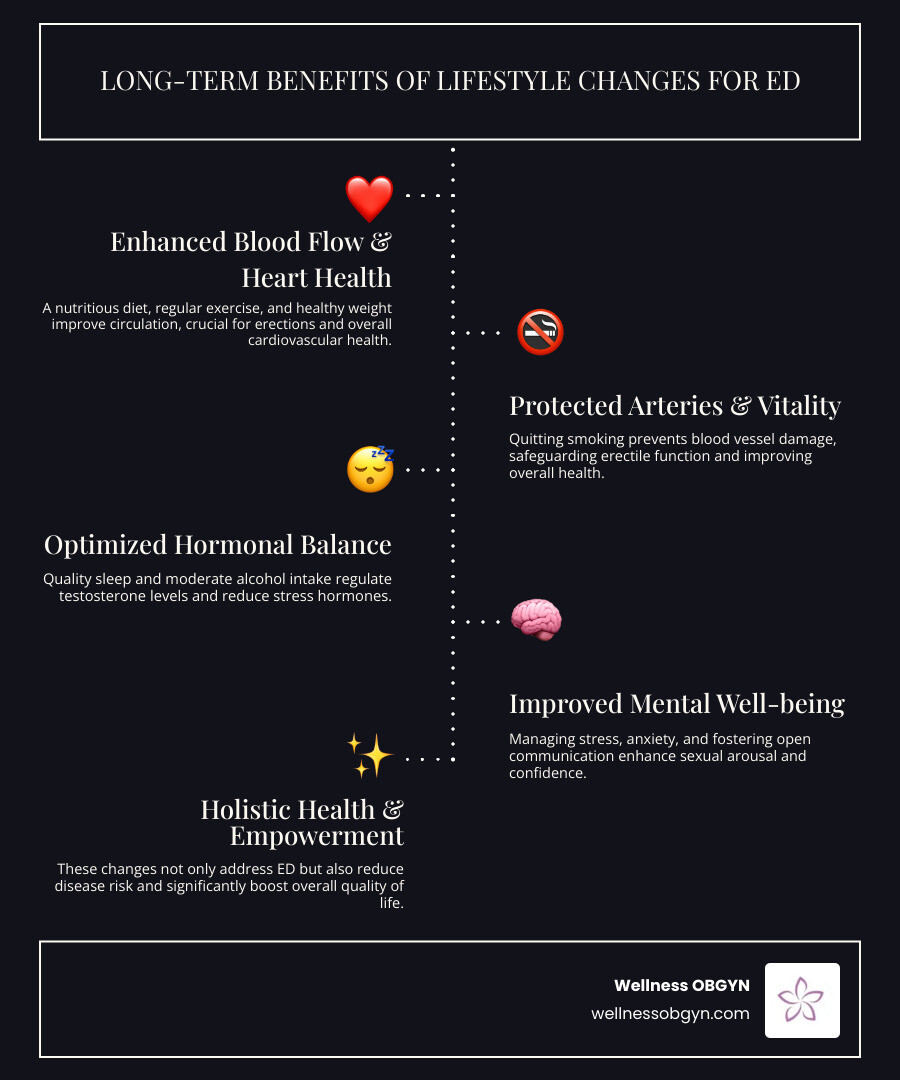
Embracing lifestyle changes for ed is truly about taking charge of your overall health and happiness. We’ve journeyed through how a complete approach can profoundly impact erectile function. This includes focusing on your diet, getting regular exercise, managing your weight, and paying attention to habits like smoking, alcohol, and sleep. Just as important, we’ve seen how addressing the psychological side of ED – things like stress, anxiety, and how you communicate in relationships – is also key.
The wonderful thing is that the long-term benefits of a healthy lifestyle go far beyond just improving sexual health. By eating well and staying active, you’re not only boosting blood flow where it counts but also strengthening your heart, lowering your risk for conditions like diabetes, and lifting your mental well-being. Quitting smoking protects your arteries and overall energy. Finding the right balance with alcohol and getting enough quality sleep helps keep your hormones balanced and energy levels high. These are truly the building blocks for a vibrant, healthy life at any age.
We believe in empowering you to take proactive steps for your health. While lifestyle changes for ed can be incredibly effective, we also understand that everyone’s path is unique. If you’ve been consistently making these changes and still find yourself struggling, or if you have other health issues that might be contributing to ED, it’s wise to seek professional medical advice. Sometimes, ED can be an early sign of bigger health concerns. A trusted healthcare provider can help you find the root cause and guide you to the best next steps.