
Why Understanding JUVÉDERM™ Side Effects Matters for Your Safety
Juvederm side effects are a natural concern for anyone considering this popular dermal filler. While JUVÉDERM™ is a trusted hyaluronic acid filler for smoothing wrinkles and restoring facial volume, knowing what to expect is essential for your safety and peace of mind. Most reactions are mild and temporary, but understanding the difference between a normal response and a rare complication is key.
JUVÉDERM™ uses hyaluronic acid—a substance your body produces naturally—to restore plumpness and smooth lines. However, like any medical procedure, it carries both expected reactions and potential risks. This guide will walk you through everything you need to know.
I’m Dr. Cheryl Twu, a board-certified OB-GYN with over a decade of experience helping women steer aesthetic treatments safely in my Honolulu practice. My approach combines evidence-based medicine with holistic wellness to ensure you achieve your goals while prioritizing your overall health.

Understanding JUVÉDERM™: The Basics Before the Bumps
Before diving into juvederm side effects, let’s cover the basics. JUVÉDERM™ is a dermal filler that uses your body’s natural processes to restore volume.
What exactly is JUVÉDERM™? It’s a gel injected beneath the skin to smooth wrinkles and restore facial contours. Its main ingredient is Hyaluronic acid (HA), a substance already found in your skin that can hold a significant amount of water. When injected, the HA gel immediately plumps the treated area and attracts moisture, creating a naturally full and hydrated look. Over time, it also encourages collagen production and is gradually and safely absorbed by your body.
The FDA has approved JUVÉDERM™ for smoothing facial wrinkles, plumping lips, and adding volume to cheeks, chin, and jawline. It’s one of the most popular non-surgical cosmetic procedures available.
For more detailed information about how JUVÉDERM™ might fit into your aesthetic journey, explore our comprehensive guide: More info about Juvederm.
The JUVÉDERM™ Collection: Different Fillers for Different Needs
The JUVÉDERM™ family offers different formulations for various needs, all crafted with VYCROSS® technology for smooth, long-lasting results. Most also contain lidocaine for a more comfortable treatment.
- JUVÉDERM® VOLUMA™ XC: Designed for deep injection in the cheeks and chin to restore youthful fullness and create a subtle lift.
- JUVÉDERM® VOLUX™ XC: Specifically created to define and contour the jawline.
- JUVÉDERM® VOLLURE™ XC: Formulated for nasolabial folds (the lines from your nose to the corners of your mouth), working well in dynamic areas of the face.
- JUVÉDERM® VOLBELLA™ XC and ULTRA XC: The lip specialists, perfect for adding fullness, enhancing definition, or smoothing fine lines around the mouth.
Each product serves a specific purpose, allowing for a customized treatment plan that addresses your unique concerns for refreshed, natural-looking results.
Common and Temporary JUVÉDERM™ Side Effects
Knowing what to expect after your treatment can make the recovery process feel much more manageable. Most juvederm side effects are your body’s normal, temporary response to the injection. These reactions are typically mild and a sign that your body is healing appropriately, usually fading within a few days to two weeks.

Identifying Normal JUVÉDERM™ Side Effects
While every patient is different, these common responses are expected after treatment:
- Redness and Swelling: The most noticeable effects, especially in the lips. Swelling shows the hyaluronic acid is working and typically peaks in the first day or two before gradually subsiding.
- Tenderness or Pain: Similar to soreness after a vaccination, this is usually manageable with over-the-counter pain relief.
- Minor Bruising: Can occur even with a skilled injector. It typically fades within a week or two and can be covered with makeup.
- Lumps or Bumps: Usually just the filler settling into place. These typically smooth out on their own within ten days.
- Itching and Firmness: The injection site may feel itchy or firm as your skin adjusts to the filler. These sensations usually resolve within a few days.
Managing Your Recovery and How Long Side Effects Last
Most side effects resolve within two weeks. To support your body’s healing process and ensure the best results, follow these simple steps:
- Use Cold Compresses: Apply a cold pack wrapped in a thin cloth for 20 minutes at a time during the first few hours to reduce swelling.
- Avoid Strenuous Exercise: For at least 24 hours, let your body focus its energy on healing.
- Limit Sun and Heat: Postpone beach days, hot tubs, and saunas for a day or two, as heat can worsen swelling.
- Avoid Alcohol: For 24 hours, as alcohol can increase bruising.
- Be Gentle: Avoid touching, rubbing, or massaging the treated areas unless specifically instructed by your provider.
- Makeup: You can typically apply makeup after 12 hours, once the injection sites have closed.
For any discomfort, acetaminophen is recommended. Avoid anti-inflammatory drugs like ibuprofen unless advised, as they can increase bruising.
If you’re interested in comprehensive skin health beyond injectables, we also offer laser skin treatment in Honolulu to complement your aesthetic goals.
When to Worry: Recognizing Serious Complications
While most juvederm side effects are temporary, it’s crucial to distinguish between normal healing and signs that require immediate attention. Serious complications are rare, but recognizing them early is key to your safety.
Signs of Potential Complications
Contact your provider immediately if you notice any of the following:
- Persistent Lumps or Nodules: Hard lumps that don’t resolve within a few weeks, or new lumps that appear months later, require medical evaluation.
- Signs of Infection: Worsening pain, spreading redness, warmth, swelling that increases after a few days, pus, or fever need immediate antibiotic treatment.
- Allergic Reactions: Though extremely rare, widespread hives, significant facial or throat swelling, or difficulty breathing require emergency medical attention.
- Skin Discoloration: A bluish tint (Tyndall effect) can occur if filler is placed too superficially. While not dangerous, it requires correction.
- Delayed-Onset Reactions: Any inflammation, swelling, or nodules that develop weeks or months after your injection should be evaluated.
The Most Serious Risk: Vascular Occlusion
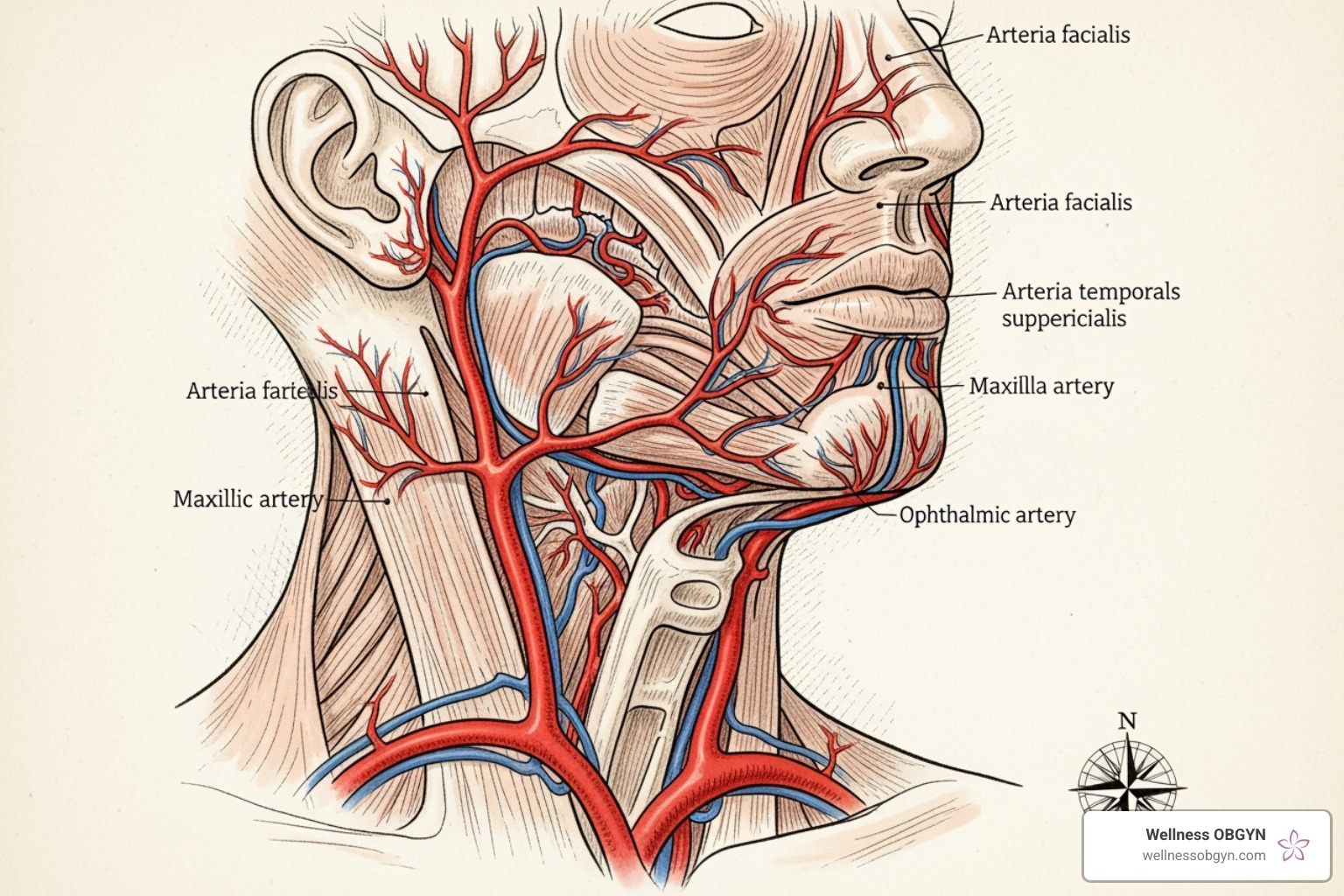
The most critical, though extremely rare, complication is vascular occlusion, which occurs if filler accidentally blocks a blood vessel. This is why choosing an experienced injector with deep knowledge of facial anatomy is non-negotiable.
Signs of vascular occlusion require immediate action:
- Sudden, severe pain that is disproportionate to normal injection discomfort.
- Skin that turns white, gray, or blotchy (mottled).
- Any vision changes, such as blurriness, vision loss, or pain in the eyes.
If you experience these symptoms, contact your injector or seek emergency medical care without delay. An enzyme called hyaluronidase can dissolve the filler, but it is most effective when administered quickly. In the most severe cases, vascular occlusion can lead to tissue death (necrosis), blindness, or stroke.
The FDA provides comprehensive information on these risks, emphasizing the importance of patient awareness. FDA information on dermal filler risks.
Your Safety First: Minimizing Risks and Taking Action
When it comes to juvederm side effects, your safety is our priority. With proper preparation and the right provider, you can significantly minimize risks and enjoy beautiful results. Think of this as your safety roadmap for your aesthetic journey.
Preparing for a Safe Treatment
Safe results begin weeks before your appointment.
- Choose the Right Provider: This is the most important step. Your injector must be a licensed healthcare professional with specific training in facial anatomy and dermal fillers. Experience is key to avoiding complications.
- Have a Thorough Consultation: This is where we discuss your goals, evaluate your facial structure, and create a personalized, safe treatment plan.
- Disclose Your Medical History: Be honest about all allergies (especially to bacterial proteins or lidocaine), medical conditions, and medications, including supplements. JUVÉDERM™ is not suitable for those with severe allergies.
- Prepare Your Body: For about two weeks before your appointment, avoid blood-thinning substances like aspirin, ibuprofen, vitamin E, and fish oil to reduce bruising. Always consult your doctor before stopping any prescribed medication.
What to Do If You Suspect a Complication
Trust your instincts. If something doesn’t feel right, take action.
- Contact Us Immediately: Don’t wait and hope for improvement. Call our team at Wellness OBGYN to describe your symptoms and get guidance.
- Seek Emergency Care: Go to the ER for sudden severe pain, vision changes, signs of a stroke (facial drooping, difficulty speaking), or skin that turns white or dusky. Worsening signs of infection (spreading redness, warmth, pus, fever) also require immediate medical help.
- Hyaluronidase is Your Safety Net: This enzyme can dissolve hyaluronic acid fillers like JUVÉDERM™. It’s a key advantage of HA fillers, as it can reverse issues from overfilling to a serious complication like vascular occlusion.
FDA Warnings: Unapproved Fillers and Devices
The FDA warns against several dangerous practices:
- Never buy fillers online. They may be counterfeit, contaminated, or unapproved.
- DIY injections are never safe. Injecting yourself or using an untrained person risks infection, disfigurement, and severe complications.
- Avoid needle-free “hyaluron pens.” The FDA warns these devices lack precision and can cause permanent skin damage and serious injury. FDA warning on needle-free devices.
- Verify your provider uses only sterile, FDA-approved JUVÉDERM™. A qualified provider will be transparent about the products they use.
Frequently Asked Questions about JUVÉDERM™
Here are answers to the questions we hear most often in our Honolulu practice.
How is JUVÉDERM™ different from Botox?
This is our most common question. While both are injectables, they work differently:
- JUVÉDERM™ is a filler. It uses hyaluronic acid to add volume and fill in static wrinkles—the lines visible when your face is at rest, like nasolabial folds or thinning lips.
- Botox is a neuromodulator. It relaxes the muscles that cause dynamic wrinkles—the lines that appear with expression, like crow’s feet or forehead lines.
Think of it this way: JUVÉDERM™ fills the valleys, while Botox smooths the peaks. They are often used together for comprehensive, natural-looking results. Learn more here: More info about Botox in Honolulu.
How long do JUVÉDERM™ results and side effects last?
JUVÉDERM™ results can last from 6 months to 2 years, depending on the product used and your individual metabolism. For example, JUVÉDERM® VOLUMA™ XC in the cheeks can last up to two years, while fillers for lips and facial lines typically last around one year.
Fortunately, juvederm side effects are short-lived. Most common reactions like swelling, redness, and tenderness resolve within a few days to two weeks. Bruising may last up to two weeks, and any lumps or bumps usually settle within 10 days.
What is the average cost of a JUVÉDERM™ treatment?
JUVÉDERM™ is priced per syringe, with costs typically ranging from $500 to $2,000 per syringe. The total cost depends on the amount of product needed, your geographic location, and the expertise of your injector. Investing in a skilled, experienced provider is crucial for your safety and results.
As an elective cosmetic procedure, JUVÉDERM™ is not covered by health insurance. During your consultation at Wellness OBGYN, we will provide a transparent cost estimate based on your personalized treatment plan. We also recommend looking into loyalty programs like Allē to save on treatments.
Conclusion: Achieving Your Aesthetic Goals Safely in Honolulu

Your journey toward feeling more confident should be empowering, not uncertain. We’ve covered the key information on juvederm side effects, from common, temporary reactions like swelling to the rare complications that need immediate attention. The most important takeaway is that knowledge and choosing an experienced provider are your best protection.
At Wellness OBGYN in Honolulu, we believe aesthetic treatments are part of your overall well-being. When you feel good about your appearance, it radiates through every aspect of your life. This commitment to holistic care is at the heart of everything we do.
Whether you’re considering JUVÉDERM™ or exploring our comprehensive wellness solutions, our team is here to guide you with expert, compassionate care. We create personalized treatment plans that honor your unique goals.
Ready to take the next step? We invite you to explore our full range of aesthetic services and learn how we can help you achieve your goals safely and effectively.