
Why Midlife Women’s Health Deserves Your Full Attention
Midlife women’s health covers one of the most significant — and most overlooked — transitions in a woman’s life.
Here’s a quick snapshot of what that means:
| Key Fact | Detail |
|---|---|
| Midlife age range | Ages 35-65 |
| U.S. women in midlife | 63% (U.S. Census Bureau) |
| Average age of menopause | 51 |
| Bone density lost around menopause | ~50% of lifetime total |
| Women over 50 who will break a bone | 1 in 2 |
| Midlife women with clinical depression | 20-30% |
| Average weight gain per year in midlife | 1.5 pounds |
Midlife isn’t just about hot flashes and missed periods. It’s a critical window — a period when bone density drops sharply, cholesterol rises, cardiovascular risk climbs, and mental health shifts, often all at once.
The good news? Many of these changes are manageable. When you understand what’s happening in your body and why, you can take real steps to protect your long-term health.
This guide walks you through the full picture — from hormonal changes and chronic disease risks to evidence-based treatments and practical lifestyle strategies.
I’m Dr. Cheryl Twu, founder of Wellness OBGYN in Honolulu, and after more than a decade of clinical experience in women’s health — including hormone optimization, minimally invasive gynecologic surgery, and preventive care — midlife women’s health is one of the areas I’m most passionate about supporting. I’ve helped hundreds of women navigate this transition with clarity, confidence, and a plan tailored to their whole self.
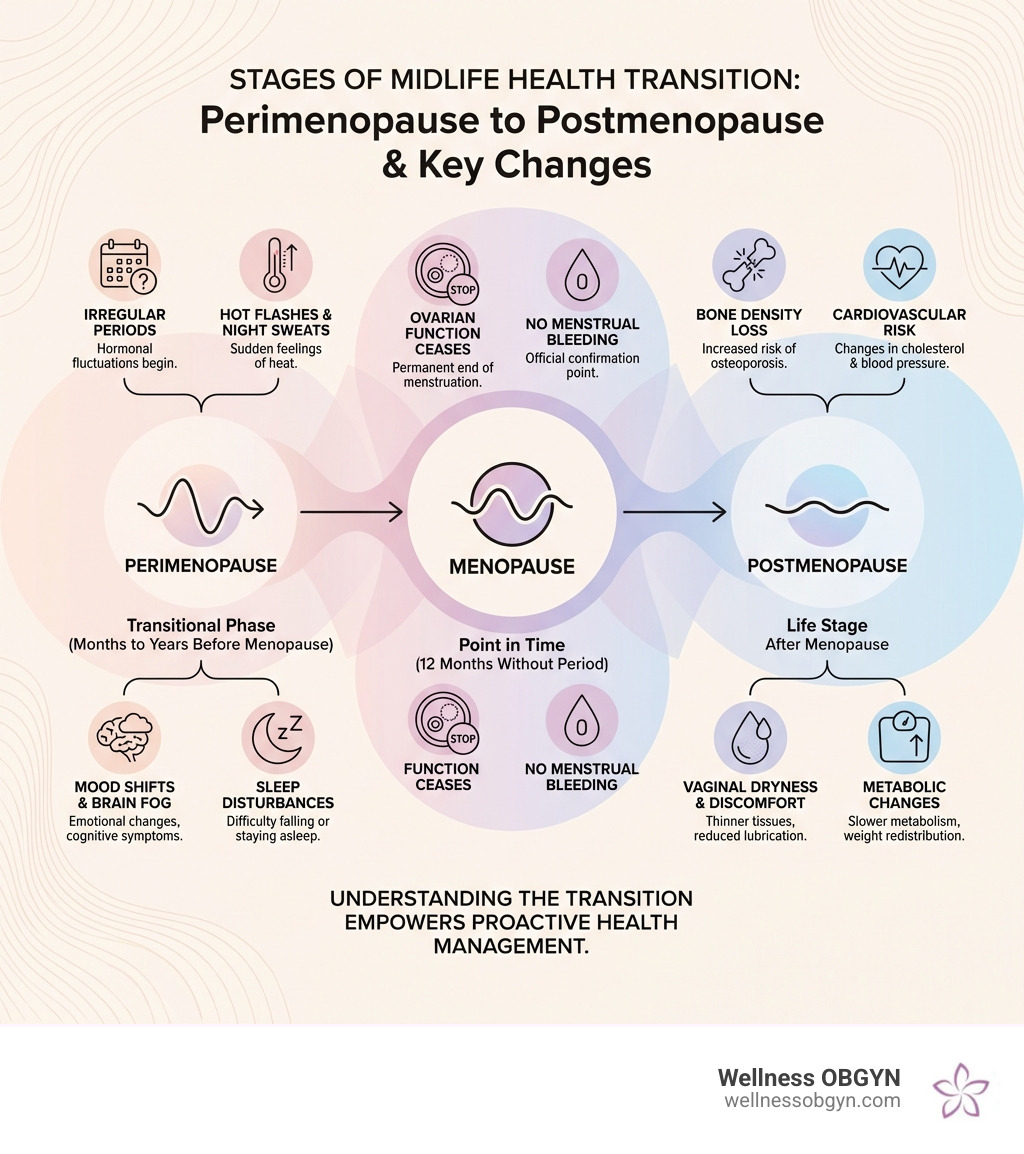
Easy midlife women’s health glossary:
Navigating the Menopausal Transition and Midlife Women’s Health
When we talk about midlife women’s health, we are essentially discussing a spectrum that begins around age 35 and stretches toward 65. This period encompasses several reproductive stages that were formally categorized in the Scientific research on the Stages of Reproductive Aging Workshop, known as STRAW+10. This framework helps us understand where a woman stands in her journey, from the late reproductive years through the final menstrual period and into late postmenopause.
At Wellness OBGYN, we see many women who feel like they’ve suddenly been dropped onto a hormonal roller coaster. One day you’re fine; the next, you’re wondering why the thermostat is set to “surface of the sun.” This transition is driven by ovarian aging. As our ovaries begin to wind down their production of key hormones, the “communication” between the brain and the ovaries becomes a bit like a spotty Wi-Fi connection—unpredictable and occasionally frustrating.
Hallmark Symptoms of Midlife Women’s Health
The most famous (or perhaps infamous) symptoms are vasomotor symptoms—the hot flashes and night sweats that affect the vast majority of women. But the transition involves much more than just temperature spikes. Many women experience irregular bleeding, which can range from skipped periods to unexpectedly heavy flow. We often provide early menopause support for those experiencing these changes sooner than expected.
Another significant shift is Genitourinary Syndrome of Menopause (GSM). This is a fancy medical term for the changes in the vagina and bladder caused by low estrogen. Because estrogen helps keep these tissues thick and lubricated, a decline can lead to vaginal dryness and discomfort during intimacy.
| Symptom | Perimenopause | Postmenopause |
|---|---|---|
| Menstrual Cycles | Irregular, varying length | Absent for 12+ months |
| Hot Flashes | Can be intense and frequent | Often peak, then gradually decline |
| Vaginal Dryness | May begin to appear | More common and persistent |
| Sleep Issues | Often linked to night sweats | May become chronic |
Psychosocial Stressors and Cognitive Function
We can’t talk about midlife women’s health without mentioning the “brain fog.” Many of our patients in Honolulu report trouble concentrating or a sudden forgetfulness that feels like their “mental filing cabinet” has been shaken up. These cognitive changes are often exacerbated by sleep disturbances; if you aren’t sleeping because of night sweats, your brain isn’t going to perform at its peak.
Furthermore, midlife is a time of high psychosocial pressure. Many women are in the “sandwich generation,” caring for growing children while simultaneously managing the needs of aging parents. This, combined with workplace stressors and financial pressures, contributes to the fact that 20-30% of midlife women experience episodes of clinical depression. If you’re feeling overwhelmed, visiting a female sexual health clinic or a mental health professional is a vital step in self-care.

The Critical Window: Preventing Chronic Disease and Promoting Healthy Aging
In the medical community, we refer to midlife as a “critical window.” This is because the physiological changes happening now—some related to ovarian aging and others to chronological aging—set the stage for your health in your 70s, 80s, and beyond. We believe in a holistic approach to women’s health because we aren’t just treating symptoms; we are preventing future diseases.
One of the most dramatic shifts occurs in our bones. We know from scientific research on bone loss during the menopausal transition that about half of a woman’s lifetime loss in bone mineral density happens during the few years surrounding the final menstrual period. This is why 1 in 2 women over age 50 will eventually break a bone due to osteoporosis.
Cardiovascular disease risk also accelerates during this time. Estrogen plays a protective role in heart health by helping keep blood vessels flexible and maintaining a healthy balance of cholesterol. As estrogen levels drop, we often see an increase in total cholesterol and LDL (the “bad” cholesterol). Additionally, osteoarthritis—the leading cause of pain and disability—becomes much more prevalent, with two-thirds of early postmenopausal women showing evidence of joint changes.
Metabolic and Cardiovascular Shifts in Midlife Women’s Health
Have you noticed that your favorite pair of jeans feels a bit tighter, even if your diet hasn’t changed? You aren’t imagining it. On average, women gain about 1.5 pounds per year during midlife. More importantly, the way we carry weight changes. Lower estrogen levels encourage the body to store “visceral fat” around the midsection.
This isn’t just a cosmetic issue; visceral fat is metabolically active and can lead to insulin resistance, metabolic syndrome, and higher blood pressure. This is why we place such a heavy emphasis on menopause and diet. Shifting toward a Mediterranean-style diet rich in healthy fats, lean proteins, and fiber can help mitigate these metabolic shifts.
Evidence-Based Treatments and Sexual Wellness
When it comes to managing symptoms, there is no “one size fits all” answer. At Wellness OBGYN, we prioritize shared decision-making. We want you to understand all your hormone therapy options so we can choose the path that fits your lifestyle and health history.
Hormone Therapy (HT) remains the most effective treatment for vasomotor symptoms and bone protection. For many, bioidentical hormones—which are chemically identical to the ones our bodies produce—offer a comfortable way to find balance. For women who cannot or choose not to use hormones, there are evidence-based alternatives like low-dose SSRIs or gabapentin that can significantly reduce hot flashes and improve sleep. Working with an obgyn menopause specialist ensures that your treatment is monitored and optimized for safety.
Lifestyle Strategies and Preventive Screenings
While medical treatments are powerful, they work best when paired with solid lifestyle foundations. We often tell our patients that midlife is the time to “invest” in your future self.
Physical activity is non-negotiable for midlife women’s health. Weight-bearing exercises (like walking, hiking, or weightlifting) are essential for maintaining bone mass, while strength training helps preserve muscle mass, which naturally declines with age. Muscle is metabolically active, so the more you have, the better your body handles sugar and fat.
Menopause lifestyle changes also include focusing on sleep hygiene—keeping your bedroom cool, limiting blue light before bed, and avoiding alcohol, which can trigger night sweats. Quitting smoking is perhaps the single most important step you can take to protect your heart and bones.
Proactive Screenings for Long-Term Midlife Women’s Health
Prevention is the ultimate goal of our womens wellness clinic. Regular screenings allow us to catch potential issues before they become serious problems.
The essential screenings for women in midlife include:
- Mammograms: Recommended annually or biennially starting at age 40 (or earlier if high risk).
- Colonoscopy: Now recommended to start at age 45 for most women.
- Bone Density (DEXA) Scan: Crucial for assessing osteoporosis risk, especially if you have risk factors or are postmenopausal.
- Lipid Panels and Blood Pressure: To monitor cardiovascular health and catch rising cholesterol early.
- Cervical Cancer Screening: Pap and HPV tests should continue as recommended by your provider until age 65.
Frequently Asked Questions about Midlife Health
What is the average age for the start of menopause?
In the United States, the average age for the final menstrual period is 51. However, the “start” of the transition—perimenopause—often begins in the mid-40s. Some women may notice changes as early as their late 30s. Factors like smoking, genetics, and certain medical treatments can lead to an earlier onset.
How does midlife impact bone health?
Midlife is a “bone drain” period. Because estrogen is vital for bone-building cells, its decline leads to accelerated bone loss. In fact, a woman can lose up to 20% of her bone density in the five to seven years following menopause. Ensuring adequate intake of Calcium and Vitamin D, alongside weight-bearing exercise, is essential to protect your skeleton.
Can lifestyle changes really reduce hot flashes?
Yes, for many women, lifestyle adjustments provide significant relief. Common triggers include spicy foods, caffeine, alcohol, and stress. Dressing in layers (the “Honolulu cardigan” approach) and maintaining a healthy weight can also reduce the frequency and intensity of flashes. Stress reduction techniques like yoga or meditation have also been shown to help the nervous system handle hormonal fluctuations more smoothly.
Conclusion
By focusing on midlife women’s health today, you are choosing a future defined by strength, mobility, and vitality. We invite you to partner with us in this transition.
Explore our full range of services and let’s create a plan that helps you look and feel your best, now and for years to come.