
Why Menopause and Wellness Matter More Than Ever
Menopause and wellness go hand in hand during one of the most significant transitions in a woman’s life. Menopause is confirmed after 12 consecutive months without a period—typically around age 52, though it can happen anytime between 45 and 55 or older. This hormonal shift affects far more than your menstrual cycle: it influences bone density, heart health, sleep quality, mood, sexual function, and even workplace productivity.
Quick answers to improve your menopausal health:
- Prioritize nutrition: Aim for 1,200 mg calcium and 2,000 IU vitamin D3 daily, plus a plant-based diet rich in whole foods
- Stay active: Include weight-bearing exercise (walking, dancing, resistance training) at least 2.5 hours per week
- Manage symptoms: Use vaginal lubricants for dryness, dress in layers for hot flashes, and practice stress-reducing activities like yoga or meditation
- Protect long-term health: Schedule regular screenings (mammograms, bone density scans, blood pressure checks) and quit smoking
- Consider treatment options: Discuss hormone therapy, non-hormonal medications, or advanced treatments
- Build support: Talk openly with your partner, join support groups, and advocate for menopause-friendly workplace accommodations
The stakes are real. Around 6,000 women reach menopause every day in the United States. Women can lose up to 10% of bone mass within five years of their final period, and up to 50% of postmenopausal women will be diagnosed with osteoporosis. Meanwhile, 15–30% of women experience symptoms severe enough to resemble a depressive disorder during perimenopause, yet only 1 in 25 discuss these changes with a mental health provider.
Many women also face professional challenges. With roughly 44% of women in the workforce over age 45, untreated moderate-to-severe symptoms contribute to $150 billion in menopause-related productivity losses worldwide. Yet fewer than one in five women talk to their significant other about symptoms, and only 9% discuss menopause with their mothers.
The good news? You have more control than you think. Lifestyle changes—better nutrition, regular exercise, stress management, and quality sleep—can ease hot flashes, protect your bones, and reduce your risk of heart disease. Medical treatments, from FDA-approved hormone therapy to innovative options for sexual wellness and urinary incontinence, offer targeted relief. And building a community of support—whether through your partner, friends, online forums, or workplace advocacy—can make the transition far less isolating.
I’m Dr. Cheryl Twu, a board-certified obstetrician-gynecologist and founder of Wellness OBGYN in Honolulu. Over the past decade in high-volume hospital settings and now in private practice, I’ve helped countless women navigate menopause and wellness using an integrative approach that blends evidence-based medicine with osteopathic principles and lifestyle guidance. This guide will walk you through every stage—from perimenopause to postmenopause—and give you the tools to stay well when your hormones go rogue.
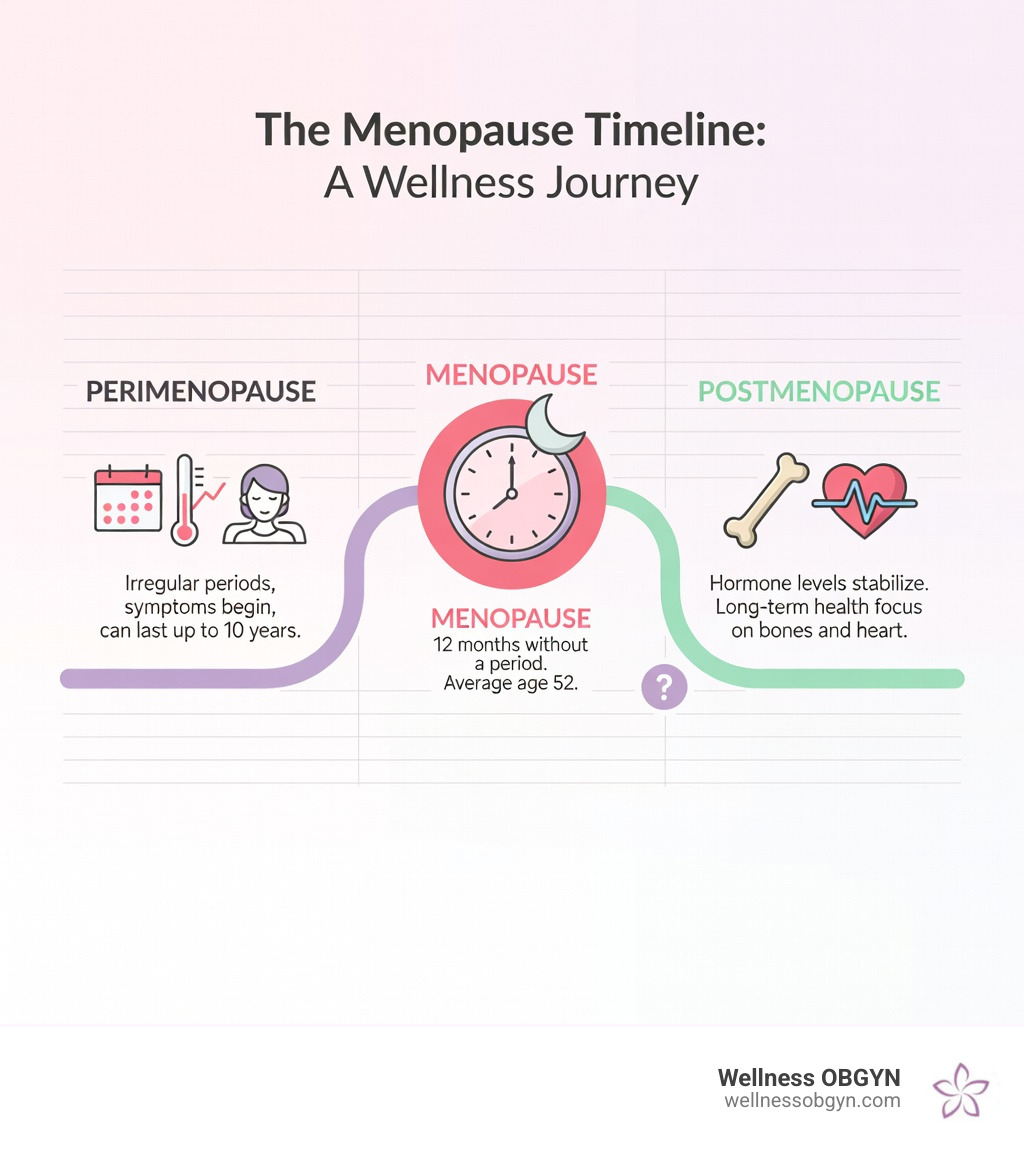
Menopause and wellness terms to know:
Understanding the Stages of Menopause and Wellness

At Wellness OBGYN, we believe that understanding the roadmap of menopause is the first step toward mastering it. Menopause isn’t a single event but a biological arc that spans several years. By identifying where you are in this transition, we can better tailor your early-menopause-support and long-term wellness strategy.
The Perimenopausal Shift
Perimenopause, or the menopausal transition, is the time leading up to your final period. For some of our patients in Honolulu, this phase begins in their mid-40s, but it can start as early as the late 30s. During this time, your ovaries gradually produce less estrogen and progesterone.
This hormonal “rollercoaster” can last anywhere from four to ten years. You might notice your periods becoming irregular—spaced further apart or suddenly closer together. While fertility is declining, it is important to remember that you can still become pregnant during perimenopause until you have officially reached the 12-month milestone of menopause.
Life After the Final Period
Once you have gone one full year without a menstrual cycle, you have entered postmenopause. In the United States, the average age for this is 52. At this stage, your hormone levels stabilize at a lower baseline. While the “storm” of perimenopause symptoms like hot flashes may begin to subside for many, this is the most critical time to focus on menopause and wellness from a preventive standpoint. Our obgyn-menopause-specialist team focuses on protecting your heart, bones, and cognitive health during these years.
Navigating Common Symptoms and Long-Term Health Risks
The drop in estrogen affects almost every system in your body. While some women breeze through the transition, others find that symptoms significantly disrupt their quality of life. Understanding these changes allows us to implement effective menopause-lifestyle-changes early on.
Managing Vasomotor and Sleep Issues
The most famous symptoms are vasomotor symptoms: how to manage and treat hot flashes and night sweats. A hot flash is a sudden wave of heat, often accompanied by a red, blotchy face and sweating. These can last from 30 seconds to several minutes and can be triggered by stress, caffeine, alcohol, or spicy foods.
Night sweats frequently lead to sleep problems during menopause. Chronic sleep deprivation can exacerbate mood swings and “brain fog.” At Wellness OBGYN, we often recommend Cognitive Behavioral Therapy (CBT) for insomnia, which research shows is highly effective for menopausal sleep disruptions.
Protecting Bone Density and Heart Health
The silent risks of menopause are often the most dangerous. Estrogen plays a vital role in maintaining bone density. Without it, women can lose up to 10% of their bone mass in the first five years of postmenopause. This leads to a significantly higher risk of osteoporosis—a condition where bones become brittle and prone to fracture. We recommend a baseline DXA scan around the time of menopause to monitor your bone health.
Furthermore, heart disease risks increase as estrogen levels fall. Before age 55, women generally have a lower risk of heart disease than men; however, after menopause, that risk levels out. A holistic-menopause-treatment plan must include monitoring blood pressure and cholesterol to mitigate these cardiovascular risks.
Holistic Strategies for Menopause and Wellness
Wellness is not just the absence of disease; it is the presence of vitality. We encourage our patients to use tools like My Menoplan to create a personalized self-care roadmap.
Nutrition and Exercise for Menopause and Wellness
What you put on your plate matters more than ever. A menopause-and-diet plan should emphasize:
- Calcium and Vitamin D: Aim for 1,200 mg of calcium daily through foods like kale, sardines, and fortified dairy. Combine this with 2,000 IU of Vitamin D3 to ensure absorption.
- Plant-Based Foods: Diets rich in soy and legumes may help naturally balance some vasomotor symptoms.
- Weight-Bearing Exercise: To fight bone loss, you need to put stress on your bones. Walking, jogging, dancing, and resistance training with weights or bands are essential. We recommend at least 30 minutes of physical activity most days of the week.
Mental Health and Workplace Productivity
The psychological impact of menopause is often overlooked. Women are 1.5 times more likely to develop anxiety during perimenopause than before. Up to 60% of women with a history of depression may see a recurrence during midlife.
This often bleeds into the professional sphere. “Presenteeism”—being at work but not fully functioning due to symptoms—costs the global economy billions. We advocate for menopause at work support, such as flexible hours, breathable uniforms, and adjustable office temperatures. Don’t be afraid to speak up; your health is the foundation of your productivity.
Comparing Systemic HRT vs. Local Vaginal Treatments
Choosing the right hormone delivery system is essential for safety and efficacy. Our menopause-treatment-honolulu experts help you navigate these choices:
| Treatment Type | Method | Best For |
|---|---|---|
| Oral Estrogens | Tablets (e.g., Estrace, Premarin) | Severe hot flashes and osteoporosis prevention. |
| Transdermal Patches | Skin patch (e.g., Vivelle-Dot) | Consistent hormone delivery; lower risk of blood clots than oral. |
| Vaginal Rings | Insertable ring (e.g., Femring) | Local vaginal symptoms and some systemic relief. |
| Local Vaginal Cream | Topical application | Vaginal dryness and painful intercourse; very low systemic absorption. |
| MonaLisa Touch® | Laser therapy | Non-hormonal treatment for vaginal atrophy and lubrication. |
Staying Proactive: Screenings and Support Systems
Wellness is a team sport. Staying healthy after menopause requires a proactive approach to medical screenings and a strong social network. Our holistic-approach-to-womens-health ensures you don’t miss a beat.
- Mammograms: Annual or biennial screenings are recommended for women ages 40 to 75.
- Pelvic Exams and Pap Tests: Even after menopause, regular pelvic exams are necessary. Pap/HPV tests are generally recommended every five years until age 65.
- Colonoscopy: Starting at age 45, regular screenings for colon cancer are vital.
- Smoking Cessation: Smoking can cause menopause to occur two years earlier and intensifies symptoms. Visit women.smokefree.gov for resources to help you quit.
Building a Community of Support
Isolation can make menopause feel much heavier than it is. We encourage you to:
- Talk to your partner: Only 17% of women speak to their significant others about symptoms. Open communication can improve intimacy and reduce relationship stress.
- Join a support group: Connecting with other women who understand the “brain fog” and hot flashes can be incredibly validating.
- Use a Menopause Care Journal: Tracking your triggers (like sugar or stress) and symptoms can provide valuable data for your next appointment.
- Find a Practitioner: If you aren’t in Honolulu, use the Find a Practitioner tool from The Menopause Society to find an expert near you.
Frequently Asked Questions about Menopause and Wellness
When should I see a doctor for menopause and wellness?
You should consult a holistic-obgyn-honolulu professional if your symptoms interfere with your daily life, sleep, or relationships. Additionally, any vaginal bleeding after menopause is a “red flag” that requires immediate medical evaluation to rule out fibroids or endometrial cancer.
Are bioidentical hormones safer than traditional HRT?
“Bioidentical” hormones are chemically identical to those your body produces. Many FDA-approved bioidentical options are available and regulated for safety. However, be cautious of “compounded” bioidenticals, as the FDA warns they may lack the rigorous evidence for safety and consistency found in approved therapies.
Can I still get pregnant during perimenopause?
Yes. As long as you are still having periods—even irregular ones—ovulation can still occur. We recommend continuing birth control until you have reached the full 12-month milestone without a period.
Conclusion
At Wellness OBGYN in Honolulu, we believe that menopause is not an end, but a new beginning. It is a unique window of opportunity to reset your health habits and prioritize your well-being. Whether through nutritional guidance, hormone optimization, or advanced regenerative treatments, our mission is to provide personalized, compassionate care that honors your individual journey.
Ready to take control of your hormones? More info about menopause services is just a click away. Let’s work together to ensure your postmenopausal years are your most vibrant yet.