
Why Scar Tissue Massage Matters for Your Recovery
Scar tissue massage is a proven self-care technique that helps soften, flatten, and improve the flexibility of scars while reducing pain, itching, and adhesions that can limit movement. Whether you’re healing from a C-section, hysterectomy, or other surgical procedure, gentle massage applied 2-3 times daily for 5-10 minutes can significantly improve your scar’s appearance and function—especially when started 2-3 weeks after your wound has fully closed.
Quick Guide to Scar Tissue Massage Benefits:
- Softens and flattens raised or hard scar tissue
- Reduces adhesions that can stick to muscles, bones, or organs
- Improves flexibility and range of motion
- Relieves pain, itching, and sensitivity at the scar site
- Boosts circulation and lymphatic drainage to the area
- Provides psychological relief by giving you control over your healing
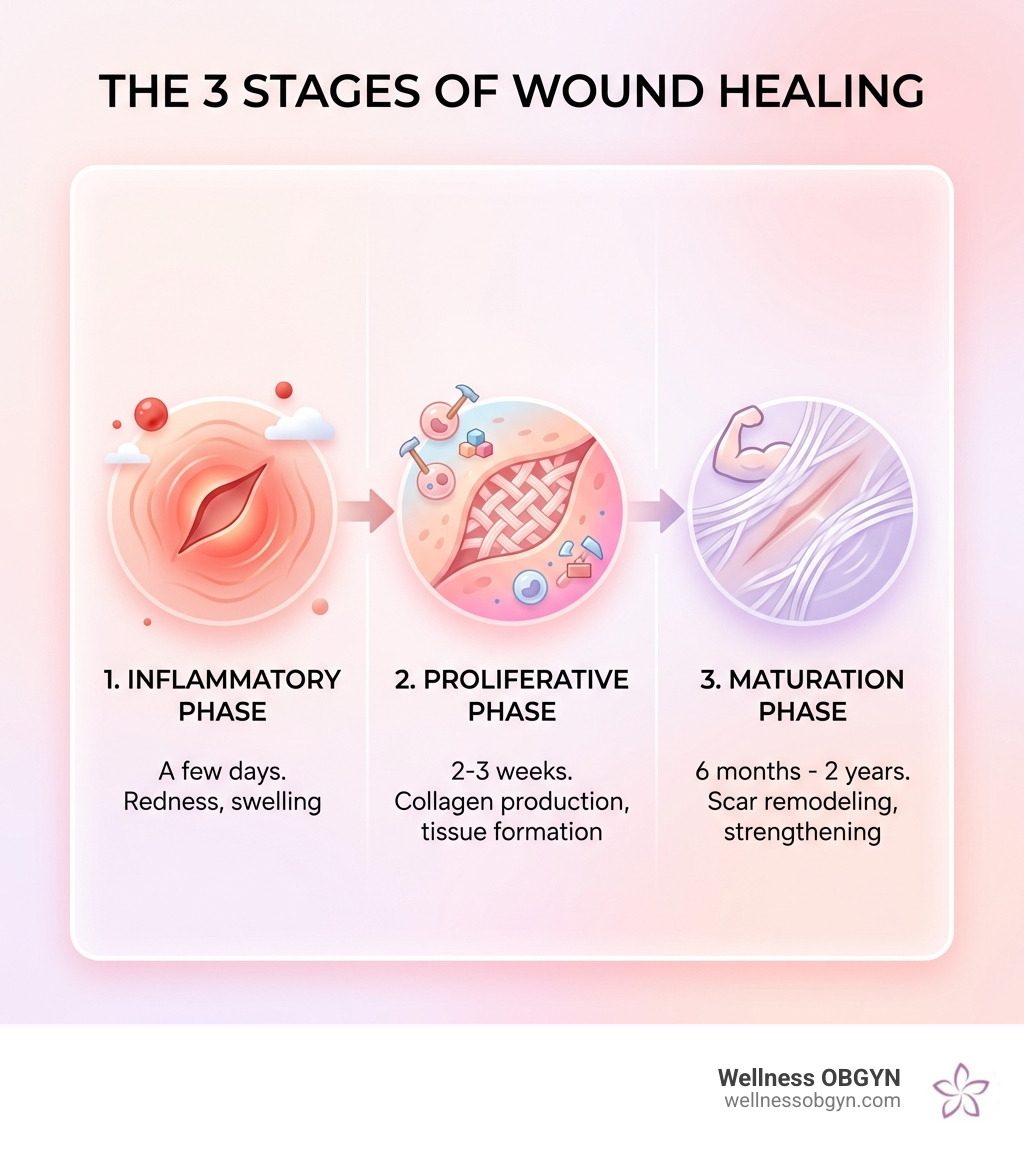
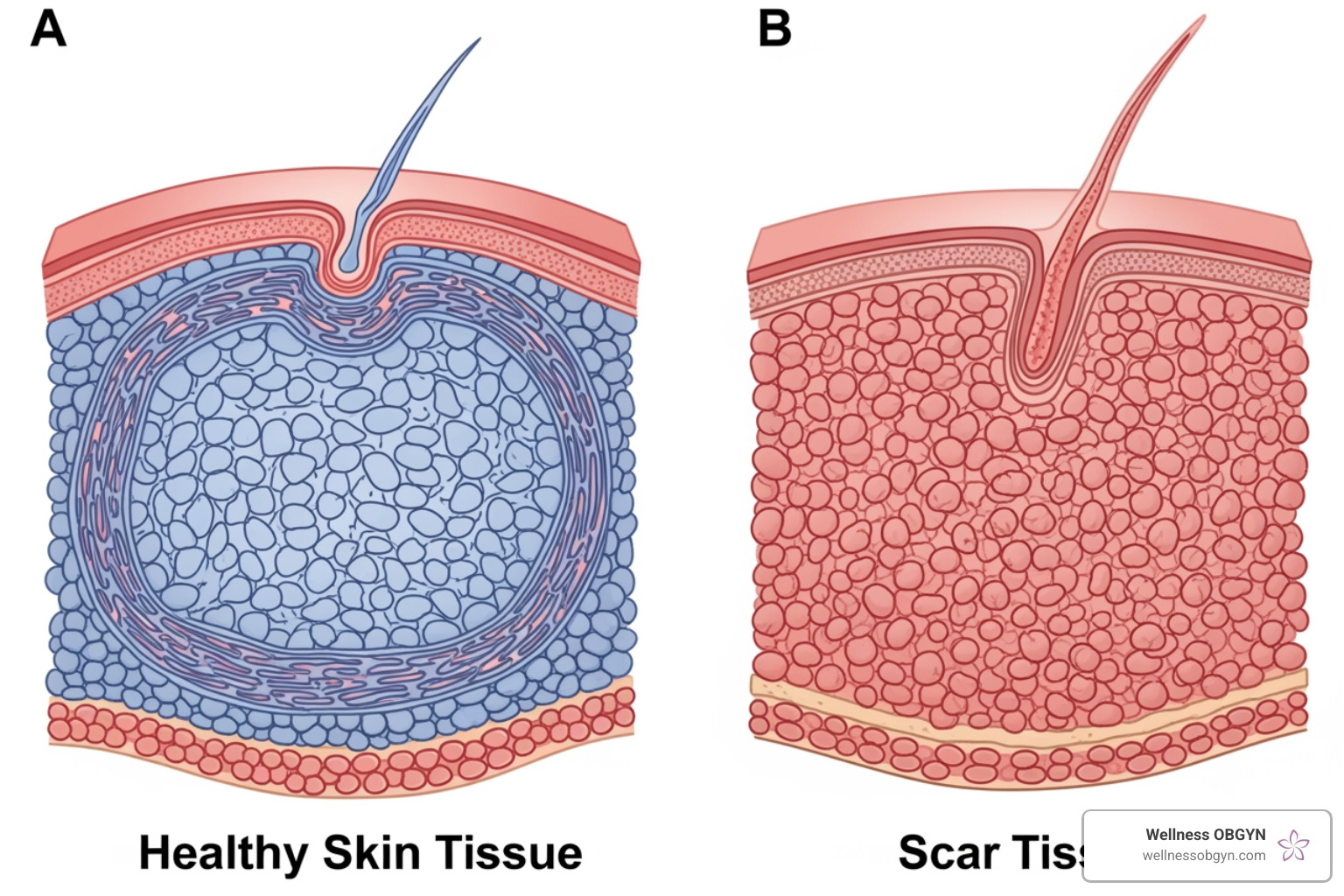
Scars are your body’s natural response to injury or surgery, but they’re not permanent fixtures. During the healing process—which can take 3 to 18 months—your body produces collagen to repair damaged tissue. Unlike healthy skin, where collagen arranges in an organized basket-weave pattern, scar tissue forms with random, disorganized fibers. This leaves scars less elastic, more rigid, and reaching only 70-80% of normal skin strength.
The good news? Early and consistent massage can help remodel this tissue, aligning collagen fibers more effectively and restoring function. Research shows that regular scar massage significantly improves pain, pliability, pigmentation, and overall scar quality. One study of postoperative scars found measurable improvements in hydration, elasticity, and structure after just 8 weeks of combined manual therapy.
As Dr. Cheryl Twu, board-certified OB-GYN and founder of Wellness OBGYN, I’ve guided countless patients through post-surgical recovery, including those healing from C-sections, hysterectomies, and other gynecologic procedures where effective scar tissue massage plays a vital role in restoring comfort and mobility. My approach combines evidence-based techniques with osteopathic principles to support your whole-person wellness.
Scar tissue massage vocabulary:
Understanding the Science of Scar Tissue and Remodeling
To understand why we massage scars, we first have to look at what is happening under the surface of your skin. When you undergo a Minimally Invasive Surgery or any procedure that involves an incision, your body rushes to “patch” the gap. This patch is made of collagen fibers.
In healthy, uninjured skin, these collagen fibers are arranged in a beautiful, organized “basket-weave” pattern. This structure is what gives your skin its bounce, stretch, and strength. However, when scar tissue forms, the body is in a hurry. It lays down collagen in a random, haphazard alignment. Imagine a neatly stacked pile of lumber versus a tangled heap of sticks—that tangled heap is your scar.
Because of this disorganized structure, scar tissue is naturally more fibrous and less elastic than the original skin. It also tends to have a reduced blood supply, leading to what we call tissue hypoxia (low oxygen). This can make the area feel cold, numb, or persistently tight. Furthermore, if left alone, this fibrous tissue can create “adhesions”—internal snagging where the scar sticks to underlying muscles, fascia, or even organs like the bladder or uterus.
According to a Scientific review on factors affecting wound healing, various systemic and local factors influence how this collagen is deposited. By intervening with massage, we are essentially acting as “traffic controllers” for those collagen fibers, encouraging them to align in a way that mimics healthy tissue.
Why Scar Tissue Massage is Essential for Healing
You might wonder, “Can’t I just let it heal on its own?” While your body is amazing at self-repair, scar tissue massage provides the mechanical “cues” your cells need to do a better job. This process is known as mechanotransduction—where mechanical pressure from your fingers is converted into biochemical signals that tell your cells to break down excess collagen and reorganize the rest.
The Benefits of a Hands-On Approach
- Circulation Boost: Massage brings fresh, oxygenated blood to the area, which is vital for the remodeling phase.
- Lymphatic Drainage: It helps move stagnant fluid and toxins away from the surgical site, reducing that “puffy” feeling around an incision.
- Range of Motion: Especially for abdominal surgeries, massage prevents the skin from tethering to the abdominal wall, allowing you to stand up straight without feeling a “pull.”
- Pain Reduction and Desensitization: Many scars become hypersensitive or “angry” to the touch. Consistent, gentle rubbing helps the nerves in the area realize that normal touch is not a threat.
- Psychological Well-being: Taking time to care for your scar helps you reconnect with your body after trauma or surgery, reducing anxiety and giving you a sense of agency in your recovery.
A Scientific research on manual scar therapy effectiveness highlights that combined manual therapies can lead to significant reductions in pruritus (itching) and scar stiffness.
Master the Techniques: Step-by-Step Guide to Scar Tissue Massage at Home
Ready to get started? Once your healthcare provider has given you the green light, you can perform these techniques in the comfort of your Honolulu home. We recommend finding a quiet time, perhaps after a warm shower when your skin is most pliable.
The Golden Rules of Technique:
- Pressure: You want to apply enough pressure so that the skin “blanches” (turns white) under your finger. You should be moving the tissue under the skin, not just sliding your fingers over the surface.
- Frequency: Aim for 2-3 times daily for about 5-10 minutes.
- Consistency: The remodeling phase lasts up to two years, so staying consistent for at least the first six months is key.
1. Cross-Friction Massage
Place one or two fingers on the scar. Move your fingers back and forth in a direction perpendicular to the scar line. This “cross-grain” motion is excellent for breaking up stubborn adhesions and aligning fibers.
2. Circular Motions
Using the pads of your fingers, make small, firm circles along the entire length of the scar and the surrounding skin. This helps ensure the scar stays loose from the tissue layers beneath it.
3. Linear Strokes
Massage along the length of the scar, pushing the tissue in one direction and then the other.
4. Myofascial Release (Skin Rolling)
Once the scar is more mature, try to gently pick up the scar between your thumb and index finger and “roll” it. If the scar is “stuck,” you won’t be able to lift it much—this is a sign that it needs more work!
When to Start and How to Choose the Right Products
Timing is everything. If you start too early, you risk pulling the wound apart or introducing infection. If you start too late, the tissue may have already become very rigid.
Typically, it is safe to start scar tissue massage about 2-3 weeks post-surgery. You must ensure that:
- The wound is completely closed.
- All stitches or staples have been removed (or dissolved).
- There is no active scabbing or drainage.
When you are ready, choosing the right lubricant is important. In our Honolulu practice, we often discuss Obgyn Surgical Procedures and the recovery that follows. While the act of massage is more important than the cream itself, the right product can make the process more comfortable.
| Product Type | Benefits | Best For |
|---|---|---|
| Water-based Lotions | Absorbs quickly, less messy. | Daily use, quick sessions. |
| Vitamin E Oil / Cocoa Butter | High hydration, keeps skin very soft. | Mature scars, nighttime massage. |
| Onion Extract (Quercetin) | Clinically shown to reduce redness and itching. | Hypertrophic (raised) scars. |
| Silicone Gels | Creates a protective barrier, mimics skin. | Preventing keloids. |
Pro Tip: If you find your fingers are sliding too much to get a good “grip” on the deep tissue, try doing the deep massage on dry skin first, then apply your favorite lotion or Vitamin E oil afterward to soothe the surface.
Safety First: Precautions for Effective Scar Tissue Massage
While scar tissue massage is generally very safe, there are a few “red flags” to watch for. If you notice any of the following, stop the massage and contact us:
- Signs of Infection: Increased redness, warmth, swelling, or foul-smelling drainage.
- Fragile Skin: If you have recently undergone radiation therapy, your skin is much more delicate and requires special clearance.
- Open Lesions: Never massage a scar that has an open area or a blister.
- Pain: While you might feel a “stretching” sensation, the massage should never be agonizing.
Specialized Care for Surgical and Pelvic Scars
At Wellness OBGYN, we focus heavily on the unique needs of women. Scars in the pelvic region can have far-reaching effects on your health.
- C-section Adhesions: A C-section scar isn’t just a line on your skin; it goes through several layers of tissue. If the scar becomes “stuck” to the bladder or uterus, it can cause urinary frequency or pelvic pain.
- Hysterectomy Recovery: Even with laparoscopic incisions, internal scarring can occur. Gentle abdominal massage helps maintain the “slide and glide” of your internal organs.
- Episiotomy Care: Scars from childbirth can lead to painful intimacy. Gentle desensitization and massage can help restore comfort.
If you are experiencing significant tightness, you may benefit from Female Pelvic Floor Therapy, which addresses both external and internal scar tissue to restore pelvic balance. Interestingly, Scientific research on post-burn scar massage shows that similar manual techniques are highly effective in improving the pliability of even the most restrictive tissues.
Frequently Asked Questions about Scar Management
Is scar tissue permanent?
While a scar is technically permanent, its behavior is not. Through scar tissue massage and proper care, a scar that was once red, hard, and painful can become a pale, flat, and flexible line that is barely noticeable. The remodeling phase is your window of opportunity to change the scar’s future.
When is it too late to start scar massage?
It is never truly “too late” to see some improvement, but the best results occur within the first two years. Even older scars can sometimes be softened and desensitized with dedicated work, though they may require more vigorous techniques like myofascial release.
What are the best complementary therapies for scars?
Beyond massage, many patients find success with:
- Silicone Sheeting: To keep the scar hydrated.
- Kinesiotaping: To provide a gentle, 24/7 “lift” to the tissue.
- Cupping: To pull the tissue upward and break deep adhesions.
- Sun Protection: Scars burn easily and can permanently darken if exposed to the Honolulu sun. Keep them covered or use SPF 30+ for at least the first year.
Conclusion
Mastering the art of scar tissue massage at home is one of the most impactful things you can do for your post-surgical recovery. By dedicating just a few minutes a day to these techniques, you are helping your body build a stronger, more flexible, and more comfortable future.
At Wellness OBGYN in Honolulu, we believe in patient-centered care and shared decision-making. We aren’t just here for the surgery; we are here for your entire recovery journey. If you have questions about your healing or want a personalized recovery plan tailored to your individual needs, we invite you to reach out.
Master your recovery at the Center for Women’s Health and let us help you feel like yourself again.