
Why Pelvic Floor Strengthening Matters After Baby
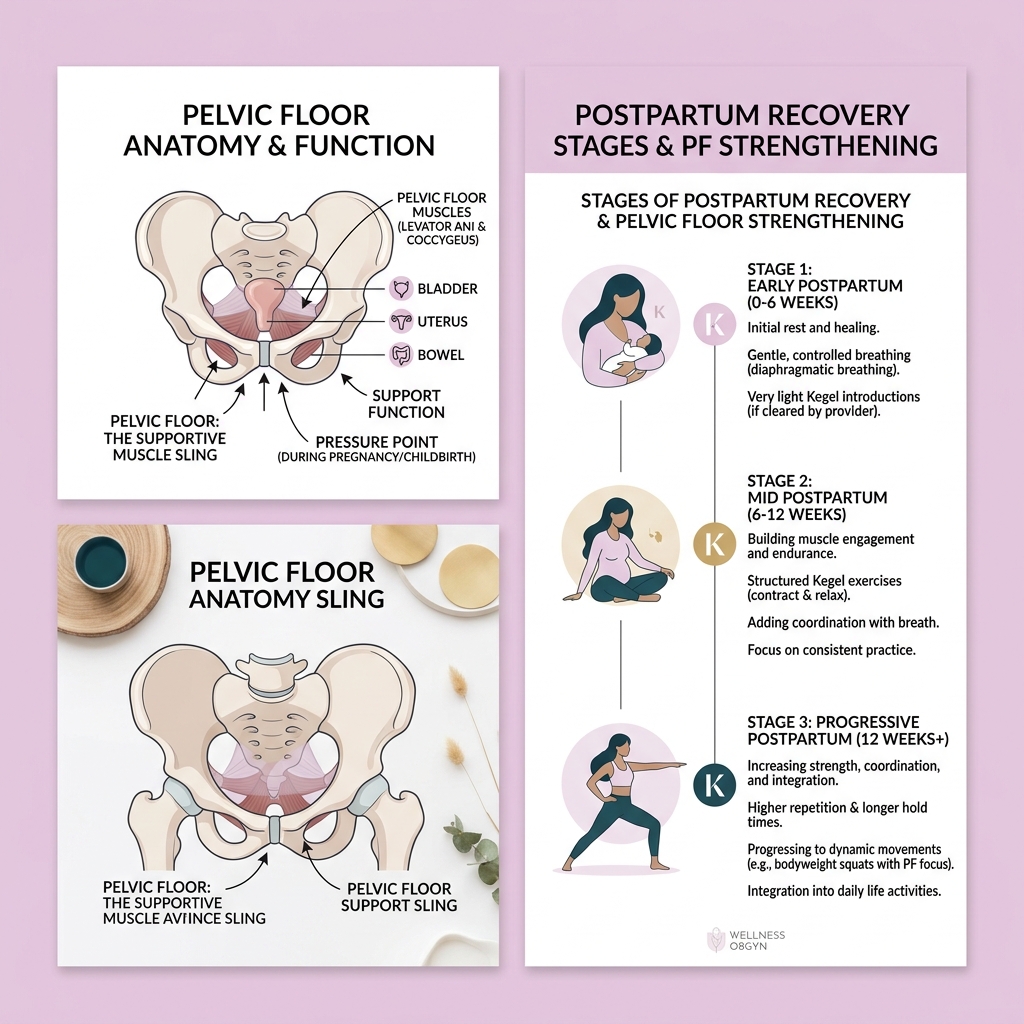
Pelvic floor strengthening is the practice of exercising the group of muscles that form a supportive “sling” across the bottom of your pelvis — holding up your bladder, uterus, and bowel.
Here’s a quick overview of what you need to know:
- What it is: Targeted exercises (like Kegels) that contract and relax the pelvic floor muscles to build strength and control
- Who needs it: Anyone who has given birth, experienced pregnancy, or notices leaking, urgency, or pelvic pressure
- Key benefits: Reduces urinary and fecal leakage, supports organ position, improves sexual sensation, and speeds postpartum recovery
- How to start: Tighten the muscles you’d use to stop urine flow, hold for 3–10 seconds, relax fully, and repeat 10–15 times, 3 times a day
- When to expect results: Most women notice improvement within 4–6 weeks; significant changes can take up to 3 months
Pregnancy and childbirth put enormous pressure on these muscles. Pushing during labor, carrying extra weight for nine months, and hormonal shifts after delivery can all leave the pelvic floor weakened — sometimes without you even realizing it. In fact, an estimated 25 million adults in the US live with urinary incontinence, and many cases are directly linked to pelvic floor weakness that was never properly addressed.
The good news? These muscles can be retrained. And starting sooner rather than later makes a real difference.
I’m Dr. Cheryl Twu, board-certified OB-GYN and founder of Wellness OBGYN in Honolulu — and pelvic floor strengthening is one of the most important topics I discuss with patients at every stage of their reproductive lives, from prenatal care through postpartum recovery. From over a decade of clinical experience in women’s health, I’ve helped countless patients regain confidence and function through the right combination of exercise, guidance, and personalized care.
Handy pelvic floor strengthening terms:
Understanding the Pelvic Floor and Postpartum Weakness
Think of your pelvic floor as a muscular hammock. It stretches from your pubic bone at the front to your tailbone at the back. This “hammock” is responsible for some pretty heavy lifting—it supports your bladder, uterus, and bowels, ensuring everything stays where it belongs. It also plays a vital role in pelvic floor anatomy and function, helping you control when you pee or poop and contributing significantly to sexual sensation.
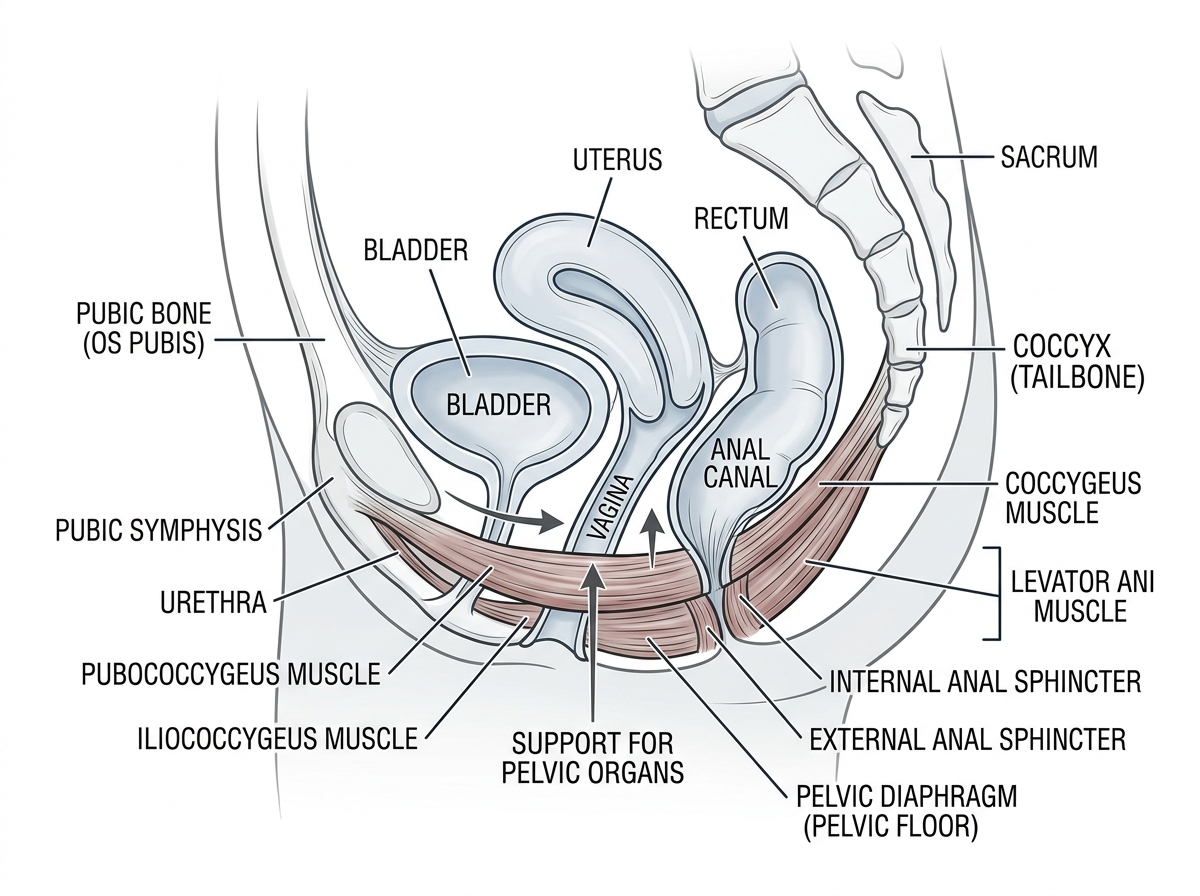
During pregnancy, this hammock is under constant strain. Not only is it supporting the weight of a growing baby, but your body also produces hormones like relaxin, which softens the connective tissues to prepare for birth. Whether you had a vaginal delivery or a C-section, the pressure of carrying a child for nine months can cause these muscles to stretch and weaken.
For those who deliver vaginally, the birth canal and surrounding tissues are stretched significantly. While our bodies are incredible at healing, this stretching can lead to vaginal laxity or even pelvic organ prolapse, where organs like the bladder or uterus begin to sag into the vaginal space. Furthermore, the drop in estrogen levels after delivery—especially if you are breastfeeding—can lead to thinning and drying of the vaginal tissues, making pelvic floor strengthening even more critical for long-term comfort.
The Benefits of Pelvic Floor Strengthening After Childbirth
The most immediate benefit of pelvic floor strengthening is regaining control. We’ve all heard the jokes about “mom bladder”—leaking a little when you laugh, sneeze, or jump on a trampoline. This is known as stress incontinence. According to scientific research on pelvic floor exercises and incontinence, consistent training can drastically improve or even cure these symptoms.
Beyond just staying dry, focusing on your pelvic health through Female Pelvic Floor Therapy offers several life-changing benefits:
- Improved Core Stability: Your pelvic floor is the “bottom” of your core. Strengthening it helps stabilize your spine and can even reduce postpartum back pain.
- Preventing Prolapse: By keeping the muscles firm, you provide better support for your internal organs, reducing the risk of them shifting out of place.
- Enhanced Sexual Wellness: Stronger muscles mean better blood flow and more control during intimacy, leading to increased sensitivity and more powerful orgasms.
How to Perform Exercises and Master the Kegel Technique
The gold standard of pelvic floor strengthening is the Kegel exercise. While they seem simple, many people actually perform them incorrectly by squeezing their butt or holding their breath. At Wellness OBGYN, we emphasize that quality is always better than quantity.
When you start Specialized Intimate Wellness Treatments, we teach you to isolate the muscles. You should be able to talk or breathe normally while you contract. If you find yourself tensing your abs or your inner thighs, you’re likely overcompensating.
One of the most effective tools in your arsenal is “The Knack.” This involves performing a quick, strong pelvic contraction right before you do something that increases abdominal pressure—like coughing, sneezing, or lifting your car seat. This “pre-squeeze” protects the muscles and prevents leaks.
Slow Holds vs. Quick Flicks
To build a truly functional pelvic floor, you need to train two types of muscle fibers: slow-twitch (for endurance) and fast-twitch (for quick reactions).
| Exercise Type | Technique | Goal |
|---|---|---|
| Endurance Holds | Squeeze and lift, hold for 5-10 seconds, relax for 10 seconds. | Supports organs throughout the day. |
| Quick Flicks | Squeeze and lift rapidly, then release immediately. Repeat 10 times. | Prevents leaks during sudden sneezes or coughs. |
Finding Your Pelvic Floor Muscles
If you aren’t sure where these muscles are, try these visualization techniques:
- Stop the Gas: Imagine you are in a crowded elevator and need to stop yourself from passing gas. The muscle you squeeze is your posterior pelvic floor.
- The Marble Lift: Imagine there is a small marble at the opening of your vagina. Try to “pick it up” with your muscles and pull it up toward your belly button.
- The Finger Test: If you’re still unsure, you can insert a clean finger into the vagina and squeeze. You should feel a gentle “hug” or lift around your finger.
Integrating Pelvic Floor Strengthening into Your Routine
The best exercise is the one you actually do. Since you don’t need a gym or special clothes for Kegels, you can “habit stack” them with your new mom’s life:
- While Nursing/Feeding: Use the quiet time to do a set of 10 holds.
- At Red Lights: If you’re driving around Honolulu, use every stoplight as a cue to squeeze.
- Brushing Your Teeth: A perfect two-minute window for quick flicks.
Consistency is key. Aim for at least three sets a day. We often suggest keeping an exercise log or using a phone app to track your progress, as it can take 4 to 6 weeks to notice a change and up to 3 months for major improvements.
Beyond Kegels: Advanced Variations and Professional Tools
Once you’ve mastered the basic Kegel, it’s time to integrate pelvic floor strengthening into full-body movements. After all, your pelvic floor doesn’t work in a vacuum—it works with your glutes, hips, and abs.
- Bridge Pose: Lie on your back with knees bent. As you lift your hips, engage your pelvic floor. Relax as you lower.
- Squats: As you lower into a squat, keep the pelvic floor relaxed. As you stand back up, engage the muscles to “lift” your internal organs.
- Bird-Dog: On your hands and knees, extend the opposite arm and leg while maintaining a steady pelvic contraction.
Professional Tools for Better Results
Sometimes, exercise alone isn’t enough, or you might have trouble feeling the muscles. In our Personalized Women’s Healthcare plans, we might recommend:
- Biofeedback: Using sensors to show you on a screen exactly when your muscles are contracting.
- Vaginal Weights: Small, weighted cones that give your muscles something to “hold onto,” increasing resistance.
- The Starformer Chair 2: This is a game-changer. The Starformer Chair 2 uses High-Intensity Tesla Magnetic Stimulation (HITS) to trigger thousands of supramaximal pelvic floor muscle contractions while you sit fully clothed. It’s like doing 10,000 Kegels in 20 minutes!
It is also important to note that some women have “hypertonic” or overly tight pelvic floors. If you experience pain during intercourse or difficulty emptying your bladder, doing more Kegels can actually make things worse. In these cases, we focus on relaxation stretches like Child’s Pose or Happy Baby to help the muscles lengthen.
Conclusion
At Wellness OBGYN, we believe that “mom leaks” shouldn’t be your new normal. Whether you are six weeks or six years postpartum, it is never too late to start pelvic floor strengthening. Our team in Honolulu is dedicated to a patient-centered approach, ensuring you have the tools, treatments, and support needed to feel like yourself again.
Frequently Asked Questions about Pelvic Floor Strengthening
How long does it take to see results? Consistency is everything. You might feel a difference in bladder control after 3 to 6 weeks, but it typically takes about 3 months of daily practice to see a significant, lasting change in muscle strength.
Can I do these exercises if I had a C-section? Absolutely! Even though the baby didn’t pass through the birth canal, your pelvic floor still carried the weight of the pregnancy for nine months. C-section moms are still at risk for weakness and prolapse, so strengthening is highly recommended.
What are the signs that I am doing Kegels incorrectly? If you feel your stomach tightening, your breath holding, or your butt muscles clenching, you are likely using the wrong muscles. Another sign is “bearing down” or pushing outward—you should always feel an upward and inward lift. If you experience back or pelvic pain during the exercises, stop and consult a professional to check your technique.