
Understanding Vaginal Atrophy and GSM
Vaginal atrophy treatment is more accessible and effective than most women realize — yet up to 75% of those with symptoms never seek help.
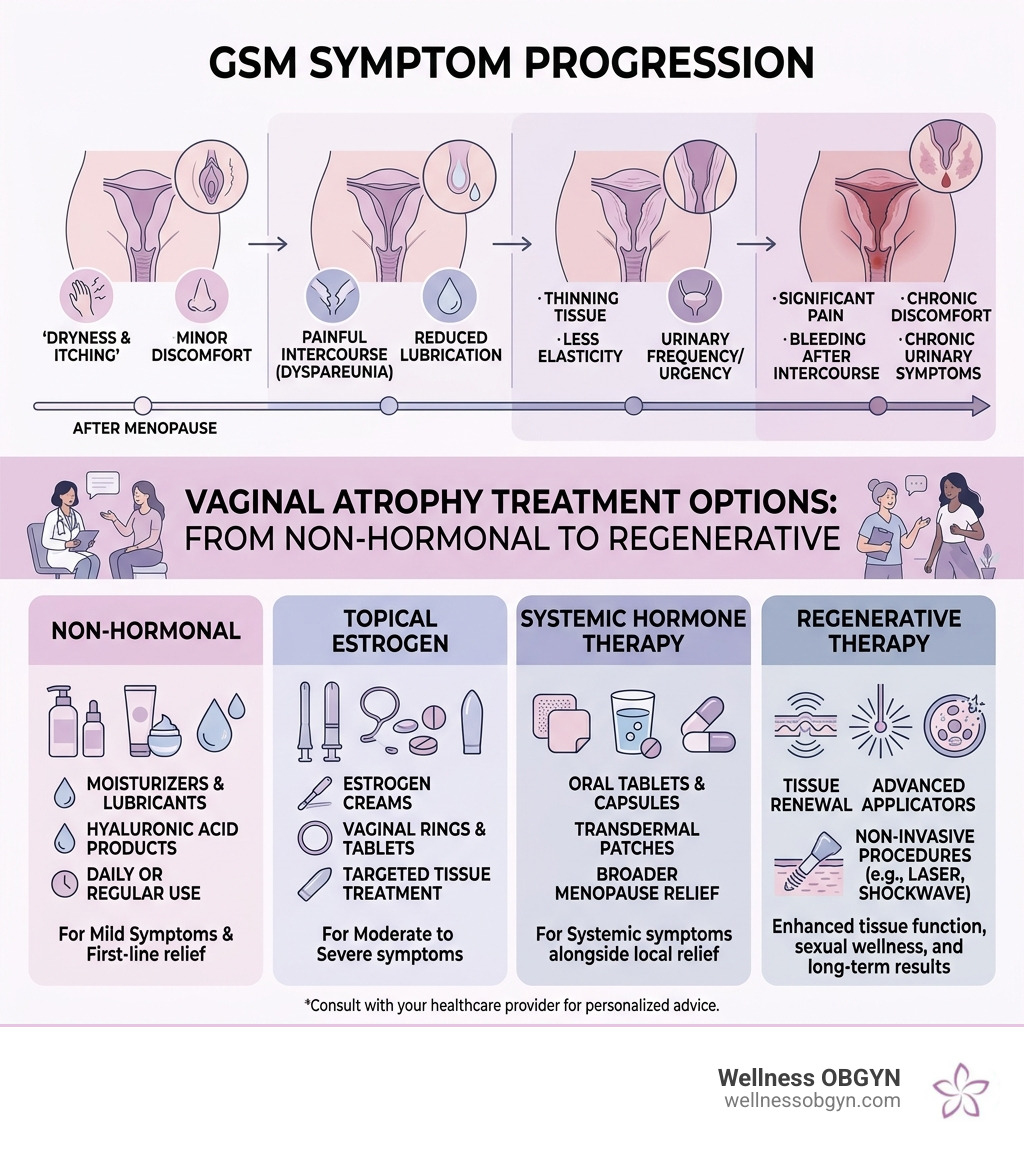
Here is a quick overview of your main treatment options:
| Treatment Type | Examples | Best For |
|---|---|---|
| Non-hormonal | Moisturizers, lubricants, hyaluronic acid | Mild symptoms, first-line relief |
| Topical estrogen | Creams, rings, tablets, suppositories | Moderate to severe symptoms |
| Oral/systemic hormone therapy | Estrogen + progestogen, DHEA, SERMs | Broader menopause symptoms |
| Lifestyle changes | Regular sexual activity, quitting smoking | Prevention and long-term management |
Vaginal atrophy — now more commonly called genitourinary syndrome of menopause (GSM) — happens when estrogen levels drop. The vaginal walls become thinner, drier, and less elastic. Sex can become painful. Urinary symptoms often follow.
It is not just a normal part of aging you have to live with. It is a medical condition with real, proven treatments.
The numbers tell a striking story: at least 50–60% of postmenopausal women are affected, and symptoms tend to worsen over time — reaching up to 75% of women 7–10 years after menopause. Yet the condition remains underdiagnosed, undertreated, and — as many women note — still uncomfortably taboo to bring up with a doctor.
You deserve better than that.
I’m Dr. Cheryl Twu, a board-certified OB-GYN and founder of Wellness OBGYN in Honolulu, Hawaiʻi. With over a decade of experience in hormone optimization and women’s sexual health — including advanced regenerative approaches to vaginal atrophy treatment — I created this guide to help you understand every option available so you can make the choice that fits your body and your life.
Related content about vaginal atrophy treatment:
To find the right vaginal atrophy treatment, we first need to understand what is happening beneath the surface. In April 2026, we now use the term Genitourinary Syndrome of Menopause (GSM) because this condition isn’t just about the vagina—it affects the entire urogenital tract.
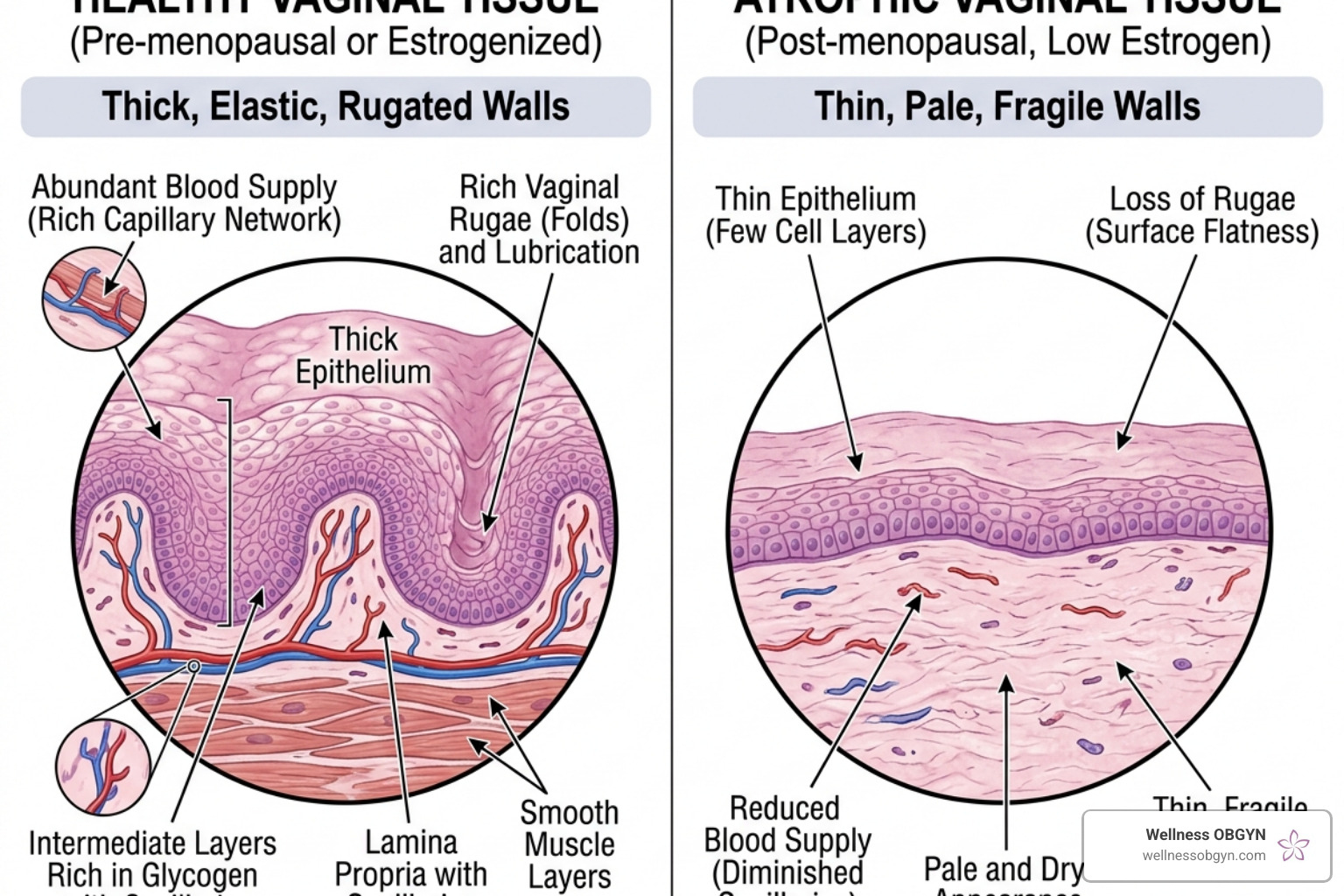
The root cause is a state called hypoestrogenism. Estrogen is the “fuel” that keeps vaginal tissues thick, elastic, and well-lubricated. When levels drop—due to menopause, perimenopause, breastfeeding, or even certain cancer treatments—the vaginal walls become thin, pale, and fragile. This lack of estrogen also disrupts the vaginal microbiota (the healthy lactobacillus bacteria), leading to a higher pH level (typically 5.5 to 6.8) and a higher risk of infections.
Common symptoms include:
- Vaginal Dryness and Itching: A persistent feeling of irritation or burning.
- Dyspareunia: Pain during or after sexual intercourse, sometimes described as a “stabbing” sensation.
- Urinary Issues: Increased urgency, frequency, or recurring urinary tract infections (UTIs).
- Physical Changes: The vaginal canal may actually shorten or tighten over time if left untreated.
If you are experiencing these, you aren’t alone. In fact, the European Vulvovaginal Epidemiological Survey found that symptoms were detected in 90% of postmenopausal women examined. For more personalized support, you can explore our holistic menopause treatment options. You can also learn more about symptoms and causes from the Mayo Clinic.
Comparing Your Options for Relief
Choosing a vaginal atrophy treatment is a collaborative process. At Wellness OBGYN, we believe in shared decision-making. We look at your symptom severity, your medical history (especially regarding breast cancer), and your personal goals for intimacy and comfort.
Some women may only require a simple moisturizer, while others with pelvic floor tension might benefit from female pelvic floor therapy in conjunction with medical treatments.
First-Line Non-Hormonal Vaginal Atrophy Treatment
For many of our patients in Honolulu, we start with non-hormonal options. These are excellent for mild dryness or for women who prefer to avoid hormones entirely.
- Vaginal Moisturizers: These are not for sex; they are for daily comfort. Products containing hyaluronic acid are particularly effective because they bind to water and stay in the tissue for several days. We recommend using these 2–3 times a week, much like you would use a face moisturizer.
- Vaginal Lubricants: These are used specifically during sexual activity to reduce friction. We generally recommend water-based or silicone-based options. Avoid those with glycerin, perfumes, or “warming” features, as these can irritate already sensitive tissue.
- Vaginal Dilators: If the vaginal canal has begun to tighten, using graduated dilators can help gently stretch the tissues and improve comfort over time.
These first-line steps are often part of a broader female sexual dysfunction therapy plan.
Choosing a Vaginal Atrophy Treatment After Breast Cancer
One of the most common questions we hear is: “Is vaginal atrophy treatment safe if I’ve had breast cancer?” The answer is often yes, but it requires a careful, individualized approach.
For survivors of estrogen-sensitive cancers, non-hormonal moisturizers remain the first choice. However, research indicates that low-dose topical estrogen often has minimal systemic absorption and may be considered safe after a thorough consultation with your oncologist. We also offer specialized early menopause support for women who have entered menopause prematurely due to chemotherapy or surgery.
Hormonal Therapies for Targeted Relief
Beyond regenerative protocols, localized hormonal treatments remain a gold standard for moderate to severe GSM. Because these are applied directly to the vaginal area, they use much lower doses than traditional “systemic” HRT (pills or patches).
- Topical Estrogen Creams: These are applied using an applicator or finger. They are highly effective, with 80–90% of women seeing significant improvement.
- Vaginal Rings: A soft, flexible ring (like the Estring) is inserted and stays in place for three months, slowly releasing low-dose estradiol.
- Estradiol Tablets: Small tablets (like Vagifem) are inserted into the vagina, usually daily for two weeks and then twice weekly for maintenance.
- DHEA (Prasterone): Marketed as Intrarosa, this is a nightly vaginal insert. DHEA is converted into estrogen and testosterone directly inside the vaginal cells, which helps avoid systemic hormone spikes.
- Ospemifene (Osphena): This is a Selective Estrogen Receptor Modulator (SERM). It’s an oral pill that acts like estrogen on the vaginal tissues but doesn’t contain hormones, making it a unique hormone therapy option for those who prefer a pill over a cream.
Lifestyle Changes and Long-Term Prevention
We always say that vaginal atrophy treatment doesn’t stop at the clinic door. Your lifestyle plays a massive role in maintaining vaginal health.
- Regular Sexual Activity: Whether with a partner or through self-stimulation, regular activity increases blood flow to the vaginal tissues, which helps keep them elastic and healthy.
- Smoking Cessation: Smoking impairs blood circulation and can interfere with the body’s natural estrogen. Quitting is one of the best things you can do for your urogenital health.
- Avoid Irritants: Stick to plain water for cleaning the vulva. Avoid douching, scented soaps, and bubble baths that can strip away natural moisture.
- Hydration: Staying hydrated helps all your mucous membranes, including the vaginal lining.
Combining these habits with hormone therapy for menopause can provide a comprehensive shield against the worsening of symptoms.
Frequently Asked Questions about Vaginal Atrophy
How is vaginal atrophy diagnosed by a specialist?
Diagnosis usually begins with a comfortable conversation about your history. When you visit a gynecologist in Honolulu, we perform a gentle pelvic exam to look for signs of thinning or redness. We may also perform a vaginal pH test (atrophic tissue is less acidic) or a urine analysis to rule out infection.
Can vaginal atrophy be reversed or cured?
While we don’t necessarily “cure” menopause, we can absolutely reverse the atrophic changes in the tissue. With consistent treatment and maintenance, your vaginal health can be restored to a state where sex is comfortable and urinary symptoms are a thing of the past. It is all about improving your long-term quality of life.
Conclusion
We are committed to providing personalized, compassionate care to the women of Honolulu. If you’re ready to explore the best vaginal atrophy treatment for your unique needs, we invite you to take the first step toward relief.
Schedule a consultation at our Female Sexual Health Clinic today and let’s start a conversation about your well-being.