
Why Minimally Invasive Women’s Surgery Is Changing Gynecologic Care
Minimally invasive women’s surgery offers a safer, faster-healing alternative to traditional open surgery for a wide range of gynecologic conditions. Here’s a quick summary of what it means and why it matters:
- What it is: Surgery performed through tiny incisions (usually under 1 inch) or no incisions at all, using specialized tools and cameras
- Who it helps: Women with conditions like endometriosis, uterine fibroids, ovarian cysts, abnormal bleeding, and pelvic pain
- Key benefits: Less pain after surgery, faster recovery (often days instead of weeks), smaller scars, reduced infection risk, and shorter hospital stays
- Common approaches: Laparoscopy, hysteroscopy, robotic-assisted surgery, and vaginal surgery
- Recovery: Many patients go home the same day and return to normal activities within one to four weeks
Women today have more options than ever when it comes to gynecologic surgery. Yet many still picture a large incision, a long hospital stay, and weeks of recovery. For most conditions, that picture is outdated.
Modern minimally invasive techniques have transformed how gynecologic surgery is done — and what recovery looks like after. The results matter a lot. Less trauma to the body. Less pain. Faster return to the life you love.
But not all minimally invasive approaches are the same. And knowing your options — and asking the right questions — can make a real difference in your outcome.
I’m Dr. Cheryl Twu, founder of Wellness OBGYN in Honolulu, and I’ve spent over a decade performing minimally invasive women’s surgery, including da Vinci® robotic gynecologic procedures, across high-volume hospital settings in California and Hawaiʻi. In this guide, I’ll walk you through everything you need to make a confident, informed decision about your care.
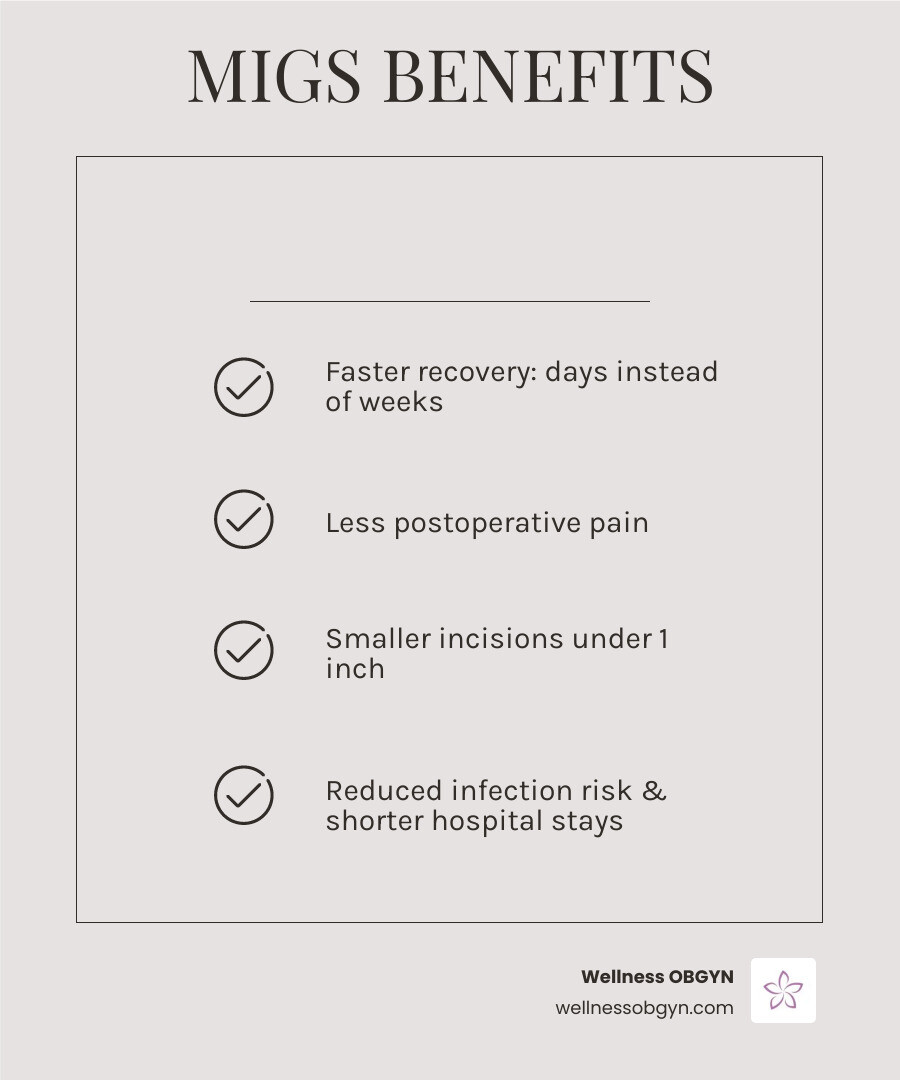
Minimally invasive women’s surgery basics:
Understanding Minimally Invasive Women’s Surgery
When we talk about minimally invasive surgery, we are describing a philosophy of care as much as a surgical technique. The goal is simple: achieve the best clinical outcome while causing the least amount of trauma to your body. In the past, “open” surgery (laparotomy) required a large abdominal incision, often 5 to 7 inches long, to allow the surgeon to see and reach the pelvic organs. Today, we can perform many of those same complex procedures through openings no larger than a buttonhole.
According to a scientific research on MIGS overview, these techniques significantly reduce the “insult” to the body’s tissues. There are four primary ways we approach this:
Laparoscopy
This is often the “gold standard” for minimally invasive women’s surgery. We make a few tiny incisions in the abdomen, usually near the belly button. A laparoscope—a thin tube with a high-definition camera—is inserted, sending live images to a monitor. We then use specialized, slender instruments to perform the surgery with incredible precision.
Hysteroscopy
This approach is truly “incisionless.” We guide a small camera through the natural opening of the cervix into the uterus. This allows us to diagnose and treat issues like polyps or fibroids inside the uterine cavity without a single cut on your skin.
Robotic-Assisted Surgery
Using systems like the da Vinci®, we gain even more precision. The robot doesn’t perform the surgery; rather, it acts as a highly advanced extension of the surgeon’s hands. It provides a magnified 3D view and instruments that can rotate further than a human wrist, which is a game-changer for complex cases like deep endometriosis or large fibroids.
Vaginal Approaches
Often called the “original” minimally invasive surgery, this involves performing the procedure entirely through the vaginal canal. It leaves no visible external scars and typically offers the fastest healing time for major surgeries like hysterectomies.
Conditions Treated with Advanced Surgical Techniques
It is a common misconception that minimally invasive women’s surgery is only for “minor” issues. In reality, highly trained specialists use these methods to treat some of the most complex gynecologic conditions. Research on MIGS for complex cases shows that even advanced diseases can often be managed without a large open incision.
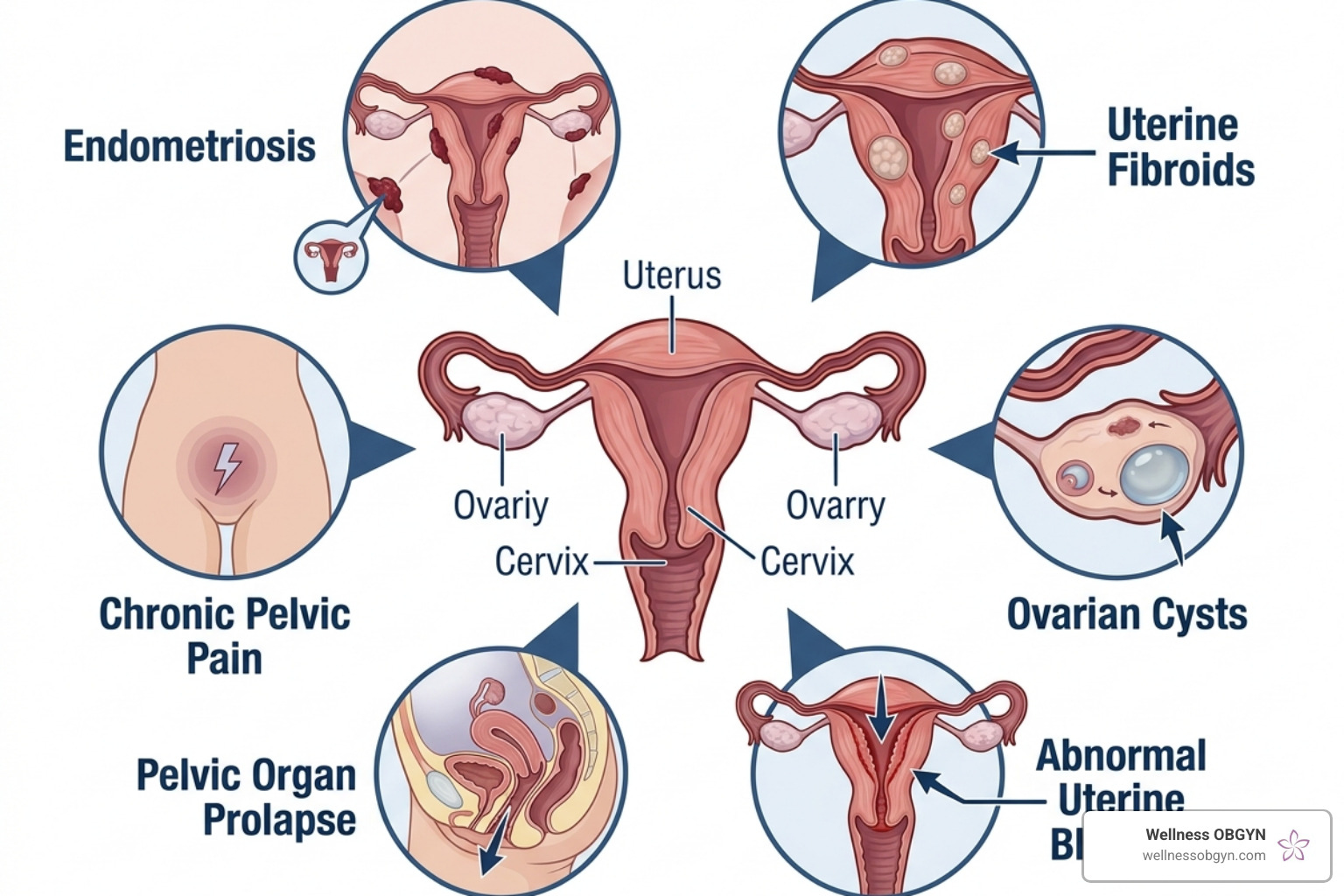
Here are the conditions we most frequently treat:
- Endometriosis: We prefer laparoscopic excision (cutting out the lesions) over ablation (burning them). Excision allows us to remove the entire diseased tissue and send it to a lab for a definitive diagnosis. This is especially vital for “deep infiltrating” endometriosis that might affect the bladder or bowel.
- Uterine Fibroids: Whether you need a myomectomy (removing just the fibroids) or a hysterectomy, we can often do this laparoscopically or robotically. New technologies like laparoscopic radiofrequency ablation can even shrink fibroids without any cutting of uterine tissue.
- Ovarian Cysts: Most benign cysts, even large ones, can be removed through tiny incisions while sparing the healthy part of the ovary.
- Abnormal Uterine Bleeding: If medication doesn’t work, procedures like endometrial ablation or hysteroscopic removal of polyps can provide a “new lease on life” for women struggling with heavy periods.
- Pelvic Organ Prolapse: We can use minimally invasive techniques to secure pelvic organs back into their proper positions, often using the patient’s own tissue or specialized mesh when appropriate.
- Chronic Pelvic Pain: When the cause of pain is unclear, a diagnostic laparoscopy allows us to see exactly what is happening inside the pelvis, identifying adhesions (scar tissue) or other hidden issues.
Key Benefits: Why Choose a Minimally Invasive Approach?
The switch from traditional open surgery to a minimally invasive approach isn’t just about aesthetics; it’s about your total well-being. When you work with minimally invasive procedure specialists, you are choosing a path that prioritizes your recovery.
1. Faster Recovery
This is the “Big Health Win” our title refers to. While a traditional abdominal surgery might keep you sidelined for 6 to 8 weeks, many of our patients are back to their normal routines in 1 to 2 weeks. For certain procedures, like radiofrequency ablation for fibroids, most women are back to normal activity within seven days.
2. Less Postoperative Pain
Smaller incisions mean less trauma to the skin, muscles, and nerves. Most patients find they need significantly less pain medication—and for a shorter duration—than those who undergo open surgery.
3. Reduced Infection Risk
Large incisions are more prone to infection and complications like “dehiscence” (the wound opening back up). Tiny incisions heal much faster and are easier to keep clean.
4. Shorter Hospital Stays
Many minimally invasive women’s surgery procedures are performed on an outpatient basis. This means you can recover in the comfort of your own home in Honolulu, often leaving the surgical center just a few hours after your procedure.
5. Minimal Scarring
For many women, the psychological impact of a large scar is significant. Minimally invasive techniques leave tiny marks that often fade to the point of being nearly invisible over time.
Holistic Recovery and Sexual Wellness Solutions
At Wellness OBGYN, we believe surgery is just one part of your health journey. A truly holistic approach to OBGYN surgical procedures means looking at how surgery impacts your quality of life, including your sexual wellness and pelvic floor health.
Sometimes, even after a successful surgery, women may experience changes in sensitivity, vaginal dryness, or pelvic floor tension. This is where our commitment to comprehensive care shines. We integrate multidisciplinary approaches, collaborating with pelvic floor physical therapists and pain specialists to ensure you don’t just “heal,” but thrive.
Navigating Your Surgical Experience
Deciding to have surgery is a big step. We believe in “shared decision-making,” which means we provide the expertise, but you remain the captain of your ship. We walk you through every option, including non-surgical alternatives, so you feel confident in your choice.
Comparing Your Options
| Feature | Minimally Invasive (MIGS) | Traditional Open Surgery |
|---|---|---|
| Incision Size | 0.5 cm to 1.5 cm | 10 cm to 15 cm |
| Hospital Stay | Same day or 1 night | 2 to 4 nights |
| Recovery Time | 1 to 2 weeks | 6 to 8 weeks |
| Pain Level | Low to Moderate | High |
| Blood Loss | Minimal | Higher |
Preparing for Minimally Invasive Women’s Surgery
Preparation starts with a thorough consultation. We will review your full medical history, perform necessary imaging (like ultrasounds), and discuss your goals.
When choosing a surgeon, don’t be afraid to ask about their surgical volume. Research shows that high-volume surgeons—those who perform these procedures many times a month—have better outcomes and lower “conversion rates” (the rare instance where a surgeon must switch from a tiny incision to a large one). At leading institutions, the conversion rate is often less than 1%, a standard we strive for here in Honolulu.
Questions to ask your surgeon:
- How many of these specific procedures do you perform annually?
- What is your rate of conversion to open surgery?
- Are there alternatives to a hysterectomy for my condition?
- What type of anesthesia will be used (General vs. Sedation)?
Recovery After Minimally Invasive Women’s Surgery
While the incisions are small, your body still needs time to heal internally. Following your minimally invasive surgery OBGYN plan is crucial.
- The First 24 Hours: You may feel tired from anesthesia or experience mild “shoulder pain” (a common side effect of the gas used to inflate the abdomen during laparoscopy).
- Activity: We encourage walking almost immediately to prevent blood clots, but you’ll need to avoid heavy lifting (usually anything over 10 lbs) for a few weeks.
- Follow-up: We will see you back in our Honolulu office to check your incisions and ensure your internal healing is on track.
Frequently Asked Questions
Am I a candidate for minimally invasive surgery?
Most women are candidates! Even if you have had previous surgeries or have large fibroids, an expert minimally invasive surgery OBGYN can often still use these techniques. However, in rare cases—such as extremely large tumors or certain types of advanced cancer—traditional surgery may still be the safest option.
How long is the typical recovery period?
For minor procedures like a hysteroscopy, you might feel back to normal in 24 to 48 hours. For more involved surgeries like a laparoscopic hysterectomy, most women return to work and light activity within 2 weeks, though we usually advise waiting 6 weeks before resuming strenuous exercise or sexual intercourse.
What are the risks compared to traditional open surgery?
All surgery carries some risk, such as bleeding, infection, or injury to surrounding organs. However, the risks of minimally invasive women’s surgery are generally lower than open surgery because there is less blood loss, a lower risk of wound infection, and fewer complications like blood clots or bowel obstructions.
Conclusion
At Wellness OBGYN, our mission is to provide the women of Honolulu with the highest standard of surgical care in a warm, compassionate environment. We know that facing surgery can be daunting, but with minimally invasive women’s surgery, the path to health is shorter and smoother than ever before.
Ready to take the next step toward your “Big Health Win”? We invite you to learn more about our services and schedule a consultation to discuss your personalized care plan. Together, we can help you get past surgery and back to the life you love.