
How Menopause Affects Your Relationship — and What You Can Do About It
Menopause and relationships are deeply connected — and understanding that link can make a real difference for couples navigating this transition together.
Here’s a quick overview of how menopause commonly affects relationships:
- Mood changes — Irritability, anxiety, and depression can strain communication and emotional closeness
- Sleep disruption — Night sweats and insomnia leave both partners exhausted and short-tempered
- Loss of libido — Declining estrogen and testosterone reduce sexual desire
- Vaginal dryness and pain — Physical discomfort can make intimacy feel difficult or unappealing
- Fatigue and brain fog — Low energy and memory issues affect daily connection
- Identity shifts — Emotional changes can create distance if left unaddressed
The good news? With the right knowledge and support, couples often come out of this transition closer than before.
The numbers make it clear: this is a widespread challenge. The divorce rate peaks during perimenopause, when most women are in their late forties. Up to 70% of women in perimenopause report mood challenges like irritability and rage. And more than a third of women report sexual difficulties during this time.
Yet most couples enter this phase without any real preparation or information. That gap — between what’s happening hormonally and what couples understand about it — is often what puts relationships at review.
I’m Dr. Cheryl Twu, a board-certified OB-GYN and founder of Wellness OBGYN in Honolulu, and I’ve spent over a decade helping women navigate the full spectrum of menopause and relationships — from managing mood and intimacy changes to hormone optimization and whole-person wellness. In the sections ahead, I’ll walk you through exactly what’s happening in the body, how it ripples into your relationship, and what practical steps you and your partner can take together.
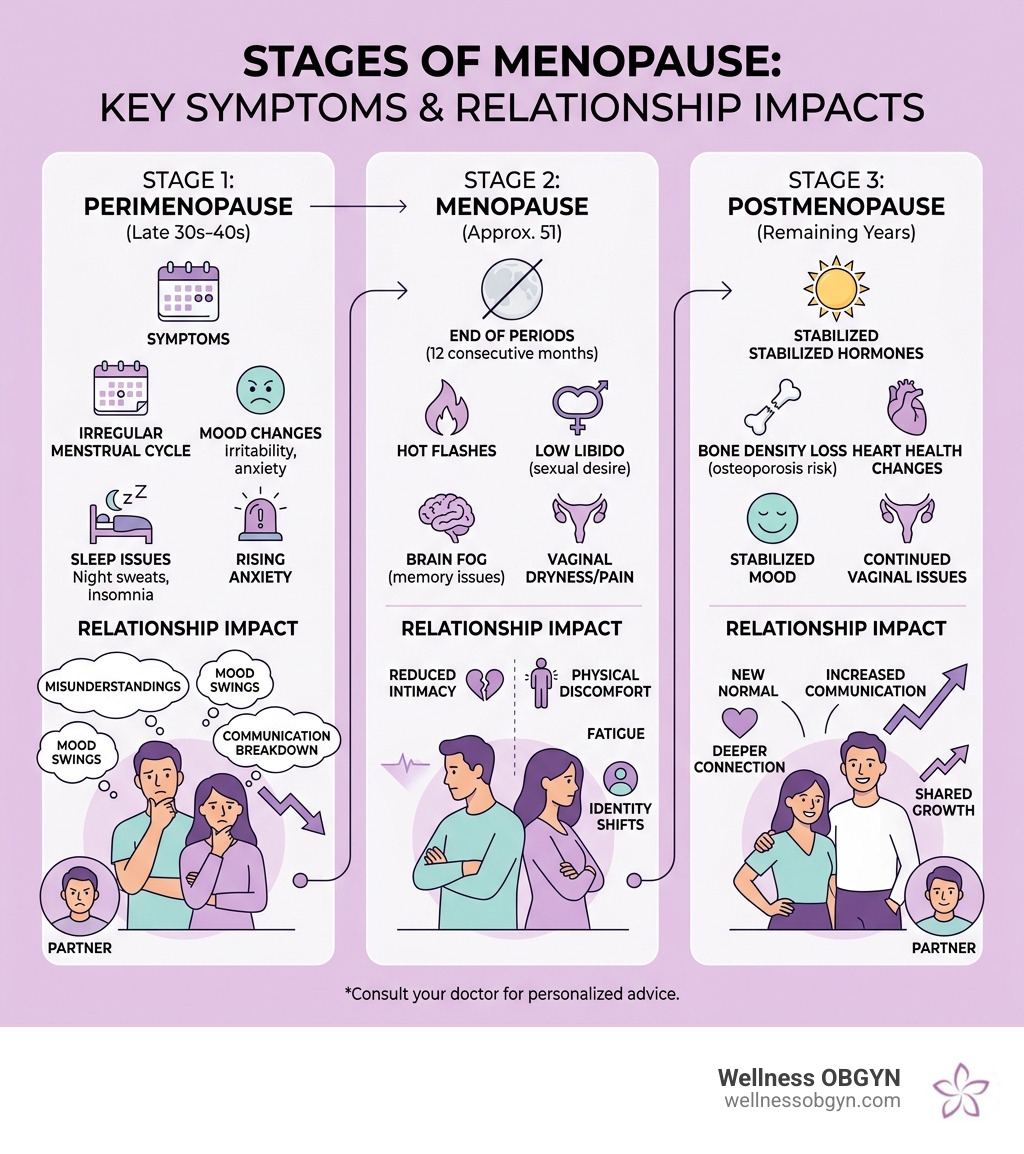
Menopause and relationships terms explained:
The Biological Connection Between Menopause and Relationships

When we talk about Menopause and relationships, we have to start with biology. It isn’t “all in your head,” but it is definitely in your hormones. As we transition through perimenopause, our estrogen levels don’t just gently dip; they fluctuate wildly. This hormonal roller coaster directly impacts our brain chemistry.
Estrogen plays a vital role in the production of serotonin, our “feel-good” neurotransmitter. When estrogen drops, serotonin often follows, leading to increased anxiety and depression. Furthermore, declining estrogen levels can make the amygdala—the brain’s emotional processing center—more sensitive. This means things that might have been a minor annoyance five years ago can suddenly trigger a “fight or flight” response.
We also see a drop in oxytocin, often called the “cuddle hormone.” Oxytocin facilitates bonding and empathy. When it declines, you might find yourself feeling less patient or less connected to your partner, even if you still love them deeply. Understanding these scientific links between menopause and relationships helps take the shame out of the equation. For many, early menopause support is the key to stabilizing these biological shifts before they cause permanent damage to the partnership.
How Menopause and Relationships Change During Perimenopause
Perimenopause is often the most turbulent time for a couple. It typically begins in the late forties, though some women in Honolulu notice changes in their late thirties. This is the stage where the divorce rate peaks. Why? Because the symptoms are often “invisible” or misattributed to stress, midlife crises, or falling out of love.
Up to 70% of women report irritability as their primary mood complaint. This isn’t just a bad mood; it’s often described as “menopause rage.” When hormonal fluctuations hit their peak, a partner’s chewing or a misplaced sock can feel like a personal affront. Without the context of perimenopause, partners may feel attacked or bewildered, leading to a cycle of withdrawal and resentment.
The Role of Sleep and Fatigue in Partnership Conflict
Never underestimate the power of a good night’s sleep—or the destruction caused by the lack of it. Night sweats are more than just a physical nuisance; they are a relationship disruptor.
Imagine this: You wake up drenched, heart racing, and have to flip the duvet or change the sheets at 3 AM. Your partner is woken up by the movement. Both of you are now awake, frustrated, and losing precious REM sleep. One night is fine; three years of this creates a chronic “sleep debt.”
Fatigue makes us less resilient, less funny, and much more likely to snap at our loved ones. Implementing menopause lifestyle changes like optimizing your sleep hygiene and cooling your environment can significantly lower the “conflict temperature” in your home.
Navigating Physical Changes and Sexual Wellness
Physical intimacy is often the first thing to suffer when Menopause and relationships collide. The decline in estrogen leads to Genitourinary Syndrome of Menopause (GSM), which includes thinning of the vaginal tissues and decreased lubrication.
This can make sex not just unappealing, but physically painful (dyspareunia). When sex hurts, we tend to avoid it. When we avoid it, our partners may feel rejected, and we may feel guilty or “broken.” This “intimacy gap” can widen over time if not addressed with a holistic menopause treatment plan that looks at both the physical and emotional aspects of sex.
Menopause and Relationships: Addressing the Intimacy Gap
Closing the gap requires a shift in how we define intimacy. It doesn’t always have to be about intercourse. We encourage couples to explore:
- Non-sexual touch: Holding hands, long hugs, and massages help maintain the oxytocin flow without the pressure of “performance.”
- Vulnerability: Being honest about physical discomfort is crucial. Saying “I want to be close to you, but I’m worried it will hurt” is an invitation for support rather than a rejection.
- Practical aids: High-quality lubricants and vaginal moisturizers are essential tools, not signs of failure.
Communication Strategies for Navigating the Transition
Silence is the enemy of a healthy relationship during menopause. Many women feel they should “just get on with it,” while partners often walk on eggshells, afraid of saying the wrong thing. Breaking this silence requires intentional communication.
We recommend using “softened startups”—a technique from the Gottman Institute’s guide on perimenopause. Instead of saying, “You never help with the dishes,” try an “I” statement: “I’m feeling really overwhelmed and exhausted tonight; I would love some help in the kitchen.” This reduces defensiveness and invites the partner to be an ally. Our obgyn menopause specialist services often involve helping couples find these communication “on-ramps.”
Menopause and Relationships: Managing Irritability and Rage
When the “rage” hits, it’s important to have a plan.
- Identify Triggers: Is it hunger? Lack of sleep? A specific time of day?
- Take a “Time-Out”: If you feel your temper rising, it is okay to step away for 20 minutes to self-soothe.
- Share the Load: Irritability is often exacerbated by an unequal “mental load.” Couples who proactively redistribute household tasks often find that the woman’s stress levels—and subsequent irritability—drop significantly.
Planning for a Post-Menopausal Future Together
Menopause isn’t just an end; it’s a transition into a new phase of life. This is a great time to sit down and discuss your future. What are your shared health goals? How will you manage healthcare planning as you age?
Many women find a newfound sense of freedom and “superpower” post-menopause, free from the monthly cycles and pregnancy concerns. Use this energy to create new rituals—perhaps a morning walk together or a new hobby—that celebrate this next chapter.
Professional Support and Medical Interventions
You don’t have to white-knuckle your way through this. Professional help can be a game-changer for Menopause and relationships.
Hormone Replacement Therapy (HRT) is one of the most effective ways to stabilize mood, stop night sweats, and protect bone and heart health. In some cases, adding a small amount of testosterone can significantly help with libido and “brain fog.” At Wellness OBGYN, we provide customized HRT plans that are tailored to your specific symptoms and health history.
Lifestyle Adjustments to Support the Partnership
While medical interventions are powerful, they work best when supported by lifestyle choices. We often discuss menopause and diet as a way to manage inflammation and mood.
- Anti-inflammatory Diet: Focus on whole foods, healthy fats, and lots of fiber to help stabilize blood sugar and hormones.
- Movement: Regular exercise, especially strength training and yoga, improves body image and releases endorphins.
- Mindfulness: Even five minutes of daily meditation can help regulate the amygdala’s response to stress.
Frequently Asked Questions about Menopause and Relationships
Why does the divorce rate peak during perimenopause?
The peak in divorce during the late 40s is often a “perfect storm.” Hormonal shifts cause mood instability and lower libido, while life stressors (teenagers, aging parents, career peaks) are at an all-time high. Without understanding that menopause is the underlying factor, couples may assume they have simply grown apart or are no longer compatible.
How can a partner provide practical help during menopause?
The best thing a partner can do is educate themselves. Knowing that a “rage” moment is a physiological event rather than a personal attack changes the dynamic. Partners can also help by taking over more household management, attending doctor appointments to learn about treatment options, and providing a safe, non-judgmental space for the woman to express her frustrations.
Conclusion
Navigating Menopause and relationships requires patience, education, and often, professional guidance. At Wellness OBGYN in Honolulu, we believe that every woman deserves to move through this transition feeling supported and empowered.
Don’t let menopause strain the bonds you’ve worked so hard to build. Reach out to us to start your journey toward better health and a stronger relationship. You can find more info about menopause treatment in Honolulu on our website or by calling our office today. Let’s work together to make this next chapter your best one yet.