
Understanding Your Options for Menopause Relief
Hormone therapy options are available in several forms to help manage menopause symptoms. Here’s a quick overview:
| Type | Delivery Methods | Best For |
|---|---|---|
| Systemic Hormone Therapy | Pills, patches, gels, sprays | Hot flashes, night sweats, bone protection |
| Local/Vaginal Therapy | Creams, rings, tablets | Vaginal dryness, urinary symptoms |
| Estrogen-Only | Various forms | Women without a uterus |
| Combined (Estrogen+Progestogen) | Various forms | Women with a uterus (protects against uterine cancer) |
| Testosterone | Gels, creams | Low libido, energy, mood (specialist prescription) |
Are you feeling blindsided by hot flashes, night sweats, or mood swings? You’re not alone. About 75% of women experience menopausal symptoms, and navigating the sea of treatment options can feel overwhelming.
Menopause marks a natural transition in a woman’s life, typically occurring around age 51, when the ovaries stop producing eggs and hormone levels decline. This drop in estrogen and progesterone can trigger a range of symptoms from mild to severe, affecting quality of life and long-term health.
The good news? You don’t have to simply endure these changes. Modern medicine offers effective solutions, with hormone therapy standing as the most proven treatment for moderate to severe symptoms.
As a board-certified OB-GYN with over a decade of experience, I’m Dr. Cheryl Twu, and I’ve helped hundreds of women find relief through personalized hormone therapy options at Wellness OBGYN in Honolulu, where we take an integrative approach to managing menopause symptoms.
What Is Hormone Therapy & Why It Matters
Feeling overwhelmed by hot flashes or struggling with sleep? You’re experiencing the very real effects of changing hormones. Hormone therapy (HT) offers a solution by replacing what your body is naturally losing during menopause.
“Think of hormone therapy options as replenishing what your body once produced abundantly,” says Dr. Twu. “It’s like watering a plant that’s becoming dry – we’re giving your body what it needs to thrive again.”
At its core, hormone therapy (sometimes called hormone replacement therapy or menopausal hormone therapy) works by supplementing the estrogen and sometimes progesterone that naturally decline as you transition through menopause. These powerful hormones affect nearly every system in your body, which explains why their decline can cause such widespread symptoms.
“I always tell my patients that hormone therapy isn’t a one-size-fits-all treatment,” Dr. Twu explains with a warm smile. “At Wellness OBGYN, we carefully match the type, dose, and delivery method to your unique symptoms, medical history, and personal preferences.”
Hormone therapy options generally fall into two main categories:
Systemic hormone therapy delivers hormones throughout your entire body via pills, patches, gels, or sprays. This approach works wonders for most menopause symptoms, from those notorious hot flashes to night sweats and even helps protect your bones from becoming fragile.
Local hormone therapy targets specific areas – particularly vaginal and urinary issues – using low-dose vaginal creams, tablets, or rings. The beauty of this approach is that it minimizes how much hormone circulates through your entire body, reducing potential risks while still providing relief where you need it most.
The benefits of replacing these declining hormones can be truly life-changing:
| Natural Hormone Decline Effects | Hormone Replacement Benefits |
|---|---|
| Hot flashes and night sweats | Reduction in frequency and severity of vasomotor symptoms |
| Vaginal dryness and pain during intercourse | Improved vaginal lubrication and comfort |
| Bone loss (osteoporosis risk) | Protection against bone fractures |
| Sleep disturbances | Better sleep quality |
| Mood changes | Stabilized mood |
| Increased risk of heart disease (in some women) | Potential cardiovascular benefits when started early |
The Science Behind Menopausal Symptoms
Understanding what’s happening inside your body helps explain why hormone therapy works so effectively. As your ovaries gradually reduce function, estrogen levels don’t just gently decline – they can plummet dramatically or fluctuate wildly. This hormonal rollercoaster affects multiple body systems:
Your body’s internal thermostat gets thrown off balance when estrogen levels fluctuate, which explains those sudden feelings of intense heat (hot flashes) and middle-of-the-night sweats that leave your pajamas drenched.
Vaginal tissues rely on estrogen for blood flow, elasticity, and natural lubrication. Without sufficient estrogen, these delicate tissues become thin and dry, making intimacy uncomfortable or even painful.
Your bones are continuously breaking down and rebuilding, and estrogen helps maintain this delicate balance. When estrogen levels fall, bone breakdown accelerates faster than rebuilding, increasing your risk of fractures and osteoporosis.
Even your brain function is affected, as estrogen receptors throughout your brain influence mood, memory, and cognitive function. Those moments of forgetfulness or unexpected mood swings? They’re often connected to these hormonal changes.
“What I want women to understand is that these symptoms aren’t just inconveniences to endure – they can significantly impact your quality of life and long-term health,” notes Dr. Twu. “The good news is that we have effective treatments to address them, and finding the right hormone therapy options can make this transition so much smoother.”
With personalized hormone therapy at Wellness OBGYN, you don’t have to simply “tough it out” through menopause. Together, we can find the right balance to help you feel like yourself again.
Hormone therapy options: Systemic vs Local
When considering hormone therapy options, understanding the difference between systemic and local treatments is crucial for making an informed decision.
Systemic Hormone therapy options
Imagine hormone therapy that works throughout your entire body, like a gentle wave washing over all your menopausal symptoms at once. That’s what systemic therapy does. These hormone therapy options deliver relief from head to toe, addressing everything from hot flashes to bone health.
“Many of my patients tell me they feel like themselves again once we find the right systemic therapy,” shares Dr. Twu. “It’s not just about managing symptoms—it’s about restoring quality of life.”
Oral tablets offer the convenience of a daily pill, making them a popular choice for many women. They’re precise and easy to use, but they do pass through the liver first (what doctors call the “first-pass effect”), which slightly increases the risk of blood clots and stroke for some women.
Transdermal patches have become a game-changer for many of our Honolulu patients. Applied to the skin and changed just once or twice weekly, these patches bypass the liver entirely. Research backs their safety profile—a significant study found that while women using HRT tablets were 58% more likely to develop blood clots within 90 days compared to non-users, those using patches showed no increased risk at all. That’s quite remarkable!
For women who prefer a daily routine without pills, gels and sprays offer another skin-applied option. They dry quickly after application, though you’ll want to be careful about touching others before the product absorbs completely.
Some women prefer longer-lasting solutions like implants—small pellets placed under the skin that steadily release hormones for months at a time. While less common, they eliminate the need for daily administration and provide consistent hormone levels.
Local/Low-dose Hormone therapy options
For those primarily troubled by vaginal dryness, painful intercourse, or urinary symptoms, local hormone therapy options can be a godsend. These treatments target specific tissues with minimal absorption into the bloodstream.
Vaginal creams deliver estrogen right where you need it most. Applied with a simple applicator, they restore moisture and comfort to vaginal tissues. Many women notice improvement within just a few weeks of starting treatment.
“I’ve had patients literally cry with relief after starting vaginal estrogen,” Dr. Twu notes. “When intercourse has been painful for months or years, the return to comfort can be truly life-changing.”
Vaginal tablets offer a mess-free alternative to creams. Inserted with a disposable applicator, they dissolve gradually to release a precise dose of estrogen directly to vaginal tissues.
For women who prefer less frequent application, vaginal rings provide a convenient solution. These flexible rings sit comfortably inside the vagina, releasing a steady dose of estrogen for up to three months before needing replacement.
The beauty of local therapy lies in its minimal absorption. This makes it an excellent option for women who have contraindications to systemic therapy but still need relief from vaginal symptoms.
Timing matters when choosing between these hormone therapy options. Research suggests the “timing hypothesis”—starting hormone therapy within 10 years of menopause or before age 60 provides the most favorable benefit-risk ratio, particularly for heart health. This is something we carefully consider at Wellness OBGYN when developing your personalized treatment plan.
Another important decision involves choosing between continuous or cyclic regimens:
With continuous regimens, you take hormones every day without breaks—typically recommended for women further from their last menstrual period. Cyclic regimens, on the other hand, involve taking estrogen daily with progestogen added for 10-14 days each month. This approach often results in monthly bleeding similar to a period and may be more appropriate during perimenopause or early postmenopause.
Making sense of all these hormone therapy options can feel overwhelming, but you don’t have to steer this journey alone. At Wellness OBGYN in Honolulu, we take the time to understand your unique symptoms, health history, and preferences before recommending the approach that’s right for you. For more information about how hormone therapy might affect clotting risk and other factors, you might find this scientific research on clot risk helpful as you consider your options.
Delivery Methods: Picking the Best Fit for Your Body
Choosing the right delivery method for hormone therapy is a personal decision that depends on your symptoms, lifestyle, and medical history. At Wellness OBGYN, we believe in empowering our patients with knowledge about all available hormone therapy options.
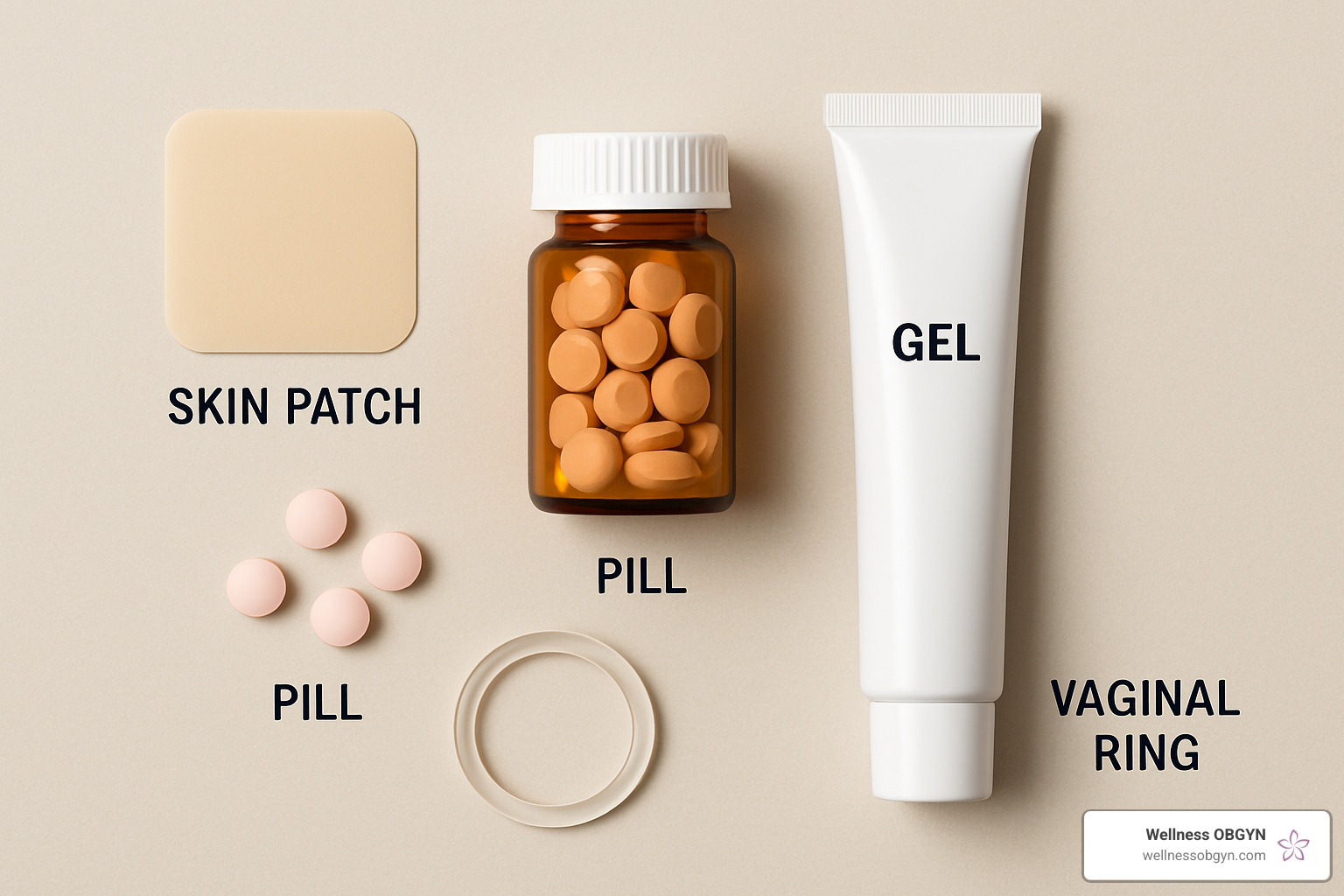
Let’s talk about pills first. Taking a daily oral estrogen tablet is convenient for many women, but there’s a catch. When you swallow that pill, it travels through your liver before entering your bloodstream. This “first-pass effect” can affect blood clotting factors, which is why Dr. Twu often says, “For women with a history of migraines with aura or clotting disorders, we typically avoid oral estrogen. The liver metabolism can increase stroke risk in these patients.”
If you’re looking for a “set it and forget it” approach, patches might be your friend. Simply apply them to clean, dry skin on your lower abdomen or buttocks and change them once or twice weekly. The beauty of patches is that they deliver estrogen directly into your bloodstream, bypassing the liver and reducing clot risk. Though as Dr. Twu notes with a smile, “Some women experience skin irritation or have trouble keeping them adhered, especially in our humid Hawaiian climate.”
For those who prefer a daily routine, gels offer flexibility. Applied to arms, shoulders, or legs, they dry quickly but require clean, dry skin. Just remember to avoid washing the area or swimming for at least an hour after application. “Gels are easily adjusted to your needs,” explains Dr. Twu, “but they do require careful handling to prevent transfer to others, especially children or partners.”
A newer option in the hormone therapy options family is estrogen spray, applied to the inner forearm daily. Like gels, you’ll need to wait before washing the area or allowing others to touch it.
For women who need progestogen to protect the uterine lining, an Intrauterine System (IUS) or Mirena coil can be a game-changer. This approach delivers progestogen directly to the uterus while you take estrogen separately. The benefit? Minimal systemic progestogen effects like bloating or mood changes that many women find troublesome.
Many of our patients at Wellness OBGYN have found success with body-identical hormones like 17β-estradiol and micronized progesterone. These have the exact same molecular structure as the hormones your body naturally produces. As Dr. Twu explains, “It’s like giving your body back what it already recognizes, which may improve tolerability for some women.”
When choosing your ideal delivery method, consider these personal factors:
- What symptoms are bothering you most?
- Do you prefer daily application or something less frequent?
- Do you have a history of blood clots, liver disease, or migraines?
- Is your skin sensitive to adhesives?
- What will your insurance cover?
The best choice is one that fits seamlessly into your life and effectively addresses your symptoms. For more information about our comprehensive approach to menopause management, visit our holistic menopause treatment page.
Estrogen-only vs Combined hormone therapy options
Another important decision is whether to use estrogen alone or combined with a progestogen. This choice primarily depends on whether you still have your uterus.
Estrogen-only therapy is typically prescribed for women who have had a hysterectomy (surgical removal of the uterus). Without a uterus, there’s no risk of endometrial (uterine) cancer, so progestogen isn’t needed.
Combined hormone therapy options include both estrogen and progestogen. This combination is essential for women with an intact uterus because estrogen alone can stimulate the uterine lining, increasing the risk of endometrial cancer. The progestogen counteracts this effect.
Combined therapy comes in two main regimens:
- Sequential (cyclic) combined HRT: Estrogen is taken daily, with progestogen added for 10-14 days each month. This typically causes monthly bleeding similar to a period and is often recommended for women in perimenopause or early postmenopause who still have occasional periods.
- Continuous combined HRT: Both estrogen and progestogen are taken every day without breaks. This approach typically doesn’t cause regular bleeding and is usually recommended for women who are at least 12 months past their last period.
“The choice between sequential and continuous regimens often depends on where you are in your menopause journey,” explains Dr. Twu. “Women closer to their last period may do better with sequential therapy, while those further from menopause typically prefer continuous therapy to avoid monthly bleeding.”
Another option is tibolone, a synthetic steroid with estrogenic, progestogenic, and mild androgenic effects. It’s taken as a daily tablet and can help with hot flashes, night sweats, low mood, and low libido. However, it’s not widely available in the United States.
At Wellness OBGYN, we carefully evaluate each woman’s health history, symptoms, and preferences to recommend the most appropriate hormone therapy options.
Testosterone & Emerging Add-ons
While estrogen and progesterone get most of the attention, testosterone is another hormone that declines during menopause and can affect women’s health and quality of life.
“Many women don’t realize that testosterone plays an important role in female health,” says Dr. Twu. “It contributes to energy levels, mood, cognitive function, and sexual desire.”
Although testosterone therapy isn’t FDA-approved specifically for women, it can be prescribed “off-label” by specialists for women experiencing:
- Low libido
- Fatigue and low energy
- Decreased sense of well-being
- Poor concentration and memory
Testosterone is typically given as a gel or cream at a much lower dose than what’s prescribed for men. It’s important to use testosterone under medical supervision, as excessive doses can cause unwanted effects like acne, hair growth, or voice deepening.
“At Wellness OBGYN, we may consider adding testosterone to a woman’s hormone regimen if she continues to experience low desire or energy despite adequate estrogen therapy,” explains Dr. Twu. “We monitor levels carefully to ensure safety and effectiveness.”
Other emerging add-on therapies include:
- DHEA (dehydroepiandrosterone): A precursor hormone that the body can convert to estrogen and testosterone. Vaginal DHEA (prasterone) is FDA-approved for treating vaginal dryness.
- Selective Estrogen Receptor Modulators (SERMs): Compounds that act like estrogen in some tissues but block estrogen effects in others. They can be used in combination with estrogen for specific benefits.
- Tissue Regenerative Factors: These innovative treatments stimulate the body’s natural regenerative processes to improve tissue health and function.
These options represent the evolving landscape of hormone therapy options, offering more personalized approaches to menopause management.
Benefits Beyond Hot Flashes
When women seek out hormone therapy options, they’re often desperate for relief from those sudden waves of heat and drenching night sweats. But what many don’t realize is just how far-reaching the benefits of hormone therapy can be—extending to nearly every system in the body.
Bone Health Protection
“I had a patient who came in solely for hot flash relief,” shares Dr. Twu. “She was completely unaware she was losing bone density until we did her screening. Hormone therapy not only helped her sleep through the night again but likely saved her from a future hip fracture.”
Estrogen acts as a natural shield for your bones. When levels drop after menopause, bone cells break down faster than they rebuild, silently weakening your skeleton. Hormone therapy options can dramatically slow this process by:
Maintaining bone mineral density, slowing the natural loss that accelerates after menopause, and reducing fracture risk by up to 30% in some women. This protection is especially critical for women experiencing early menopause, who face longer exposure to low estrogen levels.
Cardiovascular Considerations
The relationship between hormones and heart health isn’t simple, but timing appears to be everything. Research published in the British Medical Journal found something remarkable: women who started hormone therapy within 10 years of menopause showed significantly reduced risk of heart failure and heart attacks.
“It’s like there’s a window of opportunity,” explains Dr. Twu. “Start hormone therapy options early enough, and your cardiovascular system may thank you. Wait too long, and that benefit might diminish.”
This “timing hypothesis” has revolutionized how we approach hormone therapy, emphasizing the importance of individualized care and considering a woman’s age and time since menopause.
Cognitive Function
That frustrating “where did I put my keys?” moment may not be just a normal part of aging. Many women describe menopause-related brain fog as feeling like their thoughts are wrapped in cotton wool—everything is just a bit harder to grasp.
Estrogen receptors are found throughout the brain, influencing everything from memory to mood. When levels decline, many women notice difficulty concentrating, memory lapses, and reduced mental clarity. Hormone therapy options may help clear this fog, potentially offering protection against cognitive decline for some women.
“When my patients describe feeling like themselves again mentally, it’s often one of the benefits they value most,” notes Dr. Twu.
Metabolic Benefits
Ever notice how your body started storing fat differently after menopause? There’s a reason for that. Estrogen influences how your body processes glucose and fat. After menopause, many women experience the “menopause middle”—weight gain particularly around the abdomen, along with increased insulin resistance.
Hormone therapy may help improve insulin sensitivity and potentially reduce diabetes risk in some women, addressing a concern that goes far beyond appearance to fundamental health.
Skin, Hair, and Muscle Integrity
“I didn’t start hormone therapy for my skin,” one Wellness OBGYN patient shared, “but my daughter recently asked what new skincare products I’m using because I’m ‘glowing’!”
Estrogen contributes significantly to collagen production, skin hydration, and muscle mass. After menopause, many women notice thinner, drier skin with increased wrinkles, hair thinning, and reduced muscle strength. While these changes might seem cosmetic, they reflect important changes in tissue health throughout the body.
Quality of Life Improvements
Perhaps most meaningful of all, hormone therapy options can transform daily life by addressing the constellation of symptoms that impact how women feel day to day. Better sleep leads to more energy. Mood stability brings back joy. Improved sexual function and comfort can revitalize intimate relationships.
“One of my patients recently told me, ‘I forgot what it felt like to feel good,'” shares Dr. Twu. “That restoration of well-being—of feeling like yourself again—that’s immeasurably valuable.”
Understanding these broader benefits helps place hormone therapy options in proper context. They’re not just treatments for hot flashes but comprehensive approaches to supporting women’s health during and after menopause, potentially improving quality of life for years or even decades.
At Wellness OBGYN in Honolulu, we believe in helping women see the full picture—both the relief from immediate symptoms and the potential long-term benefits—so they can make informed decisions about their menopausal journey.
Understanding Risks & Who Should Avoid HT
While hormone therapy offers significant benefits for many women, it’s not appropriate for everyone. Understanding the potential risks and contraindications is essential for making an informed decision about hormone therapy options.
Potential Risks
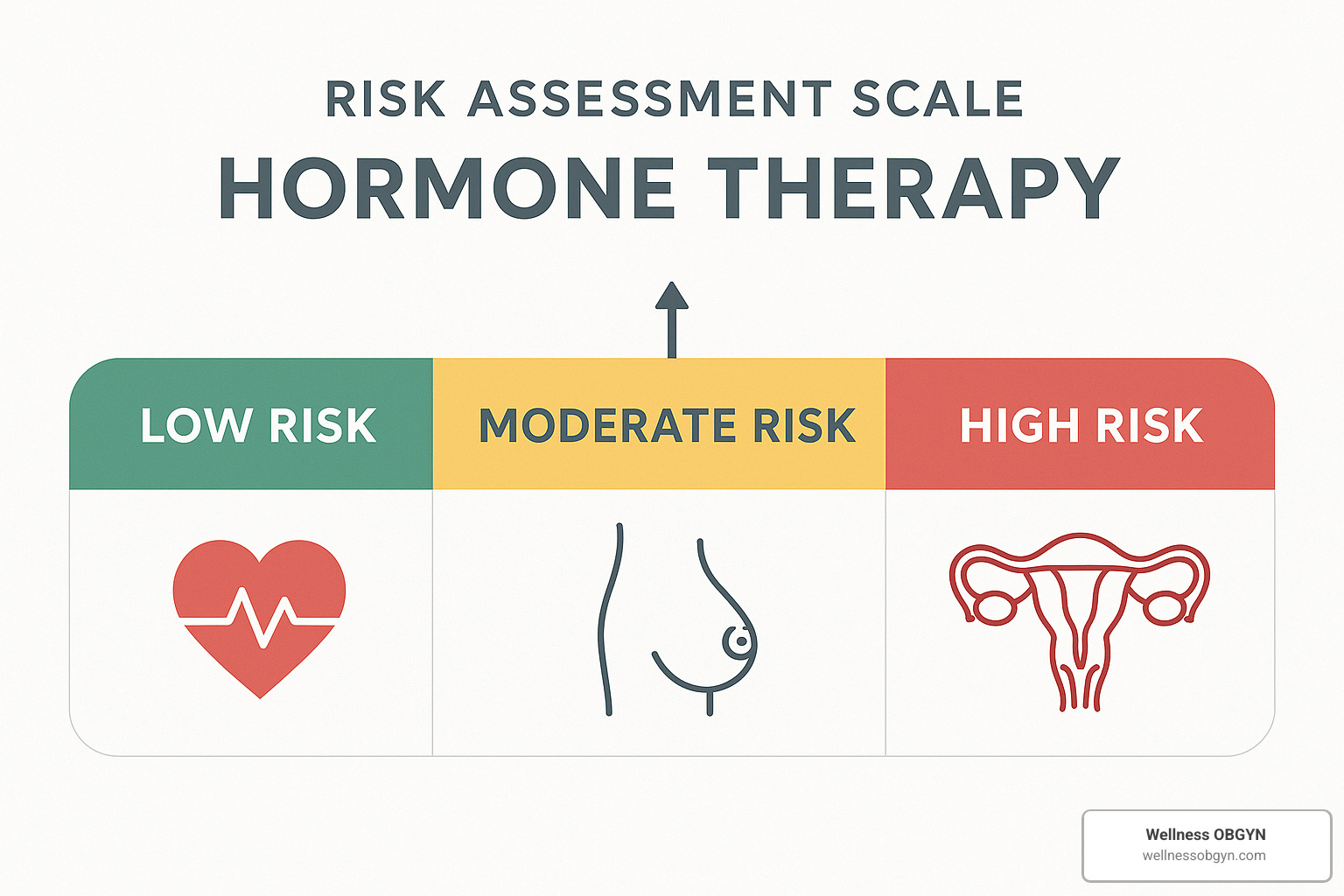
The risks of hormone therapy aren’t one-size-fits-all – they vary depending on the type you choose, the dose you take, how long you use it, and your personal health history.
When it comes to breast cancer, combined estrogen-progestin therapy is associated with a small increased risk when used for more than 5 years. To put this in perspective, the risk is less than 1 in 1,000 per year for women in their 50s – smaller than the risk associated with obesity or regular alcohol consumption. Women using estrogen-only therapy (an option for those without a uterus) generally face even lower breast cancer risk.
“Many women are surprised to learn that the absolute risk is quite small,” says Dr. Twu. “This is why we have such detailed conversations about personal and family history before making recommendations.”
Blood clots represent another concern, particularly with oral estrogen during the first year of use. This is why at Wellness OBGYN, we often recommend transdermal options like patches and gels, especially for women with existing clotting risk factors – these delivery methods bypass the liver and significantly reduce clotting risks.
Stroke risk shows a small increase with hormone therapy, primarily with oral formulations and higher doses. Similarly, gallbladder disease risk may increase with estrogen therapy, potentially leading to gallstones or inflammation.
Who Should Avoid Hormone Therapy
Your health history matters tremendously when considering hormone therapy options. We generally don’t recommend hormone therapy if you have:
Current or past estrogen-sensitive cancers – including certain types of breast cancer – since hormones might stimulate cancer cell growth.
History of blood clots or high clotting risk – hormones, especially oral forms, can further increase this risk.
Previous stroke or heart attack – these cardiovascular events suggest potential vulnerabilities that hormones might exacerbate.
Unexplained vaginal bleeding – this requires investigation before starting hormone therapy.
Liver disease – since the liver metabolizes hormones, liver impairment can affect how your body processes them.
“At our practice, safety always comes first,” explains Dr. Twu. “During your initial consultation at Wellness OBGYN, we’ll thoroughly review your medical history to identify any red flags before discussing hormone options.”
We also exercise caution with women experiencing migraines with aura, high triglyceride levels, active gallbladder issues, liftd breast cancer risk factors, or those over 60 who haven’t previously used hormone therapy.
“Just because hormone therapy might not be right for you doesn’t mean you have to suffer through menopause symptoms,” Dr. Twu adds. “We offer numerous non-hormonal alternatives that can provide significant relief.”
Mitigating Risk: Dose, Route, Timing
For women who are good candidates for hormone therapy, we can employ several strategies to minimize potential risks:
Lowest effective dose is our guiding principle at Wellness OBGYN. By finding the minimum amount needed to control your symptoms, we can reduce potential risks while still providing relief. We often start low and adjust gradually based on your response.
Delivery method selection makes a significant difference. Transdermal options like patches, gels, and sprays bypass the liver’s first-pass metabolism, potentially reducing blood clot and stroke risks compared to pills.
Timing matters tremendously. Research consistently shows that starting hormone therapy within 10 years of menopause or before age 60 provides a more favorable benefit-risk ratio, particularly for heart health. This “timing hypothesis” guides our recommendations.
Regular reassessment ensures you don’t use hormone therapy longer than necessary. We schedule follow-up appointments every 6-12 months to evaluate whether your current regimen still provides the best balance of benefits and risks.
“Hormone therapy isn’t a set-it-and-forget-it treatment,” Dr. Twu emphasizes. “At Wellness OBGYN, we view it as an ongoing conversation. Your needs may change over time, and we adjust your treatment accordingly.”
Lifestyle factors play a crucial supporting role too. Maintaining healthy weight, avoiding tobacco, limiting alcohol, and staying physically active can all help minimize risks associated with hormone therapy while enhancing its benefits.
“Think of hormone therapy as just one piece of your menopause management puzzle,” suggests Dr. Twu. “When combined with healthy habits, it can dramatically improve your quality of life during this transition.”
Personalizing Treatment: Assessment, Monitoring & When to Stop
The journey through menopause is as unique as your fingerprint. At Wellness OBGYN, we believe your hormone therapy options should reflect that individuality. Think of hormone therapy not as an off-the-rack solution, but as a custom garment crafted specifically for you.
“When a woman walks into my office struggling with menopause symptoms, I don’t just hand her a prescription,” says Dr. Twu. “We start on a collaborative journey to find the perfect fit for her body, her symptoms, and her life.”
Initial Assessment
Before we discuss specific hormone therapy options, we need to understand your complete picture. Our comprehensive evaluation includes:
A heart-to-heart conversation about your symptoms – which ones disrupt your life most, how severely they affect you, and what impact they’re having on your daily activities and relationships. Many women tell us they just want to feel like themselves again.
We’ll review your medical history with a fine-tooth comb, looking at previous conditions, surgeries you’ve had, and whether your family has a history of hormone-sensitive cancers, heart disease, or blood clots.
Your physical exam will include checking your blood pressure, weight, and conducting breast and pelvic exams – all important baseline measures before starting treatment.
Laboratory testing helps us understand your current hormone levels, cholesterol profile, liver function, and other relevant markers that might influence our approach.
Sometimes we’ll recommend imaging studies like a mammogram or bone density scan, depending on your age and health status.
“This thorough evaluation isn’t just paperwork – it’s the foundation of truly personalized care,” explains Dr. Twu. “It helps us determine not just if hormone therapy is right for you, but precisely which hormone therapy options will best address your unique needs.”
Ongoing Monitoring
Starting hormone therapy isn’t the end of our partnership – it’s really just the beginning. Regular check-ins allow us to fine-tune your treatment for optimal results.
“I remember a patient who started with a standard patch but experienced skin irritation,” shares Dr. Twu. “During her follow-up, we switched to a gel, and she’s been thriving ever since. These adjustments make all the difference.”
During follow-up visits, we’ll assess how well your symptoms are improving – are those disruptive hot flashes decreasing? Is your sleep getting better? Has vaginal dryness resolved? We’ll also watch for any side effects like breast tenderness, unexpected bleeding, mood changes, or other concerns.
Based on your response, we might adjust your dosage or recommend a different delivery method to find that sweet spot where you get maximum symptom relief with minimal side effects. We’ll also make sure you’re keeping up with recommended screenings like mammograms and bone density tests.
“We typically see patients about three months after starting therapy, then every 6-12 months if things are going well,” notes Dr. Twu. “These check-ins aren’t just medical necessities – they’re opportunities to make sure you’re getting the relief you deserve.”
When and How to Stop
One of the most common questions women ask is: “How long will I need to take hormones?” The answer isn’t one-size-fits-all.
Most women take hormone therapy for 2 to 5 years, though some may benefit from longer treatment. The decision to continue or stop depends on several factors, including how well your symptoms are controlled, your age and time since menopause began, individual risk factors, and your personal comfort level with therapy.
“When it is time to stop, we don’t just cut you off,” Dr. Twu emphasizes. “We typically recommend tapering gradually rather than stopping abruptly.”
This tapering process might involve reducing your dose over several months, decreasing how often you use the medication, or transitioning from systemic to local therapy if vaginal symptoms are your main concern.
“About half of women experience a return of symptoms when stopping hormone therapy,” Dr. Twu explains. “If that happens to you, we won’t leave you suffering. We can discuss whether to resume at a lower dose, try non-hormonal alternatives, or consider other options that might help.”
For more information about our comprehensive approach to menopause management, visit our OBGYN Menopause Specialist page.
Hormone therapy options decision checklist
Choosing among hormone therapy options involves weighing several important factors. Think of this as your personal roadmap to making an informed decision:
Start by getting crystal clear about your symptoms – which ones are making you miserable? Are night sweats leaving you exhausted? Is brain fog affecting your work? How are your symptoms changing your daily life? Understanding what bothers you most helps target treatment effectively.
Your health history plays a crucial role in determining safe options. Do you still have your uterus? (This determines whether you need progesterone.) Any history of blood clots, stroke, heart disease, or breast cancer might limit certain options. Family history of hormone-sensitive cancers, migraines with aura, or liver disease also matter. And where you are in your menopause journey – your age and time since your last period – shapes our recommendations.
“Your personal preferences matter enormously,” says Dr. Twu. “Some women hate taking pills daily but don’t mind changing a patch weekly. Others are concerned about specific side effects or risks. We honor these preferences when crafting your treatment plan.”
Your lifestyle factors like smoking (which increases risks), alcohol consumption, exercise habits, and weight management all influence both the effectiveness of treatment and its safety profile. And finally, we need to understand your treatment goals – are you looking for short-term relief, or are you also interested in long-term health benefits for your bones and heart?
“At Wellness OBGYN, this isn’t just a checklist we run through,” says Dr. Twu. “It’s a thoughtful conversation where your voice matters most. After all, it’s your body, your symptoms, and your life quality at stake.”
Alternatives & Complementary Approaches
While hormone therapy is the most effective treatment for many menopause symptoms, it’s not the only option. Whether you’re not a candidate for hormones or simply prefer non-hormonal approaches, several alternatives can help you steer this transition with greater comfort.

“Not every woman needs or wants hormone therapy,” says Dr. Twu. “At Wellness OBGYN, we respect each woman’s preferences and medical situation, offering a range of solutions custom to individual needs.”
Non-Hormonal Medications
For women who can’t use hormone therapy options due to medical contraindications or personal preference, several prescription medications can effectively target specific symptoms.
When it comes to managing those uncomfortable hot flashes and night sweats, certain antidepressants known as SSRIs and SNRIs (including paroxetine, venlafaxine, and escitalopram) can reduce their frequency and severity by 30-60%. While not as effective as hormone therapy, they provide significant relief for many women.
Gabapentin, originally developed as an anti-seizure medication, has proven particularly helpful for women whose sleep is disrupted by night sweats. Similarly, clonidine, primarily used for blood pressure management, provides relief for some women experiencing vasomotor symptoms.
“One of our newer options is fezolinetant, which works directly on the brain’s temperature control center,” explains Dr. Twu. “It represents an exciting advance in non-hormonal management of hot flashes.”
For women struggling primarily with vaginal dryness and painful intercourse, ospemifene (a SERM—selective estrogen receptor modulator) can improve vaginal tissue health without systemic effects. Many women also find relief with over-the-counter lubricants and moisturizers, which provide temporary comfort during intimacy.
Lifestyle and Complementary Approaches
At Wellness OBGYN, we’ve seen remarkable improvements when women incorporate lifestyle modifications into their menopause management strategy.
“Sometimes the simplest changes make a significant difference,” notes Dr. Twu. “Identifying your personal hot flash triggers—whether that’s spicy foods, alcohol, caffeine, or stress—can dramatically reduce their frequency.”
Many women benefit from cooling techniques like dressing in layers, keeping a small fan nearby, and having ice water readily available. Paced respiration—slow, deep breathing at the first sign of a hot flash—can sometimes reduce its intensity.
Regular exercise deserves special mention for its wide-ranging benefits during menopause. Beyond potentially reducing hot flash frequency, it improves mood, sleep, bone density, and cardiovascular health. Even 30 minutes of moderate activity most days can make a noticeable difference.
Sleep disturbances often respond well to consistent sleep hygiene practices—maintaining a regular schedule, keeping your bedroom cool and dark, and limiting screen time before bed. For persistent insomnia, Cognitive Behavioral Therapy for Insomnia (CBT-I) has shown impressive results without medication.
Mood changes and irritability can be addressed through stress management techniques like yoga, tai chi, or meditation. Many women find that social support from others experiencing similar challenges provides invaluable emotional relief. Structured approaches like Cognitive Behavioral Therapy (CBT) help manage negative thought patterns that can emerge during this transition.
“The foundation of menopause wellness is a balanced diet rich in fruits, vegetables, whole grains, and lean proteins,” emphasizes Dr. Twu. “Adequate calcium and vitamin D are particularly important for bone health, while limiting alcohol and caffeine can reduce hot flash triggers.”
For women who smoke, smoking cessation offers multiple benefits during menopause, including fewer hot flashes and reduced health risks.
Herbal and Dietary Supplements
Many women are drawn to natural approaches for menopause symptom relief. Phytoestrogens—plant compounds with weak estrogen-like effects found in soy, red clover, and flaxseeds—may offer modest benefits for some women.
Black cohosh has shown mixed results in clinical studies but remains popular for hot flash management. Some women report benefits from evening primrose oil for breast tenderness and valerian root for sleep disturbances.
“I always encourage open conversations about supplements,” says Dr. Twu. “The research evidence is limited for most of these products, and quality can vary significantly between brands. Plus, ‘natural’ doesn’t automatically mean safe—some supplements can interact with medications or have their own risks.”
At Wellness OBGYN, we believe in integrating the best of conventional medicine with evidence-informed complementary approaches. Our holistic perspective recognizes that menopause is not merely a collection of symptoms to treat but a natural life transition deserving of comprehensive support.
For more information about our whole-person approach to women’s health, visit our holistic OBGYN Honolulu page.
Frequently Asked Questions about Menopause Hormone Therapy
How long should I stay on hormone therapy?
The journey with hormone therapy is as unique as you are. While most women find relief with HRT for about 2 to 5 years, there’s no one-size-fits-all answer to how long you should continue treatment.
“I like to think of hormone therapy as a partnership between doctor and patient,” shares Dr. Twu. “We regularly check in with our patients at Wellness OBGYN to reassess whether the benefits still outweigh any potential risks for their individual situation.”
For women who primarily started hormone therapy to manage those disruptive hot flashes and night sweats, we often consider gradually reducing the dose after a few years as these symptoms typically become less intense over time.
If you experienced early menopause—before age 45—we generally recommend continuing hormone therapy at least until around age 51 (the average age of natural menopause). This helps protect your bone density and heart health during those extra years you would have naturally had hormones.
When it’s time to stop, we’ll guide you through a gradual tapering process rather than stopping abruptly. This gentle approach often helps minimize the chance of symptoms making an unwelcome comeback.
Are body-identical or bioidentical hormones safer?
You’ve probably heard these terms tossed around, and they can be confusing! Body-identical hormones have the exact same molecular structure as the hormones your body naturally produces—including estradiol, estrone, estriol, and micronized progesterone. Many FDA-approved hormone products contain these body-identical hormones.
“There’s often confusion about the term ‘bioidentical,'” Dr. Twu explains with a smile. “While it sounds appealing—who wouldn’t want something identical to their body?—it’s frequently used as a marketing term for custom-compounded formulations that haven’t undergone the same rigorous testing as FDA-approved medications.”
Despite claims you might see about compounded bioidentical hormones being “safer” or “more natural,” scientific evidence doesn’t support these assertions. In fact, FDA-approved hormone therapy options have significant advantages: they’re tested for safety and efficacy, manufactured to consistent standards, and provide reliable dosing.
“At Wellness OBGYN, we often prescribe FDA-approved body-identical hormones,” says Dr. Twu. “This gives our patients the best of both worlds—hormones that match what your body naturally produces, with the safety assurance that comes from standardized manufacturing and testing.”
What should I do if symptoms return after stopping HT?
It can be frustrating when those hot flashes and night sweats make an unwelcome return after you’ve stopped hormone therapy. You’re not alone—about half of women experience some symptom recurrence.
If you find yourself reaching for the fan and kicking off the covers again, you have several paths forward:
Resuming hormone therapy might be appropriate, perhaps at a lower dose or with a different delivery method. We’ll carefully reassess your current health status and risk factors to ensure this remains a good option for you.
Non-hormonal medications can be effective alternatives. Low-dose antidepressants, gabapentin, or clonidine might help tame those hot flashes without using hormones.
Complementary approaches often provide relief for many women. Simple lifestyle adjustments, cognitive behavioral therapy for managing symptoms, or certain supplements might be worth exploring.
Local therapy for vaginal symptoms is worth considering if vaginal dryness is your main concern. Low-dose vaginal estrogen might be appropriate even if systemic therapy isn’t recommended for you.
“The return of symptoms doesn’t automatically mean you need to restart systemic hormone therapy,” Dr. Twu reassures. “At Wellness OBGYN, we’ll explore the full spectrum of hormone therapy options and alternatives to find what works best for your body right now.”
Your menopause journey continues to evolve, and so should your approach to managing it. We’re here to help you steer each phase with confidence and comfort.
Conclusion
Navigating the twists and turns of menopause doesn’t have to be a solo journey. The good news? You have options – and plenty of support to help you make the right choices for your body and lifestyle.
At Wellness OBGYN in Honolulu, we understand that every woman’s experience with menopause is unique. That’s why we take the time to listen, evaluate, and create personalized plans that address your specific symptoms and concerns.
“Menopause isn’t something to simply endure,” says Dr. Twu with a warm smile. “It’s a natural transition that we can manage effectively with the right approach. No more suffering in silence!”
The landscape of hormone therapy options has transformed dramatically over recent years. Today’s treatments offer more refined, personalized approaches with improved safety profiles when prescribed appropriately. Whether you need systemic therapy to address multiple symptoms or local treatments targeting specific concerns, modern options are more customized than ever before.
As you consider your next steps, keep these important points in mind:
Hormone therapy remains the gold standard for treating moderate to severe symptoms like hot flashes, night sweats, and vaginal dryness. Nothing else works quite as effectively for most women.
Your treatment should be as unique as you are, taking into account your symptoms, medical history, personal preferences, and risk factors. One-size-fits-all approaches simply don’t work when it comes to menopause management.
Timing matters significantly – starting hormone therapy within that crucial 10-year window after menopause begins (or before age 60) typically offers the best balance of benefits and risks.
Regular check-ins are essential to ensure your treatment continues to meet your changing needs. Your body evolves, and your treatment plan should too.
Complementary approaches can make a big difference, whether used alongside hormone therapy or as alternatives for women who prefer non-hormonal options. From lifestyle changes to mind-body practices, these approaches can improve your overall well-being during this transition.
We invite you to reach out and schedule a consultation at Wellness OBGYN to discuss your menopause experience. Our compassionate team is ready to help you steer this chapter with confidence, dignity, and an improved quality of life. After all, menopause marks not an ending, but a new beginning – one where you can thrive with the right support.
For a complete overview of our women’s healthcare services, from adolescence through menopause and beyond, visit our services page. We’re here for you at every stage of your journey.