
Why Understanding Menopause Hormone Therapy Matters
Hormone therapy for menopause is a prescription treatment that replaces hormones your body stops making during menopause, helping relieve symptoms like hot flashes, night sweats, and vaginal dryness.
Quick Facts About Hormone Therapy for Menopause:
- What it is: Prescription medication containing estrogen (alone or with progesterone) to replace declining hormones
- Who it helps: Women with moderate to severe menopause symptoms, especially those under 60 or within 10 years of menopause
- How it works: Pills, patches, gels, creams, or vaginal treatments that restore hormone levels
- Main benefits: Reduces hot flashes by 85%, improves sleep, relieves vaginal dryness, protects bones
- Key considerations: Individualized treatment based on your health history, symptoms, and risk factors
If you’re experiencing the roller coaster of menopause symptoms like hot flashes, night sweats, and vaginal dryness, you’re not alone—and you don’t have to suffer through it.
Every woman’s menopause journey is different. For those whose quality of life is significantly impacted, hormone therapy remains the most effective treatment for moderate to severe symptoms. Understanding your options is key to making the right choice for your body.
As Dr. Cheryl Twu, I’ve spent over a decade helping women steer menopause with evidence-based, personalized care. My experience in hormone therapy for menopause involves guiding patients through treatment plans that restore comfort and confidence during this natural life transition.
What is Menopause Hormone Therapy and How Does It Work?
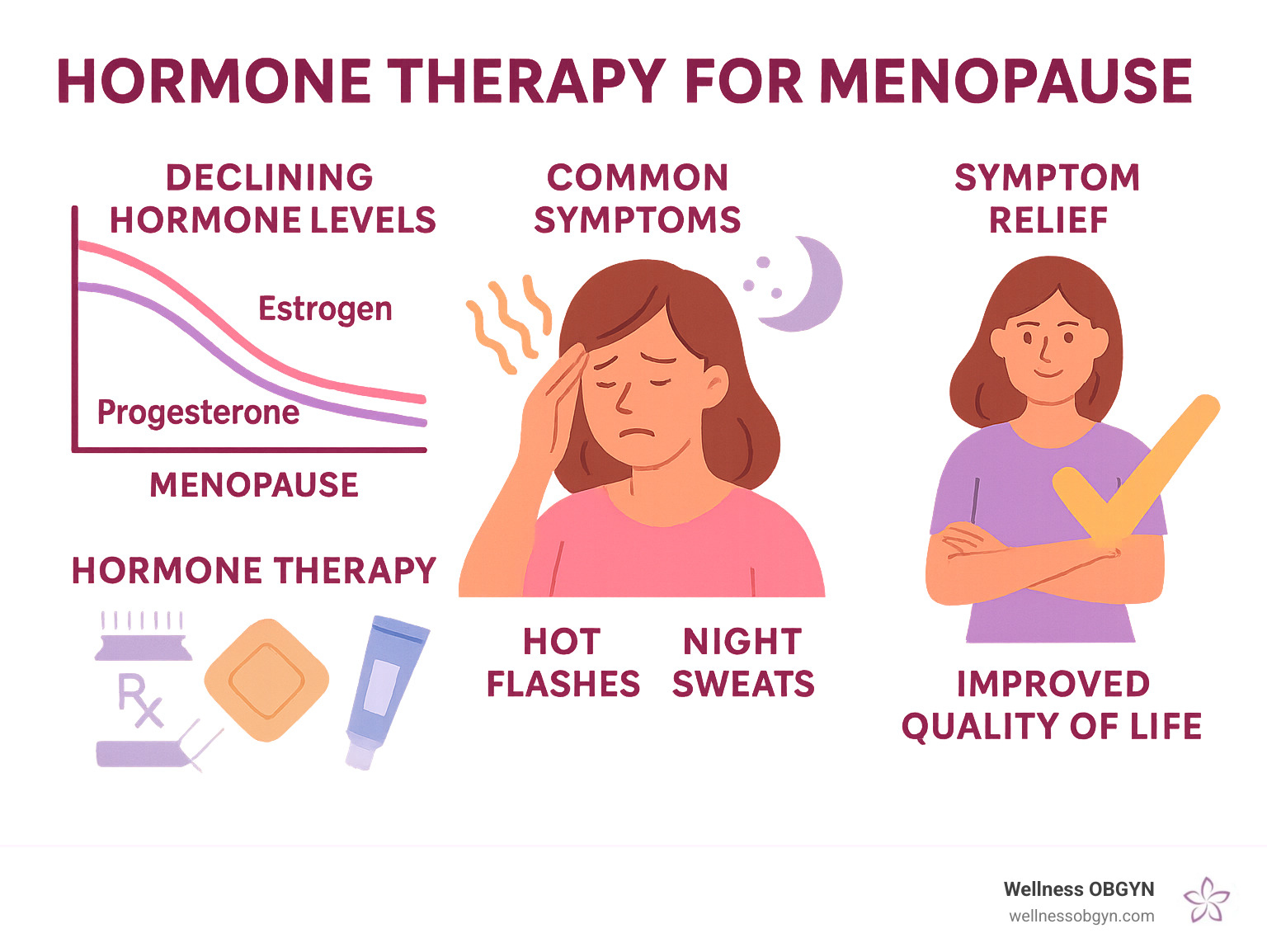
Menopause is confirmed after 12 months without a period, typically around age 51. The transition leading up to it, perimenopause, can start in your 40s or even late 30s. During this time, your ovaries gradually produce less estrogen and progesterone. This hormonal decline is the cause of common menopause symptoms.
Symptoms can include disruptive hot flashes and night sweats, vaginal dryness that can make intimacy uncomfortable, sleep problems, and mood swings. These symptoms can significantly affect your daily life, from your work to your relationships.
Hormone therapy for menopause works by reintroducing estrogen (and often progesterone) to restore hormonal balance and significantly reduce these disruptive symptoms. It helps turn the hormonal “dimmer switch” back up to a more comfortable level.
The Goal of Hormone Therapy for Menopause
The primary goal of hormone therapy for menopause is to improve your quality of life by relieving symptoms. It’s not a ‘cure’ for aging, but a targeted medical treatment to help you feel like yourself again.
At Wellness OBGYN, we take an individualized treatment approach. We consider your specific symptoms, health history, and personal preferences to find the right solution for you. Our philosophy is to use the lowest effective dose for the shortest time needed to provide relief, helping you steer this phase of life with comfort and confidence.
Hormone Therapy vs. Hormone Replacement Therapy: What’s the Difference?
You’ve likely heard both terms, and they are often used interchangeably. Historically, Hormone Replacement Therapy (HRT) was the common term. Today, Hormone Therapy (HT) is preferred by many in the medical community as it more accurately reflects the goal of alleviating symptoms rather than simply replacing hormones to pre-menopausal levels.
For most women managing typical menopause, both terms refer to the same treatments. The key takeaway is that effective options are available to dramatically improve your quality of life. Learn more about our hormone therapy options and how we can help you find the right fit.
The Different Types of Hormone Therapy

When it comes to hormone therapy for menopause, there is no one-size-fits-all approach. The best therapy for you depends on your symptoms, medical history, and whether you still have your uterus. Let’s walk through the main options.
Systemic vs. Local Therapy
The first decision is how to deliver the hormones. Systemic hormone therapy sends hormones through your bloodstream to treat whole-body symptoms like hot flashes, night sweats, and mood swings, and to help with bone loss prevention. Systemic options include pills, patches, gels, and sprays.
Local hormone therapy targets the vaginal and urinary areas specifically. This is an excellent choice if your main concerns are vaginal dryness, painful intercourse, or recurrent urinary tract infections—symptoms known as Genitourinary Syndrome of Menopause (GSM). Local therapy uses very low doses of estrogen delivered via vaginal creams, tablets, or flexible rings, which means minimal absorption into the bloodstream and fewer risks.
Estrogen-Only vs. Combination Therapy
Your anatomy plays a key role in your hormone therapy for menopause plan. If you’ve had a hysterectomy (your uterus has been removed), estrogen-only therapy is a straightforward and effective option.
If you still have your uterus, combination therapy is essential. This approach pairs estrogen with a progestogen (a synthetic form of progesterone). Estrogen alone can cause the uterine lining to thicken, increasing the risk of endometrial cancer. Progestogen protects the uterine lining, making the therapy safe. I never prescribe estrogen alone to women with a uterus; the combination approach is vital for long-term health. Understanding these reproductive health considerations helps us create the safest possible treatment plan for you.
What About ‘Bioidentical’ and Compounded Hormones?
You’ve likely heard of “bioidentical hormones,” often marketed as a more “natural” or safer option. Let’s clarify what this means for your health.
Bioidentical hormones are chemically identical to those your body produces. Many FDA-approved hormone therapies, such as the estradiol and micronized progesterone I prescribe, are bioidentical and have undergone rigorous testing for safety and efficacy.
The confusion often arises with custom-compounded hormones, which are mixed at compounding pharmacies. While the idea of a personalized formula is appealing, these products are not regulated by the FDA in the same way. This means there’s no guarantee of consistent dosage or purity, which can lead to ineffective treatment or potential side effects. For women with a uterus, inconsistent progestogen levels could fail to protect the uterine lining, increasing cancer risk.
The American College of Obstetricians and Gynecologists advises against the routine use of custom-compounded hormones due to these safety concerns. You can read more about ACOG’s clinical consensus on compounded hormones here.
At Wellness OBGYN, I use FDA-approved medications to ensure your treatment is consistent, reliable, and safe.
| FDA-Approved Hormone Therapy | Custom-Compounded Hormone Therapy |
|---|---|
| Rigorously tested for safety, effectiveness, and consistent dosage | Minimally regulated; no guarantee of consistent strength or purity |
| Every pill or patch contains exactly what the label says | Can vary significantly from batch to batch |
| Supported by extensive clinical research | Lacks large-scale safety studies |
| Precise progestogen protection for women with a uterus | May not provide adequate uterine protection |
Weighing the Benefits and Risks of Hormone Therapy for Menopause
Deciding on hormone therapy for menopause is a conversation, not a command. At Wellness OBGYN, we believe in shared decision-making, working with you to weigh the pros and cons for your unique situation.

Key Benefits Beyond Symptom Relief
While most women seek hormone therapy for menopause to relieve hot flashes and night sweats, the benefits can extend further.
- Bone Loss Prevention: Estrogen is vital for bone strength. HT is highly effective at preventing the rapid bone density loss that occurs during menopause, reducing the risk of osteoporosis and fractures. Research has consistently shown that menopausal hormone therapy improves bone health.
- Reduced Colorectal Cancer Risk: Studies have observed that women using hormone therapy may have a lower risk of developing colorectal cancer.
- Other Potential Benefits: For women who start HT under age 60 or within 10 years of menopause, there may be cardiovascular benefits and a reduced risk of developing type 2 diabetes.
Understanding the Risks: The Women’s Health Initiative and FDA Warnings
Concerns about hormone therapy often trace back to The Women’s Health Initiative (WHI) study from the early 2000s. However, our understanding has evolved significantly since then. A modern re-evaluation of the WHI data has clarified the risks.
Timing is crucial. The benefit-risk balance is most favorable for women who start HT under age 60 or within 10 years of menopause. Starting later increases the risk of complications.
The type of therapy also matters. The WHI found an increased risk of blood clots and stroke with oral combination therapy. The risk of blood clots is lower with transdermal methods like patches or gels. The risk of breast cancer was found to increase with long-term use of combination therapy (estrogen plus progestin). Importantly, women in the study taking estrogen-only therapy had a lower risk of breast cancer than those taking a placebo.
Due to these historical findings, the FDA requires a black box warning on all estrogen products. However, many experts argue that this warning may overstate the risk for some forms of therapy, especially low-dose vaginal estrogen. The concern is that this broad warning might prevent women from using what can be a safe and effective treatment for their symptoms.
The bottom line is that hormone therapy for menopause is not inherently dangerous, but it requires a careful, personalized assessment of your health profile. That’s why a detailed conversation with your healthcare provider is essential.
Your Personalized Journey with HT: Candidacy, Alternatives, and Duration

At Wellness OBGYN, we see the whole you, not just your symptoms. Your health history, lifestyle, and personal goals all shape your treatment plan. This is a conversation, and we’re here to help you make decisions that feel right for your body and life.
Who is a Good Candidate for HT (and Who Should Avoid It)?
Hormone therapy for menopause can be life-changing for the right person. You may be a good candidate if you:
- Are under 60 and within 10 years of starting menopause.
- Experience moderate to severe symptoms like hot flashes, night sweats, or vaginal dryness.
- Went through early menopause or have premature ovarian insufficiency.
However, HT is generally not recommended if you have a history of:
- Breast cancer (especially hormone-sensitive types)
- Blood clots, stroke, or heart attack
- Liver disease
- Unexplained vaginal bleeding
Even with some risk factors, options like local vaginal estrogen may still be safe. Learn more from our OBGYN menopause specialist about personalized assessment and treatment options.
Alternatives to Hormone Therapy
If HT isn’t for you, there are many other effective ways to manage symptoms.
- Lifestyle Changes: Simple adjustments to your diet (like avoiding caffeine and spicy foods), regular exercise, and stress reduction techniques like yoga or meditation can provide significant relief.
- Non-Hormonal Prescriptions: Certain antidepressants (SSRIs/SNRIs) and other medications like gabapentin can effectively reduce hot flashes.
Explore our specialized intimate wellness treatments and learn about our comprehensive holistic menopause treatment approach.
How Long Should You Take HT and How Do You Stop?
One of the most common questions is, “How long will I need this?” The goal is always the lowest effective dose for the shortest time needed to manage your symptoms. For most women, this is between 3 to 5 years.
We’ll have regular check-ins to reassess your needs and adjust your plan. When it’s time to stop, we typically recommend gradually tapering your dose to minimize the return of symptoms. It’s important to know that some symptom recurrence is possible, as the underlying hormonal changes of menopause persist. If this happens, we can explore other strategies to keep you comfortable.
Frequently Asked Questions about Menopause Hormone Therapy
As you consider your options, it’s natural to have questions. Here are honest answers to some of the most common concerns we hear at Wellness OBGYN.
What are the most common side effects of hormone therapy?
When starting hormone therapy for menopause, some women experience mild, temporary side effects as their body adjusts. These can include breast tenderness, bloating, headaches, or irregular bleeding (with combination therapy). These effects usually resolve within the first three months. If they persist, we can often fix the issue by adjusting your dose or changing the type of therapy.
Will hormone therapy make me gain weight?
This is a top concern for many women. The reassuring answer is that research does not show that hormone therapy causes weight gain. Weight changes during midlife are typically due to a natural slowing of metabolism, not the therapy itself. In fact, some studies suggest HT may help prevent the belly fat accumulation common in menopause. A healthy lifestyle remains the key to managing weight.
Is hormone therapy recommended just to prevent chronic diseases?
This is an important distinction. Hormone therapy for menopause is not recommended for the sole purpose of preventing chronic conditions like heart disease or dementia. The U.S. Preventive Services Task Force specifically recommends against HT for primary prevention because the risks don’t outweigh the benefits for this purpose.
However, if you are taking HT to treat bothersome symptoms, the associated health benefits are a welcome bonus. The decision always comes down to whether the symptom relief and quality-of-life improvements justify any potential risks for you, personally.
Take Control of Your Menopause Journey
Menopause is a natural transition, but its symptoms can be overwhelming. The good news is that you don’t have to simply “tough it out” or steer this journey alone.
At Wellness OBGYN in Honolulu, we believe that empowerment through information is the first step toward feeling like yourself again. Understanding your options for hormone therapy for menopause and other treatments gives you the power to make decisions that align with your health goals.
Whether you’re struggling with hot flashes, night sweats, or vaginal dryness, our expert team is here to listen and guide you. We know that personalized care is key. We’ll take the time to understand your unique situation, answer your questions, and work with you to create a plan that helps you regain comfort, confidence, and control.
Your menopause journey is yours to own. With the right support and medical care, this transition can be a time of renewed well-being.