
Why a Holistic Approach to Women’s Health is Changing Modern Healthcare
A holistic approach considers the whole woman—body, mind, and environment—so symptoms are traced back to their true causes rather than patched with temporary fixes. At Wellness OBGYN in Honolulu, we see every day how this broader lens transforms care.
Why the surge in interest?
• Integrated wellness – nutrition, movement, mental health, social ties and environment are addressed together.
• Root-cause focus – we ask why hormones, gut health or mood are off balance before prescribing.
• Shared decision-making – women help steer treatment choices.
• Life-stage personalisation – from first period to post-menopause, needs evolve.
• Prevention first – early lifestyle shifts head off expensive interventions later.
The stakes are high: nearly 40 % of UK women report daily stress and many miss basic screenings. Research shows that lifestyle therapies can equal or outperform medication for PCOS, endometriosis and menopausal symptoms—yet conventional visits often remain siloed.
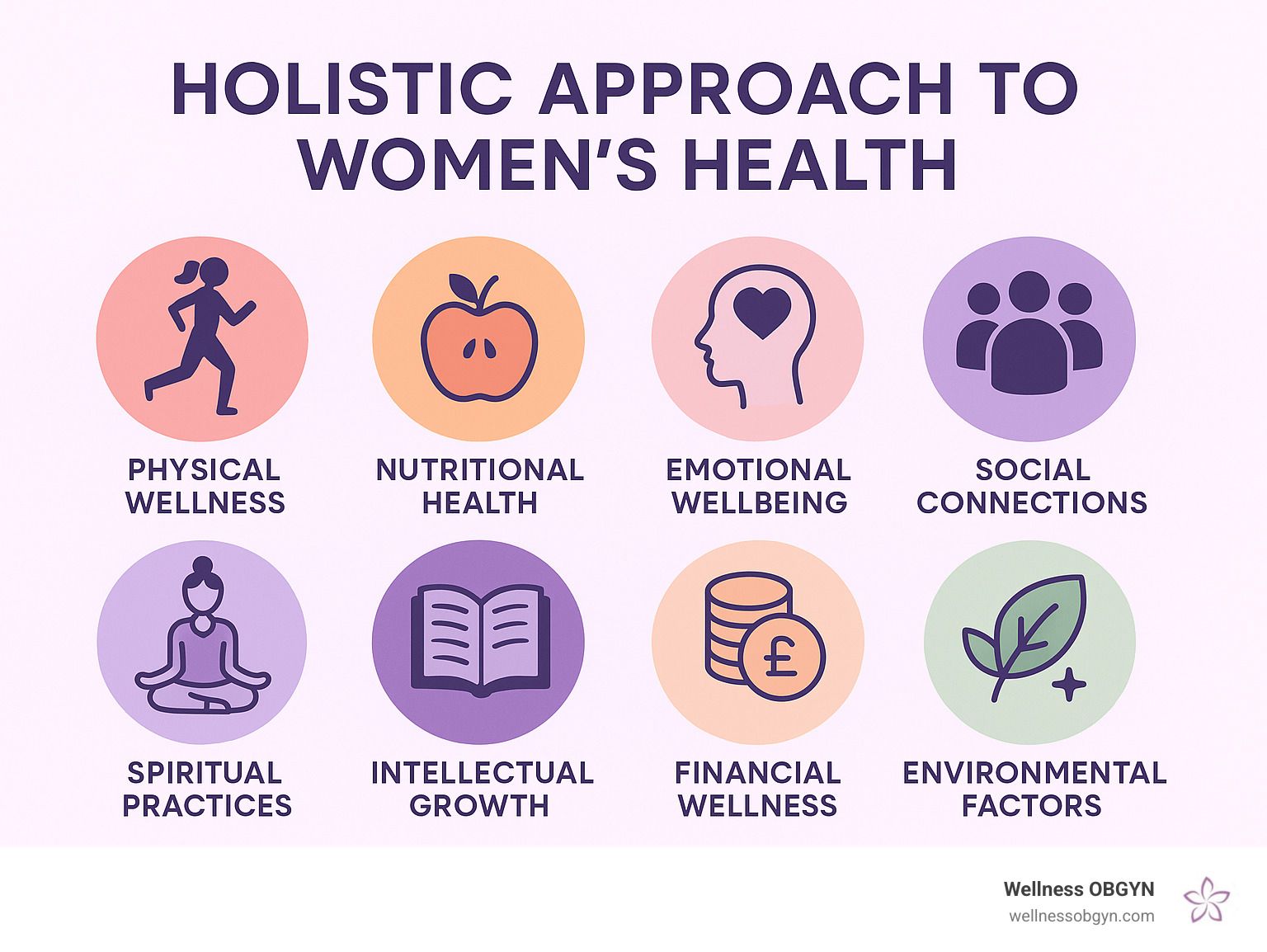
Simple holistic approach to women’s health word guide:
The Core Principles of a Holistic Approach to Women’s Health
At Wellness OBGYN we start with one assumption: everything in a woman’s body is connected. Hormones affect mood, sleep shapes immunity, and stress can derail digestion as easily as it disrupts periods. Our eight-pillar framework keeps those connections front and centre:
- Physical health
- Nutritional wellness
- Emotional balance
- Social support
- Spiritual purpose
- Intellectual growth
- Financial security
- Environmental awareness
| Aspect | Conventional Care | Holistic Care |
|---|---|---|
| Goal | Symptom control | Root-cause findy |
| Timeline | Short-term fixes | Long-term prevention |
| Patient role | Passive | Active partner |
| Toolbox | Mainly drugs & surgery | Lifestyle, integrative therapies, plus conventional care |
Lifestyle medicine underpins everything. Regular movement (≈150 min/week), nutrient-dense meals, and restorative sleep keep hormones, brain and immune system in sync. A landmark study on climacteric women showed 70 % were overweight at first gyn visit, underscoring why metabolic health matters as much as estrogen levels.
We individualise care: one woman may thrive on nutrition tweaks and breath-work; another may need bio-identical hormones or minimally invasive surgery. Either way, shared decision-making guides the plan.
More info about clinic services
Life-Stage Care: Adolescence to Post-Menopause
A holistic approach adapts as a woman’s body changes, making early wins pay off decades later. Think of Wellness OBGYN as a long-term partner rather than a one-time problem-solver.
Teens & Early Adulthood – Setting the Stage
• Menstrual education: cycles as a monthly report card.
• HPV vaccination for cancer prevention.
• Mental-health screening during a hormonally intense life phase.
• Fertility awareness plus contraceptive counselling so young women can plan, not guess.
Reproductive Years – Hormones & Family Planning
Conditions like PCOS and endometriosis demand more than birth-control pills. We combine anti-inflammatory diets, stress reduction, targeted supplements and, when necessary, minimally invasive surgery. Pre-conception optimisation—three months of nutrient loading, toxin reduction and stress management—sets up healthy pregnancies.
Female Reproductive Health Issues
Midlife & Beyond – Holistic Menopause Treatment

Integrative Tools, Therapies & Innovative Protocols
Modern holistic care blends time-tested wisdom with precise technology.
• Functional labs use tighter reference ranges to spot thyroid or nutrient issues early.
• Seed cycling (pumpkin/flax then sesame/sunflower) offers a simple food-as-medicine strategy to steady cycles.
• Evidence-based botanicals—cranberry for UTIs, ginger for nausea, black cohosh for hot flashes—extend options beyond the pharmacy.
• Osteopathic Manipulative Treatment (OMT) eases pelvic pain, cramps and pregnancy discomfort by restoring musculoskeletal balance.
What is Osteopathic Manipulative Treatment (OMT)?
Hormonal Balance & Metabolism
Thyroid, insulin and sex hormones function like a symphony. Sub-clinical thyroid issues can trigger irregular periods; blood-sugar swings strain the same hormonal pathways that influence fertility. Our anti-inflammatory nutrition plans—balanced macros, fibre-rich carbs, omega-3 fats—keep glucose and cortisol steady.
Scientific research on PCOS risk
Stress, Mind-Body Medicine & Sleep
Five-minute breathing breaks, yoga poses between meetings, or app-guided meditation lower cortisol and rescue hormones from chronic “fight-or-flight.” Gratitude journaling and HRV tracking turn stress management into a measurable habit.
Sexual Wellness & Tissue Regeneration

Empowerment Through Education & Access
Knowledge fuels self-advocacy. Yet many women reach adulthood unsure what a normal cycle looks like or when to request a Pap, mammogram or lipid panel. Digital tools, telehealth and community programs can close that gap.
Research shows comprehensive health education improves long-term outcomes, but the UK still lags the EU in blood-pressure checks and cancer screening. At Wellness OBGYN we embed teaching into every visit and share vetted online resources so women leave appointments confident—not confused.
Scientific research on holistic reproductive empowerment
Navigating Care & Finding Practitioners
Look for:
• Board-certified MDs or DOs with integrative or functional training
• NDs (in licensed states) and nurse practitioners experienced in women’s health
• A collaborative attitude—quality clinicians welcome questions and referrals, respect evidence and avoid miracle claims.
What is a D.O. (Doctor of Osteopathic Medicine)?
Red flags include dismissing all conventional medicine or pushing pricey supplements without testing. Trust your instincts; you deserve a partner who listens.
Frequently Asked Questions about the Holistic Approach to Women’s Health
1. How does holistic care differ from conventional medicine?
Conventional visits often treat a single symptom, such as giving birth-control pills for irregular periods. Holistic care asks why periods are off, exploring stress, sleep, nutrition, thyroid and more. The toolkit expands beyond prescriptions to include lifestyle medicine, botanicals, OMT and technologies —while still using drugs or surgery when evidence shows they are best.
2. Can I fit holistic habits into a hectic schedule?
Yes. Pair existing routines with micro-changes: practise gratitude while sipping morning coffee, do squats during tooth-brushing, or breathe deeply at red lights. Swap one processed snack for nuts, stretch for two minutes every hour and keep screens out of the last 30 minutes before bed. Small, repeatable actions beat perfection.
3. How do I find a qualified integrative women’s-health provider?
Search directories from the Institute for Functional Medicine, American Board of Integrative Medicine or the American Osteopathic Association. During a consult ask about training, treatment philosophy and whether they use shared decision-making. Avoid anyone who guarantees cures or shuns conventional diagnostics.
Conclusion
Whether your goal is clearer cycles, an empowered pregnancy, smoother menopause or revitalised intimacy, one small step today—booking a consultation, adding a daily walk, or learning your screening schedule—starts a ripple effect that benefits you for decades.
More info about our full services