
Why Your Annual Well Woman Visit is the Foundation of Lifelong Health
An annual well woman visit is a preventive health appointment designed to keep you healthy across every stage of life—from adolescence through menopause and beyond. Unlike visits for illness or injury, this yearly check-up focuses on screening, counseling, and early detection to help you avoid future health problems.
What happens during an annual well woman visit:
- Document your health habits and history – Your provider reviews your medical, family, sexual, and mental health background
- Complete a physical exam – Includes blood pressure, weight, BMI, and age-appropriate screenings like clinical breast exams or pelvic exams
- Set personalized health goals – Discuss topics like birth control, nutrition, exercise, mental health, and preventive screenings
- Receive recommended screenings – Based on your age and risk factors, these may include Pap smears, HPV testing, STI screening, mammograms, cholesterol checks, or bone density scans
More than 50% of preventive care visits for women are provided by obstetrician-gynecologists, and the Women’s Preventive Services Initiative recommends at least one preventive care visit per year beginning in adolescence and continuing throughout your life. These visits give you the opportunity to build an honest relationship with your provider, ask questions, and address concerns before they become serious problems.
Whether you’re seeking your first wellness exam or looking for a trusted partner to guide you through perimenopause, sexual health concerns, or hormone optimization, the right provider makes all the difference. I’m Dr. Cheryl Twu, and over the past decade in high-volume hospital settings and now at Wellness OBGYN, I’ve specialized in whole-person preventive care, minimally invasive surgery, and helping women navigate every aspect of their annual well woman visit with compassion and evidence-based guidance. My goal is to ensure you feel informed, empowered, and supported at every appointment.
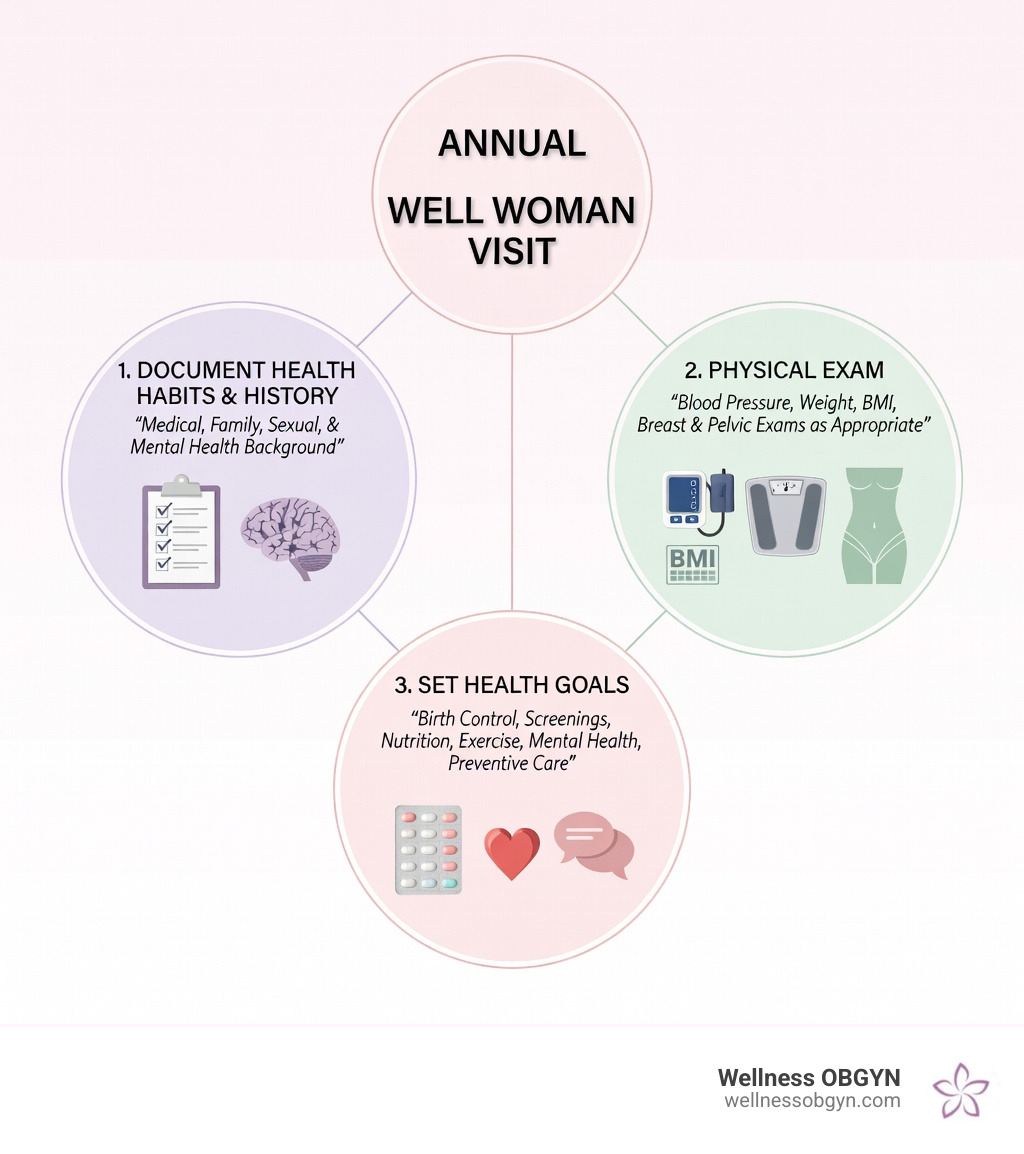
Simple annual well woman visit glossary:
What is an Annual Well Woman Visit and Why is it Essential?

At its heart, an annual well woman visit is all about you, your body, and your reproductive health. While many patients refer to it as a “yearly exam” or “Pap smear appointment,” it is actually a comprehensive clinical encounter that promotes health over the course of your lifetime. We view this visit as a proactive strategy—a way to catch potential issues like high blood pressure, cervical changes, or breast lumps before they develop into serious conditions.
According to the WPSI Recommendations for Well-Woman Care, these visits are essential because they provide a dedicated space for primary and secondary prevention. This means we aren’t just looking for existing disease; we are working together to minimize your future risks through immunizations and lifestyle counseling. At our Center for Women’s Health, we believe that building a long-term relationship with your provider leads to better health outcomes because you have a partner who knows your history and understands your personal goals.
Clinical Components of the Annual Well Woman Visit
When you step into our office for your annual well woman visit, we follow a structured but flexible approach. The Women’s Health Annual Exam typically includes:
- Comprehensive Health History: We’ll discuss any changes in your medical or surgical history, update your list of medications, and review your family’s health history.
- Physical Examination: This includes vital signs like blood pressure and heart rate, as well as height and weight to calculate your BMI. Depending on your age and history, it may also include a clinical breast exam and a pelvic exam.
- Immunization Review: We ensure you are up-to-date on necessary vaccines, such as the flu shot, Tdap, and the HPV vaccine.
Mental Health and Lifestyle Counseling
We know that health isn’t just physical. A significant portion of your annual well woman visit is dedicated to “the talk.” We provide a safe space to discuss:
- Mental Health: We routinely screen for depression and anxiety. Life in Honolulu can be busy, and we want to ensure you have the support you need.
- Lifestyle Choices: We discuss nutrition, physical activity, and tobacco or alcohol use. Even small changes can significantly lower your risk for cardiovascular disease.
- Safety and Relationships: We provide confidential screening for relationship safety and intimate partner violence.
- Sexual Health: This includes USPSTF Screening for HIV and other STIs if you are sexually active.
Preventive Screenings and Tests Across the Lifespan
One of the most common questions we hear is, “Do I need a Pap smear every year?” The answer depends entirely on your age and health history. Screening guidelines have evolved to be more effective and less invasive.
If a screening does come back with unexpected results, we are here to guide you through the next steps, such as an Abnormal Pap Follow-up.
Adolescent and Young Adult Care
The American College of Obstetricians and Gynecologists (ACOG) recommends that young women have their first annual well woman visit between the ages of 13 and 15. For teens who are not sexually active, this visit usually does not include a pelvic exam. Instead, it focuses on education, menstrual history, and establishing a baseline for health. It’s a great time to discuss painful periods or skin concerns. You can learn more about what to expect in our guide to the Annual OBGYN Visit.
Midlife and Menopause Management
As you enter your 40s and 50s, the focus of your annual well woman visit shifts toward managing the transition to menopause and monitoring for age-related chronic conditions. As a Gynecologist Honolulu specialist, we keep a close eye on:
- Perimenopause symptoms: Addressing hot flashes, mood changes, and sleep disturbances.
- Colorectal Cancer Screening: Now recommended to start at age 45.
- Metabolic Health: Screening for diabetes (typically ages 40-70) and monitoring cholesterol levels to protect your heart.
Preparing for Your Appointment
A little preparation goes a long way in making your annual well woman visit productive. We want to hear about everything—from that weird pain in your side to your stress levels at work.
How to Get Ready for Your Annual Well Woman Visit
To get the most out of your time with us at Wellness OBGYN, we recommend the following:
- Track Your Cycle: Know the date of your last period. If your periods are irregular, heavy, or painful, keep a log of your symptoms.
- Know Your Family History: Your family’s health history is a vital part of your record. We recommend using the Family Health History Tool to track conditions that run in your family, such as breast or ovarian cancer.
- List Your Medications: Include vitamins, herbal supplements, and over-the-counter meds.
- Write Down Your Questions: Don’t be shy! Whether it’s about birth control, libido, or mental health, no topic is off-limits for a Gynecologist in Honolulu.
Pro-tip: If you are having a very heavy period on the day of your exam, you might want to call us. While a light period is usually fine for a Pap smear, heavy bleeding can sometimes interfere with test results.
Frequently Asked Questions about the Annual Well Woman Visit
How often should I schedule an annual well woman visit?
You should schedule your annual well woman visit once every year. Even if you aren’t due for a Pap smear, the visit is necessary for your clinical breast exam, pelvic exam, and the vital health counseling that keeps you on track. According to the WPSI Clinical Summary Tables, consistent annual care is the best way to ensure that nothing slips through the cracks as your health needs change over the years.
Do I need a pelvic and breast exam every year?
At Wellness OBGYN, we believe in shared decision-making. While an annual clinical breast exam is generally recommended for women over 40, the frequency of pelvic exams can vary based on your age, symptoms, and risk factors. If you are experiencing pelvic pain, unusual discharge, or menstrual changes, an exam is definitely indicated. We always explain the “why” behind every part of the exam. You can find more details on what to expect in this Mayo Clinic Pelvic Exam Guide.
Is the annual well woman visit covered by insurance?
In most cases, yes! Under the Affordable Care Act (ACA), most private insurance plans are required to cover one annual well woman visit per year at no cost to the patient (no co-pay or deductible). This typically includes the exam itself and many recommended screenings. Medicare also covers many preventive services for women. If you are looking for an Obstetrician Gynecologist Near Me who accepts a variety of insurance plans, our office is happy to help you verify your benefits before your appointment.
Conclusion
Your health is your most valuable asset, and your annual well woman visit is the best tool you have to protect it. At Wellness OBGYN in Honolulu, we are dedicated to providing personalized, compassionate care that respects your individual journey. From adolescent education and reproductive planning to minimally invasive surgery and menopause management, we are here for you.
We believe that every woman deserves a healthcare provider who listens, understands, and empowers her to make the best decisions for her body. If you are looking for a new medical home, we invite you to experience our patient-centered approach. Schedule your comprehensive wellness services with us today and take the first step toward a healthier, more vibrant you.