
Why Every Woman Deserves a Complete Health Picture
A Female health assessment is your roadmap to lifelong wellness – a comprehensive evaluation that goes far beyond treating symptoms to focus on preventing health issues before they start. Unlike sick visits that address specific problems, these proactive checkups examine your complete health picture through physical exams, screenings, lifestyle discussions, and preventive care planning.
Key Components of a Female Health Assessment:
- Medical and family history review – Understanding your health background and genetic risks
- Physical examination – Including breast exam, pelvic exam, and vital signs
- Age-appropriate screenings – Pap tests, mammograms, bone density scans, and more
- Lifestyle counseling – Diet, exercise, stress management, and substance use discussions
- Mental health screening – Depression, anxiety, and emotional well-being evaluation
- Preventive care planning – Immunizations, contraception, and future health goals
The power of these assessments lies in their ability to catch problems early when they’re most treatable. Regular annual visits help establish your health baseline, track changes over time, and build a strong relationship with your healthcare provider.
Many women feel anxious about their first gynecological exam, but these visits are designed to empower you with knowledge about your body and health needs. As one healthcare expert notes, “Health encompasses more than just being free from illness; it is soundness of mind, comfort in the physical self, and happiness in our sexuality.”
I’m Dr. Cheryl Twu, a board-certified obstetrician-gynecologist with over a decade of experience providing comprehensive women’s healthcare in hospital and clinical settings. Through my practice at Wellness OBGYN in Honolulu, I’ve helped thousands of women steer their health journeys through personalized Female health assessment approaches that combine evidence-based medicine with holistic wellness principles. Let’s explore how a thorough assessment can open up your path to optimal health at every stage of life.
What Is a Comprehensive Female Health Assessment?
A comprehensive Female health assessment is your personal health roadmap. It’s a thorough, proactive evaluation focused on keeping you healthy, not just treating problems. This is your dedicated time to partner with your provider, review your wellness, and plan for your future health.
A well-woman visit is proactive. Unlike a sick visit for current symptoms, a Female health assessment looks at the big picture when you’re well. These checkups include physical exams and preventive care to catch problems early when they’re more treatable, as explained by the Office of Disease Prevention and Health Promotion.
| Feature | Well-Woman Visit | Routine Sick Visit |
|---|---|---|
| Purpose | Promote health, prevent disease, and detect issues early. Focus on overall well-being, preventive screenings, and counseling. | Diagnose and treat specific symptoms, acute illnesses, or injuries. Focus on resolving immediate health problems. |
| Focus | Comprehensive health assessment, age-appropriate screenings (Pap tests, mammograms), lifestyle counseling, mental health screening, vaccinations, family planning, and long-term health planning. | Symptom evaluation, diagnosis, prescription of medication, and specific treatment plans for the presenting complaint. |
| Timing | Typically once a year, even when feeling healthy. | As needed, when symptoms arise or an injury occurs. |
| Scope | Broad, covering various aspects of physical, mental, and reproductive health across the lifespan. | Narrow, focused on the specific problem that prompted the visit. |
| Key Activities | Health history update, physical exam, vital signs, preventive screenings (e.g., Pap, HPV, breast exam), immunizations, counseling on diet, exercise, stress, contraception. | History of present illness, physical exam focused on symptoms, diagnostic tests (e.g., strep test, X-ray), treatment recommendations, follow-up for illness resolution. |
| Provider Role | Partner in long-term health, offering guidance on preventive measures, risk assessment, and age-appropriate care. | Diagnostician and treater of acute conditions, providing immediate relief and management. |
| Importance | Establishes baseline health, tracks changes, identifies risk factors, and catches potential issues (like cancer or chronic diseases) in their earliest, most treatable stages. | Addresses immediate health concerns, alleviates discomfort, and prevents complications from acute illnesses. |
This proactive approach is transformative, putting you in charge of your health. Get Your Well-Woman Visit Every Year to stay ahead of potential concerns.
The Four Pillars of Your Assessment
A comprehensive Female health assessment rests on four essential pillars for a complete health picture.
Medical and family history forms our foundation. We’ll explore your past medical conditions, surgeries, allergies, and current medications, including supplements. Your family’s health story is equally important, as a history of conditions like heart disease or breast cancer can help us tailor your care, perhaps by starting mammograms earlier.
Physical examination components give us concrete data. We’ll check vital signs (blood pressure, heart rate, BMI) and perform a physical exam. For women, the clinical breast exam and pelvic exam are particularly valuable for evaluating breast and reproductive health. We prioritize your comfort and explain each step.
Lifestyle discussions reveal how daily choices impact long-term health. We’ll talk about your diet, exercise, sleep, stress management, and substance use. These non-judgmental conversations help us understand your whole life picture.
Mental and emotional well-being checks recognize the mind-body connection. We’ll screen for depression and anxiety, asking about your mental health history and how you feel about yourself to identify concerns that might need additional support.
This comprehensive approach enables us to provide truly Personalized Women’s Healthcare that addresses your unique needs.
Why Annual Visits Are Crucial
Your annual well-woman visit is an investment in your long-term health and peace of mind.
Establishing a health baseline creates your personal health fingerprint. Each visit builds a comprehensive record, making it easier to track subtle changes that might signal developing conditions.
Tracking changes over time allows us to spot patterns, like a gradual increase in blood pressure or shifts in emotional well-being, before they become bigger problems.
Building a patient-provider relationship creates the trust and comfort that leads to better health outcomes and more open communication, which is especially valuable during life transitions.
Risk factor identification helps us create a personalized prevention plan based on your history, lifestyle, and family background.
The Women’s Preventive Services Initiative recommends at least one preventive care visit annually for women, starting in adolescence. This commitment is why we prioritize your Annual OBGYN Visit as a cornerstone of lifelong wellness.
Health Assessments Through Every Stage of Life
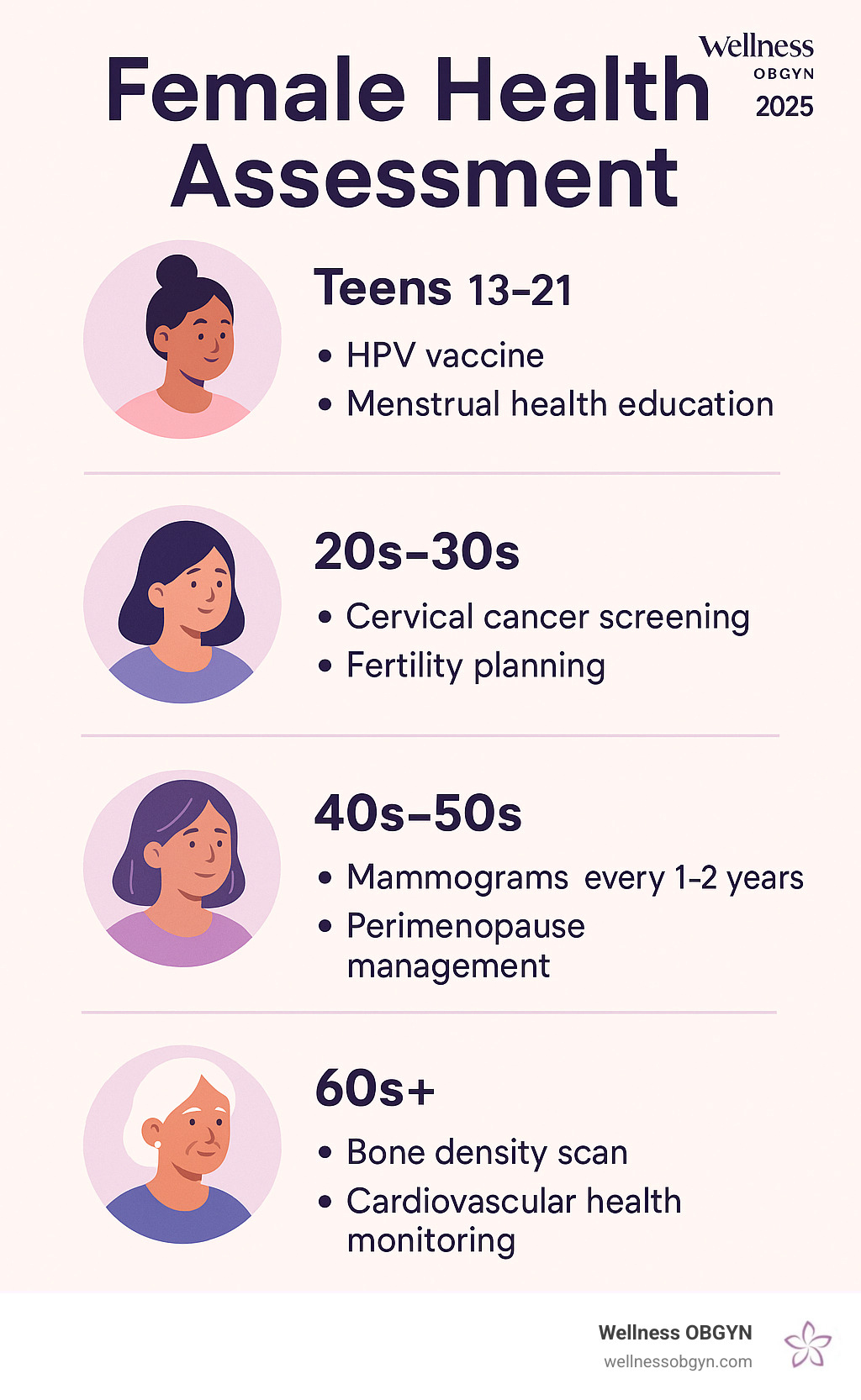
Your healthcare needs evolve with each life stage. A comprehensive Female health assessment is a personalized journey that changes with you, not a one-size-fits-all approach. At Wellness OBGYN, we provide the right care at the right time, managing your health proactively to ensure you receive what you need most, whether you’re 16 or 66.

Adolescence (Ages 13-21)
Your first gynecological visit can feel intimidating, which is completely normal. These initial visits are typically more about conversation and building a foundation for lifelong health than uncomfortable exams.
During these formative years, we focus on menstrual cycle health, asking about your period regularity and any concerns. Understanding your unique cycle is key to your overall health. The HPV vaccine discussion is also crucial for protecting your future health. We also discuss healthy habits like nutrition and exercise, and provide STI prevention counseling in a judgment-free environment.
For more detailed information, we recommend checking out Gyn Checkups (For Teens).
Reproductive Years (20s & 30s)
During your 20s and 30s, your Female health assessment becomes more comprehensive, focusing on the health needs that matter most during your reproductive years.
Cervical cancer screening becomes a regular part of your care. Women ages 21 to 29 should get a Pap smear every three years. From age 30, you can continue with Pap smears every three years or switch to HPV testing every five years. We’ll help you decide which approach is best for you.
Contraception and family planning conversations are key. Whether you’re preventing pregnancy or planning for it, we’ll discuss all your options, including the Best Hormonal Birth Control for your lifestyle. If you’re considering a family, fertility discussions and pre-pregnancy counseling help ensure you’re in the best possible health and manage any Female Reproductive Health Issues.
Perimenopause and Menopause (40s & 50s)
Most women start the perimenopause transition in their 40s, with the average age of menopause being 51. Your journey is unique, and we’re here to guide you through it.
Managing perimenopause symptoms becomes a central focus. We offer guidance on Menopause Lifestyle Changes and can explore options like hormone therapy for symptoms like hot flashes and mood swings. Our OBGYN Menopause Specialist can guide you with expertise and compassion.
Mammogram screenings become routine, typically starting between ages 40 and 45. Colon cancer screening should start by age 45, and heart health monitoring becomes increasingly important. We’ll also establish a bone density baseline to assess your osteoporosis risk.
Postmenopause (60s and Beyond)
In your post-menopause years, our health assessments focus on maintaining your quality of life and independence.
Bone density scans for osteoporosis become regular, typically starting at age 65. Continued cancer screenings for breast, cervical, and colon cancers remain important. Cardiovascular health monitoring and fall prevention are also crucial.
For comprehensive guidelines, the Healthy Living by Age resource provides excellent additional information.
Key Screenings and Their Role in Preventive Care
Preventive screenings are vital tools in a Female health assessment, acting as early warning systems that can detect potential health issues before they become serious. Understanding the purpose and recommended frequency of these tests can empower you to take charge of your health.

Early detection truly saves lives, allowing for timely intervention and more effective treatment outcomes.
Cervical Cancer Screening: Pap and HPV Tests
These tests are critical for preventing cervical cancer.
- Purpose of tests: The Pap test looks for abnormal cells on the cervix that could lead to cancer. The HPV test screens for the human papillomavirus, a common virus that can cause cervical cancer.
- Screening frequency guidelines (WPSI, USPSTF): According to the WPSI, cervical cancer screenings with HPV tests are recommended every five years for individuals at average risk between the ages of 25 and 65. The USPSTF recommends Pap tests every 3 years for women aged 21-29.
- Age recommendations: Screening typically starts at age 21. For women aged 21 to 29, a Pap smear every three years is recommended. For women aged 30 and older, either a Pap smear every three years or an HPV test every five years (or a co-test combining both every five years) is recommended.
- What results mean: Abnormal results don’t necessarily mean cancer but indicate a need for further investigation, such as a colposcopy.
For more detailed information, the Cervical Cancer Screening (National Cancer Institute) is an excellent resource.
Breast Cancer Screening: Mammograms
Mammograms are X-ray images of the breast used to screen for breast cancer.
- When to start screening: Women with an average risk for breast cancer should start having screening mammograms between ages 40 and 45. For average-risk individuals aged 40-74, mammograms are recommended once every two years.
- Risk factors: Family history of breast cancer can influence when you should start screening and how often. We will discuss your personal and family history to create a personalized screening plan.
- Frequency of mammograms: Typically every one to two years, depending on age and individual risk factors.
- Importance of breast self-awareness: While mammograms are crucial, knowing your own breasts and reporting any changes to your provider is also very important.
Learn more about these vital screenings from Mammograms (Office on Women’s Health).
Bone, Heart, and Colon Health
Beyond reproductive and breast health, several other screenings are essential for a comprehensive Female health assessment:
- Bone density scans (DEXA): These scans measure bone mineral density, helping to diagnose osteoporosis or assess your risk. Most women need regular bone density scans starting at age 65, but earlier if you have risk factors.
- Cholesterol and blood pressure checks: Regular monitoring of these vital signs is crucial for assessing cardiovascular health. Healthy blood pressure is generally 120/80 mmHg or less. Most women should start regular diabetes screening at age 35.
- Diabetes screening: Regular blood sugar checks are important, especially if you have risk factors like obesity, family history, or a history of gestational diabetes.
- Colonoscopy recommendations: Everyone should start colon cancer screening by age 45. Depending on the type of test, frequency can vary from annually to every 10 years.
Maximizing Your Well-Woman Visit
Your well-woman visit is a partnership. By preparing and participating actively, you can maximize the benefits and ensure your Female health assessment addresses all your unique needs.

How to Prepare for Your Appointment
Preparing for your appointment helps ensure a productive visit.
- Gather your family health history. Note any chronic diseases or cancers in your immediate family to help us customize your screening recommendations.
- Create a complete list of everything you’re taking – prescriptions, over-the-counter drugs, vitamins, and supplements, with dosages. Mentioning supplements is important, as they can interact with medications.
- Track your menstrual cycle information. Know the date of your last period and any patterns you’ve noticed.
- Write down your questions and concerns. A written list ensures nothing is forgotten.
Most preventive services are covered by insurance thanks to the ACA, so understanding your coverage helps you schedule screenings confidently.
Common Concerns to Discuss
Your visit is a time to speak openly. No concern is too small or embarrassing to discuss.
- Menstrual irregularities like changes in cycle length, heavy bleeding, or severe pain deserve attention.
- Pelvic pain shouldn’t be ignored, as it can have many causes that we can help identify.
- Changes in vaginal discharge or unusual bleeding can indicate treatable infections or other conditions.
- Breast changes like new lumps or pain should always be evaluated promptly.
- Mood changes and mental health concerns are as important as physical symptoms. We screen for these because mental and physical health are deeply connected.
Addressing Female Sexual Health
Sexual health is a vital component of your overall well-being. Discussing these concerns is normal and essential for comprehensive care.
Low libido, pain during intercourse, or arousal difficulties affect many women, but effective treatments exist. Vaginal dryness is also common, especially after menopause, and is very treatable. Hormonal fluctuations play a significant role, and we can assess your hormone levels to find solutions.
The treatment combines focused shockwave therapy with REGENwave® technology, laser treatment with the REGENlase® device, tissue regenerative factors (TRF), and hormone replacement therapy (HRT). Each protocol is customized to promote true cellular regeneration for lasting rejuvenation.
By addressing sexual health concerns openly during your Female health assessment, we can work together to find solutions that restore your confidence and intimacy.
Conclusion: Partnering in Your Lifelong Wellness
Your journey through this comprehensive guide has revealed an important truth: a thorough Female health assessment isn’t just another medical appointment – it’s your personal roadmap to a lifetime of vibrant health and well-being.
The difference between proactive and reactive healthcare cannot be overstated. When you accept regular well-woman visits, you’re choosing to be the author of your own health story rather than simply responding to problems as they arise. You’re investing in early detection, prevention, and the kind of personalized care that evolves with your changing needs through every season of life.
At Wellness OBGYN, we believe in more than just treating symptoms. Our Holistic Approach to Women’s Health recognizes that your physical wellness, emotional balance, and mental clarity are beautifully interconnected. When one aspect flourishes, the others follow suit.
Our commitment to you extends far beyond a single appointment. We provide expert, compassionate care that’s carefully custom to your unique needs at every life stage – whether you’re navigating your first gynecological visit as a teenager, planning a family in your twenties and thirties, managing the transitions of perimenopause, or embracing the wisdom years beyond menopause.
What makes our partnership special is our dedication to truly knowing you. We take time to understand your health history, your concerns, your goals, and your lifestyle. This personalized approach allows us to offer evidence-based screenings, customized guidance, and treatment options that make sense for your individual circumstances.
Your health is undeniably your most precious asset – more valuable than any career achievement or material possession. It’s the foundation that supports everything else you want to accomplish and enjoy in life. Don’t wait for warning signs or symptoms to appear before taking action. The most powerful step you can take is often the first one.
We invite you to experience the difference that comprehensive, compassionate care can make. Take that important first step toward open uping your optimal wellness by scheduling a Female health assessment with our dedicated team here in beautiful Honolulu. Together, we’ll create a health plan that honors where you are today while preparing you for all the vibrant years ahead.
Schedule Your Visit with an OBGYN in Honolulu, Hawaii and begin your partnership in lifelong wellness today.