
Why Laser Hair Aftercare Makes or Breaks Your Results
Laser hair aftercare is the set of steps you take to protect your skin, reduce side effects, and get the most out of every treatment session. Here is a quick overview of what matters most:
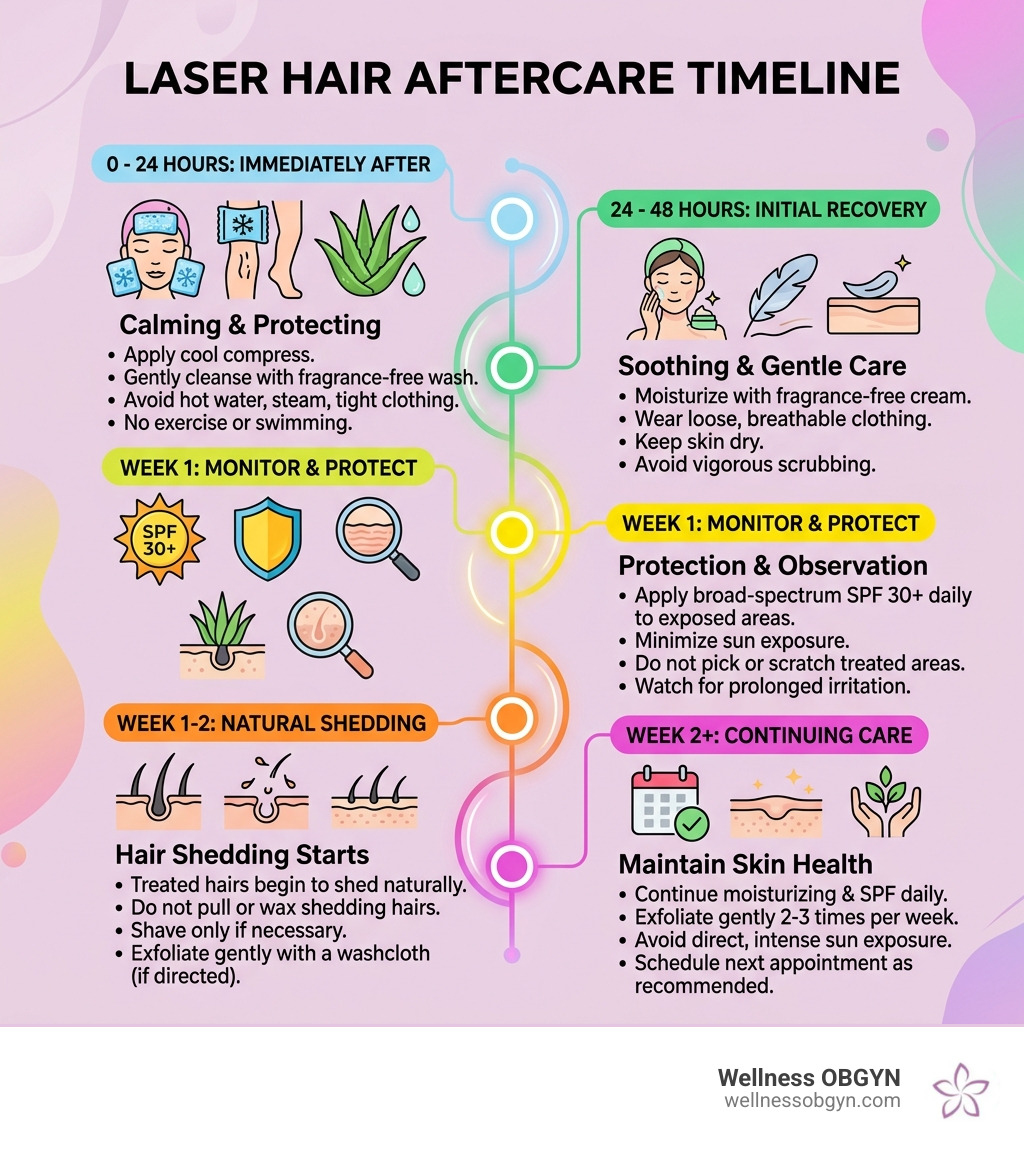
Quick-reference laser hair aftercare checklist:
- Apply a cool compress for 10-15 minutes after treatment to calm redness and swelling
- Use a fragrance-free moisturizer and gentle cleanser for the first 48-72 hours
- Avoid heat sources — hot showers, saunas, exercise — for at least 24-48 hours
- Apply broad-spectrum SPF 30+ sunscreen daily, starting within the first few days
- Skip retinoids, exfoliating acids, and fragranced products for at least 1-2 weeks
- Shave only (no waxing or tweezing) between sessions
- Expect treated hairs to shed over 1-3 weeks — this is normal and means it’s working
Laser hair removal works by targeting hair follicles with concentrated light energy during their active growth phase. Because not all hairs are in that phase at the same time, multiple sessions are needed — typically six to eight — spaced several weeks apart. What happens between those sessions matters just as much as the treatment itself.
Skipping proper aftercare can lead to prolonged redness, hyperpigmentation, or irritation that sets back your progress. Following a consistent routine, on the other hand, protects your skin and helps each session build on the last.
I’m Dr. Cheryl Twu, founder of Wellness OBGYN in Honolulu, and my integrative approach to women’s health includes guiding patients through laser hair aftercare with the same evidence-based, whole-person perspective I bring to every aspect of care. Whether you’re managing unwanted hair related to hormonal changes or simply seeking smoother skin, getting aftercare right is the step most people overlook — and the one that makes the biggest difference.
Relevant articles related to laser hair aftercare:
Essential Laser Hair Aftercare: The First 72 Hours
The first three days following your session are the most critical for skin recovery. During the treatment, the laser energy heats up the hair follicles to destroy them. This often leaves the surrounding skin feeling like it has a mild sunburn. You might notice redness, slight swelling, or tiny bumps around the follicles—a condition we call perifollicular edema. Don’t worry; this is actually a sign that the follicle successfully absorbed the energy!
According to clinical observations, about 92% of patients experience only mild, temporary redness when they follow a strict regimen of gentle cleansing and moisturizing for the first 48–72 hours. To keep your skin happy, we recommend applying a cool compress or an ice pack wrapped in a clean, soft cloth. Apply this to the treated area in 10-15 minute intervals several times a day to slash inflammation.

Immediate Steps for Laser Hair Aftercare
In our Honolulu practice, we emphasize keeping the area “cool, clean, and calm.” For the first 24 hours, stick to lukewarm water when bathing and avoid any harsh scrubbing.
- Soothe: Pure aloe vera gel (alcohol-free) is your best friend. It provides an immediate cooling sensation and helps the skin barrier repair itself.
- Hydrate: Using a fragrance-free moisturizer twice daily can prevent dryness in 88% of cases. Look for ingredients like ceramides or hyaluronic acid.
- Dress: Wear loose cotton clothing. Tight leggings or synthetic fabrics can trap heat and cause friction, leading to “laser bumps” or increased itching.
If you want to learn more about how we customize these sessions for our patients, check out More info about hair removal services.
Managing Skin Sensitivity and Itching
It is quite common for the skin to feel a bit itchy as the treated hairs begin to move toward the surface. While it’s tempting to scratch, please resist! Scratching can lead to scarring or infection.
If the itching is bothersome, a 1% hydrocortisone cream can be applied sparingly. Some patients find relief with over-the-counter antihistamines if they experience significant hives or “histamine reactions.” Additionally, incorporating vitamin C-rich fruits into your diet can support natural skin regeneration from the inside out. For more expert tips on healing, Post Laser Skin Care: Expert Tips for Fast Healing & Radiant Results offers a deep dive into maintaining that post-laser glow.
Activities and Products to Avoid for Optimal Healing
To ensure your skin heals without complications, there are a few things you’ll need to put on pause. Heat is the primary enemy of laser hair aftercare. Because your follicles are already retaining heat from the laser, adding more heat can lead to blistering or prolonged irritation.
Research shows that avoiding hot showers for just 24 hours can slash skin irritation by 75%. This applies to saunas, steam rooms, and hot tubs as well. You want to keep your body temperature stable and avoid excessive sweating, which can introduce bacteria into the sensitive follicles.
Skincare Ingredients to Pause
Your usual “powerhouse” skincare products need to take a vacation. We recommend pausing the following for at least 5–7 days post-treatment:
- Retinoids and Retinols: These increase cell turnover and make skin too sensitive.
- Acids: Glycolic, lactic, and salicylic acids can cause chemical burns on laser-sensitized skin.
- Benzoyl Peroxide: Too drying for the recovery phase.
- Alcohol-based Toners: These strip the skin of necessary moisture.
- Deodorants: If you’ve had your underarms treated, avoid deodorant for the first 24 hours to prevent clogging the follicles.
Physical Restrictions and Friction
Friction is another major trigger for post-laser complications. We advise our Honolulu patients to skip the gym for 24–48 hours. Vigorous exercise increases blood flow and sweat to the area, which can exacerbate swelling.
If you are a swimmer, you’ll need to stay out of the pool or ocean for at least 48 hours—though some experts recommend a full 7 days to avoid the irritating effects of chlorine or salt on “open” follicles.
Protecting Your Investment: Sun Safety and Skin Health
In Hawaii, the sun is our constant companion, but it is the biggest threat to your laser results. Laser treatments make your skin temporarily photosensitive. If you expose treated skin to UV rays, you run a high risk of developing hyperpigmentation (dark spots) or hypopigmentation (light spots).
You should avoid direct sun exposure on the treated area for at least one month before and after your session. If you must go outside, a broad-spectrum mineral-based sunscreen with SPF 30+ is non-negotiable. Mineral blockers (zinc oxide or titanium dioxide) are often preferred for laser hair aftercare because they sit on top of the skin and reflect heat rather than absorbing it like chemical sunscreens.
For a detailed breakdown on protecting your skin, see the Laser Hair Removal Aftercare Guide: Heal & Protect Skin.
Long-Term Laser Hair Aftercare and Maintenance
About 1 to 3 weeks after your session, you will notice something called “shedding.” It might look like the hair is growing back, but it’s actually the destroyed hair being pushed out of the follicle. You may see “pepper spots”—tiny black dots that look like stubble.
Do not pluck or wax these! Instead, use a soft washcloth to gently exfoliate the area during your shower. This helps the dead hairs fall out more easily. The first laser procedure typically removes between 10% and 25% of hairs. Since hair grows in cycles, you’ll need to maintain your 4–8 week session spacing to catch every follicle in its active phase. You can find More info about hair removal services to help plan your long-term schedule.
Frequently Asked Questions about Laser Recovery
Is it safe to shave after my session?
Yes, but timing is everything. You should wait until any redness or swelling has completely subsided—usually 24 to 48 hours. Shaving is the only recommended method of hair removal between sessions because it leaves the hair root intact for the laser to target in your next appointment. Always use a clean, sharp razor to avoid nicks on sensitive skin.
When should I seek medical attention?
While side effects are usually mild, you should contact us if you experience:
- Blistering or crusting of the skin.
- Intense pain that doesn’t respond to cool compresses or acetaminophen.
- Swelling that lasts longer than three days.
- Signs of infection, such as pus or red streaks.
- Significant changes in skin pigment that do not fade.
How many sessions are typically required?
Most people need an average of six to eight treatments to achieve 80% to 90% hair reduction. Because the laser only destroys follicles in the “anagen” (active) growth phase, and only about 20% of your hair is in that phase at any given time, multiple sessions are a biological necessity.
Conclusion
Mastering laser hair aftercare is the secret to achieving the silky-smooth results you’ve always wanted. By keeping your skin cool, protecting it from the sun, and being patient during the shedding phase, you ensure that every session is as effective as possible.
At Wellness OBGYN in Honolulu, we are dedicated to providing personalized women’s healthcare that empowers you to look and feel your best. From adolescence through menopause, our team is here to support your health and aesthetic goals with expert, compassionate care.
Ready to start your journey to a hair-free lifestyle? Schedule your hair removal consultation in Honolulu today and let us help you achieve lasting confidence.