
Understanding Postmenopausal Health Care: Your Complete Guide
Postmenopausal health care encompasses the medical screenings, preventive strategies, and treatments that help women maintain optimal health after their final menstrual period. This stage begins 12 months after menstruation stops—typically around age 51—and requires focused attention to bone density, cardiovascular health, hormone balance, and cancer prevention.
Essential components of postmenopausal health care include:
- Bone health monitoring – DEXA scans starting at age 65 (or earlier with risk factors) to detect osteoporosis
- Cardiovascular screening – Blood pressure, cholesterol, and diabetes checks every 1–3 years
- Cancer prevention – Mammograms every 1–2 years; colorectal screening starting at age 45; cervical screening until age 65
- Hormone management – Personalized therapy to relieve hot flashes, vaginal dryness, and other symptoms
- Lifestyle optimization – 1,200 mg calcium daily, 800 IU vitamin D, weight-bearing exercise, and smoking cessation
- Immunizations – Annual flu vaccine, shingles vaccine, pneumococcal vaccine after age 65
Postmenopause isn’t simply the end of fertility. It’s a decades-long phase that brings new health considerations. Your body produces less estrogen, which affects your heart, bones, urinary system, and metabolism. Research shows women can lose 25% or more of their bone density after menopause, and cardiovascular disease becomes the leading cause of death. Yet with the right preventive care, this stage can be vibrant and fulfilling.
Many women experience lingering symptoms—hot flashes, night sweats, vaginal dryness, sleep disruption, or painful intercourse. About 85% of U.S. women report hot flashes during the menopause transition, and roughly half of postmenopausal women struggle with urinary incontinence. These challenges are treatable, not inevitable.
I’m Dr. Cheryl Twu, and over the past decade I’ve cared for thousands of women navigating the menopause transition and postmenopausal years in high-volume hospital settings and now in my own practice. My training in both Western evidence-based medicine and integrative approaches informs my work in postmenopausal health care, from hormone optimization and minimally invasive surgery to comprehensive wellness planning. Together, we’ll explore the screenings, treatments, and lifestyle strategies that empower you to thrive in this next chapter.
Basic postmenopausal health care terms:
- breast cancer screening
- comprehensive wellness exam
- difference between a wellness exam and a comprehensive exam
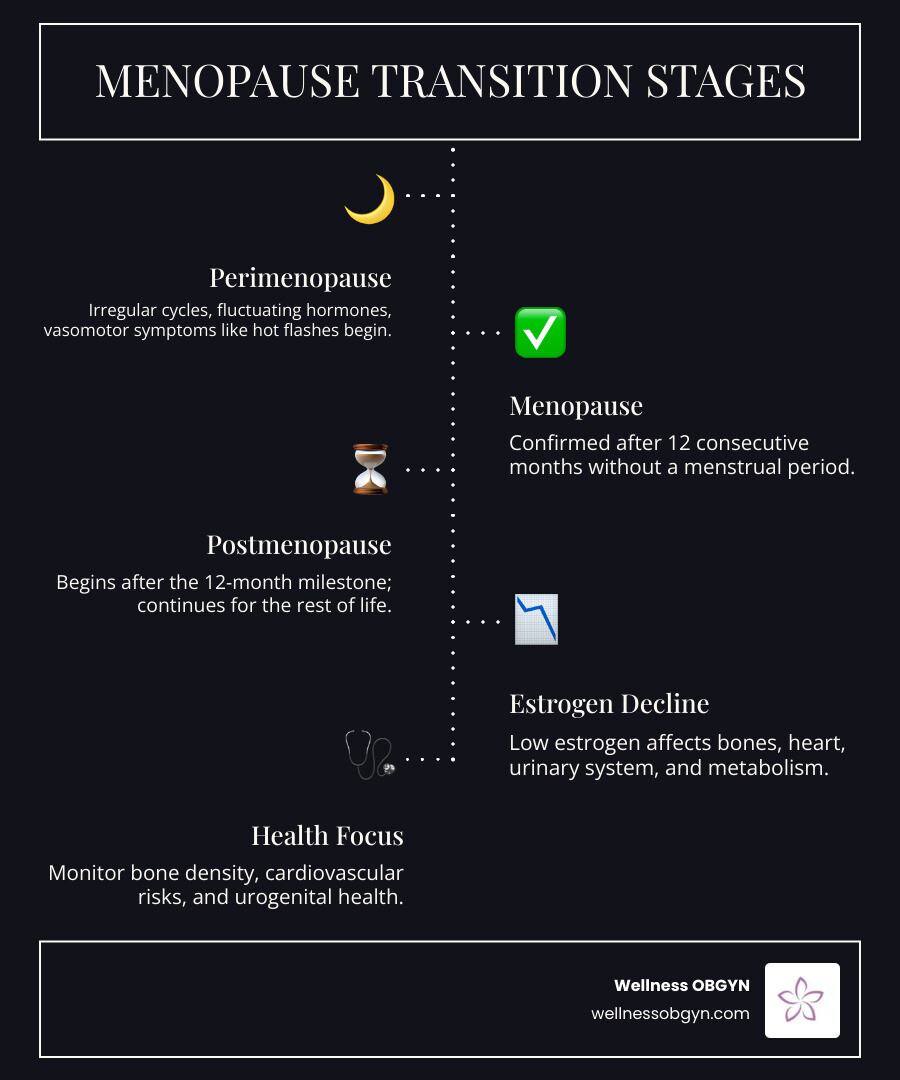
Defining the Stages: From Perimenopause to Postmenopause
Understanding your body’s timeline is the first step in effective postmenopausal health care. While many people use the terms interchangeably, perimenopause, menopause, and postmenopause represent distinct physiological phases.
Perimenopause is the “transitional” phase. It can begin in your 40s (or even late 30s) and is characterized by fluctuating hormone levels. Your ovaries are still functioning, but their egg production is becoming erratic. This is when you might notice your first hot flashes or irregular periods. If you are navigating this early shift, you can find more info about early menopause support to help manage these initial changes.
Menopause is actually a single point in time. We officially define it as the date exactly 12 months after your very last menstrual period. This milestone signals the permanent cessation of menstruation due to the loss of ovarian follicular activity. In the United States, the average age for this is 51, though it can occur anywhere between ages 45 and 55.
Postmenopause describes every day of your life after that 12-month milestone. During this stage, your estrogen and progesterone levels remain consistently low. While the “storm” of perimenopausal fluctuations has passed, the long-term absence of estrogen begins to affect other systems, such as your bones and heart. For a deeper dive into how these hormonal shifts impact your overall well-being, the Menopause and your health resource provides excellent foundational knowledge.
Essential Screenings for Postmenopausal Health Care
As we age, our “check-engine light” doesn’t always pop up on the dashboard. That is why proactive screenings are the backbone of postmenopausal health care. We aren’t just looking for problems; we are establishing a baseline for your “golden years” in Honolulu.
Bone Density and Osteoporosis
Because estrogen helps protect bone mass, its decline leads to rapid bone loss—about 1% to 2% per year immediately following menopause. We recommend a DEXA scan (Dual-energy X-ray absorptiometry) to measure bone mineral density. The National Osteoporosis Foundation (NOF) suggests routine screening at age 65, but we often start at age 60 or earlier for women with risk factors like a history of smoking or a small frame.

Cardiovascular and Metabolic Health
Cardiovascular disease (CVD) is the leading cause of death for women in the U.S., yet it is often under-screened in women compared to men. Postmenopausal women should receive:
- Blood Pressure Monitoring: At every visit.
- Lipid Profile: Every 5 years (or more frequently if risk factors exist) to check LDL, HDL, and triglycerides.
- Diabetes Screening: The ADA recommends screening all adults 45 and older every three years, especially if your BMI is 25 or higher.
Cancer Screenings
- Breast Cancer: Mammography is recommended every 1 to 2 years. While guidelines vary slightly between organizations, the goal is early detection when treatment is most effective.
- Colorectal Cancer: Screening should begin at age 45 and continue through age 75.
- Cervical Cancer: You generally need Pap smears or HPV testing until age 65. If you’ve had regular normal results, you may be able to discontinue after that.
To help you navigate the often-confusing world of medical guidelines, here is a comparison of the major recommendations for postmenopausal health care:
| Screening Type | AAFP / USPSTF Guidelines | American Cancer Society (ACS) |
|---|---|---|
| Mammography | Every 1-2 years (ages 50-74) | Yearly (starting at age 40 or 45) |
| Cervical Cancer | Every 3-5 years; stop at 65 | Stop at 65 if history is clear |
| Colorectal Cancer | Ages 45-75 | Ages 45-75 |
| Osteoporosis | Women 65+ (earlier if high risk) | (Follows specialty guidelines) |
For a more technical breakdown of these requirements, you can review the Preventive Care Considerations for Postmenopausal Women from the AAFP. At Wellness OBGYN, we use these guidelines as a starting point, tailoring the frequency to your specific family history and health profile. You can learn more info about annual OBGYN visits and how we integrate these screenings into your yearly check-up.
Long-term Risks: Cardiovascular and Bone Health
In postmenopausal health care, we have to look 20 or 30 years into the future. The choices we make in our 50s significantly impact our mobility and heart health in our 80s.
The “Silent” Risk: Osteoporosis
Osteoporosis makes bones brittle and prone to fractures. Because you can’t “feel” your bones getting weaker, many women don’t realize they have it until they experience a break. Statistics show that women can lose up to 25% of their bone density post-menopause. This is why we emphasize weight-bearing exercises and proper supplementation.
The Leading Killer: Heart Disease
Before menopause, estrogen helps keep your blood vessels flexible and maintains a healthy balance of cholesterol. When estrogen drops, your risk for heart disease and stroke rises, eventually matching the risk level of men your age. We closely monitor lipid profiles and blood pressure to manage this risk.
There has been much debate regarding the use of Menopausal Hormone Therapy (MHT) for preventing these chronic conditions. The USPSTF currently recommends against using hormone therapy solely for the primary prevention of chronic conditions like heart disease. However, the North American Menopause Society (NAMS) notes that for symptomatic women, the benefits of hormone therapy often outweigh the risks, especially when started within 10 years of menopause. You can read the scientific research on hormone therapy for chronic conditions to understand the current medical consensus.
Diet also plays a massive role in managing these risks. Focusing on anti-inflammatory foods and heart-healthy fats can mitigate some of the metabolic slowdown that occurs after menopause. For practical tips, check out more info about menopause and diet.
Lifestyle Recommendations and Immunizations
While we have amazing medical tools at Wellness OBGYN, the most powerful person in your postmenopausal health care journey is you. Small, daily habits are what build long-term resilience.
Nutrition and Exercise
- Calcium: Aim for 1,200 mg daily. It’s best to get this from food (yogurt, sardines, leafy greens), but supplements can help fill the gap.
- Vitamin D: 800 to 1,000 IU daily is essential for calcium absorption.
- Weight-Bearing Exercise: Walking, dancing, or lifting weights tells your bones to stay strong. Aim for 30 minutes, five days a week.
- Smoking Cessation: Smoking is a triple threat—it damages your bones, your heart, and increases cancer risk. It also causes women to reach menopause earlier.
If you are looking for a roadmap to implement these changes, our guide on menopause lifestyle changes offers a step-by-step approach.
Recommended Vaccinations for Older Adults
As we age, our immune systems need a little extra help. Staying up to date on immunizations is a key part of postmenopausal health care.
- Influenza (Flu): An annual shot is recommended for everyone 50 and older.
- Shingles (Herpes Zoster): The CDC recommends the two-dose Shingrix vaccine for adults 50 and older to prevent this painful skin rash and its complications.
- Pneumococcal: This protects against pneumonia and is typically recommended for all adults 65 and older (or earlier if you have certain chronic conditions).
- Tdap: You should receive a booster for tetanus, diphtheria, and pertussis every 10 years.
- COVID-19 and RSV: Talk to us about the latest boosters and the new RSV vaccine, which is now available for older adults.
You can view the full CDC Adult Immunization Schedule for more details.
Frequently Asked Questions about Postmenopause
What defines the start of postmenopause?
Postmenopause is officially defined as the period of time beginning 12 months after your final menstrual period. It lasts for the rest of your life. During this time, your ovaries have ceased releasing eggs and produce significantly less estrogen and progesterone.
Is postmenopausal bleeding normal?
No. Any vaginal bleeding that occurs after you have gone 12 consecutive months without a period is considered postmenopausal bleeding and must be evaluated by a doctor immediately. While it can be caused by something as simple as vaginal dryness or polyps, it can also be an early warning sign of endometrial hyperplasia or uterine cancer.
How much calcium should I take daily?
For postmenopausal women, the general recommendation is 1,200 mg of calcium per day. We recommend trying to meet this goal through calcium-rich foods like cheese, spinach, and fortified cereals first. If you use a supplement, your body absorbs it best in smaller doses (500 mg or less at a time).
Will I gain weight after menopause?
Many women gain an average of 5 pounds after menopause. This is due to a combination of lower estrogen levels, a naturally slowing metabolism, and a loss of muscle mass. However, a balanced diet and regular strength training can help manage this “middle-age spread.”
Conclusion
Our practice specializes in patient-centered care and shared decision-making. We don’t just tell you what to do; we work with you to create a health plan that fits your lifestyle and your values. From minimally invasive surgery to advanced regenerative therapies, we provide the expert, compassionate care you deserve right here in Hawaii.
Don’t wait for symptoms to interfere with your quality of life. Schedule Your Annual OBGYN Visit Today! and let’s ensure your postmenopausal years are your best years yet.