
Why Female Sexual Health Matters More Than You Think
Female sexual health covers a wide range of physical, emotional, and relational factors that shape how women feel about sex and intimacy throughout their lives.
Here is a quick overview of what you need to know:
| Topic | Key Facts |
|---|---|
| How common are concerns? | About 40% of women have sexual concerns; 12% find them distressing |
| Main problem areas | Low desire, arousal difficulties, orgasm challenges, painful sex |
| Common causes | Hormonal changes, stress, medications, relationship dynamics, medical conditions |
| When to get help | When symptoms cause personal distress or affect your relationship |
| Treatment options | Self-care, counseling, hormone therapy, and more |
Sexual health is not just about intercourse. It is about feeling comfortable, confident, and connected in your body — at every stage of life.
For many women, sexual concerns go unspoken. They assume it is just part of getting older, or that something must be wrong with them. Neither is true.
The reality is that sexual concerns are incredibly common, and they are treatable. The four main areas where women experience difficulties are:
- Desire – low or absent interest in sex
- Arousal – difficulty becoming or staying aroused
- Orgasm – trouble reaching climax
- Pain – discomfort or pain during sex
These issues can stem from hormonal shifts, life changes like pregnancy or menopause, stress, medications, or relationship dynamics. Often, several factors overlap.
The good news? There is real, effective help available — and you do not have to figure it out alone.
I’m Dr. Cheryl Twu, a board-certified OB-GYN and founder of Wellness OBGYN in Honolulu, and I have spent over a decade helping women navigate every aspect of female sexual health — from hormonal imbalances to minimally invasive treatments. In this guide, I will walk you through the most important things every woman should know, so you can make informed decisions about your body and your well-being.
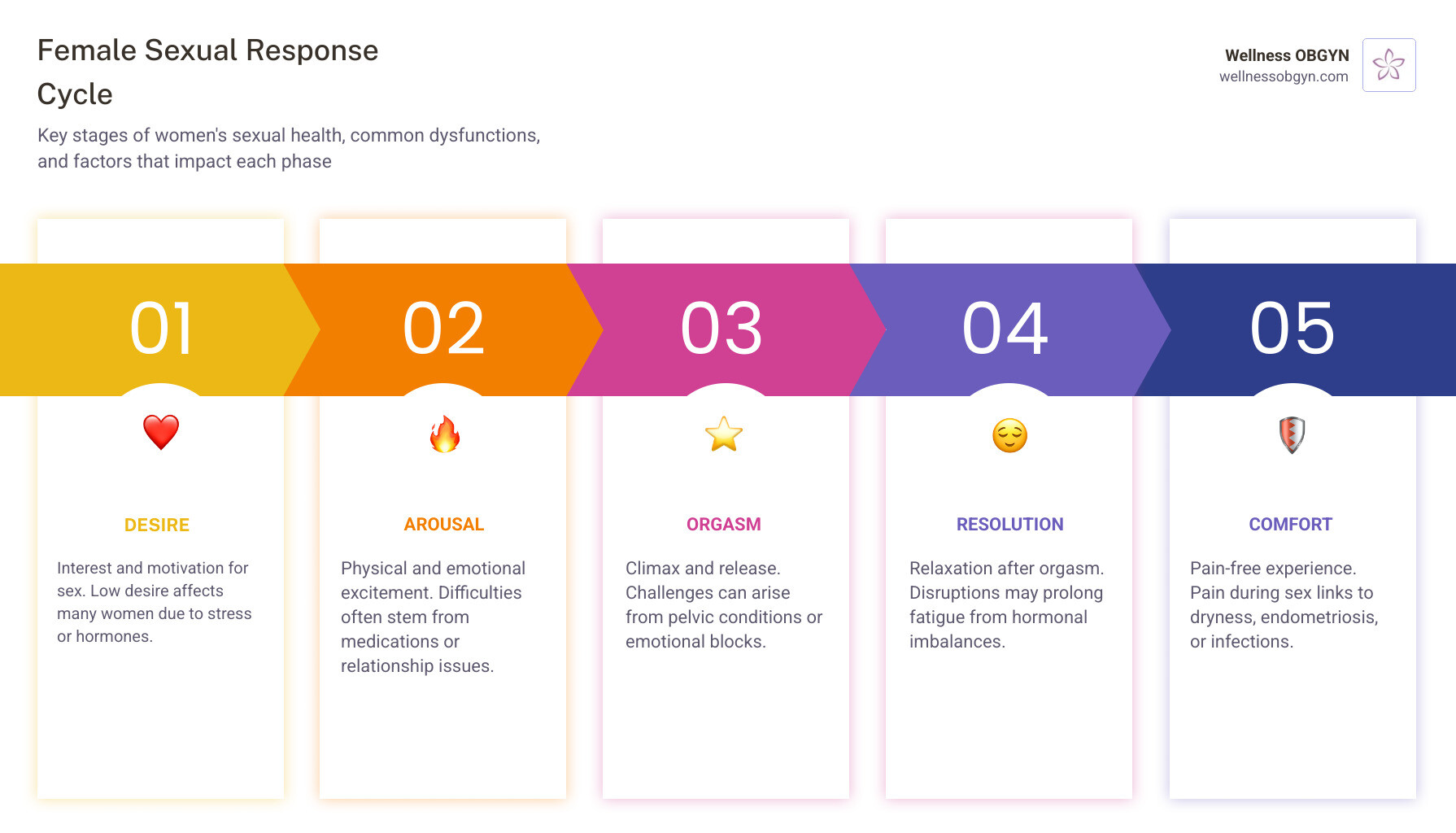
Common female sexual health vocab:
Understanding Female Sexual Health and Common Concerns
When we talk about female sexual health, we are looking at a complex puzzle where physical, emotional, and social pieces all have to fit together. It is important to remember that there is no “normal” frequency for sex or a standard level of desire you must meet. Satisfaction is entirely subjective—if you are happy with your sex life, that is what matters.
However, many women face challenges that prevent them from reaching that satisfaction. These are often categorized into four main buckets:
- Low Libido (Desire): This is the most common concern. It involves a lack of interest in sexual activity or a decrease in sexual thoughts and fantasies. When this lack of desire is persistent and causes you distress, it is often referred to as Hypoactive Sexual Desire Disorder (HSDD).
- Arousal Difficulties: You might want to have sex, but your body isn’t responding. This can manifest as a lack of vaginal lubrication or a lack of the “tingling” sensation in the pelvic area despite feeling mentally interested.
- Orgasm Challenges: Some women find it difficult or impossible to reach climax, even with sufficient stimulation. It is worth noting that many women do not regularly orgasm from intercourse alone and may require focused clitoral stimulation.
- Sexual Pain (Dyspareunia): Pain can occur at the entrance of the vagina or deep within the pelvis during penetration. This is often linked to vaginal dryness, but it can also be a sign of underlying medical conditions.
If these concerns are weighing on you, it is helpful to explore patient education on sexual problems to better understand the terminology and how doctors approach these diagnoses.
The Impact of Life Stages on Female Sexual Health
Our bodies and priorities shift as we move through different chapters of life. During pregnancy, hormonal surges and physical discomfort can either skyrocket or plummet desire. Postpartum, the combination of sleep deprivation, breastfeeding (which lowers estrogen), and the healing process often leads to a temporary “hibernation” of the libido.
As we age, the cumulative effects of life stressors, changes in body image, and shifting priorities can all play a role. It is a journey, not a static state. For a deeper look at how these transitions affect you, you can find more info about female reproductive health issues on our specialized resource pages.
Menopause and Hormonal Shifts
Menopause is perhaps the most significant biological milestone affecting female sexual health. When the ovaries stop producing estrogen, the vaginal tissues can become thinner, drier, and less elastic—a condition known as vaginal atrophy. This often makes sex uncomfortable or even painful.
Furthermore, the “vasomotor” symptoms of menopause—those pesky hot flashes and night sweats—can ruin your sleep quality, leaving you too exhausted for intimacy. If you are navigating this transition, we highly recommend you find a Menopause Society Certified Practitioner who can offer targeted relief for these specific symptoms.
Causes of Sexual Dysfunction in Women
Identifying the “why” behind sexual concerns can feel like being a detective. At Wellness OBGYN, we look at the whole person because sexual function is rarely just about one thing.
Psychological and Relational Factors
Our brains are our largest sex organs. If your mind is preoccupied with a looming deadline, a fight with your partner, or negative thoughts about your body, your body is unlikely to “turn on.”
- Stress and Fatigue: Modern life is exhausting. Between work, family, and social obligations, sex often falls to the bottom of the to-do list.
- Relationship Dynamics: If there is a lack of emotional closeness, unresolved conflict, or a partner experiencing their own sexual health issues (like erectile dysfunction), it naturally affects the female partner’s desire.
- Mental Health: Depression and anxiety are significant libido-killers, and ironically, many medications used to treat these conditions can further suppress sexual response.
Open communication is the first step toward healing. For those needing help navigating these conversations, resources like support for healthy relationships provide excellent guidance. You can also find more info about female sexual dysfunction therapy to see how professional counseling can bridge the gap.
Medical and Physical Triggers
Sometimes, the cause is purely physical. Conditions such as endometriosis, uterine fibroids, or pelvic inflammatory disease can make penetration painful. Additionally, the pelvic floor muscles—the “hammock” that supports your pelvic organs—can become too tight or too weak.
If your pelvic floor is in spasm, it can lead to chronic pain. Conversely, weakness can lead to issues with sensation or even urinary incontinence. We often recommend more info about female pelvic floor therapy as a non-invasive way to retrain these muscles and restore comfort.
Enhancing Female Sexual Health Through Self-Care
While professional treatments are powerful, self-care is the foundation of long-term wellness.
- Kegel Exercises: Strengthening the pelvic floor can improve blood flow and increase the intensity of orgasms.
- Masturbation: Learning what feels good for you through solo play is one of the best ways to improve communication with a partner.
- Prioritizing Foreplay: Most women require at least 20 minutes of stimulation to be fully aroused. Don’t rush the process!
- Hormone Awareness: Understanding how your specific levels affect you is key. For instance, you can find more info about low testosterone in women to see how this often-overlooked hormone impacts energy and libido.
Frequently Asked Questions about Female Sexual Health
Navigating lubricants and moisturizers can be confusing. Here is a quick guide to help you choose:
| Product Type | Purpose | How to Use |
|---|---|---|
| Lubricants | Reduces friction during sex | Apply immediately before or during intercourse. |
| Vaginal Moisturizers | Provides long-term moisture for tissues | Apply 2-3 times a week, regardless of sexual activity. |
| Vaginal Estrogen | Reverses tissue thinning (prescription) | Usually a cream, tablet, or ring inserted into the vagina. |
When should I see a doctor for sexual concerns?
You should schedule a visit if your sexual concerns are causing you distress, affecting your self-esteem, or creating tension in your relationship. Specifically, seek help if you experience:
- Persistent pain during or after sex.
- A sudden, unexplained drop in desire.
- Difficulty with bladder control during intimacy.
During a consultation, we will review your medications (as some blood pressure or antidepressant drugs can interfere with libido) and may perform a gentle pelvic exam. Interestingly, many of our patients’ partners also seek help; for information on that side of the equation, you can look into more info about mens sexual wellness treatments.
How does female sexual response differ from men?
Men often experience “spontaneous desire”—they see something or think something and feel ready to go. For many women, especially those in long-term relationships or over age 40, desire is “responsive.” This means you might not feel “in the mood” initially, but once you start kissing or receiving a massage, the desire kicks in.
Emotional closeness is often the primary driver for women. Understanding this can take the pressure off “waiting for the urge” to strike. For a more detailed look at these patterns, see the Mayo Clinic guide to sexual health.
Conclusion
At Wellness OBGYN in Honolulu, we believe that every woman deserves a sex life that is fulfilling, comfortable, and safe. Whether you are navigating the challenges of new motherhood, the transitions of menopause, or simply want to enhance your intimate wellness, we are here to provide personalized, compassionate care.
Ready to take the next step? Find more info about our female sexual health clinic and schedule your consultation today. Let’s work together to restore your confidence and well-being.