
Why Understanding Erectile Dysfunction Matters
What is ED? ED, or erectile dysfunction, is the persistent inability to achieve or maintain an erection firm enough for satisfactory sexual activity. It affects as many as 30 million men in the United States and is reported in 18% of males aged 50 to 59 years, rising to 37% in males aged 70 to 75.
Quick Answer:
| Definition | Persistent difficulty getting or keeping an erection firm enough for sex |
|---|---|
| Duration | Symptoms lasting 3+ months |
| Prevalence | 30–50 million U.S. men; 40% at age 40, 70% by age 70 |
| Main Causes | Vascular disease, diabetes, hypertension, obesity, smoking, stress, medication side effects |
| Key Insight | ED is often an early warning sign of cardiovascular disease |
| Treatment | Lifestyle changes, counseling, medications, devices, regenerative therapy, surgery |
ED is not a routine part of aging, despite becoming more common with age. It often signals underlying health issues—particularly cardiovascular disease—because what’s good for heart health is good for sexual health.
About 75% of diagnosed cases go untreated, largely due to embarrassment. Yet ED is highly treatable. Whether caused by physical factors like reduced blood flow and nerve damage, or psychological factors like performance anxiety and stress, effective solutions exist.
Many men experience occasional difficulty with erections, but chronic ED means the problem persists for at least three months and causes significant distress. Distinguishing between occasional performance issues and true erectile dysfunction is the first step toward getting help.
As Dr. Cheryl Twu, a board-certified obstetrician-gynecologist at Wellness OBGYN in Honolulu, I’ve spent over a decade helping patients and their partners navigate sensitive health concerns, including what is ED and how it impacts relationships and overall wellness. My integrative approach combines evidence-based medicine with holistic lifestyle guidance to address sexual health from every angle.
Easy what is ed glossary:
Understanding the Basics: What is ED?
To truly grasp what is erectile dysfunction, we have to look past the locker-room jokes and into the clinical reality. According to the World Health Organization’s ICD-11, ED is more than just a “bad night.” It is a medical condition where a man cannot get or keep an erection firm enough for satisfactory sexual performance.
While it is true that some men remain sexually functional into their 80s, the statistics show a clear trend with age. Prevalence is reported at about 18% for men in their 50s, jumping to 37% for those in their 70s. However, age isn’t the only factor. In the United States, as many as 30 million men are affected, yet only a small fraction (about 5.6%) are medically diagnosed or receiving a prescription. This suggests a massive gap in care, often fueled by the myth that “this is just what happens when you get older.”

Defining the Medical Diagnosis: What is ED?
When we define what is ed in a clinical setting, we look to two major diagnostic manuals. The DSM-5-TR (Diagnostic and Statistical Manual of Mental Disorders) classifies it as “Erectile Disorder.” To meet this diagnosis, the symptoms must persist for at least six months and cause significant clinical distress.
The ICD-11 (International Classification of Diseases) uses the term “Male erectile dysfunction” (code HA01.1). Both manuals emphasize that the condition can be:
- Physiological (Organic): Caused by physical issues like poor blood flow, nerve damage, or hormonal imbalances.
- Psychological (Psychogenic): Driven by mental health factors like depression, severe stress, or performance anxiety.
In reality, most cases are a mix of both. A physical “glitch” can lead to anxiety about it happening again, which then creates a psychological barrier.
Identifying the Signs and Symptoms
Recognizing erectile dysfunction symptoms is about more than just a total inability to achieve an erection. It often starts subtly. You might notice that while you can get an erection, it isn’t as firm as it used to be, or it “wilts” before you’re finished.
Common symptoms include:
- Trouble getting an erection at all.
- Difficulty keeping an erection during sexual activity.
- Reduced interest in sex (low libido).
Recognizing Early Warning Signs
One of the most telling signs of a physical issue is the loss of “morning wood.” Healthy men typically have several involuntary erections during sleep. If these disappear, it often points to a vascular or nerve-related problem. Other early signs include sustainability issues—where an erection is lost the moment a man’s focus shifts—or a delayed climax that results from a lack of sufficient physical sensation.
| Feature | Occasional Difficulty | Chronic ED |
|---|---|---|
| Frequency | Happens once in a while | Happens most or all the time |
| Morning Erections | Still present | Often absent or weak |
| Duration | Lasts a few days/weeks | Persists for 3+ months |
| Context | Linked to alcohol or high stress | Occurs regardless of the situation |
Common Causes and Risk Factors
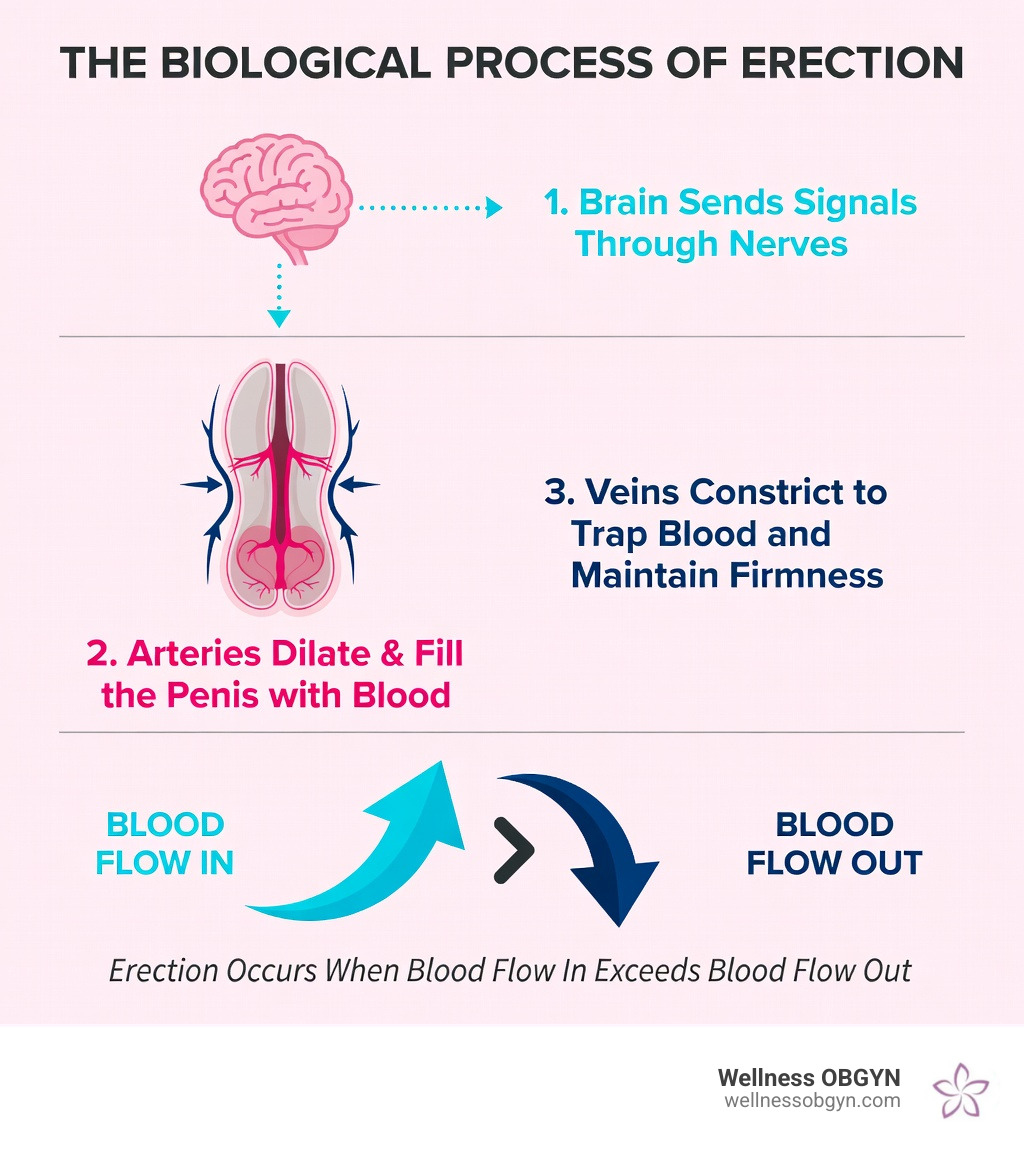
At Wellness OBGYN, we always tell our patients: the penis is the “antenna” of the heart. Because the arteries in the penis are much smaller than those in the heart, [erectile dysfunction](https://en.wikipedia.org/wiki/Erectile_dysfunction#:~:text=Erectile%20dysfunction%20(ED) is often the very first sign of heart disease and atherosclerosis. If blood isn’t flowing well there, it likely isn’t flowing well elsewhere.
Major physical causes include:
- Diabetes: High blood sugar can damage both the small blood vessels and the nerves responsible for erections.
- Hypertension (High Blood Pressure): This can damage the lining of blood vessels and interfere with blood flow.
- Obesity: Carrying extra weight lowers testosterone and increases inflammation.
- Chronic Kidney Disease: This affects hormones and blood vessel health.
Physical and Lifestyle Triggers
Your daily habits play a massive role in what is ed. Smoking is a major culprit; it constricts blood vessels and damages the vascular system. Sedentary behavior—sitting all day—leads to poor circulation. Interestingly, even hobbies like long-distance cycling can contribute, as prolonged pressure on the perineum can compress the nerves and blood vessels that lead to the penis.
Furthermore, many common medications list ED as a side effect. These include blood pressure meds, antidepressants, and even some over-the-counter antihistamines.
Psychological and Emotional Factors
While the majority of cases have a physical root, the mind is a powerful organ. Performance anxiety is perhaps the most common psychological factor. Once a man has one “failure,” he may become so worried about it happening again that his body enters a “fight or flight” mode during intimacy, which actively kills an erection.
Other factors include:
- Relationship Stress: Unresolved conflicts can kill arousal.
- Depression: This chemical imbalance often lowers libido and makes physical response difficult.
- Pornography Consumption: Some studies suggest that heavy use of high-intensity pornography can desensitize a man to real-life intimacy, though the research is still evolving.
How Doctors Diagnose Erectile Dysfunction
If you are wondering what is ed in your specific case, a doctor will start with a thorough medical history and physical exam. We use the International Index of Erectile Function (IIEF) questionnaire to gauge the severity of the issue.
Advanced diagnostics may include:
- Blood Tests: Checking for diabetes, high cholesterol, and low testosterone.
- Penile Ultrasound: Using ultrasound imaging to see how blood flows through the penis.
- Nocturnal Tumescence Test: Using a device at night to see if you have involuntary erections while sleeping.
Seeking Professional Guidance: What is ED?
Don’t let embarrassment stop you. In Honolulu, we see many men who wait years to bring this up. A consultation with a urologist or a specialized health care provider can screen for silent killers like cardiovascular disease while addressing the immediate concern of sexual function.
Frequently Asked Questions about Erectile Dysfunction
Is ED a normal part of aging?
No. While it takes longer to get an erection as you age, and you might need more direct stimulation, a total inability to perform is not “normal.” It is a treatable medical condition.
Can stress alone cause erectile issues?
Absolutely. High levels of cortisol (the stress hormone) can interfere with the signals the brain sends to the penis. However, if stress is managed and the problem persists, there is likely a physical component as well.
Are over-the-counter “male enhancement” pills safe?
Generally, no. The FDA has found that many of these products are “adulterated” with bootlegged versions of prescription drugs. They haven’t been tested for safety and can cause dangerous interactions with heart medications.
Conclusion
Understanding what is ed is the first step toward reclaiming your confidence and your health. At Wellness OBGYN in Honolulu, we believe that a healthy sex life is a vital part of overall well-being. We offer a patient-centered approach where your individual needs come first.
If you’re ready to stop wondering what is ed and start finding solutions, contact us today. Let’s work together to help you achieve optimal health and a fulfilling intimate life.