
What to Know About ED Treatment Options
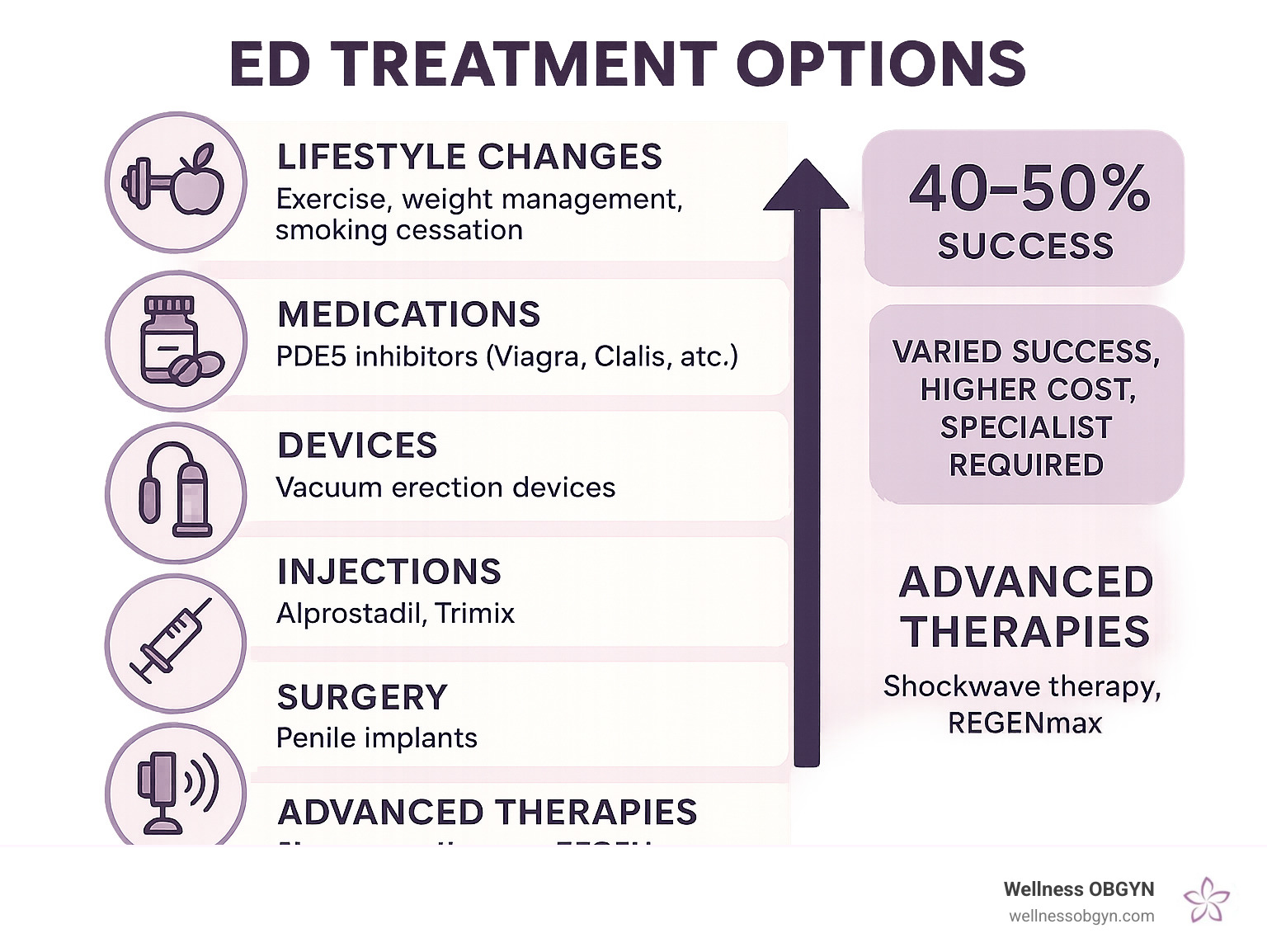
ED treatment options range from lifestyle changes to medications and advanced therapies. Here’s a quick overview:
- Lifestyle modifications: Exercise, weight management, smoking cessation
- Oral medications: PDE5 inhibitors (Viagra, Cialis, Levitra, Stendra)
- Vacuum devices: Creates erections through negative pressure
- Injectable therapies: Alprostadil, Trimix
- Surgical options: Penile implants (inflatable or malleable)
Erectile dysfunction affects over 50% of men between ages 40-70, but it’s treatable at any age. Finding the right solution depends on understanding its causes and working with healthcare providers to develop a personalized approach.
Erectile dysfunction isn’t just about sex—it can signal underlying health issues like heart disease, diabetes, or hormone imbalances. This connection makes proper evaluation and treatment essential for overall health.
Many men avoid seeking help due to embarrassment, but modern treatments offer effective solutions with fewer side effects than ever before. The key is finding the right approach for your specific situation.
I’m Dr. Cheryl Twu, a board-certified OB-GYN with experience in sexual wellness who has helped countless patients steer ED treatment options at Wellness OBGYN in Honolulu. My integrative approach combines evidence-based medicine with holistic principles to address both symptoms and underlying causes.
Understanding Erectile Dysfunction
Erectile dysfunction (ED) isn’t just a bedroom issue—it’s a health concern that affects millions of men and their partners. Simply put, ED is when you can’t get or keep an erection firm enough for satisfying sexual activity.
If you’re dealing with ED, you’re far from alone. Research from the Massachusetts Male Aging Study shows that about 52% of men between 40 and 70 experience some degree of erectile difficulties. That’s more than half of middle-aged men!
ED can show up in different ways. Some guys might occasionally have trouble getting an erection, while others might find it impossible every time. Many men notice a gradual change—erections aren’t as firm as they used to be, or they don’t last long enough for satisfying intimacy.
Here’s something crucial to understand: ED often signals something happening elsewhere in your body. As Dr. Adrian Dobs, a respected researcher in this field, points out, “erectile dysfunction can serve as a forewarning symptom of progressive coronary disease.” That’s why at Wellness OBGYN, we take ED seriously as a potential indicator of your overall health.
Several factors can increase your risk of developing ED:
- Age (though it’s not inevitable with getting older)
- Diabetes (affecting 35-50% of diabetic men)
- Heart disease and high blood pressure
- High cholesterol and obesity
- Smoking and excessive alcohol
- Certain medications
- Psychological factors like stress, anxiety, and depression
What happens during a normal erection?
To understand what’s going wrong, it helps to know how things should work. An erection is essentially a hydraulic event—it’s all about blood flow, triggered by arousal signals from your brain.
When you become sexually aroused, your brain sends signals that release nitric oxide in your penis. This amazing chemical messenger relaxes the smooth muscles in your penile arteries and erectile tissue (called the corpus cavernosum), allowing blood to flow in more freely.
The corpus cavernosum contains two chambers of spongy tissue running the length of your penis. As these chambers fill with blood, they expand, compressing the veins that would normally drain blood away. This trapped blood creates pressure—and voilà, an erection.
Any disruption to this delicate process, whether physical or psychological, can lead to erectile difficulties.
Who gets ED and why?
While ED becomes more common as we age, getting older itself doesn’t cause erectile dysfunction. Some men maintain healthy sexual function well into their 80s and 90s. Instead, ED typically stems from underlying conditions that become more common with age.
As Dr. Kohler, a urologist specializing in sexual medicine, explains: “Problems with erectile dysfunction are super common, but as you get older you don’t have to accept them if you take care of your health.”
Physical causes often include:
Vascular issues like atherosclerosis (hardened arteries) that restrict blood flow to the penis. Neurological disorders such as multiple sclerosis or Parkinson’s can interfere with nerve signals. Hormonal imbalances, particularly low testosterone, can impact both desire and function. Diabetes is a major culprit, damaging both blood vessels and nerves over time.
Many medications, especially those treating high blood pressure, depression, and prostate conditions, list ED as a side effect. Surgical complications, particularly following prostate, bladder, or colorectal procedures, can also lead to ED.
Lifestyle factors play a huge role too—smoking damages blood vessels, excessive alcohol interferes with nerve function, and obesity contributes to hormone imbalances and vascular problems.
On the psychological side, performance anxiety, relationship issues, depression, stress, and past sexual trauma can all contribute to erectile difficulties.
Often, it’s not just one thing but a combination of factors. For example, a man with mild vascular disease might function normally until stress or relationship problems compound the issue.
How doctors diagnose it
At Wellness OBGYN, diagnosing ED involves a comprehensive approach to identify underlying causes. We start with a detailed medical and sexual history, asking about:
- When your symptoms began
- Whether they came on gradually or suddenly
- If you have morning or nighttime erections (which can help distinguish physical from psychological causes)
- Your current medications
- Your alcohol and tobacco use
- Any recent life stressors
- Your relationship status and satisfaction
A physical examination follows, focusing on your genitourinary, vascular, and neurological systems. We check for signs of hormonal imbalances and examine the penis for any physical abnormalities.
Laboratory tests often include a complete blood count to check for anemia, urinalysis to screen for diabetes and kidney problems, lipid profile to assess cardiovascular risk, testosterone levels to check for hormonal issues, thyroid function tests, and blood glucose or HbA1c to screen for diabetes.
In some cases, we recommend specialized tests like Doppler ultrasound to evaluate blood flow to the penis, nocturnal penile tumescence testing to monitor nighttime erections, or psychological evaluation if emotional factors seem significant.
“What’s good for heart health is good for sexual health” is a principle we share with patients. This connection guides our approach to diagnosis and helps frame ED treatment not just as addressing a sexual issue but as an opportunity to improve your overall health.
ED Treatment: Lifestyle & First-Line Options

When it comes to tackling erectile dysfunction, sometimes the simplest changes make the biggest difference. Many men are surprised to learn that lifestyle modifications can be powerful tools in their ED treatment journey – and in some cases, these changes alone can resolve mild erectile issues completely.
ED Treatment Checklist: Lifestyle Resets
Your daily habits have a profound impact on your sexual health. Think of your body as an interconnected system – what’s good for your heart is good for your sexual function too.
Starting with exercise is a game-changer. Aim for just 30 minutes of moderate activity most days. The evidence is compelling – the Massachusetts Male Aging Study found that previously sedentary men who began exercising in midlife reduced their ED risk by a remarkable 70%. That morning walk or evening swim isn’t just good for your waistline – it’s revitalizing your sexual health too.
Speaking of waistlines, carrying extra weight puts extra pressure on your vascular system. Even modest weight loss of 5-10% can improve erectile function. Pair this with a Mediterranean diet rich in colorful fruits, vegetables, whole grains, fish, and olive oil, and you’re giving your body the nutrients it needs to support healthy blood flow. Men who adopt this eating pattern often see improvements within months.
“What many of my patients don’t realize is that the cigarette they enjoy is actually suffocating their sexual function,” says Dr. Twu. Smoking damages the very blood vessels that supply the penis, while excessive alcohol can dampen both desire and performance. Cutting back on both can lead to noticeable improvements.
Stress and anxiety are also silent saboteurs of sexual function. Taking time for relaxation techniques like deep breathing or meditation can help calm the mind and body. Many men also benefit from Kegel exercises – strengthening the pelvic floor muscles that support erection. Simply contract the muscles you’d use to stop urination mid-stream, hold for five seconds, and release. Doing this exercise regularly can improve control and rigidity.
Your bedroom habits matter too – but I’m talking about sleep! Poor sleep is linked to lower testosterone levels, which can contribute to ED. Aim for 7-8 hours of quality rest each night.
And don’t underestimate the power of open communication with your partner. Talking about concerns can reduce performance anxiety and strengthen intimacy, creating a more relaxed and enjoyable sexual experience.
ED Treatment with PDE5 Inhibitors
When lifestyle changes need a boost, medication often comes next. PDE5 inhibitors have revolutionized ED treatment since their introduction in the late 1990s. These medications work with your body’s natural chemistry, enhancing the effects of nitric oxide to relax penile muscles and increase blood flow during arousal.
There are four main options, each with unique characteristics:
Sildenafil (Viagra) is the original “blue pill” that works within 30-60 minutes and lasts about 4-5 hours. For best results, take it on an empty stomach – that pepperoni pizza might delay its effects.
Tadalafil (Cialis) offers more flexibility with its longer duration – up to 36 hours, earning it the nickname “the weekend pill.” It’s available as both a daily low-dose option and an as-needed higher dose. Many men appreciate that it’s less affected by food.
Vardenafil (Levitra, Staxyn) works similarly to sildenafil but comes in a dissolving tablet form (Staxyn) that doesn’t require water – convenient for spontaneous moments.
Avanafil (Stendra) is the newest option and often works within 15-30 minutes – potentially the fastest-acting of the group. It’s also less likely to cause the visual side effects sometimes associated with other PDE5 inhibitors.
“These medications have helped millions of men reclaim their confidence,” notes Dr. Twu, “but they’re not magic pills. They improve your body’s natural response to sexual stimulation – they don’t create desire where none exists.”
Most men experience minor side effects, if any – headaches, facial flushing, nasal congestion, or indigestion being the most common. More serious but rare side effects include prolonged erections lasting more than four hours (priapism), sudden hearing or vision loss, or cardiovascular events in high-risk patients.
It’s crucial to mention that these medications shouldn’t be taken with nitrate medications for chest pain – this combination can cause a dangerous drop in blood pressure. They also require careful management if you’re taking alpha-blockers for prostate conditions or high blood pressure.
About 70% of men respond well to these medications, though success rates vary depending on what’s causing the ED. Men with diabetes or those who’ve had prostate surgery might need additional treatments for optimal results.
When Hormones Help
Sometimes the issue lies with your body’s natural chemistry. Testosterone plays a vital role in sexual function, and low levels can dampen both desire and performance. If you’re experiencing fatigue, low libido, depression, decreased muscle mass, or increased body fat alongside your ED, your testosterone levels might need checking.
If blood tests confirm low testosterone, hormone replacement therapy (HRT) could be an important piece of your ED treatment puzzle. “Hormone optimization isn’t just about sexual function,” explains Dr. Twu. “It affects your energy, mood, muscle mass, bone density – even your cognitive function. When we balance your hormones, we’re supporting your whole-body health.”
HRT comes in several forms – injections, patches, topical gels, or subcutaneous pellets. At Wellness OBGYN, we typically prescribe a comprehensive year-long program with evaluations every four months to ensure optimal results.
While testosterone therapy can be transformative, it’s not without considerations. Some men experience side effects like sleep apnea, acne, breast enlargement, or changes in red blood cell counts. Regular monitoring through blood tests ensures your levels stay in the healthy range and catches any issues early.
It’s worth noting that testosterone therapy alone may not completely resolve ED if other factors like vascular issues are involved. However, it often improves sexual desire and can improve the effectiveness of PDE5 inhibitors in men with low testosterone.
The journey to better sexual health is personal and often involves trying different approaches. Whether through lifestyle changes, medications, hormone therapy, or a combination approach, effective ED treatment options exist for nearly every man. The key is working with a healthcare provider who understands the complex factors involved and can help you find the right solution for your unique situation.
Vacuum Pumps & Constriction Rings
Vacuum erection devices (VEDs) work on a simple but effective principle: create negative pressure around the penis to draw blood into the erectile tissues, then keep it there with a constriction ring placed at the base. Think of it as a mechanical way to create what your body would naturally do during arousal.
These devices offer several advantages. They’re completely non-invasive and, as a one-time purchase, prove cost-effective over the long run. About 75% of men find them effective, making them a reliable option particularly for those who can’t take ED medications due to heart conditions or other contraindications.
“Many of my patients initially feel awkward about using a vacuum device,” shares Dr. Twu, “but most quickly adapt and appreciate the reliability it provides. Some couples even incorporate the device into their foreplay.”
Using a vacuum device is straightforward once you get the hang of it. After applying lubricant to both the penis and the rim of the cylinder, you place it over the penis and activate the pump. When you achieve an erection, you slide the constriction ring onto the base and remove the cylinder. The ring can safely remain in place for up to 30 minutes.
While generally safe, these devices can cause mild bruising (usually painless), some numbness or coolness of the penis, delayed ejaculation, or a somewhat unnatural pivoting movement at the base. Despite these minor drawbacks, many men find them to be an excellent non-pharmaceutical option.
Injection & Suppository Therapies
For men seeking a more direct approach, intracavernosal injections offer impressive results with success rates reaching 85%. These treatments involve injecting medication directly into the side of the penis using a very fine needle—a prospect that makes many men wince, though most find the actual experience less uncomfortable than anticipated.
The most commonly used injectable medications include alprostadil (Caverject, Edex), a synthetic version of prostaglandin E1, and combination therapies like Bimix or Trimix that blend alprostadil with other vasodilators for improved effectiveness. After injection, erections typically develop within 5-20 minutes and last 30-60 minutes, depending on the dosage.
“I always supervise the first self-injection in the office,” Dr. Twu explains. “This not only ensures proper technique but also helps alleviate anxiety. Most men are surprised by how manageable the process is.”
For those who prefer to avoid needles altogether, alprostadil is also available as a urethral suppository (MUSE). This tiny pellet is inserted into the urethral opening using a special applicator, producing erections within 8-10 minutes that typically last about half an hour to an hour.
While these treatments are highly effective, they can have side effects including pain at the injection site, prolonged erection (priapism), penile scarring with long-term use, or bleeding and bruising. Despite these risks, many men value the reliability and rapid onset these methods provide.
Penile Implants & Surgery
When other treatments fall short, penile implants offer a permanent solution with remarkably high satisfaction rates—up to 90% of recipients report they would choose the surgery again if given the choice. That’s higher than almost any other medical procedure!
Two main types of implants are available: inflatable and malleable. Inflatable implants consist of two or three pieces, including cylinders implanted in the penis, a pump placed in the scrotum, and (in three-piece models) a fluid reservoir positioned in the lower abdomen. To create an erection, the patient simply squeezes the pump, transferring fluid from the reservoir to the cylinders. When intimacy concludes, a release valve returns the fluid to the reservoir.
Malleable implants take a simpler approach, using bendable rods implanted within the erection chambers. The penis remains semi-rigid at all times and just needs to be positioned appropriately for intimacy.
“Modern implants are remarkably reliable and typically last 10-15 years,” notes Dr. Twu. “The most significant risk is infection, which occurs in less than 2% of cases.”
The implant surgery is performed under anesthesia, usually taking one to two hours. Recovery involves abstaining from sexual activity for 4-6 weeks, managing pain with prescribed medications, and gradually returning to normal activities within 2-4 weeks. Many patients can go home the same day or after an overnight hospital stay.
For younger men (typically under 40) whose ED stems from specific vascular issues following pelvic trauma, penile revascularization surgery may be an option—particularly if they don’t have systemic vascular conditions.
Experimental and Complementary Options
The landscape of ED treatment continues to evolve, with several promising therapies on the horizon. While not yet mainstream, these approaches merit attention:
Platelet-Rich Plasma (PRP) Therapy involves drawing your blood, processing it to concentrate platelets, and injecting this platelet-rich solution into the penis. The growth factors in platelets may promote tissue healing and new blood vessel formation, though larger clinical trials are still needed to fully establish its efficacy.
Stem Cell Therapy shows early promise for regenerating erectile tissue by increasing nitric oxide production, promoting new blood vessel growth, and replacing damaged cells. While results from preliminary studies are encouraging, this remains experimental and hasn’t yet received FDA approval for ED.
Many men also turn to herbal supplements like L-arginine, Panax ginseng, horny goat weed, or Yohimbe. However, Dr. Twu offers an important caution: “No rigorous studies have proven their effectiveness. These supplements aren’t FDA-regulated and may cause dangerous interactions with medications or unexpected side effects.” Always discuss any supplements with your healthcare provider before trying them.
Getting Help & Accessing Safe Care

Taking that first step to seek help for erectile dysfunction might feel uncomfortable, but it’s one of the most important decisions you can make for both your sexual and overall health. Many men put off treatment because of embarrassment or pride, but I’ve seen how early intervention often leads to the best outcomes.
“Open conversation with a healthcare provider is essential despite embarrassment,” I often tell my patients at Wellness OBGYN. “ED may be your body’s way of telling you that something isn’t right.”
You should consider talking to a healthcare provider if you’ve experienced erectile difficulties consistently for more than three months, if these issues are causing tension in your relationship, or if you’re noticing impacts on your mental wellbeing. This is especially important if you have other health concerns like diabetes or heart disease, which often go hand-in-hand with ED.
Many medications can contribute to erectile issues too, so if you’ve recently started a new prescription and noticed changes, that’s definitely worth discussing. And if you’ve experienced a sudden onset of severe ED, don’t wait – this could signal an underlying medical condition that needs prompt attention.
At Wellness OBGYN in Honolulu, we’ve created a comfortable, judgment-free environment where you can discuss these sensitive concerns. We understand that ed treatment involves addressing both physical and psychological aspects, and we’re here to help with both.
Counseling and Therapy Options
For many men I see, psychological factors play a significant role in their erectile function. Performance anxiety, daily stress, depression, relationship conflicts, and even past sexual experiences can all impact your ability to achieve and maintain an erection.
“The triad relationship between depression, erectile dysfunction, and cardiovascular disease suggests mental health screening in ED patients is critical,” I often explain to my patients. These conditions frequently overlap, and addressing one often helps improve the others.
Several therapeutic approaches have proven particularly effective. Cognitive Behavioral Therapy (CBT) helps identify and change negative thought patterns that contribute to anxiety and ED. A skilled therapist can help you challenge unrealistic expectations about sexual performance, develop healthier attitudes toward sexuality, learn stress management techniques, and address underlying anxiety or depression.
Sex therapy offers specialized support with education about sexual function, communication strategies for couples, specific exercises to reduce performance anxiety, and sensate focus techniques that take the pressure off performing. These approaches can be remarkably effective, especially when the mind plays a significant role in your ED.
Couples counseling can be transformative as well. “Including your partner in decision-making and therapeutic counseling when appropriate” often leads to significantly better outcomes. This approach addresses communication barriers, intimacy issues, expectations, and helps couples explore alternative forms of physical connection when needed.
I’ve found that combining psychological therapy with medical treatment yields the best results for many men, especially when ED has both physical and psychological components. This integrated approach treats the whole person, not just the symptoms.
For more information about therapy standards and finding qualified professionals, the British Association for Counselling and Psychotherapy provides excellent resources.
Buying Medicines Online Safely
The convenience and privacy of purchasing ED medications online can be appealing, but this comes with significant risks if not done properly. The digital marketplace is unfortunately filled with counterfeit products that could harm your health.
“Be very careful when buying medicines online,” I always caution my patients. The FDA has found many counterfeit ED drugs that contain incorrect dosages, include harmful ingredients, lack active ingredients entirely, or are manufactured in unsanitary conditions.
To safely purchase ed treatment medications online, first verify the pharmacy is legitimate. In the US, look for VIPPS (Verified Internet Pharmacy Practice Sites) certification and ensure they require a valid prescription. Any reputable online pharmacy should have a licensed pharmacist available for consultation and a physical address and phone number in the United States.
Always confirm proper licensing – the online pharmacy should be licensed in the state where it operates, and online doctor services should be registered with appropriate medical boards. The prescribing doctors should be licensed and their credentials verifiable.
Watch for red flags like extremely low prices (if it seems too good to be true, it probably is), no prescription requirement, unsolicited emails, shipping from outside the US, or no way to speak with a licensed pharmacist.
“Verify any online pharmacy is registered with the General Pharmaceutical Council,” I tell my patients. “Ensure online doctor services are registered with the Care Quality Commission and confirm all prescribing doctors are registered with the General Medical Council.”
For reliable guidance on safely purchasing medications online, the General Pharmaceutical Council provides excellent resources to help you steer these waters safely.
At Wellness OBGYN, we can provide legitimate prescriptions for ED medications when appropriate, ensuring you receive safe, effective treatment without the risks associated with unverified online sources.
Urgent Red Flags
Some symptoms require immediate medical attention, and it’s important to recognize these warning signs.
Priapism – an erection lasting more than 4 hours – is a genuine medical emergency that can cause permanent tissue damage if not treated promptly. If this happens, don’t wait or feel embarrassed – seek emergency care immediately.
Sudden vision or hearing loss can rarely occur with PDE5 inhibitors like Viagra or Cialis. If you experience these symptoms, stop taking the medication immediately and get emergency medical care.
Chest pain, severe dizziness, or fainting during sexual activity could indicate a serious cardiovascular issue requiring immediate medical attention. Sexual activity increases your heart rate and blood pressure, which can sometimes reveal underlying heart problems.
“If you have a painful erection lasting more than two to four hours, go to the emergency room to prevent permanent damage,” I emphasize to all my patients using ED medications.
The connection between anxiety disorders and erectile dysfunction is well-established. For more information about this relationship, the National Institute of Mental Health provides excellent resources on anxiety and its physical manifestations.
Seeking help for erectile dysfunction isn’t just about improving your sex life – it’s about taking care of your overall health. ED can be an early warning sign of other health conditions, and addressing it promptly could lead to better health outcomes across the board.
Frequently Asked Questions about ED Treatment
Can ED treatment cure underlying health problems?
While ED treatment itself doesn’t directly cure conditions like diabetes or heart disease, it often serves as an important warning sign that leads to their findy. Many men don’t realize that erectile difficulties can be the first visible symptom of more serious health issues.
“Erectile dysfunction can serve as a forewarning symptom of progressive coronary disease,” explains Dr. Twu. “The blood vessels in the penis are smaller than those in the heart and can reveal vascular disease earlier than coronary arteries.”
Think of ED as your body’s check engine light—it’s alerting you that something needs attention. By seeking help for erectile dysfunction, you might find high blood pressure, diabetes, or heart disease that would have otherwise gone undetected. Addressing these underlying conditions through lifestyle improvements, proper medication, and regular checkups can improve both your erectile function and your overall health.
Many men find that their journey to treat ED becomes a turning point for better health in general—a silver lining to what initially feels like a purely negative experience.
Is it normal to need more than one ED treatment?
Absolutely! Combining multiple approaches is not only normal but often the most effective strategy for treating erectile dysfunction. Just as a complex problem rarely has a single solution, ED treatment frequently works best when using complementary approaches that address different aspects of the condition.
“Combination therapies are common but should only be undertaken after consulting a health care provider to manage dosing and avoid complications,” advises Dr. Twu.
Many men find success with approaches like combining oral medications with lifestyle improvements, or pairing PDE5 inhibitors with testosterone therapy if they have low hormone levels. Some use vacuum devices alongside medications for better rigidity, while others benefit from adding psychological counseling to address anxiety or relationship issues that may be contributing to their ED.
Needing multiple treatments doesn’t mean you’ve failed—it simply acknowledges that erectile function is complex and influenced by many factors. As your body changes over time or as underlying conditions evolve, your treatment plan may need adjustments. Regular check-ins with your healthcare provider ensure your approach stays optimized for your current needs.
Conclusion
Key takeaways from our guide include the understanding that ED is often more than just a sexual issue—it frequently signals underlying health concerns, particularly vascular problems that may affect other parts of your body. By addressing erectile dysfunction, you’re often taking an important step toward better overall health.
The journey to better erectile function typically begins with lifestyle changes. Regular exercise, maintaining a healthy weight, quitting smoking, and following a heart-healthy diet can dramatically improve your erectile function while enhancing the effectiveness of other treatments. These fundamental changes create the foundation for successful treatment.
“What works for one patient may not work for another,” Dr. Twu often reminds her patients. Your ED treatment should be personally custom to your specific situation, underlying causes, preferences, and how you respond to initial therapies. This individualized approach leads to the best outcomes.
Most men find that combination approaches yield better results than relying on a single solution. Your treatment plan might include medications alongside lifestyle changes, or perhaps a regenerative therapy complemented by counseling. This comprehensive strategy addresses multiple factors contributing to your ED.
The psychological aspects of erectile dysfunction shouldn’t be overlooked. Addressing anxiety, stress, and relationship issues through counseling can be just as important as treating the physical symptoms. Many men find that talking with a professional helps relieve performance anxiety and builds sexual confidence.
Including your partner in discussions and treatment decisions often strengthens your relationship while improving treatment outcomes. Open communication creates understanding and patience during the treatment process, reducing pressure and fostering intimacy beyond just physical connection.
At Wellness OBGYN in Honolulu, we understand that discussing erectile dysfunction can be difficult. Our compassionate approach focuses on creating a comfortable environment where you can openly discuss your concerns and explore all available options.
Don’t let erectile dysfunction diminish your quality of life or relationship satisfaction. With proper evaluation and personalized treatment, most men can experience significant improvement or complete resolution of ED symptoms.
Take the first step toward reclaiming your sexual health by scheduling a consultation with Dr. Twu at Wellness OBGYN. Together, we’ll develop a treatment plan custom to your specific needs and goals.
