
Why Your Annual Well Woman Exam is Your Best Health Investment
A well woman test—also known as a well-woman exam or wellness visit—is your annual preventive checkup focused on women’s unique health needs throughout every stage of life. If you’re ready to schedule yours, here’s what you need to know:
Quick Guide to Booking Your Well Woman Test:
- Who needs it: All women and people assigned female at birth, from teens through post-menopause
- How often: Annually, starting between ages 13–15
- What’s included: Health history review, physical exam (breast and pelvic), screening tests (Pap smear, HPV, STIs), blood pressure check, counseling on contraception, mental health, and lifestyle
- Insurance: Covered at no cost under the Affordable Care Act as preventive care
- How to book: Call your OB-GYN or use online scheduling—no special preparation needed
Nearly 50 percent of U.S. women surveyed missed a health screening in the past year, yet 95% of cervical cancers are detected when Pap and HPV tests are used together. Your well woman test is more than a routine appointment—it’s your personal health roadmap for early detection, prevention, and peace of mind.
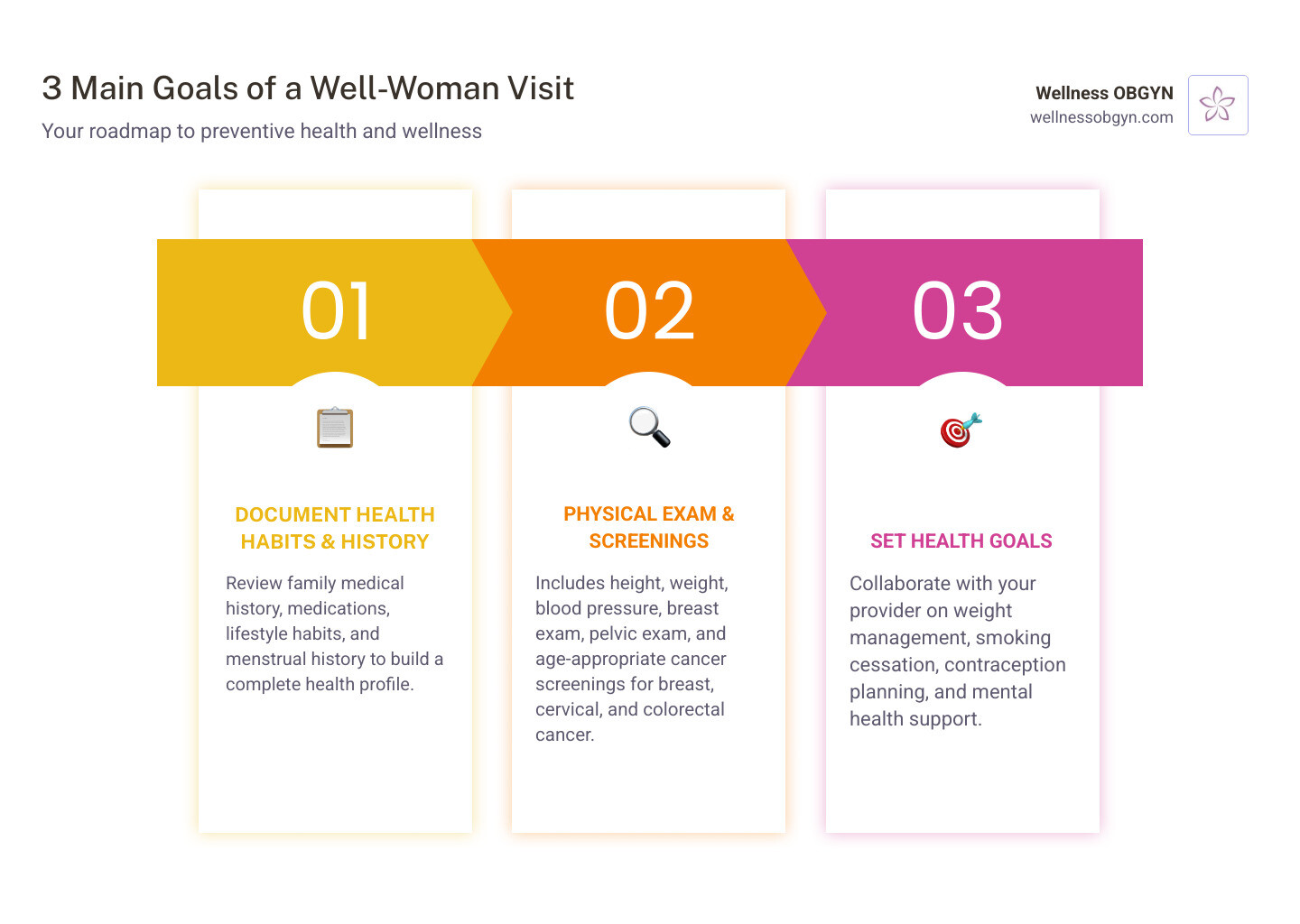
Think of it as a check-in for your body and your future. The visit covers three core goals: documenting your health habits and history, completing age-appropriate physical exams and screenings, and setting health goals with your provider. You’ll discuss everything from family planning and contraception to mental health, menopause, and sexual wellness—all in a safe, judgment-free space.
As Dr. Cheryl Twu, I’ve spent more than a decade guiding women through every stage of reproductive health, from adolescence to menopause, with a focus on preventive well woman test care and minimally invasive treatments. At Wellness OBGYN, we combine evidence-based medicine with osteopathic, whole-person care to ensure you feel informed, empowered, and truly heard.
Well woman test terms to learn:
What is a Well Woman Test and Why is it Essential?
At its heart, a well woman test is a preventive encounter designed to promote health over a woman’s entire lifetime. Unlike a sick visit where we address a specific problem like an infection or pain, this is a dedicated time for an Annual OBGYN Visit that focuses on the “big picture.”
The primary goal is prevention and early diagnosis. Statistics show that more than 2 billion women worldwide were not tested for breast or any other type of cancer in 2021. This gap in care is why we emphasize the importance of these visits. During the exam, we perform a clinical assessment of your physical and psychosocial function. We look at risk evaluations for chronic diseases, ensure your immunizations are up to date, and provide health counseling that is tailored specifically to you.
Following Scientific research on preventive care recommendations, we use these visits to screen for issues that might not have symptoms yet. Early detection of conditions like cervical cancer or hypertension can be life-saving. It’s also a time for shared decision-making, where we work together to set your health goals for the coming year.
How the Well Woman Test Differs from a Physical
We often get asked if a well woman test is the same as a regular annual physical with a primary care doctor. While both are important, they serve different purposes. A general physical focuses on your overall systems—checking for high cholesterol, unusual moles, or general organ function.
Our Women’s Health Annual Exam dives deeper into reproductive and sexual health. While a primary care doctor might check your blood pressure, we focus on:
- Pelvic and Breast Health: Detailed exams that look for abnormalities in the uterus, ovaries, and breast tissue.
- Contraception Options: Discussing everything from IUDs like Mirena or Kyleena to permanent sterilization.
- Menstrual Concerns: Addressing heavy periods, severe cramps, or irregular cycles that a general practitioner might not specialize in.
- Life Transitions: Expert guidance through perimenopause and menopause.
What to Expect During Your Visit: A Step-by-Step Guide

Walking into a doctor’s office can sometimes feel intimidating, but we strive to make the experience at Wellness OBGYN warm and easy. Here is the general flow of what you can expect during your visit.
- Medical History Review: We start with a conversation. We’ll ask about your menstrual history (the date of your last period), sexual activity, and any changes in your health since last year.
- Vitals and BMI Check: A nurse will record your height, weight, and blood pressure. These are baseline indicators of your cardiovascular health.
- Screening Discussion: Based on your age and history, we will discuss Scientific research on cervical cancer screening and determine if it’s time for a Pap or HPV test.
- Laboratory Testing: Depending on your needs, we may order blood work to check your cholesterol, blood sugar (diabetes screening), or vitamin D levels.
- Lifestyle Counseling: We talk about the “outside” factors—stress, diet, exercise, and mental health. We even screen for things like intimate partner violence to ensure your home environment is safe.
The Physical Exam: Breast and Pelvic Health
The physical portion of the exam is handled with the utmost care and respect for your comfort. As your Gynecologist Honolulu, we perform:
- Thyroid and Lymph Node Assessment: Checking for swelling or lumps in the neck and underarms.
- Clinical Breast Exam: A manual check of the breast tissue and underarm area to look for lumps or skin changes.
- Pelvic Exam: This typically includes a speculum exam to view the cervix and a bimanual exam, where we use two hands to feel the size and shape of your uterus and ovaries.
Essential Screenings for Your Well Woman Test
Screenings are the “detective work” of your visit. One of the most critical is the Pap smear, which looks for precancerous cells on the cervix. If you have had an Abnormal Pap Follow-up in the past, we may screen more frequently. We also offer a full STI panel, as many sexually transmitted infections do not show symptoms but can impact fertility if left untreated.
Age-Specific Guidelines: When to Screen and What to Ask
Your health needs evolve as you do. A teenager’s visit looks very different from a woman navigating her 50s.
- Adolescence (Ages 13-18): The first visit should happen between 13 and 15. It’s mostly a “get to know you” session. Adolescent Gynecology Honolulu focuses on establishing trust, discussing periods, and providing HPV vaccinations. Pelvic exams are usually not required at this age unless there are specific symptoms.
- The 20s and 30s: This is the prime time for reproductive life planning. We focus on contraception, STI prevention, and regular cervical cancer screenings.
- The 40s and 50s: We begin discussing perimenopause and menopause. This is also when we start Scientific research on colorectal cancer screening, typically beginning at age 45. We will also provide mammography referrals for annual breast cancer screening.
- 60s and Beyond: We continue to monitor for gynecologic cancers and focus on bone density (DEXA scans) to prevent osteoporosis.
Preparing to Book Your Appointment
Ready to take the leap? Booking your well woman test is a simple step that pays huge dividends. When you call to find a Gynecologist in Honolulu, keep these tips in mind:
- Check Your Insurance: Under the Affordable Care Act (ACA), most insurance plans cover one well-woman visit per year at no cost to you.
- Gather Your History: Use a family health history tool to note any instances of cancer, heart disease, or diabetes in your relatives.
- Make a List: Write down questions about your cycle, libido, mood, or any “weird” symptoms you’ve noticed. No question is too small or embarrassing!
- Review Your Vaccines: Check the Scientific research on adult immunization schedules to see if you are due for a Tdap, Flu, or HPV booster.
Frequently Asked Questions about Well-Woman Care
Can I have a well woman test during my period?
Yes! Many women think they need to reschedule if their period arrives, but you can absolutely have a gynecological exam while menstruating. While a very heavy flow might occasionally affect the clinical accuracy of a Pap smear, modern liquid-based tests are very resilient. If you are comfortable, we are too. However, if you’re experiencing significant cramping and would rather wait, just let us know.
How often should I get a Pap smear?
Cervical screening generally begins at age 21. For most women, the current guideline is a three-year interval for a Pap test alone. Once you reach age 30, we often switch to “co-testing” (Pap + HPV) every five years. However, if you have a history of abnormal results, we may recommend more frequent testing. If you are a new patient, we are a Gynecologist Accepting New Patients and can review your records to find the right schedule for you.
Is the exam covered by insurance?
In most cases, yes. Preventive services for women are a core component of the ACA. This means your annual well woman test—including the office visit, the Pap smear, and certain other screenings—is typically covered at no-cost (no co-pay or deductible) by your insurance. Our Women’s Health Center Honolulu can help you verify your specific coverage.
Conclusion
Your health is your most valuable asset, and at Wellness OBGYN, we are dedicated to helping you protect it. We provide personalized women’s healthcare with a holistic approach to women’s health that respects your individual needs and values. Whether you are coming in for your first adolescent visit or navigating the changes of menopause, our Honolulu medical experts are here to provide expert, compassionate care.
Don’t wait for a symptom to appear before you prioritize your wellness. Take charge of your health journey today through shared decision-making and patient-centered care.
Ready to start your personal health roadmap? Schedule your well-woman services today and join the community of women in Honolulu who are putting their health first. Our team at Wellness OBGYN is ready to welcome you!