
Understanding the Medical Abbreviation D.O.
When you see do abbreviation medical on a doctor’s credentials, you’re looking at a Doctor of Osteopathic Medicine. Here’s what you need to know:
D.O. stands for:
- Doctor of Osteopathic Medicine
- A fully licensed physician with complete medical and surgical practice rights
- Equivalent to an M.D. (Doctor of Medicine) in training and scope of practice
- Additional training in osteopathic manipulative treatment (OMT)
- Holistic approach focusing on the whole person, not just symptoms
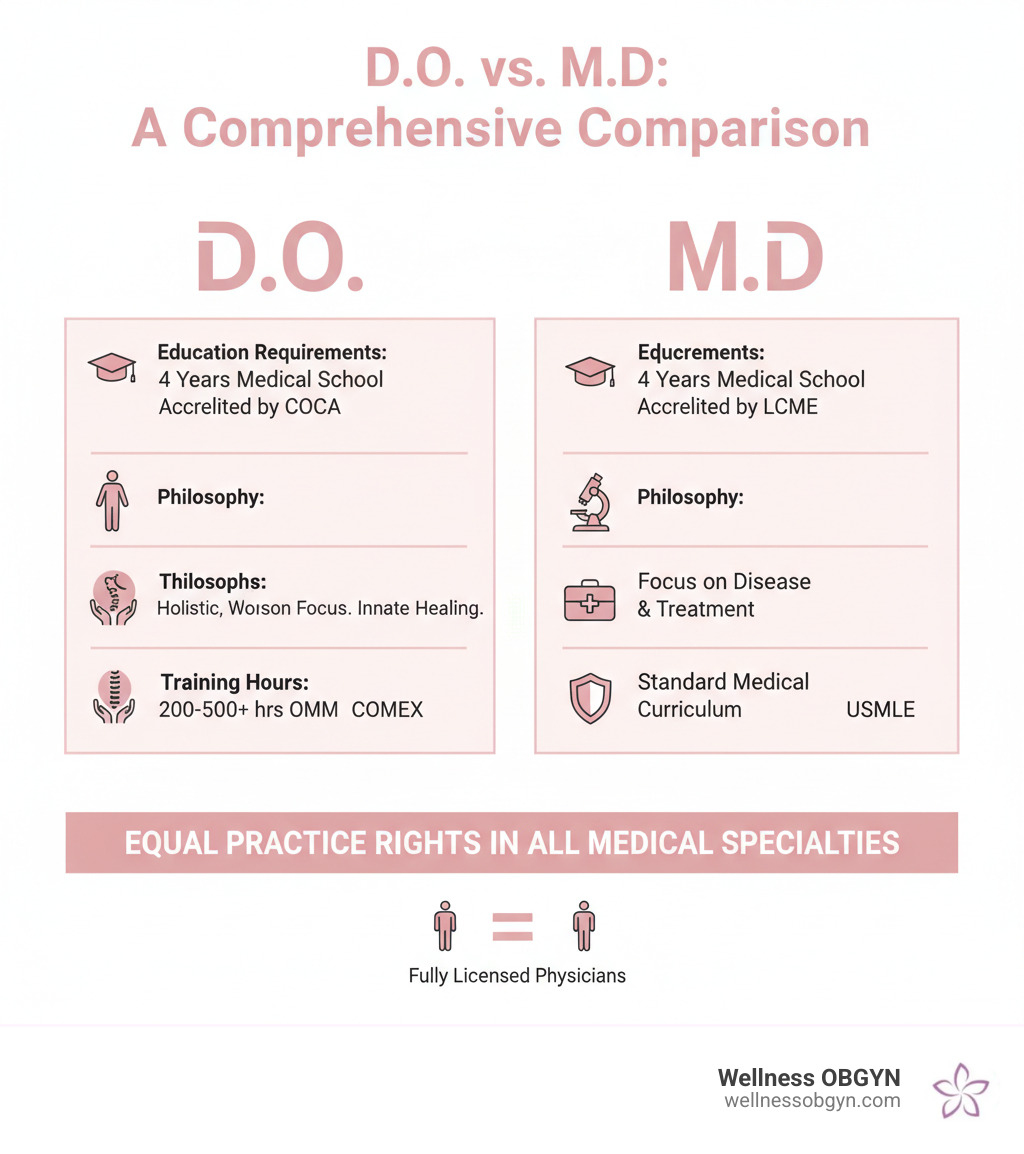
The do abbreviation medical represents one of two types of complete medical doctors in the United States. D.O.s complete the same rigorous medical education as M.D.s but receive an extra 200-500 hours of training in hands-on techniques called osteopathic manipulative medicine.
About 28% of all U.S. medical students are now enrolled in osteopathic programs, and 11% of practicing physicians are D.O.s. These numbers continue to grow as patients seek more personalized, whole-person healthcare approaches.
As Dr. Cheryl Twu, a board-certified D.O. practicing in Honolulu, I’ve seen how understanding the do abbreviation medical helps patients make informed healthcare decisions. My osteopathic training improves my ability to provide comprehensive women’s health care that addresses both physical symptoms and overall wellness.
What Does the Medical Abbreviation D.O. Stand For?
The do abbreviation medical stands for Doctor of Osteopathic Medicine – a fully licensed physician who takes a unique approach to healthcare that you might find refreshingly different from what you’ve experienced before.
While most people are familiar with M.D.s (Medical Doctors), D.O.s represent an equally rigorous but philosophically distinct path in medicine. These doctors can do everything an M.D. can do – prescribe medications, perform surgery, and specialize in any medical field – but they bring something extra to the table.
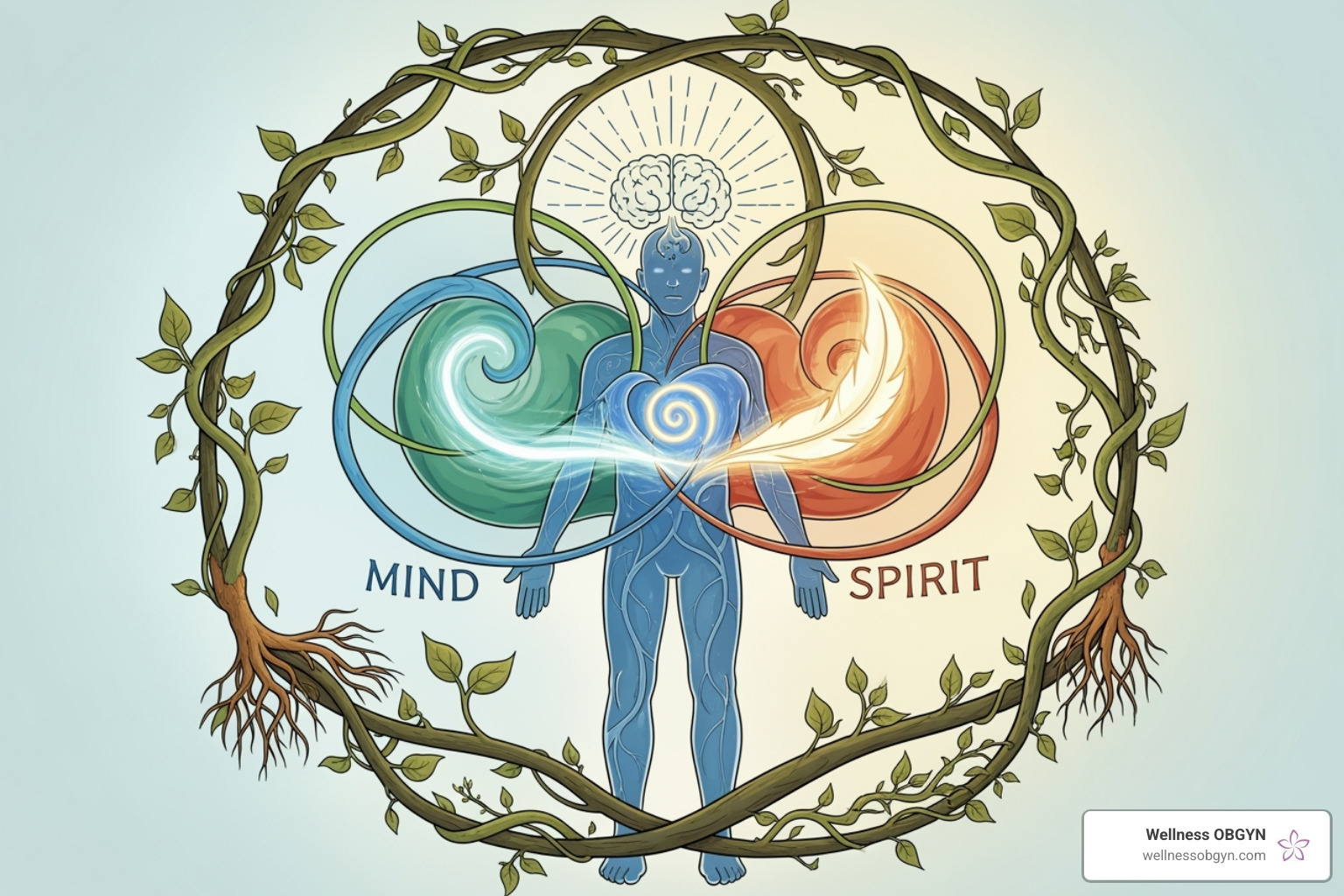
The story begins with Andrew Taylor Still, a 19th-century physician who grew frustrated with the limitations of conventional medicine of his time. Dr. Still developed a philosophy centered on whole-person healthcare that considers how your mind, body, and spirit work together to influence your overall health.
This holistic approach means that when you visit a D.O., they’re not just looking at your symptoms in isolation. Instead, they’re considering how your lifestyle, stress levels, work environment, and emotional well-being might all be contributing to what you’re experiencing. It’s like having a detective and a healer rolled into one.
The osteopathic philosophy emphasizes something pretty amazing: your body has an incredible ability to heal itself when given the right conditions. Rather than simply treating disease, D.O.s focus on removing barriers to your body’s natural healing processes and promoting overall wellness.
The Four Tenets of Osteopathic Medicine
The foundation of osteopathic medicine rests on four core principles that guide every D.O.’s approach to patient care:
The body is a unit – meaning you’re not just a collection of separate parts, but an integrated whole where your physical health, mental state, and spiritual well-being are all connected. When I treat patients at Wellness OBGYN, I see how stress can affect menstrual cycles, or how physical pain can impact emotional health.
The body is capable of self-regulation and self-healing – your body has remarkable built-in mechanisms for maintaining health and recovering from illness. A D.O.’s job is to identify what’s blocking these natural processes and help restore them.
Structure and function are reciprocally interrelated – this means that how your body is built affects how it works, and vice versa. For example, poor posture from sitting at a desk all day can affect your breathing, digestion, and even your mood. Fix the structural problem, and function often improves.
Rational treatment is based upon an understanding of these principles – D.O.s use these insights to develop treatment plans that address root causes, not just symptoms. We combine modern medical knowledge with this holistic understanding to provide comprehensive care.
These principles create what we call the mind, body, spirit connection – recognizing that true healing often requires addressing all aspects of your health, not just the physical symptoms that brought you to the doctor’s office.
To learn more about how this philosophy translates into practice, visit our detailed guide on What is a D.O. (Doctor of Osteopathic Medicine)?.
D.O. vs. M.D.: A Comparison of Two Qualified Paths
You might wonder what the difference is between seeing a do abbreviation medical physician versus an M.D. Here’s something that might surprise you: both are fully qualified doctors with identical practice rights in the United States. We can both prescribe medications, perform surgery, and practice in any medical specialty we choose.
The real differences lie in our training philosophy and approach to patient care. Think of it like two different routes to the same destination – both get you there, but the journey shapes how we practice medicine.
| Aspect | D.O. (Doctor of Osteopathic Medicine) | M.D. (Doctor of Medicine) |
|---|---|---|
| Philosophy | Holistic, whole-person approach | Traditional allopathic model |
| Training Hours | Standard medical training + 200-500 hours OMM | Standard medical training |
| Licensing Exam | COMLEX-USA | USMLE |
| Practice Rights | Full practice rights in all specialties | Full practice rights in all specialties |
Key Similarities in Education and Practice
The educational path for both do abbreviation medical physicians and M.D.s is remarkably similar. We both complete a four-year undergraduate degree, usually heavy on science courses like biology, chemistry, and physics.
Then comes four years of medical school. Whether you’re studying osteopathic or allopathic medicine, you’re learning the same foundational sciences – anatomy, physiology, biochemistry, and pharmacology. We both do clinical rotations in internal medicine, surgery, pediatrics, and obstetrics and gynecology.
After graduation, both D.O.s and M.D.s enter post-graduate residency programs that can last anywhere from three to eight years. Here’s where it gets interesting – many of us train side-by-side in the same programs! Since 2020, we’ve had a single GME accreditation system, meaning all residents meet the same rigorous standards regardless of their degree.
Board certification follows the same pattern. Both D.O.s and M.D.s can pursue specialty board certification, demonstrating our expertise through challenging exams. As fully licensed physicians, we have identical legal rights and responsibilities in patient care.
The Distinguishing Factors: Philosophy and Training
Here’s where the paths truly diverge, and it’s fascinating how these differences shape patient care.
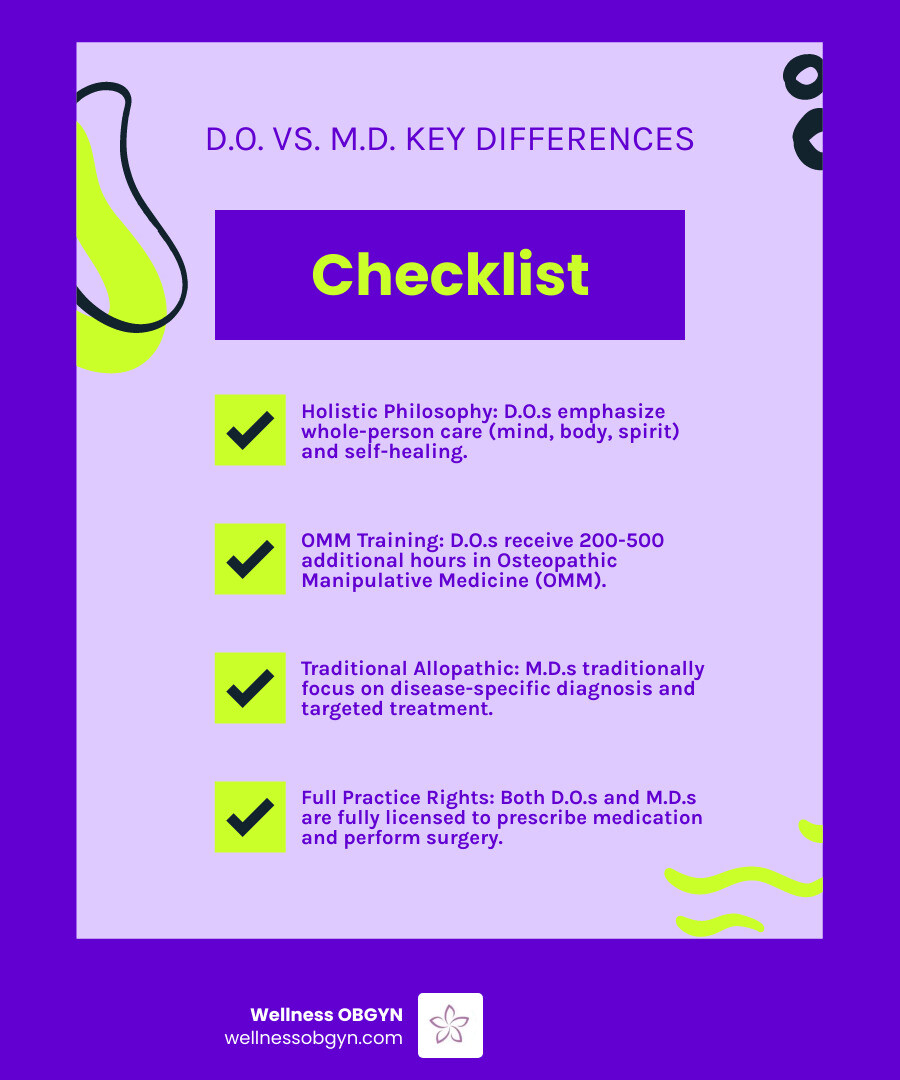
The holistic versus allopathic approach represents the biggest philosophical difference. As a D.O., I’m trained to see you as a complete person – mind, body, and spirit – within your unique environment and lifestyle. We focus heavily on preventive medicine and supporting your body’s natural healing abilities.
Traditional allopathic medicine typically targets specific diseases with medications or surgery to counteract symptoms. While many M.D.s also accept holistic approaches, it’s woven into the very fabric of osteopathic training.
You’ll find that almost 57% of D.O.s practice in primary care fields like family medicine, internal medicine, and pediatrics. This reflects our emphasis on long-term patient relationships and preventive care.
The most distinctive element of our training involves the musculoskeletal system and Osteopathic Manipulative Medicine (OMM). During medical school, I received an additional 200-500 hours of hands-on training in these specialized techniques. This education focuses on how your body’s structure – muscles, bones, joints, and nerves – affects your overall function.
OMM gives us an extra set of diagnostic and treatment tools. We learn gentle, hands-on techniques to restore normal motion, reduce pain, and improve circulation. While this might sound similar to what other practitioners do, D.O.s are fully licensed physicians who integrate these techniques into comprehensive medical practice.
When choosing your healthcare provider, the most important factor is finding a physician you trust and feel comfortable with. Both D.O.s and M.D.s are highly educated, capable medical professionals. If you’re interested in finding an osteopathic physician, the American Osteopathic Association offers a helpful search tool to locate qualified practitioners in your area.
Understanding Osteopathic Manipulative Treatment (OMT)
One of the most distinctive features that sets the do abbreviation medical apart is Osteopathic Manipulative Treatment, or OMT. This hands-on approach represents the heart of what makes osteopathic medicine unique. As D.O.s, we spend hundreds of hours during medical school mastering these gentle, precise techniques that allow us to literally feel what’s happening beneath the surface of your body.
Think of OMT as detective work with our hands. We use our trained touch to examine your body for areas of tenderness, restricted movement, or tissue changes that might be contributing to your symptoms. These findings, which we call somatic dysfunction, often reveal underlying problems that standard examinations might miss.
The techniques themselves are surprisingly gentle. We apply controlled pressure, stretching, or resistance to help restore normal motion to your joints and muscles. It’s not about forcing anything back into place – instead, we’re working with your body’s natural healing mechanisms to encourage proper function.
What makes OMT particularly powerful is its focus on restoring motion and supporting self-healing. By improving blood flow, reducing nerve irritation, and correcting biomechanical imbalances, we’re helping your body do what it does best – heal itself. This perfectly embodies the osteopathic principle that structure and function are intimately connected.
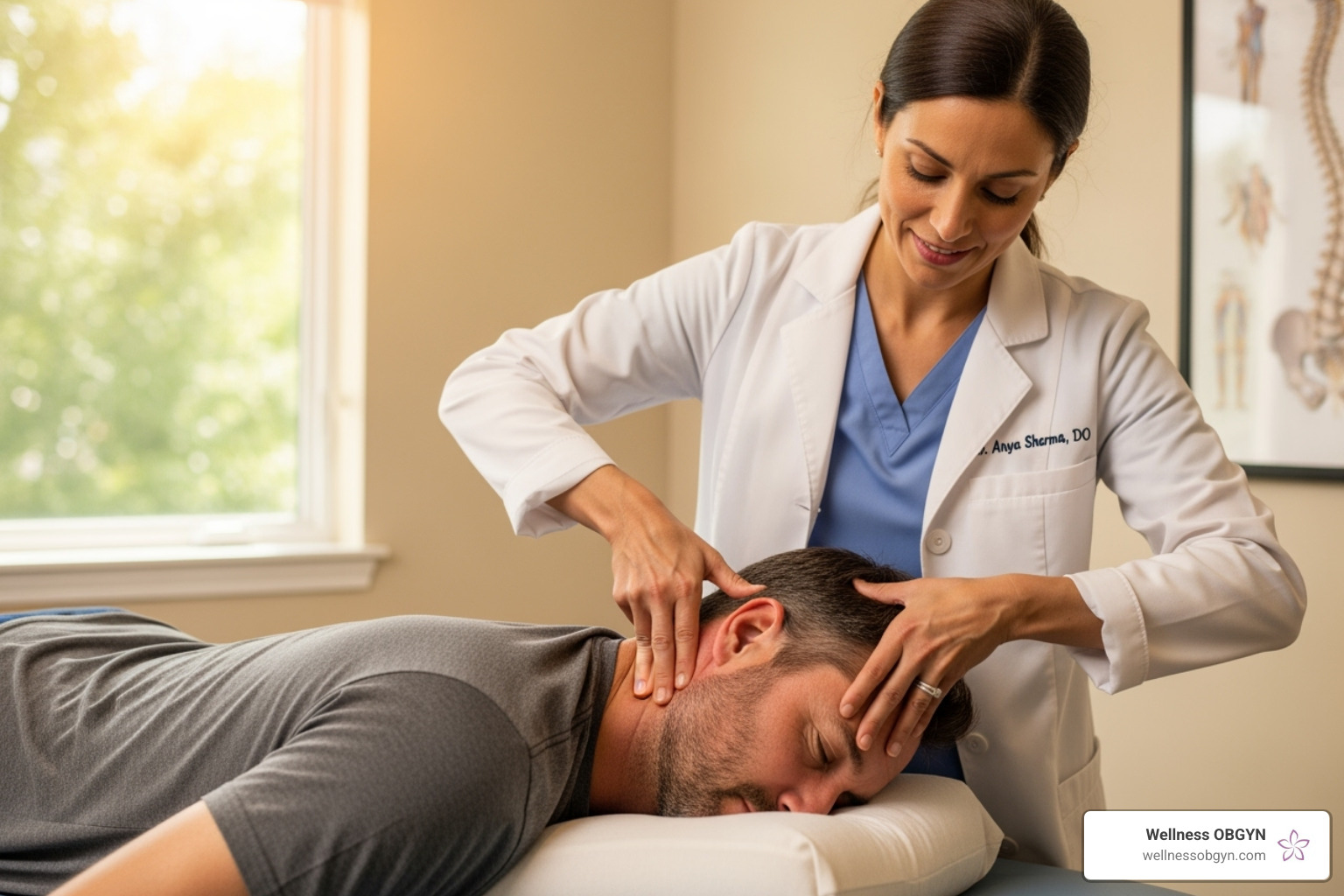
OMT works beautifully alongside conventional medical treatments. You might receive medication for pain relief while we simultaneously work on the underlying structural issues contributing to your discomfort. This integrated approach often leads to better outcomes and sometimes allows patients to use less medication over time.
For those curious about the science behind these techniques, we encourage you to explore our comprehensive guide on What is Osteopathic Manipulative Treatment (OMT)?.
Conditions Addressed with OMT
The versatility of OMT continues to amaze both patients and healthcare providers. We use these techniques to address a remarkably wide range of conditions, often with surprising success.
Musculoskeletal pain is perhaps the most obvious application. Whether you’re dealing with chronic discomfort, acute injuries, or pain from poor posture, OMT can often provide significant relief. We frequently see patients who’ve been struggling with back pain – whether it’s in the upper, middle, or lower regions – find substantial improvement through techniques that address spinal alignment and pelvic balance.
Neck pain and stiffness respond particularly well to OMT. Many of our patients are amazed at how much their range of motion improves after treatment. We also see excellent results with headaches and migraines, especially those tension-type headaches that seem to build up from neck and shoulder stress.
Some applications might surprise you. Sinus disorders often improve with OMT as we work on the delicate bones and tissues of the face and skull to improve drainage. Carpal tunnel syndrome frequently responds well when we address restrictions not just in the wrist, but throughout the arm and even the neck area.
For our expectant mothers, OMT offers a gentle, medication-free approach to managing pregnancy-related pain. Back pain, sciatica, and pelvic discomfort – all common during pregnancy – can often be significantly reduced through careful osteopathic treatment.
Pelvic pain, which can be particularly challenging to treat, sometimes has musculoskeletal components that OMT can address effectively. We also use these techniques to support recovery from sports injuries, help with certain digestive issues, and even aid in post-surgical rehabilitation.
The beauty of OMT lies in its individualized approach. Every treatment is custom specifically to what your body needs at that moment. Many patients ask us, Does Osteopathic Manipulative Treatment Work?. The growing body of research, particularly for conditions like lower back pain, continues to support what we see in practice every day – OMT can be remarkably effective for the right conditions and the right patients.
The Role of D.O.s in Modern Healthcare
The landscape of American healthcare is changing, and do abbreviation medical professionals are leading the charge. If you’re wondering how significant this shift is, consider this: 28% of all U.S. medical students today are choosing osteopathic programs. That’s more than one in four future doctors embracing the holistic philosophy we’ve been discussing.
This isn’t just a trend—it’s a movement. Between 2011 and 2022, enrollment in D.O. programs jumped by an incredible 68%. Currently, 11% of practicing physicians in the United States are D.O.s, and that number keeps climbing as more patients find the benefits of whole-person care.
What’s driving this growth? Patient satisfaction. Studies show that people who see osteopathic doctors report higher satisfaction with their treatment compared to those who visit other types of healthcare providers. When you feel heard, understood, and treated as a complete person rather than just a collection of symptoms, it makes a real difference in your healthcare experience.
At Wellness OBGYN in Honolulu, we see this satisfaction daily. Our patients appreciate how our osteopathic training allows us to look beyond immediate symptoms and consider all the factors affecting their health—from stress levels to lifestyle habits to family dynamics.

Specialties and Practice Areas for the “do abbreviation medical”
Here’s something that surprises many people: physicians with the do abbreviation medical designation can practice in any medical specialty. We’re not limited to certain areas of medicine. You’ll find D.O.s performing complex heart surgery, delivering babies, treating cancer, and conducting cutting-edge research.
That said, there’s definitely a pattern in where D.O.s choose to practice. Almost 57% of D.O.s work in primary care, which makes perfect sense when you consider our training in preventive medicine and whole-person care. We’re naturally drawn to family medicine, where we can care for entire families across generations, internal medicine for comprehensive adult care, and pediatrics for children’s health.
But don’t think we stop there. D.O.s are making their mark in OB/GYN care (like here at Wellness OBGYN), surgery of all types, psychiatry where the mind-body connection is crucial, and emergency medicine where quick, comprehensive assessment can save lives.
The beauty of the do abbreviation medical degree is its versatility. Whether you need a family doctor, a specialist, or emergency care, you’re likely to encounter a D.O. who brings that unique combination of medical expertise and holistic perspective to your treatment.
A Holistic Approach in Specialized Care
At Wellness OBGYN, our commitment to a Holistic Approach to Womens Health perfectly demonstrates how osteopathic principles improve specialized care. We don’t just treat symptoms—we consider how your work stress might be affecting your menstrual cycle, how your sleep patterns influence your energy levels, or how relationship dynamics impact your overall well-being.
This comprehensive perspective is especially valuable in sensitive areas like sexual wellness. When addressing intimate health concerns for both women and men, we understand that the solution often involves multiple factors—physical, emotional, and relational.
Frequently Asked Questions about the “do abbreviation medical”
We understand that navigating healthcare credentials can feel overwhelming, especially when you’re trying to make the best choice for your health. The do abbreviation medical designation brings up many questions for patients, and we’re here to provide clear, honest answers to help you feel confident in your healthcare decisions.
Can D.O.s perform surgery and prescribe medication?
This is probably the most important question we hear, and the answer is a resounding yes! D.O.s have full practice rights and are legally and professionally equivalent to M.D.s in every way. We can perform surgery across all specialties – whether it’s a complex cardiac procedure, orthopedic surgery, or the minimally invasive gynecological surgeries we specialize in at Wellness OBGYN.
We also have full prescriptive authority in all 50 states. This means we can prescribe everything from antibiotics for infections to hormone therapy for menopause symptoms. Our medical training is just as rigorous as our M.D. colleagues, with the added benefit of osteopathic manipulative training.
The confusion often comes from people mixing up D.O.s with other healthcare providers who have more limited scope of practice. Rest assured, when you see the do abbreviation medical after a physician’s name, you’re working with a fully licensed doctor who can provide complete medical care.
Is a D.O. a “holistic doctor”?
Yes, but not in the way you might be thinking! When people hear “holistic,” they sometimes picture someone who avoids modern medicine in favor of alternative treatments. That’s not what osteopathic medicine is about at all.
A D.O. brings a holistic philosophy to medicine, meaning we consider the whole person – your physical symptoms, emotional well-being, lifestyle factors, and environment. We believe these all work together to impact your health. But we absolutely use all the tools of modern medicine, including diagnostic tests, medications, and surgical interventions when needed.
The difference is in our approach. Instead of just treating symptoms, we look for root causes. We ask questions like: “What in this person’s life might be contributing to their chronic headaches?” or “How can we support their body’s natural healing while also providing necessary medical treatment?”
A D.O. is a fully licensed physician who brings an additional, holistic perspective to patient care. We combine evidence-based medicine with a deeper understanding of how all aspects of health connect. It’s the best of both worlds – comprehensive modern medical care with a personalized, whole-person approach.
How do I find a D.O.?
Finding a D.O. has become much easier as our numbers continue to grow. The good news is that we’re practicing in communities across the country, often in the same hospitals and medical centers where you’d find M.D.s.
Checking credentials is always a smart first step when choosing any physician. Look for the D.O. designation after their name, and don’t hesitate to ask about their training and approach to care during your initial consultation.
Physician directories are helpful, and many allow you to filter specifically for D.O.s. Your insurance provider lists will show which osteopathic physicians are in your network, and hospital affiliations can help you find D.O.s on staff at your preferred medical centers.
For the most comprehensive search, we recommend using the American Osteopathic Association’s “Find a DO” tool. This specialized directory lets you search by location, specialty, and even specific areas of expertise like osteopathic manipulative treatment.
The most important thing is finding a physician you trust and feel comfortable with, regardless of whether they have M.D. or D.O. after their name. Both are excellent choices – it’s really about finding someone whose approach to care aligns with your preferences and health goals.
Conclusion
Understanding the do abbreviation medical doesn’t have to be complicated. When you see those two letters after a doctor’s name, you’re looking at a Doctor of Osteopathic Medicine—a fully licensed physician who’s completed the same rigorous training as any M.D., with some unique additions that make them special.
Here’s what we want you to remember: D.O.s are complete doctors. We diagnose diseases, prescribe medications, perform surgery, and practice in every medical specialty you can think of. The difference isn’t in what we can do—it’s in how we approach your care.
The holistic philosophy that guides osteopathic medicine means we see you as a whole person, not just a collection of symptoms. When you visit a D.O., we’re thinking about how your work stress might be affecting your back pain, or how that old ankle injury could be contributing to your headaches. It’s this interconnected view of health that sets us apart.
Osteopathic Manipulative Treatment (OMT) gives us an extra set of tools that most physicians don’t have. These hands-on techniques can often provide relief when traditional treatments haven’t worked, or they can complement your regular medical care beautifully.
The choice between seeing a D.O. or an M.D. is really about finding the right fit for you. Both provide excellent, evidence-based medical care. The growing popularity of osteopathic medicine—with over 28% of medical students now choosing the D.O. path—shows that more patients are seeking this comprehensive, patient-centered approach to healthcare.
At Wellness OBGYN in Honolulu, we embody this osteopathic commitment to treating the whole person.
The beauty of osteopathic medicine lies in its fundamental trust in your body’s ability to heal itself. Our job is to remove the barriers to that healing and support your journey to optimal health. To learn more about how hands-on, holistic treatments can make a difference in your care, we encourage you to explore our comprehensive guide on What is Osteopathic Manipulative Treatment (OMT)?.