
Understanding Your Healthcare Visit Options
The difference between a wellness exam and a comprehensive exam can feel confusing when you’re trying to schedule the right appointment for your needs. Many patients call to book a “wellness exam” only to find they actually need something more thorough to address their health concerns.
Quick Answer: Key Differences
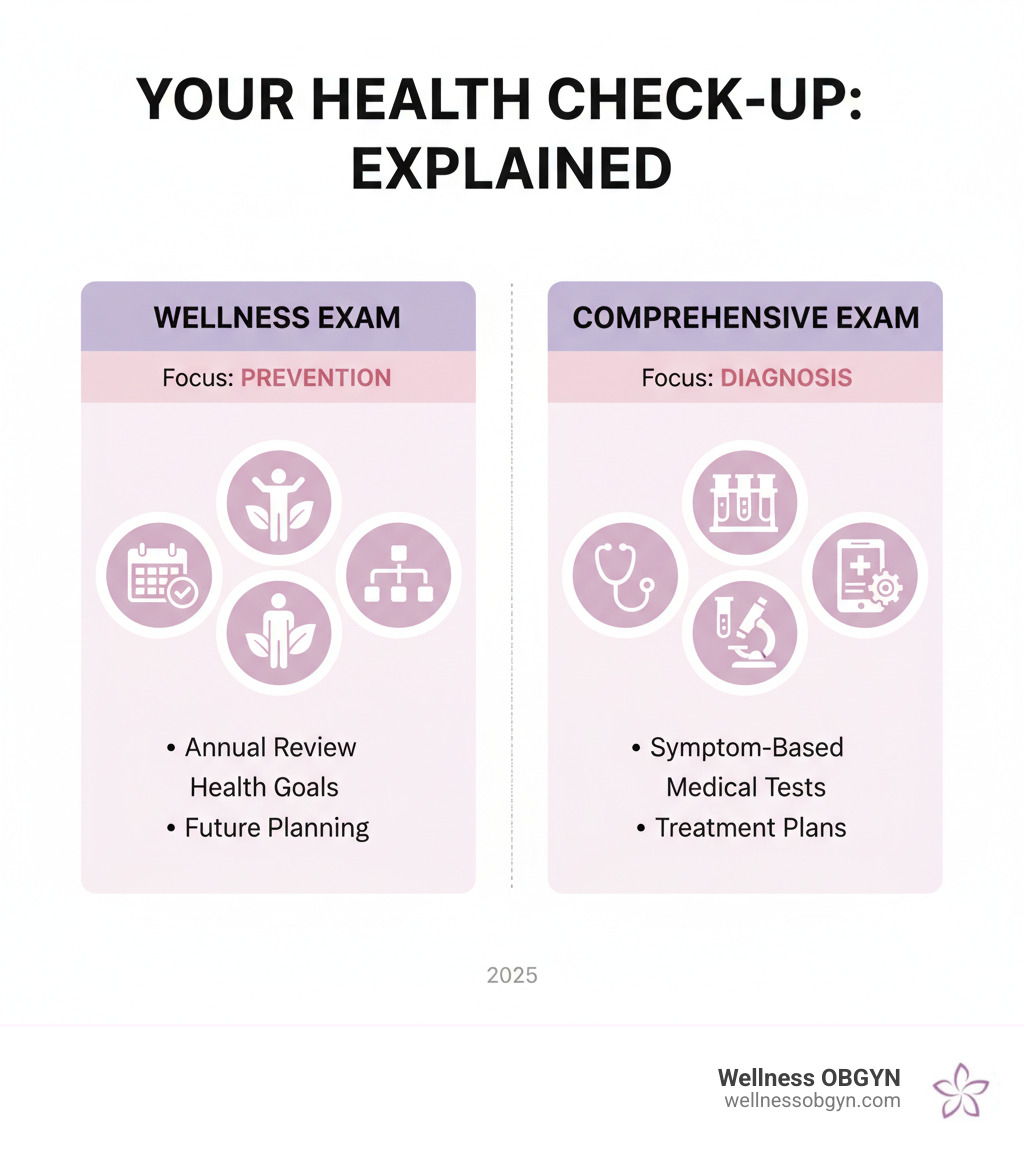
- Wellness Exam: Focuses on prevention and maintaining good health when you’re feeling well
- Comprehensive Exam: Focuses on diagnosis and treatment when you have symptoms or health concerns
- Wellness visits typically involve discussions about lifestyle, health risks, and future planning
- Comprehensive exams include hands-on physical assessments, diagnostic tests, and problem-solving
Understanding these differences helps you choose the right type of visit, avoid surprise billing issues, and get the most appropriate care for your situation.
Why This Matters for Your Health
Research shows that annual physical exams can result in a 45% reduced mortality risk, while about 88% of all diagnoses in primary care come from thorough physical examinations. Both types of visits play important roles in your healthcare journey – wellness exams help prevent problems before they start, while comprehensive exams catch and treat issues early.
As Dr. Cheryl Twu, I’ve spent over a decade helping women steer their healthcare needs in both high-volume hospital settings and now in my private practice. Throughout my experience, I’ve seen how understanding the difference between a wellness exam and a comprehensive exam empowers patients to make better decisions about their care and get the most value from their visits.
The Wellness Exam: Your Proactive Health Blueprint
Think of a wellness exam as sitting down with a trusted friend who happens to be a healthcare expert. The primary focus isn’t about fixing something that’s wrong – it’s about preventive care and maintaining good health when you’re already feeling well.
I like to compare it to getting your car serviced regularly. You’re not waiting for the engine to break down; you’re being proactive to keep everything running smoothly. During a wellness visit, we’re essentially creating your personalized roadmap for staying healthy.
The beauty of wellness exams lies in their forward-thinking approach. We conduct a thorough health risk assessment based on your unique situation – your family history, lifestyle, age, and personal health goals. Then we work together to develop a personalized prevention plan that makes sense for your life.
This isn’t just about today or next month. Future health planning is at the heart of every wellness visit. We’re looking ahead to help you avoid potential health issues before they even have a chance to develop.

What’s Included in a Wellness Visit?
The magic of a wellness visit happens through conversation and connection. We start with a comprehensive medical history review, updating any changes since your last visit and reviewing your current medications. It’s amazing how much your health story can tell us about what preventive steps will work best for you.
Your family history discussion is equally important. Did your mom have heart disease? Does diabetes run in your family? These genetic clues help us tailor your prevention strategy more effectively. Knowledge is power when it comes to staying ahead of potential health challenges.
We’ll dive deep into your lifestyle habits too. How’s your sleep? What does your typical day look like? Are you managing stress well? These everyday choices have a huge impact on your long-term health, and small adjustments can make a big difference.
Mental health screening is also a vital part of our wellness visits. Your emotional well-being affects everything else, so we’ll check in on your mood, stress levels, and overall mental health. This might involve a simple questionnaire, but it’s an important piece of your health puzzle.
During the visit, we’ll also review your immunization schedule to make sure you’re current on all recommended vaccines. We’ll spend time setting health goals that feel realistic and achievable for you – whether that’s improving your nutrition, starting a new exercise routine, or finding better ways to manage stress.
Finally, we’ll map out your planning future screenings based on your age, risk factors, and family history. This might include scheduling mammograms, bone density scans, or other preventive tests that will help us catch any issues early.
Understanding the difference between a wellness exam and a comprehensive exam helps you get the most out of both types of visits. Wellness exams are your prevention headquarters – the place where we focus on keeping you healthy for years to come.
The Comprehensive Exam: A Deep Dive into Your Current Health
When you’re dealing with symptoms or health concerns, a comprehensive exam becomes your diagnostic detective. Unlike the preventive nature of wellness visits, the primary focus here is diagnostic care – we’re actively working to understand what’s happening in your body right now.
This type of exam is perfect when you’re investigating new symptoms that have appeared. Maybe you’ve been experiencing unusual fatigue, persistent headaches, or changes in your menstrual cycle. A comprehensive exam gives us the tools and time to dig deeper and find answers.
It’s also essential for managing chronic conditions. If you’re living with conditions like diabetes, high blood pressure, or thyroid disorders, regular comprehensive exams help us monitor how you’re doing and adjust your treatment plan as needed. This problem-focused approach means we can dedicate our attention to the specific health issues that matter most to you.
What makes this different from a wellness visit is the hands-on assessment. While wellness exams focus heavily on conversation and planning, comprehensive exams involve thorough physical examination and often diagnostic testing to get to the bottom of your concerns.

The Power of a Thorough Physical Assessment
During a comprehensive exam, we start with a complete vital signs check – your blood pressure, heart rate, temperature, and breathing rate. These numbers tell us a lot about how your body is functioning and can point us toward potential issues.
The hands-on evaluation is where we really get to work. We’ll spend time listening to your heart and lungs with a stethoscope, checking for irregular rhythms, murmurs, or breathing sounds that might indicate problems. Abdominal palpation allows us to feel for organ enlargement, tenderness, or masses that could explain your symptoms.
Depending on what you’re experiencing, we might examine your reflexes, check your skin for unusual changes, or assess how well your joints are moving. Every part of this physical assessment helps us build a complete picture of your health.
When needed, we’ll also focus on ordering lab tests or imaging studies. Blood work can reveal infections, hormone imbalances, or organ function issues. Urine tests might catch urinary tract infections or kidney problems. These objective measurements give us concrete data to work with.
The results speak for themselves – research shows that a thorough physical exam contributes to about 88% of all diagnoses in primary care. Plus, staying consistent with annual physicals can lead to a 45% reduced mortality risk. That’s the power of taking a comprehensive approach to understanding your health when something doesn’t feel quite right.
The Key Difference Between a Wellness Exam and a Comprehensive Exam
When you’re trying to understand the difference between a wellness exam and a comprehensive exam, it really comes down to timing and intent. Think of it this way: a wellness exam is like planning your vacation route before you leave home, while a comprehensive exam is like pulling over to figure out why your car is making that strange noise.
The fundamental distinction lies in purpose versus scope. Your wellness exam takes a broad, forward-looking approach to your health. We’re scanning the horizon for potential issues and creating a roadmap to keep you healthy. A comprehensive exam, however, zeroes in on specific concerns that are happening right now.
This creates what I like to call a prevention versus diagnosis dynamic. During wellness visits, we’re working to prevent problems before they start. With comprehensive exams, we’re actively diagnosing and treating issues that have already appeared. It’s the difference between building a fence and fixing the hole in it.
You’ll also notice a distinct conversation versus hands-on difference in how these appointments flow. Wellness exams are heavily discussion-based – we talk about your lifestyle, family history, and health goals. Comprehensive exams involve much more physical examination, diagnostic testing, and problem-solving. Both approaches are valuable, but they serve completely different purposes.
Understanding these differences isn’t just academic – it has real insurance implications that can affect your wallet. Plus, recognizing their complementary roles helps you make smarter decisions about when to schedule which type of visit.
Wellness vs. Comprehensive: A Side-by-Side Comparison
To make the difference between a wellness exam and a comprehensive exam crystal clear, here’s how they stack up:
| Criteria | Wellness Exam | Comprehensive Exam |
|---|---|---|
| Primary Goal | Prevention, health maintenance, identifying future risks, personalized health planning. | Diagnosis and treatment of specific symptoms, managing existing conditions, addressing current health concerns. |
| Typical Activities | Extensive medical history review, lifestyle assessment, mental health screening, immunization review, health goal setting, planning future screenings. | Detailed physical examination (vitals, palpation, auscultation), focused symptom investigation, ordering diagnostic tests (labs, imaging), medication adjustments, treatment planning. |
| When It’s Used | Annually, when you feel generally healthy and have no specific new concerns. | When you have new or worsening symptoms, when managing a chronic illness, for pre-operative clearance, or after an injury. |
| Common Insurance Coverage | Often covered 100% as preventive care under most plans (e.g., ACA, Medicare Part B yearly wellness visit). | Typically subject to deductibles, co-pays, and co-insurance, as it’s considered diagnostic/treatment-oriented care. |
Understanding the difference between a wellness exam and a comprehensive exam for insurance
Here’s where things can get tricky – and expensive if you’re not prepared. The difference between a wellness exam and a comprehensive exam creates very different insurance scenarios that can catch patients off guard.
Preventive care coverage under the Affordable Care Act (ACA) is actually pretty generous. Most insurance plans are required to cover wellness exams at 100%, meaning no copays and deductibles for you. It’s like getting a free annual tune-up for your body. Medicare wellness visits follow similar rules – if you’ve had Medicare Part B for at least 12 months, your yearly wellness visit is completely covered.
But here’s the catch: comprehensive exams fall under completely different diagnostic coding rules. Because we’re diagnosing and treating specific problems, these visits are subject to your regular copays and deductibles. The billing differences can be significant.
And here’s something that surprises many patients: if you come in for what you think is a wellness visit, but we find a new problem that needs immediate attention, your visit might get recoded. This means you could end up with unexpected charges for the diagnostic portion of your appointment.
That’s why I always recommend confirming benefits with your provider before scheduling. A quick call to your insurance company can save you from billing surprises and help you plan your healthcare budget more effectively. Trust me, it’s worth the five-minute phone call to avoid the shock of an unexpected bill.
Choosing the Right Visit for Your Needs
Understanding the difference between a wellness exam and a comprehensive exam puts you in the driver’s seat of your healthcare journey. Think of it as having the right tool for the right job – you wouldn’t use a screwdriver to hammer a nail, and you shouldn’t book a wellness visit when you need a comprehensive evaluation. Making this distinction helps you get exactly the care you need while avoiding any surprise billing situations.
When you’re clear about your appointment’s purpose from the start, it helps us prepare appropriately and ensures your time is used most effectively. It’s all about making informed decisions and being an active partner in your health management. The key is communicating with your provider about what’s bringing you in – whether it’s routine maintenance or addressing a specific concern.
Taking charge of your health journey means understanding these differences and feeling confident about when to schedule each type of visit. Let’s break down the specific scenarios where each appointment type makes the most sense.

When to Schedule Each Type of Exam
Choosing between these two appointment types becomes straightforward once you understand your current health situation and goals.
Schedule a Wellness Exam when you’re feeling generally healthy and want to stay that way. This is perfect for your annual check-in when healthy – that yearly touchpoint where we review how you’ve been doing overall. It’s also the right choice when you need to update your prevention plan, perhaps because you’ve had changes in your family medical history or you’re entering a new life stage. These visits are ideal for discussing lifestyle modifications, reviewing your immunization status, and planning future health screenings based on your age and risk factors.
Schedule a Comprehensive Exam when you have a new or worsening symptom that’s concerning you. Maybe you’ve been experiencing persistent fatigue, unusual pain, or changes in your menstrual cycle. This type of appointment is also essential for managing a known illness – if you have diabetes, high blood pressure, or another chronic condition that needs monitoring and potential treatment adjustments. You’ll also need a comprehensive exam for pre-operative clearance before any surgical procedure, as this requires a thorough physical assessment to ensure you’re ready for surgery.
The beauty of understanding these distinctions is that you can communicate your needs clearly when scheduling, which helps us allocate the right amount of time and prepare for the most appropriate type of care.
Addressing Specific Women’s Health Concerns and the difference between a wellness exam and a comprehensive exam
Women’s health needs are beautifully complex and change throughout different life stages. At Wellness OBGYN, we see how both types of exams serve distinct but equally important roles in your gynecological care.
During a wellness exam, we focus on the preventive aspects of women’s health. Pap smears are typically part of your routine wellness care, helping us screen for cervical cancer before any symptoms appear. We’ll also discuss mammogram scheduling based on your age, family history, and personal risk factors. Routine pelvic exams during wellness visits allow us to assess your reproductive health and catch any early changes that might need attention.
However, when you’re experiencing specific symptoms – perhaps irregular bleeding, pelvic pain, or concerns about sexual health – a comprehensive exam gives us the focused time and diagnostic tools needed to investigate thoroughly.
What I love about our approach is how we tailor each visit to your individual needs, whether you’re 16 and coming in for your first gynecological exam or 56 and navigating menopause. Every woman’s journey is unique, and our goal is to provide the right type of care at the right time. To learn more about our comprehensive approach to supporting women at every life stage, I encourage you to visit our Center for Women’s Health.
Frequently Asked Questions about Health Exams
I get a lot of thoughtful questions from patients about these important visits, and I love that you’re taking such an active role in understanding your healthcare options. Let me address some of the most common concerns I hear in my practice.
Can my wellness visit become a comprehensive exam?
Absolutely, and this happens more often than you might think! It’s actually one of the most common scenarios we encounter. Picture this: you come in for your annual wellness visit feeling great, but during our conversation, you mention that you’ve been having some unusual symptoms lately. Or perhaps during a routine breast exam, I notice something that needs further investigation.
When we find a new health concern that requires diagnosis or treatment beyond routine preventive care, the difference between a wellness exam and a comprehensive exam becomes very real in terms of billing. The visit may need to be re-coded to reflect the diagnostic work we’re doing. For example, if you mention severe pelvic pain or we find something during your physical exam that requires immediate attention, addressing these concerns shifts the focus from prevention to diagnosis.
I always make sure to discuss this with you during the visit so there are no surprises. The diagnostic portion would typically be subject to your deductible and co-pay, which can affect your out-of-pocket costs. My goal is always transparency – you should never feel caught off guard by billing changes.
How often should I get each type of exam?
This is such a practical question, and the answer helps you plan your healthcare throughout the year. A wellness exam is typically recommended annually – think of it as your yearly health strategy session. This consistent schedule allows us to track changes in your health over time, keep your preventive care plan current, and ensure you’re staying on top of age-appropriate screenings and immunizations.
A comprehensive exam, however, is scheduled as needed based on what’s happening with your health. There’s no magic number or set schedule because these visits are driven by your symptoms or health concerns. You might need one next month if you develop concerning symptoms, or you might not need one for years if you stay healthy. It’s completely individualized to your situation.
Are both types of exams really necessary?
I hear this question a lot, and my answer is always a resounding yes! Think of it this way – both types serve different but complementary purposes that work together like a well-coordinated healthcare team. Your wellness exams focus on long-term prevention, helping you avoid illness and maintain optimal health. These visits are like tending a garden – regular care keeps everything flourishing and catches small issues before they become big problems.
Comprehensive exams address immediate health issues, providing the diagnosis and treatment you need when something isn’t quite right. These are your problem-solving visits, where we roll up our sleeves and get to the bottom of what’s bothering you. The research I mentioned earlier shows that this approach can lead to significantly better health outcomes.
Skipping either type can leave important gaps in your healthcare. Without wellness visits, you miss opportunities for prevention and early detection. Without comprehensive exams when you need them, symptoms can worsen or conditions can go undiagnosed. Together, they create a complete picture of your health and give you the best chance for a long, healthy life.
Your Partners in Lifelong Health and Wellness
Understanding the difference between a wellness exam and a comprehensive exam truly is one of the most empowering pieces of health knowledge you can have. Think about it – when you know exactly what type of care you need and when to seek it, you’re taking control of your health story rather than just reacting to whatever comes your way.
We’ve covered a lot of ground together in this guide, from the key differences between these two essential types of visits to the practical matters like insurance coverage and scheduling. The main takeaway? Both exams play crucial but distinct roles in keeping you healthy and happy. Wellness exams keep you on track with prevention and planning, while comprehensive exams dive deep when you need answers and solutions.
Empowerment through knowledge isn’t just a nice phrase – it’s the foundation of excellent healthcare. When you understand your options, you can make informed decisions, communicate clearly with your healthcare team, and get the most value from every visit. This kind of proactive health management is what leads to better outcomes and, frankly, less stress about your health.
At Wellness OBGYN here in Honolulu, we’ve built our practice around the belief that healthcare should feel personal, not like you’re just another appointment on the schedule. Our team is dedicated to providing personalized care that honors where you are in life – whether you’re navigating adolescence, planning a family, managing the busy middle years, or embracing menopause. We believe in treating the whole person, not just the symptoms, and we’re committed to every stage of your life journey.
What makes our approach different is that we truly see ourselves as your partners, not just your doctors. We’re here for the routine wellness visits that keep you thriving, and we’re equally here for those times when something doesn’t feel right and you need comprehensive care. It’s this combination that creates the foundation for lifelong health and wellness.
Ready to experience healthcare that puts you first? We’d love to have you join our practice family. Learn more about Our Team and find how our commitment to personalized, compassionate care can make a difference in your health journey.
Whether you’re due for your annual wellness visit or have specific health concerns that need attention, we’re here to provide exactly the right type of care for your needs. Schedule your annual OB-GYN visit with us today and take that important next step in your health journey.
Have questions about which type of appointment would be best for you right now? We’re always happy to help you figure that out. Contact Us anytime – we look forward to partnering with you on your path to optimal health and wellness.