
Why Understanding Contraceptive Effectiveness Matters
The chance contraceptive method means relying on luck alone—having unprotected sex with no birth control. This approach has an 85% failure rate, meaning 85 out of 100 women using no method will become pregnant within a year. Understanding the effectiveness of actual contraceptive methods is crucial for your reproductive health.
Quick Answer: Contraceptive Method Effectiveness
- Chance Method (No Protection): 85% failure rate
- Withdrawal: 22% typical use failure rate
- Condoms: 13% typical use failure rate
- Birth Control Pill: 7% typical use failure rate
- IUDs/Implants: Less than 1% failure rate
The gap between no protection and highly effective options like IUDs is life-changing. It’s also important to know the difference between perfect use (following instructions exactly) and typical use (accounting for real-world mistakes). This distinction shows how forgiving a method is. Moving from uncertainty to informed choice means understanding how well methods work in real life. Some require daily attention, while others work for years, each with unique benefits.
I’m Dr. Cheryl Twu, a board-certified OB-GYN at Wellness OBGYN in Honolulu. With over a decade of experience, I’ve seen how understanding the chance contraceptive method and its alternatives empowers women to make choices that align with their life goals.

The High Risk of the Chance Contraceptive Method
Let’s be clear: the chance contraceptive method isn’t a method at all. It’s having unprotected sex and hoping for the best—a game of reproductive roulette with the odds stacked against you. The numbers are sobering: out of 100 women relying on chance for a year, 85 will become pregnant. That’s an 85% failure rate.
An unplanned pregnancy can reshape your education, career, and financial plans. While every pregnancy is valuable, controlling when you start a family is a key part of reproductive health. Research on understanding contraceptive failure shows that relying on chance removes all safety nets.
Why the “Chance Contraceptive Method” Fails
Biology is efficient. The chance method fails because it ignores these biological realities:
- Your fertility window is long: You’re fertile for about six days each cycle, as sperm can survive in the reproductive tract for up to five days waiting for an egg.
- Ovulation is unpredictable: Stress, travel, or illness can shift your ovulation schedule, making “safe” times unreliable.
- Sperm are resilient: They can survive much longer than many people think, meaning intercourse from days earlier can still lead to pregnancy.
- There is zero control: This passive approach involves no barriers, hormones, or conscious effort to prevent pregnancy.
- Risk compounds quickly: An 85% annual failure rate makes pregnancy almost inevitable over time, not just a possibility.
Comparing Chance to Other High-Failure-Rate Methods
The chance contraceptive method is in its own category of ineffectiveness. While other methods have higher failure rates, they are still far better than using nothing.
- The withdrawal method (pulling out) has a typical failure rate of around 22%. It’s challenging to time perfectly, and pre-ejaculate can contain sperm.
- Spermicides, chemicals that disable sperm, have a typical failure rate of 21-28%, often due to improper application or timing.
- Fertility awareness-based methods involve tracking your cycle to identify fertile days. Typical use failure rates range from 2-24%, highlighting how difficult consistent tracking can be, especially with irregular cycles. You can learn more about your monthly fertility pattern to understand its complexity.
The key difference is that these methods involve intentional effort, unlike the chance contraceptive method, which is simply hoping for the best.
Understanding Contraceptive Effectiveness: Perfect Use vs. Typical Use
When we talk about how well birth control works, we need to understand two very different scenarios. That’s the difference between perfect use and typical use when it comes to contraception.
Perfect use means following the instructions exactly, every single time, without fail. It represents the absolute best-case scenario for each method.
Typical use, on the other hand, reflects real life. It accounts for forgotten pills, broken condoms, or late appointments. These numbers show how methods actually perform for regular people in their everyday lives.
The gap between these two numbers tells you something crucial: how forgiving your method is when life gets messy. A small gap means the method works well even if you’re not perfect. A large gap means you need to be really consistent to get the protection you’re counting on. This is vital for choosing a method that fits your lifestyle.
How Forgiving is Your Method?
Some contraceptive methods are incredibly forgiving of human error. When you compare the chance contraceptive method (85% failure rate no matter what) to actual contraceptive methods, you can see dramatic differences in user dependency.
- Male condoms show a significant gap. With perfect use, condoms fail only about 2% of the time, but with typical use, that jumps to 13-18%.
- The birth control pill shows an even more striking difference. When taken perfectly, it fails less than 1% of the time. But in real-world use, that failure rate climbs to 7-9%.
- IUDs and contraceptive implants have nearly identical perfect and typical use rates—both under 1%. Once they’re inserted, they work continuously without any daily effort from you. You can’t forget them or use them wrong.
This is why understanding these differences is so important. Being honest with yourself about your lifestyle and choosing a more forgiving method is a smart choice if it means you’ll have better protection against unintended pregnancy.
A Spectrum of Effectiveness: Comparing Birth Control Options
Choosing a birth control method can feel overwhelming, but understanding the spectrum of effectiveness makes the decision clearer. Options range from the chance contraceptive method (85% failure rate) to methods over 99% effective. At Wellness OBGYN, we help you find where your comfort level, lifestyle, and health needs intersect on this spectrum. For more details on all options, the More on Birth Control Methods resource is excellent.
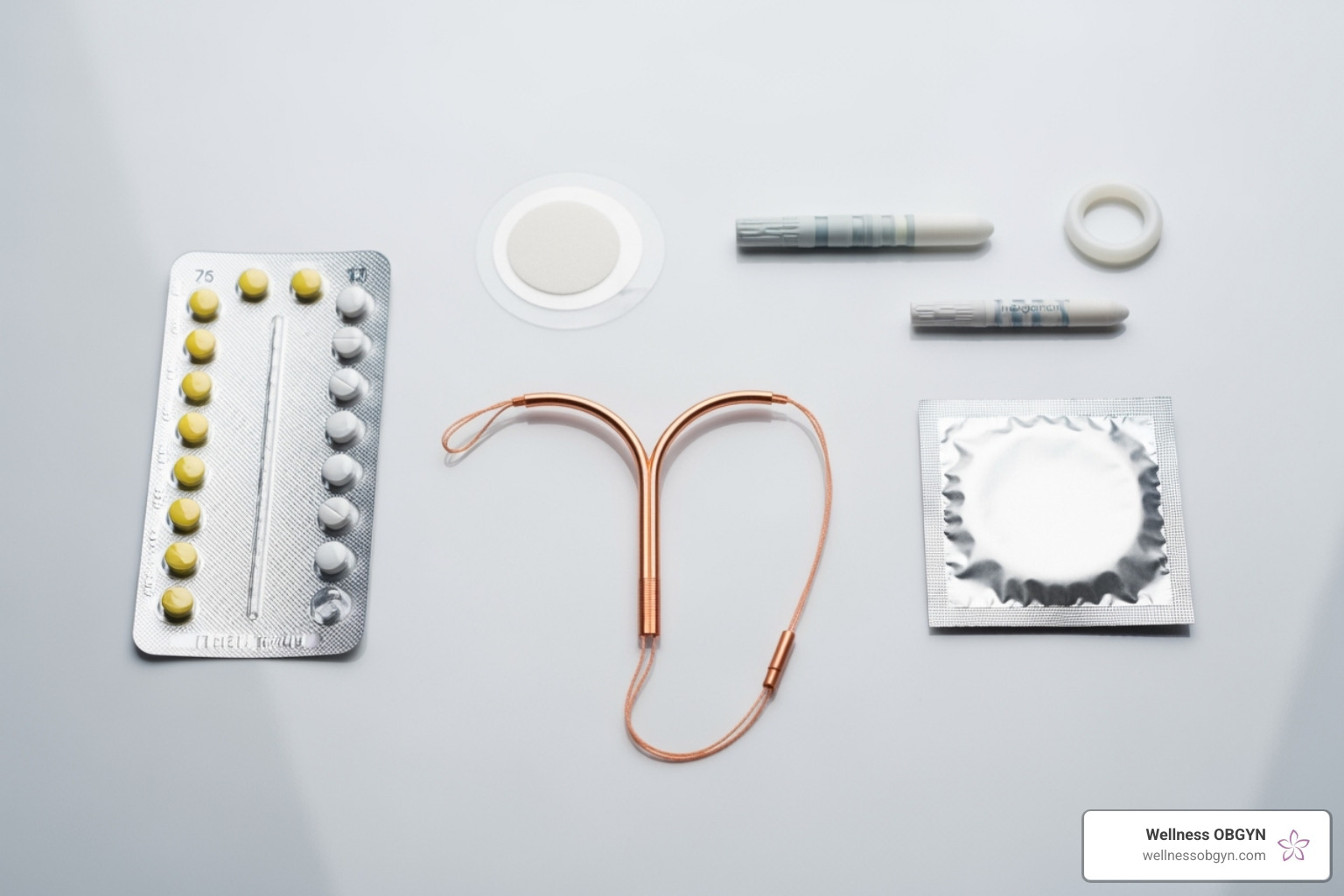
Lower Effectiveness Methods (High User-Dependency)
These methods are a major step up from chance but require correct use every time you have sex.
- Male Condoms: 13-18% typical failure rate. They are the only method that also protects against STIs.
- Female Condoms: 21% typical failure rate. Can be inserted hours before sex.
- Diaphragms and Cervical Caps: 12-29% typical failure rate. Must be inserted with spermicide before sex.
- Spermicides (used alone): 21-28% typical failure rate. A chemical barrier that must be applied correctly before intercourse.
Moderately Effective Methods (Require Consistent Action)
These methods are highly effective but require a consistent daily, weekly, or monthly routine.
- Birth Control Pills: 7-9% typical failure rate. Must be taken daily. They can also help with acne, reduce cramps, and make periods lighter. Our Best Hormonal Birth Control guide can help you choose.
- The Contraceptive Patch: 7-9% typical failure rate. A new patch is applied weekly.
- The Vaginal Ring: 7-9% typical failure rate. Inserted once a month.
- The Contraceptive Injection: 4% typical failure rate. Administered by a provider every three months, reducing user error.
Highly Effective Methods (Long-Acting & Permanent)
These are the superstars of contraception, with real-world effectiveness matching perfect-use rates. Once in place, they work without any action from you.
- Intrauterine Devices (IUDs): Less than 1% failure rate (0.2-0.8%). A small device inserted into the uterus that provides protection for 3 to 12 years. Hormonal IUDs can lighten or stop periods, while the copper IUD is a hormone-free option.
- The Contraceptive Implant: Less than 1% failure rate (0.05-0.1%). A small rod inserted under the arm skin, effective for up to five years. It is one of the most effective reversible methods available.
- Sterilization: Less than 1% failure rate. Permanent procedures like tubal ligation for women (0.5% failure) or vasectomy for men (0.15% failure) for those certain they don’t want children.
At Wellness OBGYN, we accept a Holistic Approach to Women’s Health. These “set it and forget it” methods offer incredible peace of mind and are ideal for those who want maximum effectiveness with minimal daily effort.
Choosing Your Method: Factors Beyond Effectiveness
While effectiveness is crucial when stepping away from the chance contraceptive method, it’s not the only factor. The right birth control should fit your health, routine, and values. Key considerations include:

- Non-contraceptive benefits: Hormonal methods can lighten periods, reduce cramps, clear acne, and even lower your risk for certain cancers. And studies show that, contrary to myth, birth control pills don’t make you gain weight.
- Side effects and risks: Every method has potential downsides, from minor spotting to rare but serious risks like blood clots. We’ll discuss what’s right for you.
- Lifestyle and values: Do you prefer a daily routine (pill) or a “set it and forget it” method (IUD)? Do you prefer hormonal or non-hormonal options?
- Cost and accessibility: Most insurance covers contraception, but we can help you steer any out-of-pocket costs.
- Reversibility: Most methods are easily reversible, allowing fertility to return quickly. Sterilization should be considered permanent.
At Wellness OBGYN, our Personalized Women’s Healthcare approach is built on shared decision-making, ensuring your choice aligns with your life.
Considering Sexual Health and Pleasure
Your contraceptive choice should improve your intimate life, not complicate it. When you move away from the uncertainty of the chance contraceptive method, you’re investing in both pregnancy prevention and sexual confidence.
- Impact on libido: This varies by person. For many, the freedom from worry improves sexual enjoyment.
- The dual role of condoms: Condoms are the only method that protects against both pregnancy and sexually transmitted infections (STIs). They can be used alone or with another method for dual protection.
Frequently Asked Questions about the Chance Contraceptive Method and Effectiveness
How does the effectiveness of the chance contraceptive method change with more frequent sex?
The 85% failure rate of the chance contraceptive method doesn’t change, but your personal probability of getting pregnant increases dramatically with more frequent unprotected sex. Each act is a gamble. More frequent intercourse makes it far more likely that sex will occur during your unpredictable fertile window, causing the cumulative risk of pregnancy to build up much faster—potentially in months or even weeks, rather than over a year.
What should I do if my contraceptive method fails or I use the chance method and regret it?
Act quickly. If your method failed (e.g., broken condom) or you regret using the chance contraceptive method, emergency contraception (EC) is a safe and effective option.
- EC Pills (Morning-After Pill): These work best when taken as soon as possible after unprotected sex, ideally within 72 hours, though some types are effective up to 5 days. They work by delaying or preventing ovulation.
- Copper IUD: This is the most effective form of EC and can be inserted by a provider up to five days after unprotected sex. It also provides highly effective, long-term contraception for up to 10 years.
EC is for emergencies, not regular use. Learn more about Emergency contraception (emergency birth control).
Are there any “advantages” to the chance contraceptive method?
While the chance contraceptive method is free and involves no hormones or devices, these perceived benefits are completely overshadowed by the massive disadvantages. An 85% failure rate means an unplanned pregnancy is a near certainty for most couples within a year. Furthermore, it offers zero protection against STIs. From a medical and practical standpoint, the risks vastly outweigh any “advantages,” making it the least effective and most unpredictable choice for anyone wanting control over their reproductive health.
Conclusion
Navigating contraceptive choices is empowering. Understanding the stark difference between the 85% failure rate of the chance contraceptive method and the >99% effectiveness of options like IUDs is the first step toward taking control of your reproductive health.
Your ideal method aligns with your lifestyle, health, and personal values. Whether you prefer a daily pill or a long-acting, “set it and forget it” device, the goal is to move from uncertainty to an informed choice. This means understanding typical use versus perfect use and choosing a method you can use confidently and consistently.
At Wellness OBGYN in Honolulu, we believe in expert, compassionate care custom to your individual needs. We partner with you, answering every question to help you find the perfect fit. The best contraceptive is one that gives you peace of mind and allows you to focus on your goals and dreams. Making an informed choice is an investment in your future.
For more guidance, explore our resource on Family Planning Made Easy: Tips for Conception and Reproductive Health. You don’t have to make these decisions alone; we’re here to support you.