
Why Early Detection Can Save Your Life
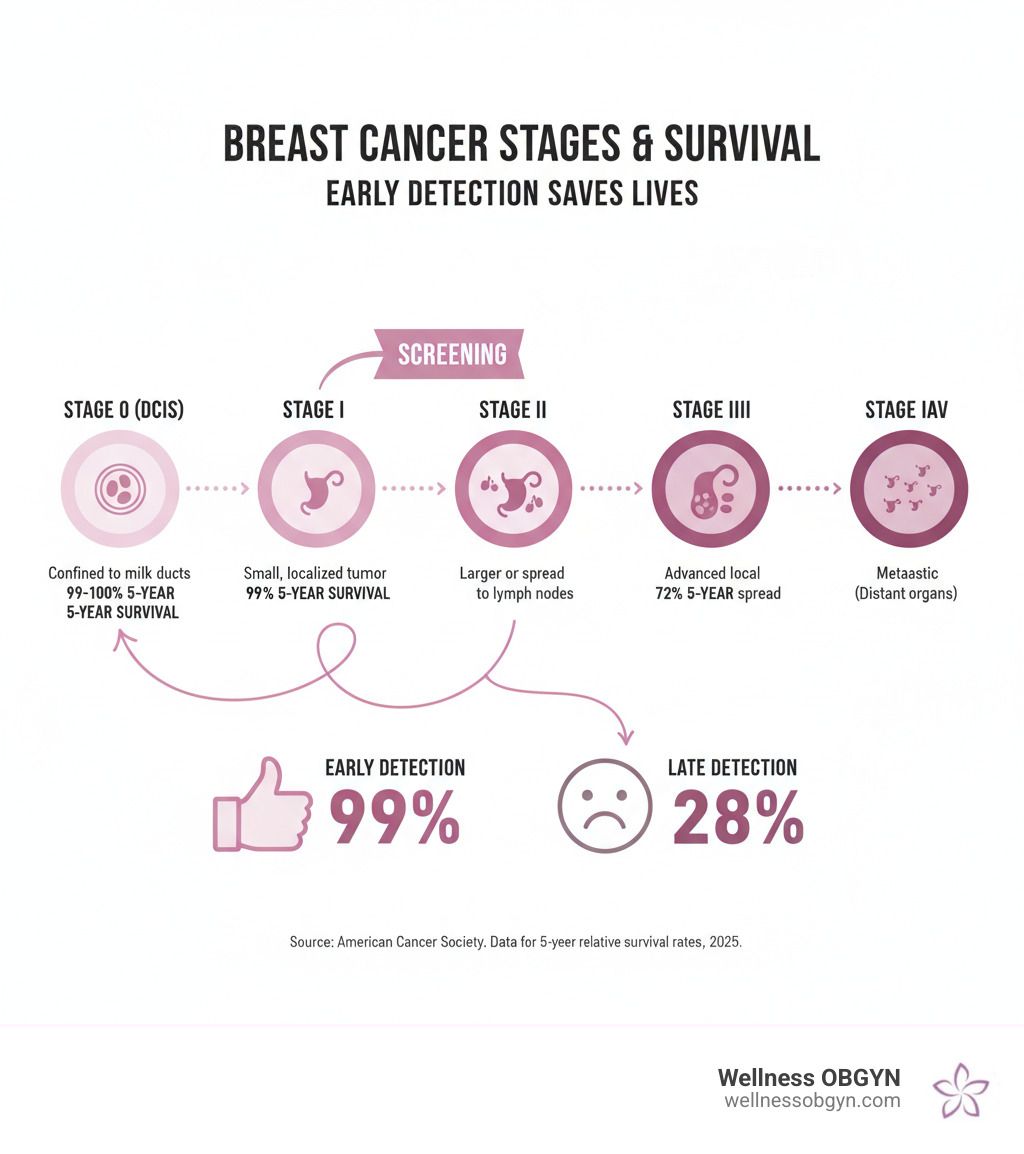
Breast cancer screening involves tests and exams used to find breast cancer before any symptoms appear. When breast cancer is found early, most people survive for at least 5 years, but if found later, only 3 out of 10 people survive for at least 5 years.
Key Facts About Breast Cancer Screening:
- Mammograms are the primary screening tool – low-dose x-rays of the breast
- Best age to start: Women 45-54 should get yearly mammograms (American Cancer Society)
- High-risk women may need screening starting at age 30 with both mammogram and MRI
- Benefits: Reduces breast cancer deaths by 15-20% for women aged 50-69
- Common concerns: About 10% of women are recalled for additional testing, but only 0.5% actually have cancer
Screening tests help find breast cancer when it may be smaller, less likely to have spread, and easier to treat successfully. Regular mammograms can often find breast changes years before physical symptoms develop, giving you the best chance for successful treatment.
The goal is simple: catch cancer early when treatment options are most effective and survival rates are highest. This same principle applies to cervical cancer screening, making preventive care one of your most powerful tools for long-term health.
As Dr. Cheryl Twu, a board-certified obstetrician-gynecologist with over a decade of experience in women’s preventive health, I’ve seen how breast cancer screening saves lives through early detection. My practice at Wellness OBGYN focuses on empowering women with the knowledge and personalized care needed to make informed decisions about their health.
Navigating Breast Cancer Screening Guidelines
Here’s what I wish every woman knew: breast cancer screening guidelines aren’t one-size-fits-all. They’re more like a starting point for a conversation between you and your doctor about what makes sense for your unique situation.
At Wellness OBGYN, I’ve had countless conversations with women who feel confused by conflicting recommendations they’ve read online. The truth is, different medical organizations sometimes offer slightly different advice because they weigh the benefits and risks differently. What matters most is finding the approach that’s right for you.
Your personal risk assessment is the foundation of good screening decisions. This means looking at your family history, your genes, your lifestyle, and your personal preferences. Some women want to start screening as early as possible for peace of mind. Others prefer to wait until the benefits clearly outweigh the risks. Both approaches can be perfectly reasonable with the right guidance.
Recommendations for Average-Risk Individuals
If you’re at average risk for breast cancer, you have some flexibility in when and how often you get screened. Let me walk you through what the major medical organizations recommend.
The American Cancer Society offers these guidelines: Women between 40 and 44 can choose to start yearly mammograms if they want to. This is entirely your decision, and there’s no wrong choice. Women 45 to 54 should get mammograms every year. Women 55 and older can switch to every other year, or continue yearly screening if they prefer and are in good health.
The U.S. Preventive Services Task Force takes a slightly more conservative approach. Their scientific research focuses heavily on the balance between catching cancer early and avoiding unnecessary anxiety from false alarms.
In Canada, the Canadian Task Force on Preventive Health Care generally recommends against routine screening for women in their 40s, but emphasizes that women in this age group should absolutely discuss their options with their healthcare provider. For women 50 to 74, they suggest screening every two to three years.
These differences might seem confusing, but they actually highlight something important: the decision about when to start breast cancer screening involves weighing personal factors that only you and your doctor can fully understand.
Recommendations for High-Risk Individuals
If you’re at high risk, the recommendations become much more straightforward and intensive. We consider you high risk if you have a BRCA1 or BRCA2 gene mutation, received chest radiation before age 30, or have a strong family history that puts your lifetime risk at 20% or higher.
For high-risk women, screening typically starts at age 30 with both a breast MRI and mammogram every year. This dual approach catches cancers that might be missed by mammography alone, especially in younger women with denser breast tissue.
More detailed information about risk factors can help you understand where you might fall on this spectrum. If you think you might be high risk, please bring this up at your next appointment so we can do a proper assessment.
Understanding the Benefits and Harms of Screening
Let’s talk honestly about what breast cancer screening can and can’t do. I believe you deserve to know both the benefits and the potential downsides so you can make an informed choice.
The benefits are significant: Screening reduces breast cancer-specific mortality for women 50 to 69 by catching cancer when it’s most treatable. The numbers tell a powerful story – for women 60 to 69, 377 women need to be screened to prevent one breast cancer death. For women 50 to 59, it’s 1,339 women screened to prevent one death. When cancer is found early, you’re more likely to need less aggressive treatment and have better outcomes overall.
But screening isn’t perfect, and the potential harms are worth understanding. False-positives are the most common issue – about 10% of women get called back for additional testing, even though only about 0.5% actually have cancer. This means 9.5% experience the anxiety and stress of thinking they might have cancer, plus the inconvenience and cost of extra tests.
Overdiagnosis is trickier to understand but equally important. Sometimes screening finds cancers that would never have caused problems if left alone. This can lead to unnecessary treatment for something that wasn’t actually threatening your life.
There’s also radiation exposure to consider, though the doses are very low, and about 1 in 5 cancers are missed by mammography, which can create false reassurance.
I share these statistics not to discourage screening, but because I believe knowledge empowers better decisions. When we sit down together to create your personalized screening plan, we’ll weigh all these factors against your individual risk profile and preferences.
Key Methods for Breast Cancer Screening
When you’re ready to take charge of your breast health, it’s helpful to understand the different screening tools available. While several methods exist for breast cancer screening, mammography remains our most trusted and effective primary screening tool.
Think of these screening methods as your health detective toolkit. Each one has its strengths, and together they help us catch potential problems early when treatment works best.
The Mammogram: Your First Line of Defense
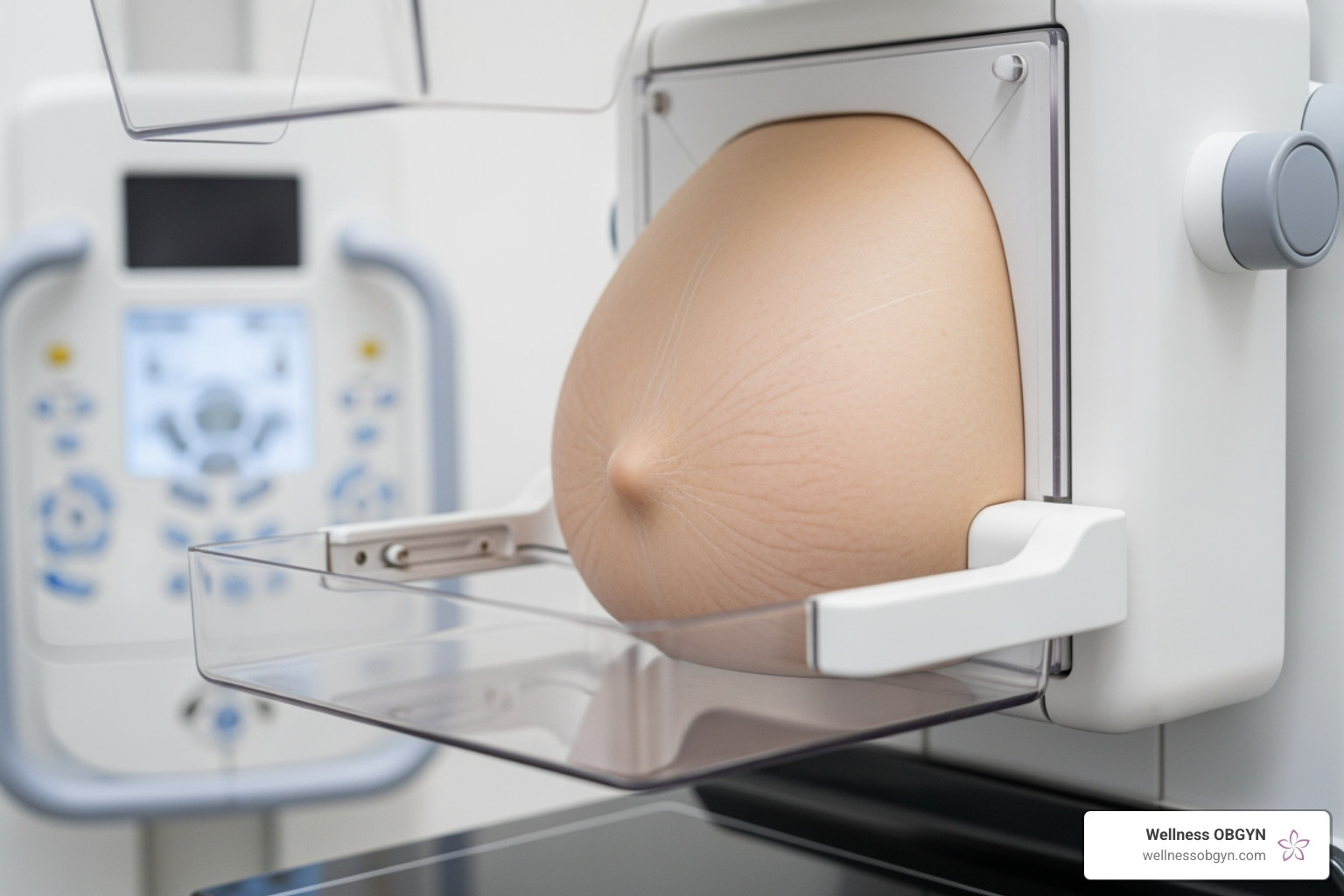
A mammogram might sound intimidating, but it’s really just a specialized X-ray designed specifically for breast tissue. During the exam, you’ll stand in front of the mammography machine while a technologist positions your breast between two clear plastic plates.
Yes, there’s some compression involved, and it might feel uncomfortable for a few seconds. But here’s why it matters: this gentle compression spreads out your breast tissue, giving us the clearest possible view while using the lowest amount of radiation necessary.
What makes mammograms so powerful is their ability to spot tiny changes in your breast tissue—like small clusters of calcium deposits or masses—often years before you or even your doctor could feel them during a physical exam. We’re talking about finding potential problems when they’re still very small and much easier to treat successfully.
The numbers speak for themselves: women who get regular mammograms are more likely to have breast cancer found at an early stage, need less aggressive treatments, and have better outcomes overall. It’s like having a security system that alerts you to trouble before it becomes a real threat.
One thing to keep in mind is that breast density can affect how well mammograms work. If you have dense breast tissue, both the tissue and any potential tumors appear white on the mammogram, making it a bit like trying to find a snowball in fresh snow. The National Cancer Institute provides helpful information about breast density and its impact on screening. Don’t worry though—we’ll discuss your individual breast density and what it means for your screening plan.
2D vs. 3D Mammography (Tomosynthesis)
You might wonder about the difference between 2D and 3D mammograms, and honestly, it’s a great question that many of our patients ask.
Traditional 2D mammography takes two X-ray pictures of each breast—one from top to bottom and one from side to side. These create flat, two-dimensional images that radiologists examine for any unusual changes.
3D mammography, also called tomosynthesis, is like getting a much more detailed view of your breast tissue. Instead of just two flat pictures, the machine takes multiple X-ray images from different angles around your breast. A computer then combines these into thin “slices” that radiologists can flip through, almost like turning pages in a book.
Imagine trying to find a specific item in a cluttered drawer. With 2D, you’re looking at everything stacked on top of each other. With 3D, you can examine each layer separately—making it much easier to spot what you’re looking for.
The benefits of 3D mammography are pretty impressive. Studies show it finds more breast cancers than 2D alone and significantly reduces the chance you’ll be called back for additional testing. This is especially true if you have dense breast tissue, where the 3D technology really shines by reducing the overlap that can hide or mimic problems.
At Wellness OBGYN, we often recommend 3D mammography when it’s available. While it does involve slightly more radiation than 2D (still very low overall), the improved accuracy and reduced anxiety from fewer false alarms usually make it worthwhile.
The Role of Breast Exams
Let’s talk about the other types of breast exams you might have heard about: clinical breast exams performed by healthcare providers and breast self-exams that you do at home.
Here’s where the science has evolved quite a bit. While these physical exams were once considered essential parts of breast cancer screening, current research shows they don’t add much benefit when you’re already getting regular mammograms. Studies haven’t found that clinical breast exams or self-exams help detect breast cancer any earlier when women are also having screening mammograms.
But before you think we’re dismissing the importance of knowing your body—quite the opposite! We strongly believe in breast self-awareness. This means becoming familiar with how your breasts normally look and feel, and letting us know promptly if you notice any changes.
Think of it as the difference between following a rigid monthly exam routine versus simply being tuned in to your body. You know when something feels different with your skin, your energy, or your digestion. The same awareness applies to your breasts.
If you notice changes like a new lump, breast pain, nipple discharge, or changes in the skin texture, don’t wait for your next mammogram—give us a call. Your awareness, combined with regular mammograms, creates the most comprehensive approach to breast health.
After the Screening: Understanding Your Results
Getting a call back after a breast cancer screening can be nerve-wracking, but an abnormal result doesn’t automatically mean cancer. Our focus is always on getting you clear answers and providing compassionate care every step of the way.

What Happens After an Abnormal Mammogram?
First, take a deep breath. About 10% of women are recalled for more testing after their screening mammogram, but here’s the reassuring part: most of these recalls are false-positives. This means the mammogram picked up something that looked suspicious but turned out to be perfectly normal breast tissue.
To put this in perspective, out of every 100 women called back, only about 5 will actually have cancer. That means 95 women will get the all-clear after additional testing. We know waiting for answers feels overwhelming, but the odds are very much in your favor.
When you’re called back, we’ll schedule diagnostic tests that give us a much clearer picture of what’s happening. These tests are more detailed and focused than your original screening mammogram.
A diagnostic mammogram is usually the first step. Think of it as getting a closer look at the area that caught our attention. We’ll take special views and sometimes magnify certain spots to see exactly what we’re dealing with. This focused approach often resolves the question right away.
If we need even more information, we might recommend a breast ultrasound. This gentle test uses sound waves to create detailed pictures of your breast tissue. It’s particularly helpful for telling the difference between a solid mass and a harmless fluid-filled cyst. You can learn more about breast ultrasound here.
For some women, especially those at higher risk, we might suggest a breast MRI. This advanced imaging uses powerful magnets to create incredibly detailed pictures of breast tissue. It’s like having superhuman vision that can see things other tests might miss.
If imaging tests still show something that needs investigation, we’ll talk about a biopsy procedure. This is the only way to know for certain whether abnormal cells are present. During a biopsy, we remove a tiny sample of tissue for examination under a microscope. While the word “biopsy” can sound scary, most women find the procedure much easier than they expected.
Throughout this entire process, we’re here to answer your questions, explain each step, and provide the emotional support you need. We understand that waiting for results creates anxiety, and we’ll do everything we can to get you answers as quickly as possible.
Making an Informed Decision about your breast cancer screening
Your breast cancer screening journey should feel like a partnership between you and your healthcare team. At Wellness OBGYN, we practice something called shared decision-making, which means we work together to create a screening plan that fits your unique situation.
During our conversations, we’ll explore your personal risk factors together. This includes your family history, any genetic factors, your age, and other health considerations that might influence your screening needs. Some women need more intensive screening starting at a younger age, while others can follow standard guidelines.
We’ll also discuss the benefits and potential harms of screening as they apply specifically to you. What matters most to one woman might be different for another. Some women prioritize catching cancer as early as possible, even if it means dealing with occasional false-positives. Others prefer a less intensive approach to avoid unnecessary anxiety.
Your values, preferences, and lifestyle all play important roles in creating your personalized screening plan. Maybe you travel frequently and need flexible scheduling. Perhaps you have anxiety about medical procedures and would benefit from extra support and explanation. Or you might be someone who wants the most advanced screening technology available.
We believe that when you truly understand your options and feel heard in the decision-making process, you’ll feel more confident about your choices. Our goal isn’t to tell you what to do, but to give you the knowledge and support you need to make decisions that feel right for you.
Screening recommendations aren’t set in stone. As your life changes, your risk factors evolve, or new research emerges, we can adjust your screening plan accordingly. What matters most is that you feel empowered and supported every step of the way.
Frequently Asked Questions about Breast Cancer Screening
At Wellness OBGYN, we love answering questions about breast cancer screening. It helps us ensure you feel completely comfortable and informed about your health decisions. Here are some of the most common concerns we hear from our patients in Honolulu.
Do mammograms hurt?
Let’s be honest – mammograms can be uncomfortable. The compression needed to spread out your breast tissue for clear images might cause some discomfort or even brief pain. But here’s the good news: this discomfort typically lasts only a few seconds during the actual imaging.
The compression isn’t just to make your day more challenging – it serves important purposes. It spreads out the breast tissue so we can see it clearly, reduces the radiation needed for good images, and keeps everything still to prevent blurry pictures.
You can take steps to make your mammogram more comfortable. Scheduling your appointment for the week after your period often helps, since your breasts are usually less tender then. Don’t hesitate to communicate with your technologist – they’re experienced professionals who want you to be as comfortable as possible while still getting the best images.
Some women find that avoiding caffeine for a few days before their mammogram helps reduce breast tenderness. Any discomfort you feel is brief, but the peace of mind from early detection can last a lifetime.
How much radiation is in a mammogram?
We understand that radiation exposure is a real concern for many women. The good news is that mammograms use a very low dose of radiation – about the same amount you’d naturally receive from your environment over just a few months of regular living.
Modern mammography equipment is specifically designed to use the lowest possible radiation dose while still producing clear, diagnostic-quality images. The medical community consistently agrees that for most women, the benefits of early breast cancer detection far outweigh the extremely small risk from this minimal radiation exposure.
Think of it this way: the tiny amount of radiation from your mammogram is a small trade-off for the potentially life-saving information it provides.
What is overdiagnosis?
Overdiagnosis is one of the more complex aspects of breast cancer screening, and we think it’s important you understand what it means. Simply put, overdiagnosis happens when screening finds a cancer that would never have caused you any problems during your lifetime if it hadn’t been finded.
Ductal carcinoma in situ (DCIS) is often discussed when talking about overdiagnosis. Before widespread mammography screening began, only about 4,900 women were diagnosed with DCIS in 1983. Today, we expect approximately 59,080 women to be diagnosed with DCIS in 2026.
Here’s the challenge: while some DCIS cases can develop into invasive cancer, others may never progress or cause harm. Unfortunately, we currently don’t have reliable ways to predict which cases will become dangerous and which won’t.
This creates a difficult situation. Once we find any cancer, even a slow-growing one that might never threaten your health, it often leads to treatment like surgery or radiation. These treatments have their own side effects and can impact your quality of life.
Overdiagnosis is a known limitation of screening, and it’s exactly why we believe in having thorough conversations with you about both the benefits and potential downsides of screening. We want you to make the decision that feels right for your unique situation, armed with all the facts.
Taking Control of Your Breast Health
Your breast cancer screening journey is ultimately about taking an active role in protecting your health and your future. Throughout this guide, we’ve walked through the complexities of screening guidelines, explored different methods, and addressed common concerns—all with one goal in mind: empowering you to make informed decisions.
The evidence is clear that early detection saves lives. When breast cancer is found at its earliest stages, survival rates are dramatically higher, and treatment options are often less invasive. Regular screening mammograms can detect changes in your breast tissue years before you or your doctor could feel them, giving you the best possible chance for successful treatment.
But here’s what’s equally important: screening isn’t a one-size-fits-all approach. Your personal risk factors, family history, age, and even your own preferences all play a role in determining what’s right for you. This is why screening is truly a personal decision that should always involve an open conversation with your healthcare provider.
We believe that knowledge is empowerment. Understanding both the benefits and potential limitations of screening—from the reassuring statistics about reduced mortality to the reality of false-positives and overdiagnosis—allows you to approach your breast health with confidence rather than fear.
At Wellness OBGYN here in Honolulu, we’re passionate about providing personalized and compassionate women’s healthcare that puts you at the center of every decision. We know that discussing breast health can feel overwhelming, and we’re here to make sure you never feel alone in this process. Our approach emphasizes shared decision-making because we believe the best health outcomes happen when you’re fully informed and actively involved in your care.
Taking control of your breast health means more than just scheduling your mammogram—though that’s certainly important. It means staying informed, knowing your family history, being aware of changes in your body, and maintaining open communication with your healthcare team.
We encourage you to prioritize your breast health starting today. Whether you need to schedule your first mammogram, discuss your family history, or simply ask questions about screening guidelines, we’re here to support you every step of the way. Learn more about our comprehensive wellness exams and how we can support your overall health journey.
Your well-being is our greatest concern, and we consider it a privilege to partner with you on your health journey. Taking care of yourself isn’t just about you—it’s about all the people who love and depend on you too.