
Finding Your Perfect Contraceptive Match
Best hormonal birth control options in 2023, ranked by effectiveness:
- Hormonal IUDs (99.8% effective) – Low-maintenance protection for 3-8 years with reduced periods
- Implant/Nexplanon (99.9% effective) – Set-and-forget arm implant lasting 3-5 years
- Injection/Depo-Provera (96% effective) – Quarterly shot with no daily reminder
- Combination Pills (93% effective) – Daily pill with estrogen and progestin benefits
- Patch/Ring (93% effective) – Weekly or monthly hormone delivery with fewer reminders
- Progestin-only Pills (93% effective) – Estrogen-free daily option ideal for certain health conditions
Choosing the best hormonal birth control for your body and lifestyle can feel overwhelming. With so many options—from daily pills to long-acting implants and IUDs—finding your perfect match requires understanding how each method works, their effectiveness rates, and their unique benefits beyond pregnancy prevention.
The reality is that no single contraceptive works best for everyone. Your ideal method depends on your health history, lifestyle, future pregnancy plans, and even how you respond to different hormones.
In this comprehensive guide, we’ll break down each hormonal contraceptive option, compare their pros and cons, and help you understand which might work best for your unique situation.
I’m Dr. Cheryl Twu, board-certified OB-GYN and founder of Wellness OBGYN in Honolulu, where I’ve helped thousands of patients find their best hormonal birth control match through personalized consultations that consider their whole-body health, lifestyle needs, and reproductive goals. My integrative approach combines evidence-based Western medicine with holistic wellness principles to ensure your contraceptive choice supports your overall wellbeing.

Hormonal Birth Control 101: Mechanisms & Hormone Types
Ever wonder how that tiny pill or discreet patch actually prevents pregnancy? Let’s explain how hormonal birth control works in your body – because understanding the “how” can help you find your perfect match.
How Hormones Prevent Pregnancy
All hormonal birth control methods are like skilled multitaskers, preventing pregnancy through three clever strategies:
First, they’re ovulation blockers – most hormonal methods tell your ovaries, “Not this month!” by preventing egg release. No egg in play means no possibility of fertilization.
Second, they create a cervical mucus barrier – imagine your cervical mucus transformed into a sticky bouncer that blocks sperm from passing through. This thickened mucus makes it nearly impossible for sperm to swim their way to an egg.
Third, they cause endometrial thinning – hormonal methods make your uterine lining thinner and less hospitable. Even if fertilization somehow occurred, implantation becomes much less likely.
The fascinating part? Different methods rely on these mechanisms to varying degrees. Combination methods excel at blocking ovulation, while some progestin-only options might allow occasional ovulation but still prevent pregnancy through their backup mechanisms. It’s like having a primary security system with two additional layers of protection!
Combination vs. Progestin-Only
When shopping for hormonal birth control, you’ll encounter two main categories:
Combination Methods contain both estrogen (typically ethinyl estradiol) and progestin. These include your traditional birth control pills, the vaginal ring (NuvaRing), and the patch. They’re highly effective at preventing ovulation but aren’t right for everyone.
Progestin-Only Methods skip the estrogen altogether. These include the “mini-pill,” hormonal IUDs (Mirena, Kyleena, Skyla, Liletta), the arm implant (Nexplanon), and the Depo-Provera shot. They’re excellent options if you can’t take estrogen due to health concerns or are experiencing estrogen-related side effects.
This distinction matters for your health. Estrogen-containing methods have different side effects and contraindications than their progestin-only cousins. For instance, combination methods carry a slightly higher risk of blood clots, while progestin-only methods might cause more irregular bleeding patterns.
Good news: today’s hormonal contraceptives use much lower hormone doses than their predecessors. Modern combination pills contain just 10-35 micrograms of ethinyl estradiol – a dramatic drop from the 150 micrograms found in the 1960s versions! Scientific research on pill safety confirms these lower-dose options maintain excellent effectiveness while minimizing side effects.
Finding your perfect hormone match might take some trial and error – and that’s completely normal! At Wellness OBGYN, we’re here to guide you through the options and help you find the right balance. For more information about how hormones affect your overall wellness, check out our More info about Hormone Therapy Options.
Comparing Your Options: Finding the Best Hormonal Birth Control
Let’s explore each method in detail to help you find which might be your perfect match. Think of this as your personal tour through hormonal contraception—where effectiveness meets lifestyle compatibility.

Pills, Patch & Ring
Combined Oral Contraceptives (COCs) are perhaps the most familiar option for many women. With typical use, they’re about 93% effective (though this jumps to over 99% with perfect use). Taking a daily pill might seem simple, but consistency matters—ideally around the same time each day. Most come in monthly packs with 21-24 active pills and up to 7 inactive ones.
Many women appreciate that the pill is widely available and easy to start or stop. Plus, it often brings welcome side benefits like clearer skin and easier periods. The downside? You’ll need to remember that daily dose, and certain medications or missed pills can reduce effectiveness.
If you’re looking for estrogen-free options, Progestin-Only Pills (POPs) might be your answer. They offer similar effectiveness rates but require stricter timing—typically a 3-hour window for traditional minipills. Unlike combination pills, these contain no placebo week, meaning you’ll take active pills continuously. They’re ideal if you’re breastfeeding or can’t take estrogen for medical reasons, though they may cause irregular bleeding patterns.
For those who struggle with daily reminders, the Patch (Xulane, Twirla) offers a weekly alternative. Simply apply it to clean, dry skin on your abdomen, buttock, or upper arm, and change it weekly for three weeks, with one patch-free week monthly. With the same 93% typical effectiveness as pills, the patch’s visibility makes it easy to confirm it’s in place. Some users experience skin irritation, and the patch delivers slightly higher estrogen levels than most pills.
The Vaginal Ring (NuvaRing, Annovera) brings monthly convenience—insert it for three weeks, remove for one week, and you’re protected. NuvaRing requires monthly replacement, while Annovera can be reused for a full year. With 93% typical effectiveness and lower hormone doses than pills, many women appreciate fewer hormone-related side effects. The main considerations? You’ll need to be comfortable with vaginal insertion, and some experience irritation.
Injection (Depo-Provera)
The Depo-Provera shot offers 96% effectiveness with typical use and requires just four appointments yearly. Every 12-14 weeks, you’ll receive an injection in your arm or buttock that provides continuous protection. Many women appreciate the privacy of this method—there’s nothing to store at home or remember daily.
The shot often reduces or eliminates periods, which many users consider a benefit. However, it comes with some unique considerations: once injected, it cannot be removed from your system, and it’s associated with more weight gain than other methods (averaging 5 pounds more than copper IUD users over a year). Additionally, fertility can take up to 10 months to return after stopping.
Implant (Nexplanon)
If you’re seeking set-it-and-forget-it best hormonal birth control, the Nexplanon implant might be your ideal match. This matchstick-sized rod, inserted under the skin of your upper arm, boasts over 99% effectiveness with both typical and perfect use—making it the most reliable reversible contraceptive available.
FDA-approved for 3 years (though research shows effectiveness up to 5 years), Nexplanon requires no daily, weekly, or monthly attention. Once removed, fertility returns quickly. The downsides? You’ll need a minor procedure for insertion and removal, and some women experience unpredictable bleeding patterns, especially in the first year.
Hormonal IUDs (Mirena, Kyleena, etc.)
Hormonal IUDs combine incredible effectiveness (over 99%) with long-lasting protection. Options include Mirena and Liletta (up to 8 years), Kyleena (5 years), and Skyla (3 years). These T-shaped devices sit in your uterus, slowly releasing small amounts of progestin locally.
Many women love that hormonal IUDs significantly reduce or even eliminate monthly periods while requiring zero maintenance after insertion. They can even serve as emergency contraception if inserted within 5 days of unprotected sex. The initial insertion involves a brief procedure that may cause cramping, and there’s a small risk of expulsion or perforation—though both are rare.
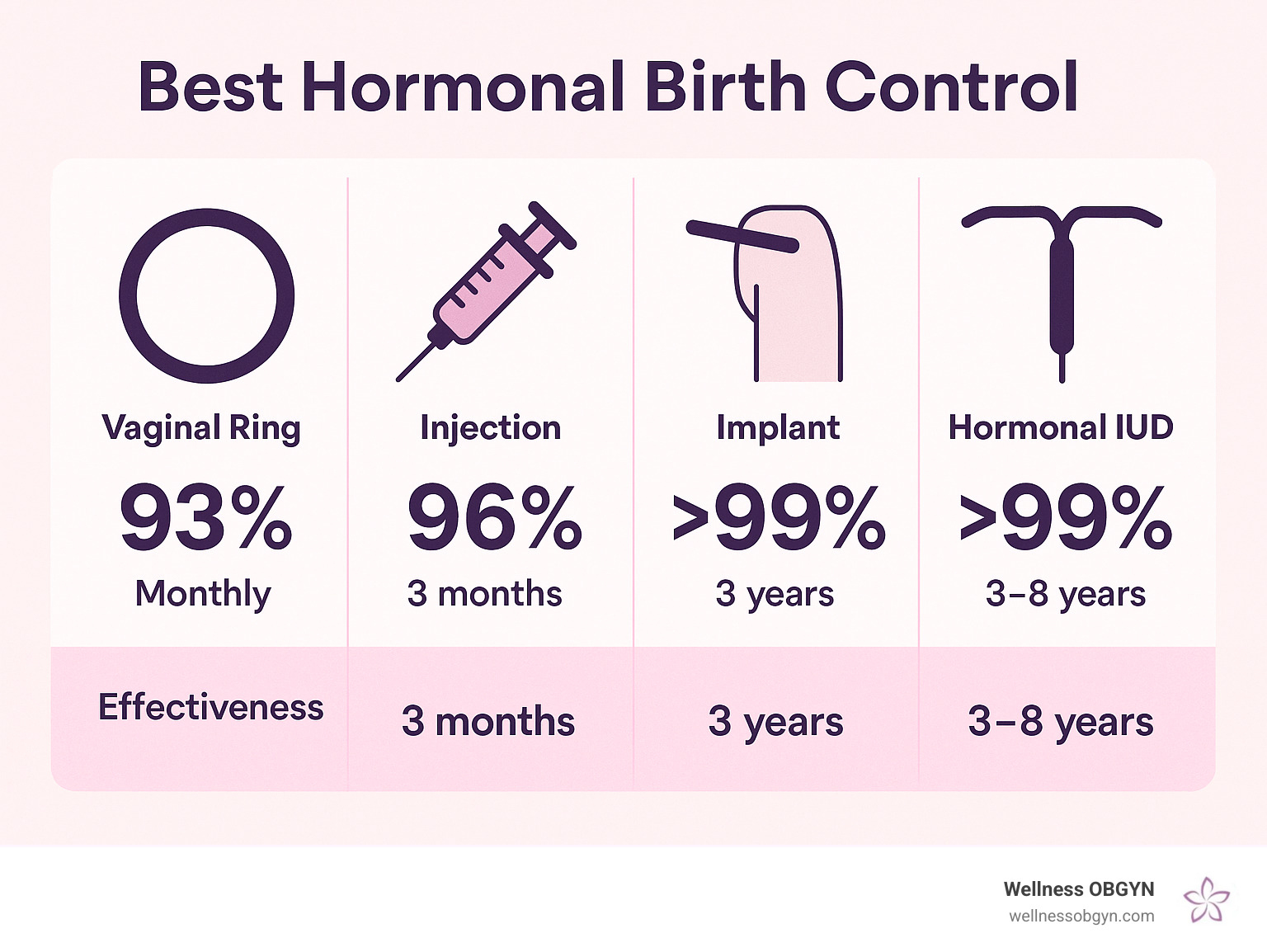
At Wellness OBGYN in Honolulu, we believe finding your best hormonal birth control match should be a personalized experience. Your perfect method balances effectiveness with your lifestyle, health history, and personal preferences. During your consultation, we’ll discuss all these options in detail, addressing your specific concerns and helping you make an informed choice that supports your reproductive goals and overall wellbeing.
Safety, Side Effects & Added Health Benefits
When it comes to finding the best hormonal birth control for your body, understanding both potential side effects and bonus health benefits is essential for making an informed choice.
Common Side Effects
Let’s be honest – no medication is without potential side effects. With combination methods like pills, patches, and rings, you might experience nausea (which typically fades after 2-3 months), breast tenderness, headaches, or spotting between periods, especially during those first few months as your body adjusts.
One concern many women have involves blood clots. While combination methods do slightly increase this risk (about 3-9 per 10,000 women annually compared to 1-5 for non-users), it’s worth noting that pregnancy itself actually carries a higher blood clot risk (5-20 per 10,000 women). This perspective helps put the relative risk in context.
For progestin-only options like minipills, implants, hormonal IUDs, and injections, the most common side effect is irregular bleeding or spotting, particularly during the initial adjustment period. You might also experience headaches, mood changes, or acne (which varies depending on the specific progestin type).
Despite what you may have heard from friends or read online, most hormonal birth control methods don’t cause weight gain. The one exception is the Depo-Provera injection, which research shows is associated with about 5 pounds more weight gain than copper IUD users over a year. For other methods, any weight changes typically just reflect normal annual fluctuations.
Non-Contraceptive Health Benefits
Beyond preventing pregnancy, hormonal birth control offers some impressive health perks that many women don’t realize:
Your periods can become lighter and less painful, especially with hormonal IUDs, implants, and extended-cycle pills. For women who struggle with acne, combination pills containing certain progestins (like drospirenone or norgestimate) often provide noticeable skin improvements.
Hormonal methods also reduce your risk of certain cancers – including ovarian, endometrial, and colorectal cancers. They can effectively treat medical conditions like endometriosis, PCOS, and menstrual migraines, while creating more predictable cycles for those with irregular periods. Plus, combination methods suppress ovulation, which reduces the formation of functional ovarian cysts.
For women experiencing sexual wellness concerns like painful intercourse or decreased satisfaction, we also offer specialized treatments beyond hormonal birth control.
Who Should Skip Estrogen?
Estrogen-containing methods aren’t right for everyone. You should avoid combination methods if you have:
A history of blood clots or certain clotting disorders, uncontrolled high blood pressure, migraine with aura, current or past breast cancer, liver disease, or if you’re over 35 and smoke cigarettes. Women who are less than 3 weeks postpartum or are breastfeeding and less than 6 weeks postpartum should also avoid estrogen-containing methods.
If any of these apply to you, don’t worry – progestin-only methods provide safe, effective alternatives with excellent pregnancy prevention rates. You can learn more about how hormones affect your overall health through our More info about Hormone Therapy Options resource.
The Upside of Progestin-Only & LARC
Long-acting reversible contraceptives (LARCs) like implants and IUDs truly shine when it comes to convenience and effectiveness. With over 99% effectiveness rates and “set it and forget it” convenience, they eliminate the stress of remembering daily pills or weekly patches.
Though LARCs have a higher upfront cost, they’re actually more cost-effective over time. They offer a quick return to fertility once removed, tend to cause fewer systemic side effects than some other methods, and are safe for nearly all women – including those who can’t use estrogen.
Progestin-only methods are particularly valuable if you have estrogen contraindications. Research confirms they’re unlikely to increase stroke risk, even in women who experience migraines with aura. This safety profile makes them an excellent option for women with certain health concerns, as Scientific research on clot risk has shown.
At Wellness OBGYN, we believe in finding the best hormonal birth control option that aligns with your unique health profile and lifestyle needs. Every body responds differently to hormones, which is why personalized consultation is so important when making this decision.
Practical Guide: Choosing, Using & Troubleshooting
Finding your best hormonal birth control match isn’t just about effectiveness—it’s about finding the method that seamlessly fits into your unique life. Let’s walk through the practical aspects of making this important decision together.
How to Choose the best hormonal birth control for Your Life
Think of choosing birth control like finding the perfect pair of jeans—what works beautifully for your friend might not be right for you. Here’s what to consider:
Your daily routine matters enormously when selecting contraception. Are you someone who thrives on routines and can reliably take a pill each day? Or would you prefer something you can “set and forget” for years? For busy professionals or those with unpredictable schedules, methods like the implant or IUD can provide peace of mind without daily maintenance.
Your health history creates the framework for safe options. If you experience migraines with aura, have high blood pressure, or smoke cigarettes over age 35, estrogen-containing methods may not be your safest bet. But don’t worry—progestin-only options like the hormonal IUD or implant offer equally effective alternatives without the estrogen-related risks.
Future pregnancy plans should guide your timing decisions. If you’re hoping to conceive within the next year, methods with immediate fertility return (like pills or the hormonal IUD) might make more sense than the injection, which can delay fertility for up to 10 months after stopping.
Your body’s past responses to hormones can be telling. If you’ve previously tried hormonal methods with success or challenges, share this history with your provider. Sometimes switching between different progestin types can make all the difference in finding a method that feels right for your body.

At Wellness OBGYN in Honolulu, we believe birth control decisions should be collaborative. Our approach centers on understanding your whole life context—not just your medical needs. We’ll discuss practical considerations like insurance coverage (some methods have higher upfront costs but save money long-term) and whether you need additional STI protection (remember that hormonal methods don’t protect against infections).
For our younger patients exploring contraception options, we provide specialized Adolescent Gynecology services that create a comfortable, judgment-free space to discuss these important decisions.
What to Do If You Miss a Dose of the best hormonal birth control
Even the most organized among us occasionally miss a dose. Here’s your quick troubleshooting guide:
With combined pills, timing matters. If you’re less than 24 hours late, simply take the missed pill right away and continue your pack as normal. More than 24 hours late? Take the missed pill immediately, continue the pack, but add backup contraception (like condoms) for the next 7 days to stay protected.
Progestin-only pills have a stricter window. Traditional minipills containing norethindrone need to be taken within a 3-hour window each day. If you’re more than 3 hours late, take it immediately and use backup protection for 48 hours. The newer drospirenone minipill (Slynd) offers a more forgiving 24-hour window, similar to combination pills.
For the patch or ring, if you’re less than 24 hours late changing or inserting, simply apply/insert the new one and continue your schedule. More than 24 hours late? Apply/insert the new one and use backup contraception for 7 days.
If you’re late for your Depo-Provera shot, timing is crucial. Less than 2 weeks late? Get the injection and you’re still protected. More than 2 weeks late? Get the injection but use backup protection for 7 days afterward.
With implants and IUDs, the main concern is ensuring they’re still properly placed. Occasionally check for your implant under your skin or your IUD strings, and always remember to replace them before their expiration date.
FAQ Corner (3 fast answers)
Q: How effective is hormonal birth control really?
A: The numbers tell an interesting story. With perfect use, most hormonal methods are 99%+ effective. But in real life—with forgotten pills, delayed patches, or late shots—the effectiveness of user-dependent methods drops to about 93%. This means about 7 out of 100 typical users will experience an unplanned pregnancy each year. The beauty of LARCs like implants and IUDs is that they maintain their >99% effectiveness regardless of your memory or schedule, since they work continuously without your intervention.
Q: Does hormonal birth control cause weight gain?
A: Despite persistent myths, most hormonal methods don’t cause significant weight changes. The exception is the Depo-Provera injection, which is associated with about 5 pounds more weight gain than copper IUD users over a year. For other methods, any weight changes typically mirror the average American woman’s normal pattern of gaining about 2 pounds annually. If weight concerns are important to you, we can discuss options least likely to affect your weight.
Q: How soon can I get pregnant after stopping hormonal birth control?
A: Your fertility typically returns quickly after most methods. With pills, the patch, ring, implant, and hormonal IUD, fertility returns immediately once you stop or have them removed. The main exception is the injection, which can delay fertility return for up to 10 months. If you’re planning a pregnancy in the near future, we can help you choose a method that aligns with your timeline.
Conclusion
Finding the best hormonal birth control for you isn’t just about choosing the most effective method—it’s about finding what works harmoniously with your unique body, lifestyle, and future plans. Like a favorite pair of jeans or the perfect coffee order, your ideal contraceptive is deeply personal and may evolve throughout different seasons of your life.
At Wellness OBGYN in Honolulu, we believe that contraceptive care should be as individual as you are. When patients visit our office, they’re often surprised by how much time we spend getting to know them—not just their medical history, but their daily routines, relationships, and life goals. This personalized approach helps us recommend options that will seamlessly integrate into your life.
The truth is, birth control is never one-size-fits-all. Your best friend might swear by her hormonal IUD, while your sister loves her pill—and both could be completely wrong for you. The best hormonal birth control method is ultimately the one you’ll use consistently, that fits comfortably into your life, and that supports your overall wellbeing both now and in the future.
We’ve seen how transformative the right contraceptive choice can be. From the college student who no longer misses class due to debilitating cramps, to the busy executive who appreciates her set-it-and-forget-it implant, to the new mom who needs a breastfeeding-compatible option—finding your perfect match can be life-changing.
If you’re feeling overwhelmed by options or unsure where to start, we’re here to help. Our team specializes in patient-centered contraceptive counseling that empowers you to make confident decisions about your reproductive health. We take pride in creating a judgment-free space where your questions are welcomed and your preferences respected.
Whether you’re starting birth control for the first time, considering switching methods after years of use, or planning your contraceptive approach after having a baby, we’re here to guide you through each step with expert knowledge and compassionate care. Your reproductive journey is uniquely yours—and we’re honored to be part of it.