
What Is Laser Therapy for Menopause — and Does It Work?
Laser therapy for menopause is a non-hormonal treatment that uses focused laser energy to stimulate collagen production in vaginal tissue, helping relieve dryness, burning, and discomfort caused by hormonal decline.
Here’s a quick overview of what you need to know:
| Question | Quick Answer |
|---|---|
| What does it treat? | Vaginal dryness, burning, itching, pain during sex, urinary leakage |
| How does it work? | Creates controlled heat to trigger collagen regrowth and tissue repair |
| Is it as effective as estrogen? | Short-term: comparable results in most studies |
| Is it FDA-approved for this use? | No — the FDA issued a warning in 2018 about unapproved marketing |
| Who benefits most? | Women who can’t use hormones (e.g., breast cancer survivors) |
| How much does it cost? | Significantly more than topical estrogen — roughly 23-24x the price |
Up to 84% of women experience symptoms of Genitourinary Syndrome of Menopause (GSM) — the clinical term for the vaginal and urinary changes that come with declining estrogen. Symptoms like vaginal dryness, painful intercourse, and urinary urgency can persist for years or even decades without treatment, quietly affecting quality of life, intimacy, and confidence.
For many women, topical estrogen is the first-line solution. But for those with hormone-sensitive conditions or a preference for non-hormonal care, vaginal laser therapy has emerged as a compelling — if still evolving — alternative.
The evidence is nuanced. Some studies show real benefits. Others, including sham-controlled trials, raise important questions. Understanding the difference between marketing and medicine matters before making a decision.
I’m Dr. Cheryl Twu, board-certified OB-GYN and founder of Wellness OBGYN in Honolulu — and I’ve guided many patients through the complex landscape of laser therapy for menopause, helping them weigh the clinical evidence against their personal health goals. In this guide, I’ll walk you through exactly what the research shows, how laser treatments compare to established options, and what questions to ask before moving forward.
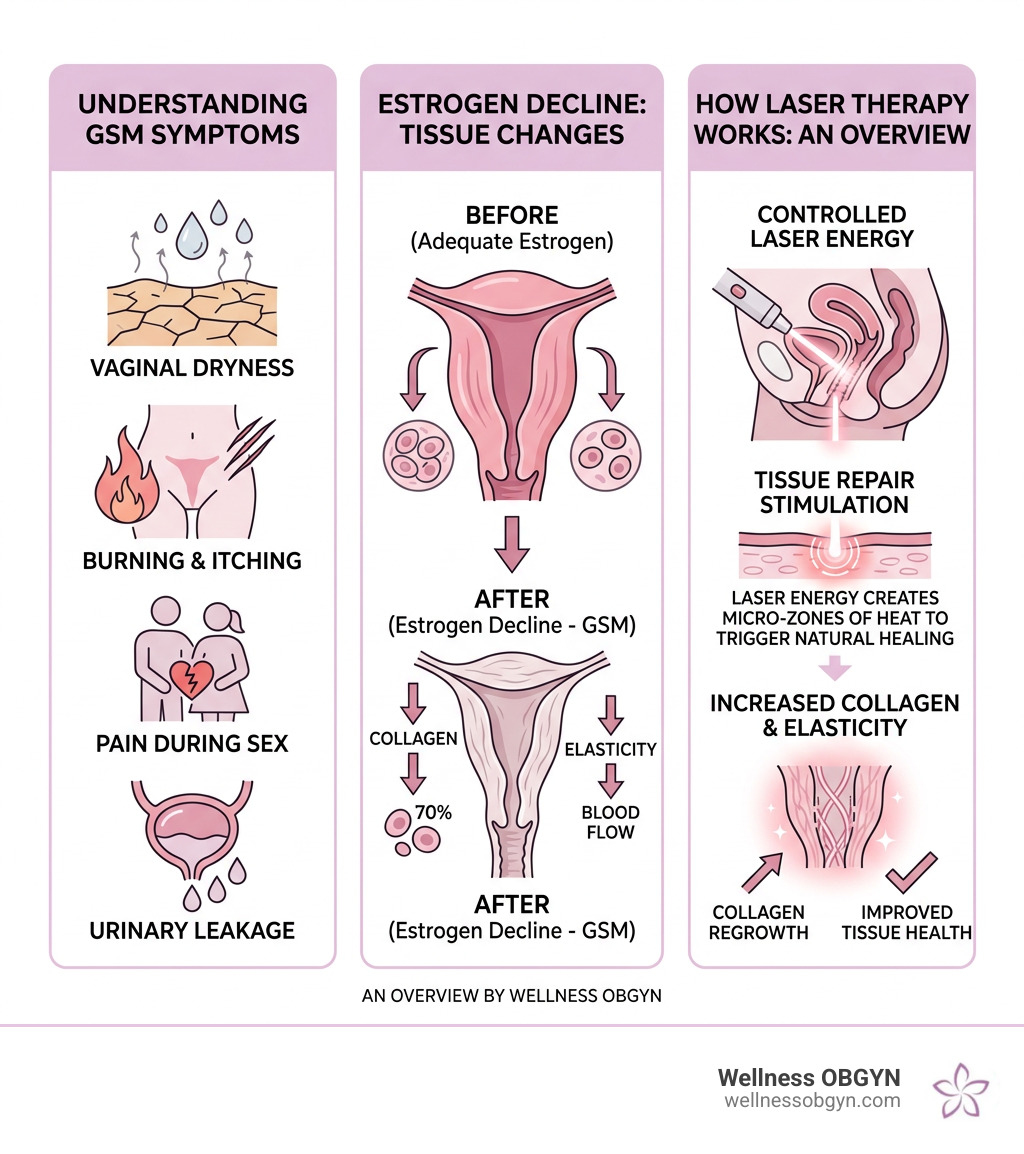
Basic laser therapy for menopause terms:
Understanding Genitourinary Syndrome of Menopause (GSM)
When we talk about menopause, most people immediately think of hot flashes. But for many of us here in Honolulu, the “heat” isn’t just a sudden flush — it’s the persistent, uncomfortable burning and dryness of the pelvic region. This collection of symptoms is known as Genitourinary Syndrome of Menopause (GSM).
GSM isn’t just a fancy name for vaginal dryness; it is a comprehensive term that covers changes to the labia, clitoris, vagina, urethra, and bladder. As estrogen levels drop, the vaginal walls become thinner, drier, and less elastic. The natural lubrication decreases, and the pH balance of the vagina shifts, making us more prone to infections.
Common symptoms we see in our practice include:
- Persistent vaginal dryness and itching.
- Burning sensations during urination or throughout the day.
- Dyspareunia (painful intercourse), which can range from mild discomfort to severe sharp pain.
- Urinary urgency and an increase in urinary tract infections (UTIs).
- Light spotting after sexual activity due to fragile tissue.
According to The 2020 NAMS GSM Position Statement, these symptoms are unlikely to resolve on their own and often worsen over time if left untreated. Because this affects so many aspects of a woman’s life, finding the right menopause treatment in Honolulu is essential for maintaining long-term health and intimacy.
How Laser Therapy for Menopause Works
The science behind laser therapy for menopause is actually quite similar to the technology used for facial rejuvenation. We are essentially using light energy to remind the body how to heal itself.
There are two primary types of lasers used in this field:
- CO2 Fractional Lasers: These create microscopic “columns” of thermal injury in the vaginal lining. This sounds scary, but it’s a controlled process that triggers the body’s natural wound-healing response.
- Erbium:YAG (Er:YAG) Lasers: These are often non-ablative, meaning they heat the tissue without vaporizing the top layer, which can sometimes lead to a shorter recovery time.
When the laser energy hits the vaginal mucosa, it activates “heat shock proteins.” These proteins signal the fibroblasts (the cells responsible for connective tissue) to start producing new collagen and elastin fibers. This process, often called tissue remodeling, helps restore the thickness, moisture, and elasticity of the vaginal walls.
For those interested in a holistic menopause treatment approach, laser therapy offers an option that doesn’t rely on daily pills or messy creams. By regenerating the tissue itself, we aim to restore the natural function of the vaginal environment.
Clinical Evidence for Laser Therapy for Menopause Relief
Is it all just hype? Not exactly, but the data is a mixed bag. Several prospective studies and the “VeLVET trial” have shown that laser therapy can be just as effective as vaginal estrogen in the short term. In these trials, 70% to 80% of participants reported being “satisfied” or “very satisfied” with the results.
However, we must also look at high-quality, sham-controlled trials. A 2021 study published in JAMA compared fractional CO2 laser treatment to a “sham” (placebo) treatment. Surprisingly, the study found that after 12 months, there was no significant difference in symptom severity between the women who received the actual laser and those who received the placebo.
What does this tell us? It suggests that the “placebo effect” in vaginal health is strong, or perhaps that the simple act of a clinical intervention provides some level of perceived relief. It also highlights that while many women feel better, the laser might not be changing the tissue as dramatically as once thought. This is why we always discuss menopause lifestyle changes alongside any procedural intervention.
Comparing Laser Therapy to Established Treatments
When deciding between laser therapy and the “gold standard” of topical estrogen, there are several factors to consider:
| Feature | Topical Estrogen | Vaginal Laser Therapy |
|---|---|---|
| Efficacy | High (well-documented) | Comparable (short-term) |
| Cost | Low (Insurance usually covers) | High (Out-of-pocket) |
| Convenience | Daily or twice-weekly application | 3 sessions, then annual maintenance |
| Safety | Minimal systemic absorption | No hormones; risk of localized irritation |
One of the most striking statistics is the cost. Research indicates that CO2 fractionated laser treatment is 23–24 times more expensive than topical estrogen. For many of our patients in Honolulu, this makes estrogen the more practical choice.
However, laser therapy is a vital alternative for women who have contraindications to hormones. This includes breast cancer survivors, particularly those taking aromatase inhibitors. For these women, even the tiny amount of estrogen absorbed from a cream might be a concern. Research on laser vs estrogen for GSM shows that for those who cannot or will not use hormones, the laser provides a non-hormonal pathway to relief.
We also encourage looking at menopause and diet as a way to support overall tissue health from the inside out, regardless of which primary treatment you choose.
Safety and Regulatory Status of Laser Therapy for Menopause
It is our responsibility to be transparent about the regulatory landscape. In 2018, the FDA issued a firm safety communication warning against the use of energy-based devices for “vaginal rejuvenation.” The FDA’s concern wasn’t necessarily that the lasers were inherently dangerous, but that they were being marketed with “deceptive health claims” for conditions they weren’t cleared to treat.
Currently, the FDA has cleared these lasers for treating specific conditions like genital warts or precancerous cells, but not specifically for GSM or “vaginal rejuvenation.”
Medical societies like NAMS and the Australasian Menopause Society (AMS) maintain a cautious stance. They recommend that vaginal laser therapy should generally be limited to clinical trials or used only when other proven therapies have failed or are contraindicated. Potential risks, though rare, include:
- Vaginal scarring or “fusion” of the tissue.
- Chronic pain or altered sensation.
- Infection or localized burns.
Emerging Alternatives: Low-Level Laser Therapy (LLLT)
If the high-energy CO2 laser sounds too intense, there is an emerging “cool” alternative: Low-Level Laser Therapy (LLLT), also known as photobiomodulation. Unlike the high-energy lasers that create micro-injuries, LLLT uses low-power light (typically around the 660 nm wavelength) to stimulate cellular activity without generating heat.
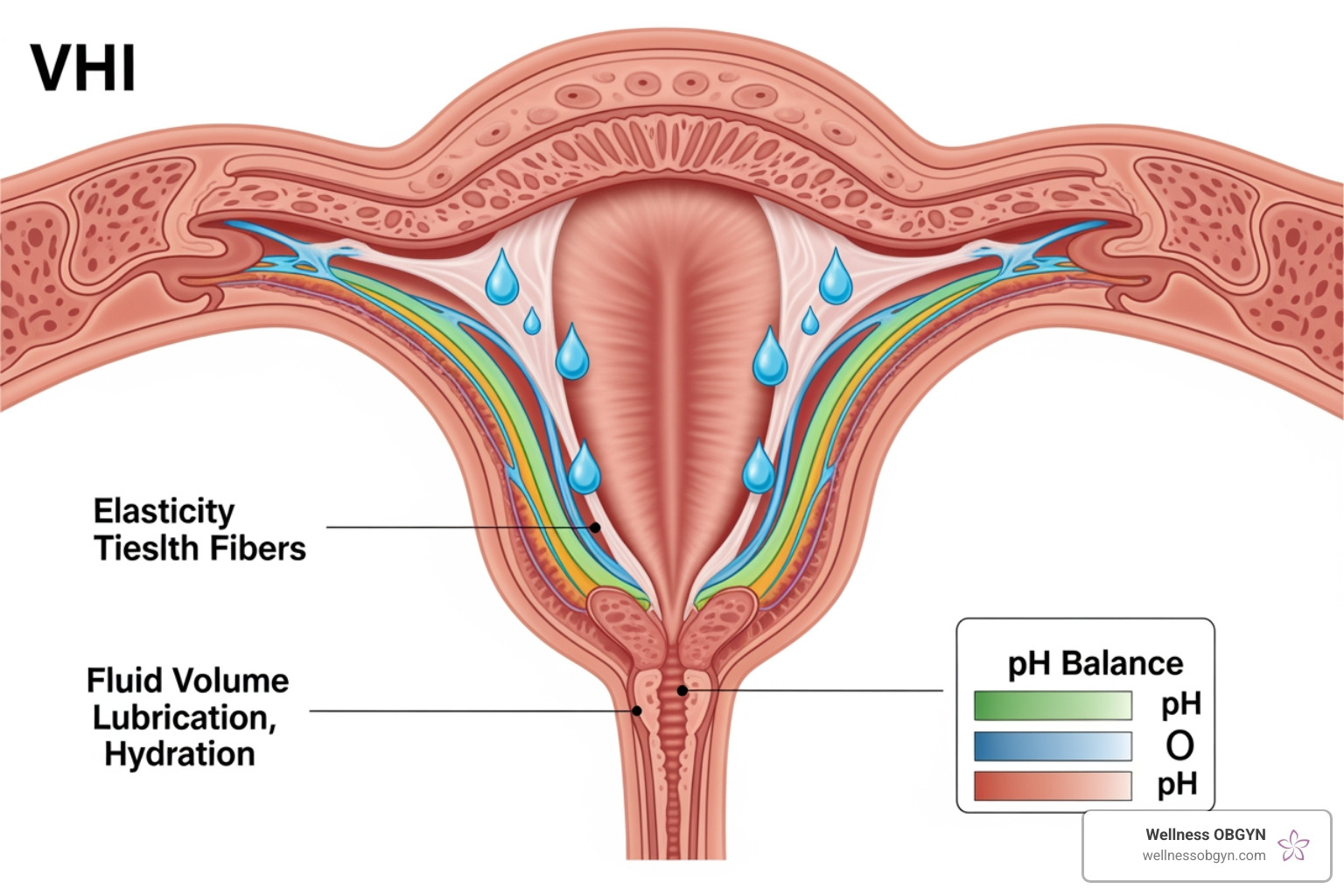
A pilot study on LLLT for GSM and SUI showed very promising results. In a trial of 41 women, the Vaginal Health Index (VHI) scores improved significantly from 12.8 to 20.1. Patients also reported improvements in stress urinary incontinence (SUI) and overactive bladder symptoms.
The best part? LLLT is virtually painless, has no reported adverse effects, and costs about one-fifth of what high-energy laser systems cost. While still considered “emerging,” it is an exciting area of Honolulu cosmetic laser technology that we are watching closely.
Frequently Asked Questions about Menopause Laser Treatments
Is laser therapy for menopause covered by insurance?
In almost all cases, the answer is no. Because the FDA has not cleared these devices specifically for GSM, insurance companies categorize the procedure as “elective” or “cosmetic.” You should expect to pay for the sessions out-of-pocket. We recommend speaking with an OBGYN menopause specialist to get a clear estimate of the total cost for the initial series and maintenance.
How many sessions are typically required for results?
The standard protocol for most high-energy lasers (like MonaLisa Touch or diVa) involves three sessions spaced about 6 to 8 weeks apart. Each session is very quick — often taking only 3 to 5 minutes. Most women begin to notice changes after the first or second session, but the full effect takes a few months as the collagen matures. To maintain the results, an annual “boost” treatment is usually recommended.
Who should avoid vaginal laser treatments?
While many can benefit, certain conditions make laser therapy a “no-go”:
- Active Infections: Any vaginal or urinary tract infection must be cleared before treatment.
- Severe Prolapse: Women with Stage 2 or higher pelvic organ prolapse may not be good candidates for the laser alone.
- Undiagnosed Bleeding: Any unusual vaginal bleeding must be investigated by a doctor first.
- Pregnancy: Though rare during menopause, any possibility of pregnancy is a contraindication.
If you are dealing with early menopause support needs, we can help determine if your tissue is healthy enough for laser intervention.
Conclusion
We emphasize shared decision-making. This means we give you the facts — the statistics, the costs, and the risks — and let you decide what fits your lifestyle. If you’re tired of “beating the heat” and are ready to address the dryness, we are here to help.
To learn more about how we can support your journey through menopause and beyond, please explore more info about our services or schedule a consultation at our Honolulu practice.