
Why Understanding Period Changes on the Implant Matters
Arm implant birth control period changes are one of the most common experiences for people using this highly effective contraceptive method. Here’s what you need to know:
Common Period Changes with the Birth Control Implant:
- Irregular bleeding or spotting – especially in the first 3-6 months
- Lighter periods – most people experience reduced menstrual flow
- No period at all – around 20% of users stop having periods completely (this is safe)
- More frequent bleeding – about 25% of users experience this pattern
- Unpredictable timing – the time between periods may vary
When These Changes Happen:
- First 90 days: Most irregular bleeding occurs during this adjustment period
- 6 months: Patterns typically stabilize by this point
- Beyond 6 months: Your bleeding pattern is likely to continue as established
Important to Know:
About 1 in 10 people choose to have their implant removed due to bleeding changes they find bothersome. However, these changes are not harmful to your health—they’re simply how your body responds to the progestin hormone the implant releases.
The arm implant (brand name Nexplanon) is a small, flexible plastic rod placed under the skin of your upper arm. It releases a steady, low dose of the hormone progestin to prevent pregnancy for up to 3-5 years. While it’s over 99% effective at preventing pregnancy, the way it affects your menstrual cycle can vary significantly from person to person.
I’m Dr. Cheryl Twu, a board-certified obstetrician-gynecologist and founder of Wellness OBGYN in Honolulu. Over my 15+ years of practice, I’ve helped hundreds of patients steer arm implant birth control period changes and find the contraceptive method that works best for their body and lifestyle. My goal is to give you the complete picture so you can make informed decisions about your reproductive health.
Arm implant birth control period terms simplified:
Understanding Your Arm Implant Birth Control Period
When you choose an arm implant for birth control, one of the most significant changes you’ll likely notice is to your menstrual cycle. It’s a common topic of discussion in our office, and for good reason—your period is a natural part of your body’s rhythm, and any alteration can feel significant.
The arm implant birth control period experience is highly individual, but certain patterns emerge. The most common side effect reported by users is a change in their normal menstrual bleeding pattern. This can manifest as irregular bleeding, spotting between periods, or even no bleeding at all (a condition called amenorrhea). For some, periods may become longer or shorter, or the time between periods may vary unpredictably.
Let’s break down these common changes:
- Irregular Bleeding or Spotting: This is arguably the most frequent complaint, especially in the initial months. Spotting refers to very light bleeding outside of a regular period. It’s not harmful, but it can certainly be inconvenient and frustrating.
- No Bleeding (Amenorrhea): Many people find this to be a welcome change! Around 20% of implant users experience a complete cessation of their periods. For over half of users, their periods become less frequent or stop altogether. This is a safe and medically recognized effect of the implant’s hormones and doesn’t mean anything is wrong with your body.
- Lighter Periods: For most individuals, any bleeding they do experience while on the implant is lighter than their usual periods.
- More Frequent or Longer Periods: While less common than lighter or absent periods, about a quarter of people with the implant will experience periods more often, for longer durations, or both. This can be particularly bothersome.
These changes are a direct result of the progestin hormone released by the implant. This hormone works to prevent pregnancy by thinning the uterine lining, which is why bleeding patterns shift so dramatically. While these changes are generally benign, about 1 in 10 women in studies reported stopping the use of the implant because of an unfavorable change in their bleeding pattern, and about 15% have the implant removed due to these changes.
When we talk about “heavy or prolonged menstrual bleeding” in the context of the implant, we’re referring to bleeding that lasts longer than what’s normal for you or is significantly heavier than your usual flow. This might mean needing to change sanitary products every hour for several hours, or bleeding that extends well beyond a typical week. If you’re experiencing this, it’s always a good idea to discuss it with your healthcare provider to rule out any other issues and explore management options.
For more detailed scientific research on menstrual bleeding patterns associated with the implant, you can refer to resources like the scientific research on menstrual bleeding patterns. We believe in providing personalized women’s healthcare, and understanding these patterns is key to making informed decisions.

What to Expect from Your Arm Implant Birth Control Period in the First Year
The first year with an arm implant is often the most dynamic in terms of menstrual changes. Your body needs time to adjust to the continuous, low dose of progestin hormone being released.
- The First 90 Days: This is often referred to as the “adjustment period.” It’s very common to experience increased spotting and irregular bleeding during these initial three months. Many people find this phase the most challenging, but it’s crucial to remember that this is a normal part of your body adapting.
- Stabilization by 6 Months: For most individuals, the bleeding patterns tend to improve and become more predictable by the six-month mark. The pattern you establish around three months often gives a good indication of what your future bleeding will look like. While improvement is common, some sources suggest that if bleeding patterns are still bothersome after six months, they may not significantly improve beyond that point.
- Beyond 6 Months: After the initial adjustment, your body typically settles into a new routine. This could mean very light periods, infrequent bleeding, or no periods at all. It might also mean continued irregular spotting or, for some, more frequent bleeding. Understanding this timeline can help manage expectations and reduce anxiety about your arm implant birth control period experience.
Long-Term Bleeding Statistics and Trends
Looking beyond the first year, the long-term trends for arm implant birth control period changes are generally positive for many users. More than half of people on the implant will experience periods less often or will stop having them entirely. Around 20% of users will have no bleeding (amenorrhea), which many consider a significant benefit. Almost 50% will experience infrequent or prolonged bleeding, but for most, any bleeding that occurs will be lighter than their usual periods.
These changes are due to the progestin continuously thinning the uterine lining, making it less likely to build up and shed regularly. This thinning is not harmful to your health. However, as we noted earlier, about 1 in 10 users find the nuisance bleeding significant enough to discontinue the implant. While irregular bleeding patterns often remain, the intensity or frequency might become more manageable over time for many.
The Science of Progestin and Menstrual Suppression
The magic behind the arm implant birth control period changes lies in the hormone it releases: progestin. Specifically, the implant (like Nexplanon) contains etonogestrel, a synthetic form of progesterone. Unlike combination birth control pills that contain both estrogen and progestin, the implant is an estrogen-free method, making it suitable for many individuals who cannot use estrogen.
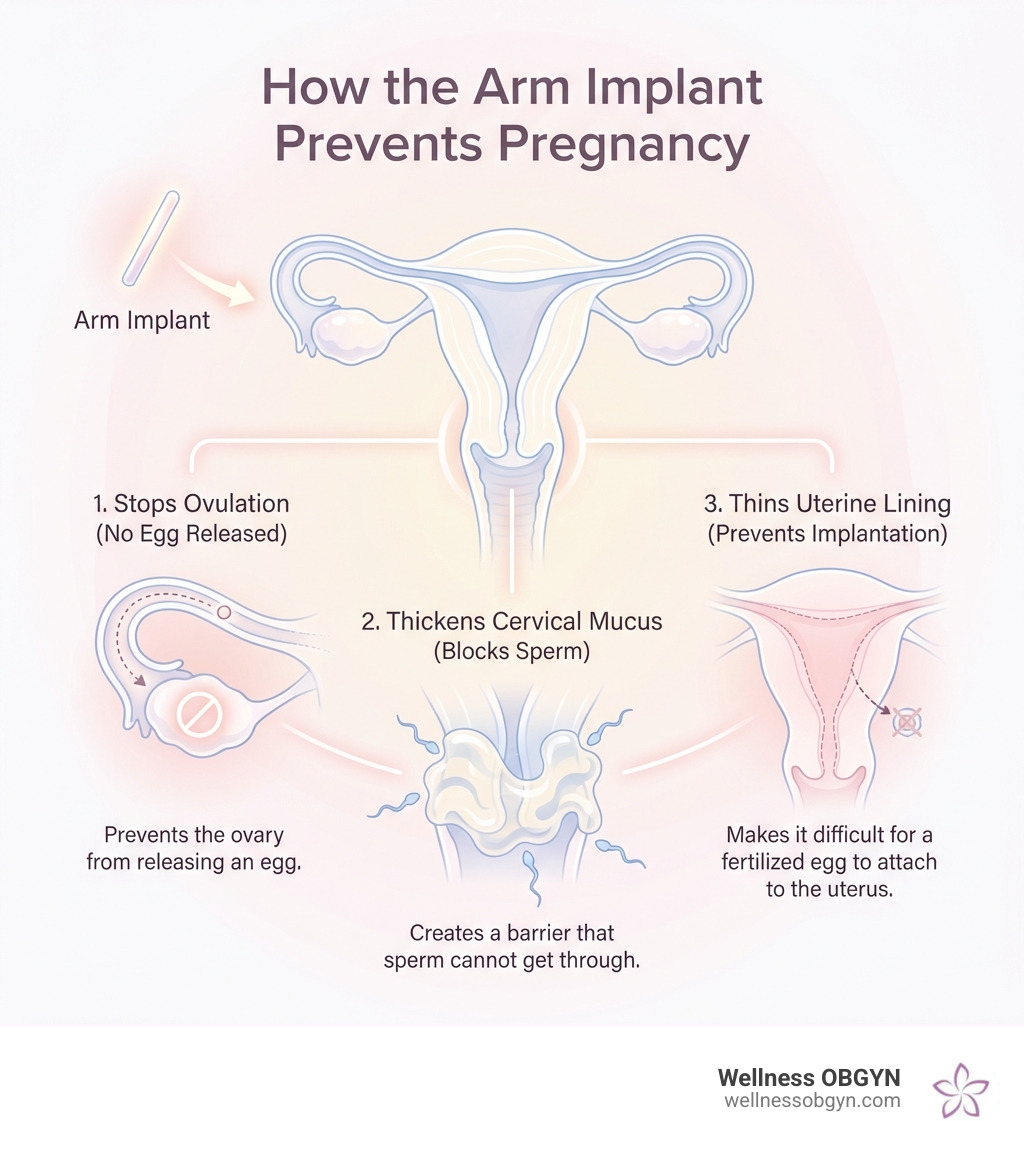
Here’s how this tiny rod works its wonders:
- Ovulation Suppression: The primary way the implant prevents pregnancy is by stopping your ovaries from releasing an egg each month (ovulation). No egg, no pregnancy!
- Cervical Mucus Thickening: The progestin also thickens the mucus in your cervix, creating a barrier that makes it incredibly difficult for sperm to travel through and reach an egg.
- Uterine Lining Thinning: The hormone thins the lining of your uterus (the endometrium). If an egg were to somehow be released and fertilized, this thin lining would make it very difficult for it to implant, thus preventing pregnancy. This thinning of the uterine lining is the main reason behind the changes in your arm implant birth control period, leading to lighter, irregular, or absent bleeding.
Because the implant works continuously, releasing a steady, low dose of progestin, it provides highly effective contraception for up to three to five years without requiring daily attention. This “set it and forget it” aspect is a major benefit for many of our patients. For more detailed information on the implant’s mechanism, you can review the Prescribing Information for the etonogestrel implant. Understanding how hormonal birth control works can help you make the best hormonal birth control choice for your body.
Immediate Protection and Insertion Timing
A common question we receive is about when the implant starts working and whether timing matters for insertion. The good news is, the implant can offer immediate protection depending on when it’s inserted in your menstrual cycle.
- The 5-Day Rule: If the implant is inserted within the first five days of your regular menstrual bleeding, you are immediately protected from pregnancy. This is because your body is already in a phase where pregnancy is unlikely or the hormone can quickly take effect.
- Backup Contraception: If the implant is inserted on any other day of your menstrual cycle (i.e., after the fifth day of your period), we recommend using an additional contraceptive method, such as condoms, or avoiding vaginal sex for the first seven days. This gives the hormone enough time to fully kick in and provide effective pregnancy prevention.
- Clinical Insertion: The insertion procedure itself is quick and simple, performed in our office. A local anesthetic is used to numb a small area on your upper arm, and the implant is gently placed just under the skin. The entire process typically takes only a few minutes.
Fertility Return After Removal
One of the significant advantages of the arm implant is its rapid reversibility. For many, concerns about long-term fertility after discontinuing birth control are paramount. With the implant, your fertility returns very quickly once it’s removed.
After the implant is removed, the progestin hormone no longer enters your bloodstream, and your body can quickly resume its natural hormonal cycle. Ovulation can restart within a few days to a few weeks. This means that pregnancy is possible almost immediately after removal. Some studies even suggest that pregnancy can be possible as soon as 1-3 weeks after the implant is taken out, with ovulation potentially occurring within days.
While your fertility returns rapidly, your arm implant birth control period might take a few weeks or months to settle back into its pre-implant pattern. Initially, your cycles might be irregular, but most individuals see their menstrual cycles return to their usual rhythm within a few months. This quick return to fertility makes the implant an excellent choice for those who want effective contraception but also desire the flexibility to plan for future pregnancies. We’re here to help with family planning made easy tips for conception and reproductive health.
Managing Side Effects and Sexual Wellness
Beyond the changes to your arm implant birth control period, some individuals may experience other side effects. Many of these are temporary and often resolve within the first few months as your body adjusts to the hormone.
Common non-menstrual side effects can include:
- Headaches: Some people report headaches, which may be mild or occasionally more severe.
- Mood Swings: Hormonal changes can sometimes influence mood, leading to feelings of anxiety, depression, or irritability. Some sources note that these often disappear after a few cycles due to an initial surge in hormone levels that then returns to baseline.
- Breast Tenderness: Your breasts might feel more sensitive or swollen.
- Acne: For some, acne may worsen, while for others, it might improve.
- Nausea: This is usually a temporary side effect that subsides early on.
- Weight Gain Myths: While some individuals report feeling bloated or gaining weight, research consistently shows that weight gain is generally not a direct side effect of the birth control implant. If you experience weight changes, it’s often due to other factors.
If you’re experiencing any side effects that bother you, please know that you’re not alone, and we’re here to help. Our goal is to ensure your comfort and well-being.
Managing Intimacy and Your Arm Implant Birth Control Period
Sexual wellness is a crucial aspect of overall health, and it’s natural to wonder how an arm implant birth control period might impact your intimate life. While the implant is highly effective at preventing pregnancy, some people may experience changes that affect their sexual experiences, such as vaginal dryness or shifts in libido.
If you find that your intimate life is being affected, we want you to know that solutions are available. At Wellness OBGYN in Honolulu, we offer comprehensive care, including specialized support for female sexual health clinic concerns.
Open communication with your partner and healthcare provider is key to navigating any changes and finding the best path forward for your intimate health.
When to Contact a Healthcare Provider
While most arm implant birth control period changes and other side effects are normal and harmless, there are specific situations when you should definitely contact your healthcare provider. Your health and peace of mind are our top priorities.
You should reach out to us at Wellness OBGYN (your trusted gynecologist in honolulu) if you experience any of the following:
- Heavy or Prolonged Bleeding: If your bleeding is significantly heavier than what’s normal for you, lasts for an unusually long time, or causes you concern, please let us know. This is especially important if it’s impacting your daily life or causing symptoms like dizziness or weakness.
- Signs of Infection at the Insertion Site: Look out for redness, warmth, swelling, pus, or severe pain around where the implant was placed.
- Inability to Feel the Implant: It’s important to be able to feel the implant under your skin. If you can’t feel it, or if it feels like it has changed shape or broken, contact us immediately. In rare cases, an implant might move, or insertion might not have been fully successful, which could affect its efficacy. If this happens, use a backup contraceptive method (like condoms) until you can be seen.
- Signs of a Blood Clot: Although rare with progestin-only methods, be aware of symptoms like severe pain or swelling in your leg, sudden chest pain, or shortness of breath.
- Sudden Severe Headaches: If you experience a new type of severe headache or a migraine with aura.
- Jaundice: Yellowing of your skin or the whites of your eyes.
- Suspected Pregnancy: If you think you might be pregnant.
- Severe Depression or Mood Changes: If mood changes are significantly impacting your well-being.
- Any Other Concerning Symptoms: If anything feels “off” or causes you worry, it’s always best to err on the side of caution and consult with a medical professional.
We are here to address your concerns and ensure your experience with the arm implant is as comfortable and safe as possible.
Frequently Asked Questions
We understand you likely have many questions about how the arm implant affects your body. Here are some of the most common ones we hear at Wellness OBGYN.
Can the implant cause my period to stop completely?
Yes, absolutely! For many people, this is one of the most appealing aspects of the arm implant. Around 20% of users experience amenorrhea, which means their period stops completely. More than half of people using the implant have a period less often or will stop having their period. This is a normal and safe effect of the progestin hormone, which thins the uterine lining so much that there isn’t enough to shed. It doesn’t mean you’re pregnant or that anything is wrong with your body; it’s simply how the implant works to prevent pregnancy.
How does the implant compare to an IUD regarding periods?
The way different long-acting reversible contraceptives (LARCs) affect your period can vary significantly. Here’s a comparison between the arm implant and both hormonal and copper IUDs:
| Feature | Arm Implant (Progestin-only) | Hormonal IUD (e.g., Mirena, Kyleena) | Copper IUD (Non-hormonal) |
|---|---|---|---|
| Hormone Type | Progestin (Etonogestrel) | Progestin (Levonorgestrel) | None |
| Effect on Uterine Lining | Thins lining significantly | Thins lining | No direct effect on lining thickness |
| Typical Period Changes | Lighter, infrequent, or absent periods (amenorrhea) are common. Irregular bleeding/spotting, especially initially. | Lighter, shorter periods, or amenorrhea are common. Spotting initially. Used to treat heavy bleeding. | Heavier, longer periods, and increased cramping are common, especially in the first few months. |
| Cramp Reduction | Often reduces or eliminates cramps | Often reduces or eliminates cramps | May increase cramping, especially initially |
| Irregular Bleeding | Common, especially in first 6-12 months | Common, especially in first 3-6 months | Not typically irregular, but heavier/longer |
| Discontinuation Due to Bleeding | About 10-15% (due to nuisance bleeding) | Less common, often used to manage heavy bleeding | More common (due to heavy bleeding/cramping) |
Understanding these differences can help you and your provider choose the best method for your specific needs and preferences regarding your menstrual cycle.
Will my period return to normal after removal?
Yes, your period will typically return to its normal pattern after the arm implant is removed. Once the implant is out, your body quickly stops receiving the progestin hormone, allowing your natural hormonal cycle to resume.
While fertility can return almost immediately, your menstrual cycle might take a few weeks to a few months to settle back into its pre-implant rhythm. You might experience some initial irregularity, but most individuals will see their periods return to their usual frequency, flow, and duration within a few months of removal. We always discuss your options and expectations for fertility and period return during your consultation and removal appointments.
Conclusion
Navigating the changes to your arm implant birth control period can be a journey, but it’s one we’re here to guide you through with compassion and expertise. We’ve explored the common shifts you might experience, from irregular spotting to the complete absence of periods, and the science behind why these changes occur. We’ve also discussed the rapid return to fertility after removal and highlighted key moments when it’s important to contact your healthcare provider.
At Wellness OBGYN in Honolulu, we believe in personalized women’s healthcare that empowers you to make informed decisions about your body and your reproductive health. Whether you’re considering an arm implant, managing its effects, or exploring other family planning options, our team is dedicated to providing expert, compassionate care custom to your individual needs. We emphasize shared decision-making, ensuring you feel heard, understood, and confident in your healthcare choices.
Your well-being is our priority, and we’re committed to enhancing your health and quality of life at every stage. If you have any further questions or wish to discuss your birth control options, please don’t hesitate to reach out. We’re here to support you on your journey to optimal health and family planning made easy tips for conception and reproductive health.