
Why Your Annual OBGYN Visit is Essential for Lifelong Health
An annual OBGYN visit is a comprehensive preventive healthcare appointment focused on reproductive and overall women’s health. This vital check-up goes beyond a simple examination to provide personalized care throughout every stage of life.
Quick Answer: Annual OBGYN Visit Essentials
| What is it? | A preventive healthcare appointment focusing on reproductive and overall women’s health |
| When to start? | Ages 13-15 for initial education visit; age 21 for pelvic exams and cervical screening |
| How often? | Yearly, even if Pap tests are only needed every 3-5 years |
| What happens? | Medical history review, physical exam, age-appropriate screenings, and health counseling |
| Why it matters | Early detection of issues, preventive care, and personalized health guidance |
Many women wonder if they really need to see their gynecologist every year, especially since cervical cancer screening guidelines have changed. The answer is yes – annual OBGYN visits remain one of the most important dates on your wellness calendar, even when you’re not due for a Pap test.
These visits provide a unique opportunity for you and your provider to discuss your overall health, address any concerns, and ensure you’re receiving appropriate preventive care based on your age and risk factors. From adolescence through post-menopause, these appointments evolve to meet your changing needs, but always maintain their importance.
At Wellness OBGYN, I provide comprehensive annual OBGYN visits that combine evidence-based Western medicine with holistic wellness principles. As a board-certified OB-GYN with over a decade of experience in both hospital settings and private practice, I’m committed to making these essential visits comfortable, informative, and personalized to each woman’s unique needs.
What Is an Annual OB-GYN Visit?
An annual OBGYN visit is much more than just a quick check-up – it’s a comprehensive wellness appointment dedicated to your reproductive health and overall wellbeing. Sometimes called a well-woman exam or gynecological exam, these visits create a special time for you to connect with your healthcare provider about your most personal health concerns.
The American College of Obstetricians and Gynecologists (ACOG) emphasizes that these visits are valuable throughout your entire life journey, not just during your reproductive years.
“A well-woman visit provides an excellent opportunity to counsel patients about maintaining a healthy lifestyle and minimizing health risks,” states ACOG in their Committee Opinion on Well-Woman Visits. I’ve seen how these appointments help us catch potential issues early, when they’re most treatable, and provide personalized guidance that empowers you to take charge of your health.
When you come in for your annual OBGYN visit at Wellness OBGYN in Honolulu, we take time to look at the whole you – not just your reproductive organs. We’ll develop or update your reproductive life plan, discussing your current situation and future goals to ensure your healthcare aligns perfectly with your personal journey, whether that includes pregnancy, contraception, or managing menopause symptoms.
Annual OB-GYN visit vs. regular physical
Many women ask me, “If I’m getting a regular physical with my primary doctor, do I still need an annual OBGYN visit?” The answer is absolutely yes – here’s why:
| Annual OBGYN Visit | Regular Physical Exam |
|---|---|
| Focuses on reproductive and gynecologic health | Focuses on overall health and body systems |
| Includes breast and pelvic exams | Includes heart, lung, and general physical assessment |
| Provides cervical cancer screening (Pap/HPV tests) | Provides general screenings (cholesterol, blood pressure) |
| Addresses menstrual issues, contraception, sexual health | Addresses general health concerns and chronic conditions |
| Offers specialized reproductive health counseling | Offers general health and lifestyle counseling |
“A yearly physical checks your heart, lungs, reflexes, and general health, while an annual gynecologic exam includes breast and pelvic exams and cervical cancer screening,” explains Dr. Melanie Hill, a women’s health nurse practitioner. “Both are important parts of your preventive healthcare routine.”
At Wellness OBGYN, we work as a team with your primary care provider, sharing relevant information (with your permission, of course) to ensure you receive comprehensive care without unnecessary duplication of services.
Annual OB-GYN visit vs. Pap smear
One of the biggest misconceptions I hear from patients is equating an annual OBGYN visit with just a Pap smear. In reality, the Pap test is just one small (but important) piece of your comprehensive well-woman care.
“A Pap smear is a specific cervical cancer screening test performed during the gynecologic exam but does not constitute the full exam itself,” notes Dr. Hill.
During a Pap test, I’ll collect cells from your cervix using a small brush or spatula during the speculum portion of your pelvic exam. These cells are then examined for precancerous or cancerous changes. Current guidelines recommend Pap tests every 3-5 years for most women (depending on your age and risk factors), but your annual OBGYN visit remains crucial even in years when you don’t need a Pap.
Think of it this way – your annual visit covers so much more: breast health, pelvic health, sexual function, contraception, menstrual concerns, and preventive screenings custom to your age and personal risk factors. It’s about keeping you healthy from year to year, not just checking a box on a screening test.
Why Your Annual OB-GYN Visit Matters (Benefits, Age & Frequency)
Your annual OBGYN visit is so much more than just a quick check-up – it’s an investment in your lifelong health and wellbeing. Think of it as your yearly health partnership, where you and your doctor work together to keep you feeling your best.
“I see these annual visits as one of the most powerful preventive tools we have in women’s healthcare,” says Dr. Hill. “They give us a chance to catch small issues before they become big problems, and to have those important conversations about your changing health needs.”
The benefits of keeping up with your annual OBGYN visit extend far beyond what many women realize. Early detection of gynecologic cancers like cervical, ovarian, and uterine cancers can be life-saving, especially since many of these conditions don’t cause noticeable symptoms in their early stages. Your preventive screenings for STIs and breast cancer provide vital peace of mind and protection.
Your reproductive health gets personalized attention too – whether you’re thinking about starting a family, looking for the right birth control option, or navigating the changes of menopause. We also take time to check in on your mental health, screening for depression and anxiety that can significantly impact your quality of life.
I love the lifestyle conversations we have during these visits. Together, we can discuss nutrition, exercise, and other habits that keep you thriving. These discussions often prevent chronic conditions before they start – something that’s much easier than treating them later.
When to start & how often
Wondering when to begin these important visits? The journey typically starts in adolescence, around ages 13-15, with an initial visit that’s mostly educational. This early introduction to gynecologic care helps young women build comfort with the process and get reliable information about their changing bodies.
“That first visit is all about building trust and answering questions,” I tell parents and teens. “It’s rarely about exams – it’s about starting a relationship that will support her health throughout her life.”
By age 21, it’s time to begin regular pelvic exams and cervical cancer screening. And from there? The American College of Obstetricians and Gynecologists recommends continuing these annual OBGYN visits throughout your life – yes, even after menopause!
At Wellness OBGYN in Honolulu, we follow these evidence-based guidelines while making sure your care feels personal and right for you. Our adolescent care is especially thoughtful, creating a judgment-free zone where young women can learn and ask questions. For more about our approach with teens, visit our adolescent gynecology services.
Key screenings by decade
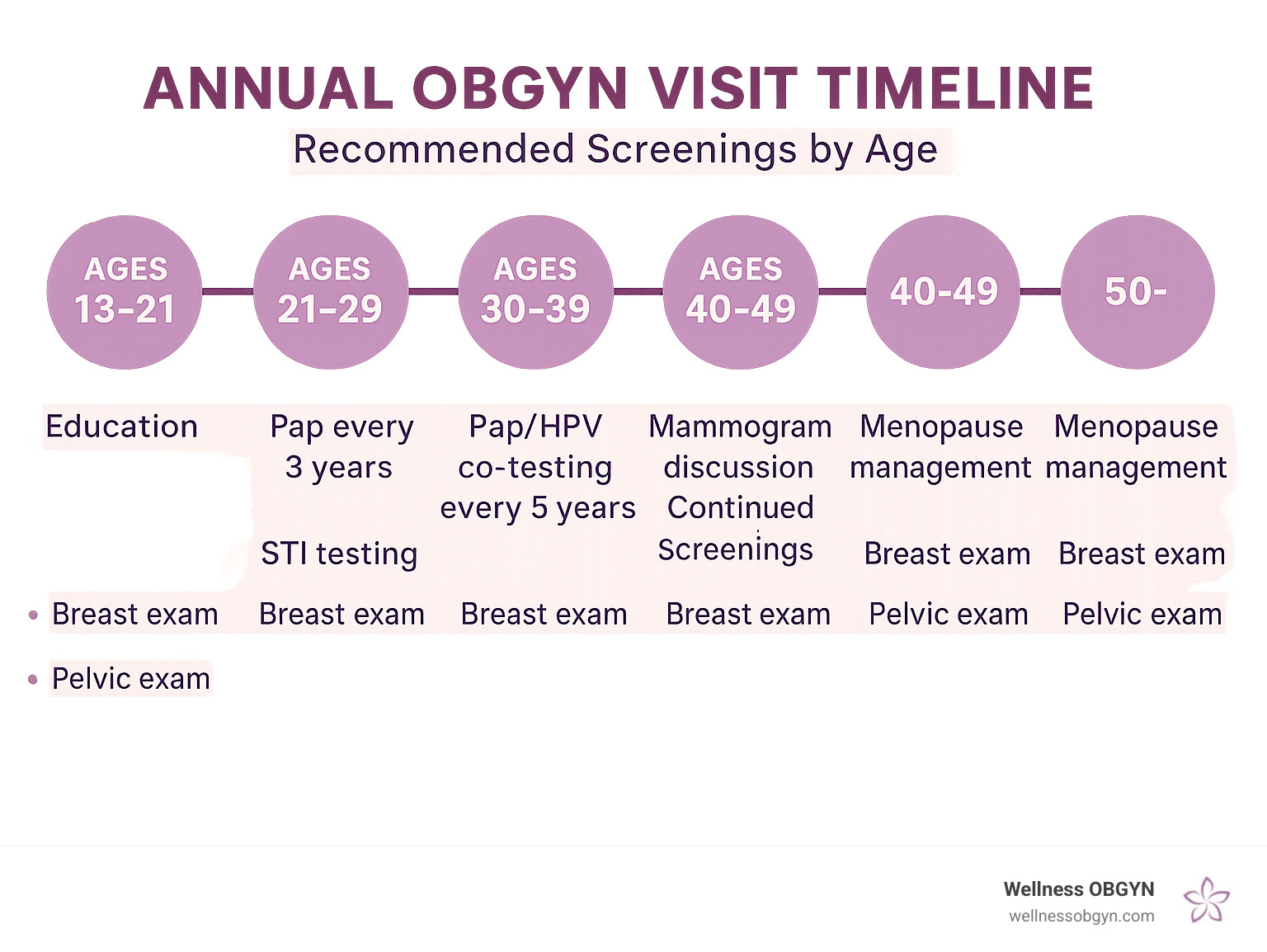
Your body’s needs change as you move through life, and your annual OBGYN visit evolves right along with you. Here’s how we tailor your care through the decades:
In your 20s (ages 21-29), we focus on Pap tests every 3 years, annual chlamydia and gonorrhea screening if you’re sexually active (especially under 25), breast exams every 1-3 years, and completing the HPV vaccination series if you haven’t already.
Your 30s bring a slight shift – we typically move to Pap and HPV co-testing every 5 years (though Pap tests alone every 3 years is still an option). Annual clinical breast exams become standard, and we have thoughtful conversations about family planning or fertility if those are on your mind.
As you enter your 40s, we continue the Pap and HPV co-testing schedule while adding discussions about mammograms, which typically begin around age 40. This is also when we might start talking about early perimenopause symptoms and how to manage them.
After 50, we maintain cervical screening until age 65 (assuming your results have been consistently normal), continue breast exams and mammograms, begin bone density screening (typically at 65), and focus more on menopause management and post-reproductive health.
“The HPV vaccine is one of our most powerful tools for preventing cervical cancer,” I often tell patients. “It works best when given before any sexual exposure, which is why we typically recommend starting around age 9.” For more details about this important protection, check out these HPV vaccine FAQs.
Your annual OBGYN visit is truly a cornerstone of good health – it’s where prevention, education, and personalized care come together to support you through every stage of life.
The Annual OBGYN Visit: Step-By-Step Walkthrough
Understanding what happens during an annual OBGYN visit can help reduce anxiety and ensure you get the most from your appointment. Here’s what to expect when you visit Wellness OBGYN in Honolulu:

When you arrive for your annual OBGYN visit, you’ll start with a friendly check-in process. One of our medical assistants will welcome you and take your vital signs – blood pressure, weight, temperature – the basics that give us a snapshot of your overall health that day.
Next comes the heart of your visit: the health history review. We’ll chat about what’s been happening in your life – your menstrual patterns, sexual health, any medications you’re taking, and family history. This conversation helps me understand your unique health picture and any concerns you might have. Many women tell me this is when they feel most heard, as we take the time to really listen to what’s going on with your body.
“At my last annual OBGYN visit, Dr. Hill spent nearly 15 minutes just talking with me before the exam even started,” shares Michelle, one of our patients. “It made me feel like a person, not just another appointment on the schedule.”
The breast examination follows, where I’ll check for any changes, lumps, or concerns. This clinical breast exam is a key part of early detection, complementing the mammograms you’ll have at appropriate ages.
For the pelvic examination, comfort is our priority. This exam might include an external check of your vulva for any abnormalities, a speculum exam to visualize your cervix (where we’ll collect cells if you’re due for a Pap or HPV test), and a bimanual exam where I gently feel your uterus and ovaries to check their size and shape. Throughout this process, I’ll explain what I’m doing and why, so you’re never left wondering.
Depending on your age and risk factors, we might recommend laboratory tests like STI screening, blood work, or a urine sample. These tests give us valuable information about your health beyond what we can see during the physical exam.
We wrap up with perhaps the most valuable part of your visit – discussion and counseling. This is where we talk about your birth control options, address sexual health concerns, manage menstrual issues, or discuss menopause symptoms. It’s also when we create your personalized preventive health plan for the year ahead.
Annual OBGYN Visit — Exam room flow
When it’s time for the physical examination portion of your annual OBGYN visit, we’ve designed the experience to be as comfortable as possible.
You’ll have privacy to change into a gown, with a warm blanket or drape to keep you covered and comfortable. Many women appreciate knowing they can request a chaperone or bring a support person into the room – just let us know your preference.
For the pelvic exam, I’ll guide you on how to position yourself comfortably. Those stirrups might look intimidating, but they’re adjustable, and we can help you find a position that minimizes discomfort.
“Taking slow, deep breaths during your exam really helps,” I often remind my patients. “When you’re tense, the exam can be more uncomfortable, but relaxing those muscles makes everything easier.”
At Wellness OBGYN, we understand that for some women, these exams trigger anxiety or past trauma. If that’s the case for you, please let us know. We offer trauma-informed care approaches, including options like starting with a smaller speculum, taking breaks during the exam, or using additional techniques to make the experience more comfortable.
Do you need a pelvic exam or Pap every year?
One of the most common questions I hear is whether you need a Pap test every year. The short answer is no – current guidelines recommend Pap tests every 3 years for women ages 21-29, and every 5 years with HPV co-testing for women ages 30-65.
As for pelvic exams, these may be performed annually or as needed based on your symptoms and health history. We practice shared decision-making at Wellness OBGYN, which means we’ll discuss the benefits and potential limitations of each screening test and procedure, helping you make informed choices about your care.
“Women were thrilled to learn they no longer needed a Pap smear every year,” I often share with new patients. “But that doesn’t mean you should skip your annual OBGYN visit. These yearly check-ins remain essential even without a Pap test – they’re our best chance to detect silent conditions early and provide personalized health guidance.”
Your annual OBGYN visit is about so much more than just screenings – it’s a dedicated time to focus on your reproductive health and overall wellbeing with a provider who knows your history and cares about your future.
Getting Ready for Your Appointment & Key Questions to Ask
Preparing for your annual OBGYN visit can help you get the most out of your time with us. A little planning goes a long way toward making your appointment both comfortable and productive.

When scheduling your appointment, try to choose a date when you’re not menstruating. While we understand periods don’t always cooperate with calendars (and we can often still see you if yours arrives unexpectedly), some tests may need rescheduling if you’re having your period.
In the 48 hours before your visit—especially if you’re due for a Pap test—it’s best to skip sexual intercourse, douching, and vaginal products including creams, medications, or tampons. These can sometimes affect test results, and we want to make sure we get the clearest picture of your health.
“I always recommend bringing a small notebook with your health information,” says Dr. Hill. “Tracking your cycle dates, symptoms, and questions helps us have a much more productive conversation during your limited appointment time.”
Your preparation checklist might include jotting down:
Your recent health timeline – When was your last period? Any recent procedures or health changes? Any new medications or supplements?
Your symptom journal – Have you noticed any unusual bleeding patterns, pelvic pain, or changes in discharge? Noting when these occur and their severity helps us spot patterns.
Your honest concerns – Everything you share stays confidential, so please don’t hold back about sexual activity, unusual symptoms, or health worries. The more forthcoming you are, the better care we can provide.
Many women feel anxious about their annual OBGYN visit, and that’s completely normal. If you’re feeling nervous, consider bringing a trusted support person, practicing deep breathing before your appointment, or letting us know about your concerns when you arrive. At Wellness OBGYN, we prioritize your comfort and can offer additional support for those with exam anxiety or past trauma.
For patients interested in family planning, your annual visit provides the perfect opportunity to discuss your reproductive goals. Whether you’re thinking about starting a family soon or want to review your birth control options, we’re here to help guide those important conversations. Visit our family planning page for more information about conception and reproductive health.
Topics to discuss with your OB-GYN
Your annual OBGYN visit offers precious one-on-one time with a specialist who understands women’s health concerns. Think of this appointment as your chance to address issues you might hesitate to bring up elsewhere.
“Many patients don’t realize how many different health topics we can address,” notes our team. “From menstrual irregularities to sexual wellness concerns, sleep problems to mood changes—we’re trained to help with the full spectrum of women’s health.”
Consider discussing period problems like heavy bleeding, severe cramps, or irregular cycles. These symptoms, while common, aren’t something you need to endure. We have numerous solutions that can help improve your quality of life.
Pain or discomfort during intercourse, chronic pelvic pain, or unexplained abdominal discomfort all warrant discussion. These symptoms can signal underlying issues that are often very treatable when caught early.
Your appointment is also the perfect time to review your birth control options or discuss any side effects you might be experiencing with your current method. We can help determine if there might be a better fit for your lifestyle and health needs.
For those experiencing menopause symptoms like hot flashes, night sweats, mood changes, or vaginal dryness, we offer comprehensive management approaches custom to your personal preferences and medical history.
Mental wellbeing is another crucial topic. Depression, anxiety, and stress can significantly impact your physical health, and we screen for these conditions as part of comprehensive care.
Special Populations, Myths & When to Come Back Sooner
Your annual OBGYN visit is essential for every woman, but we recognize that certain groups have unique needs that deserve special attention. At Wellness OBGYN, we take pride in providing personalized care that respects and addresses these differences.
Transgender & nonbinary considerations
Walking into a gynecologist’s office can feel particularly challenging for transgender and nonbinary individuals with female reproductive organs. That’s why at Wellness OBGYN, we’ve created an environment that feels safe and affirming for everyone.
“Care is inclusive of anyone with a uterus, vulva, or breasts regardless of gender identity,” is the philosophy that guides our practice. We understand that for transgender men who still have a cervix, regular screenings remain important health measures, though we may adjust the frequency based on individual risk factors and the effects of hormone therapy.
Our team makes a conscious effort to use inclusive language, honor your preferred name and pronouns, and focus on making your experience as comfortable as possible. We’ve received specialized training in the healthcare needs specific to transgender and nonbinary patients, including the effects of hormone therapy on reproductive health. Your dignity and comfort are our priorities during every interaction.
Reasons to schedule extra visits
While your annual OBGYN visit provides comprehensive preventive care, certain situations shouldn’t wait for your yearly appointment. Listen to your body—it often tells you when something needs attention sooner rather than later.
Abnormal bleeding is never something to ignore, whether it’s unusually heavy periods, bleeding between periods, or any bleeding after menopause. Similarly, persistent pelvic pain, especially if it comes on suddenly, deserves prompt attention.
Notice changes in your vaginal discharge or unusual odors? These could indicate an infection that needs treatment. If you’ve had an STI exposure or are experiencing symptoms like burning, itching, or unusual discharge, please come in right away.
A positive at-home pregnancy test is another reason to schedule an appointment to confirm your pregnancy and begin prenatal care if desired. Breast changes including new lumps, pain, discharge, or visual changes should also prompt a visit.
“If you have unusual vaginal discharge or pain when you urinate, bring it up immediately so testing or exams can be arranged,” our team at Wellness OBGYN often advises. Urinary symptoms like painful urination, blood in urine, or new incontinence issues can indicate infections or other conditions that benefit from early treatment.
For women experiencing significant menopause symptoms like severe hot flashes or night sweats that affect your quality of life, we can offer relief—you don’t need to suffer until your next annual visit.
Many women have misconceptions about gynecologic care that might prevent them from getting the attention they need. Let’s clear up some common myths:
Myth: You only need to see your OBGYN when you need a Pap smear.
Truth: Your annual visit covers many aspects of health beyond cervical screening, including breast health, contraception, and overall wellness.
Myth: Annual visits are unnecessary if you’re not sexually active.
Truth: Reproductive health issues can affect anyone, regardless of sexual activity. Regular care helps prevent and detect problems early.
Myth: Pelvic exams are always painful.
Truth: While some mild discomfort is normal, severe pain is not and should be discussed with your provider. We have techniques to make exams more comfortable.
Myth: You don’t need annual visits after menopause.
Truth: Postmenopausal women benefit greatly from continued gynecologic care for issues like vaginal atrophy, urinary problems, and ongoing cancer screening.
For women entering or experiencing menopause, we offer specialized care to help manage this transition with comfort and confidence. Learn more about our comprehensive approach on our menopause specialist page.
At Wellness OBGYN, we believe that every patient deserves care that respects their unique circumstances and concerns. Whether you’re a teenager having your first exam, a transgender individual seeking affirming care, or a woman navigating the changes of menopause, we’re here to support your journey with expertise and compassion.
Frequently Asked Questions about annual obgyn visit
Do I need an annual obgyn visit if I’m not sexually active?
This is one of the most common questions I hear in my practice, and the answer is a definite yes. Your annual OBGYN visit benefits you regardless of your sexual activity status. Many reproductive health issues, including ovarian cysts, uterine fibroids, and certain gynecologic cancers, can develop whether or not you’re sexually active.
Think of these visits as a comprehensive wellness check specifically designed for your reproductive system. We’ll discuss your menstrual health (which affects your overall wellbeing), perform age-appropriate cancer screenings, assess your breast health, and address any other concerns you might have.
“I always tell my patients that reproductive health is about so much more than just sexual activity,” I explain at Wellness OBGYN. “These annual visits help us catch potential problems early when they’re most treatable, regardless of your sexual history.”
At what age can I stop having an annual obgyn visit?
The short answer? There isn’t a specific age when you should stop. While cervical cancer screening (Pap tests) typically ends at age 65 for women with a history of normal results, other aspects of gynecologic care remain important throughout your life.
The American College of Obstetricians and Gynecologists recommends that women continue regular visits even after menopause. These appointments allow us to address common postmenopausal concerns like vaginal dryness, urinary incontinence, sexual health issues, and bone health. The frequency and specific components of these visits may evolve based on your individual health needs and risk factors.
I’ve found that many of my older patients particularly value these visits as a dedicated time to discuss changes they’re experiencing. As ACOG notes in their Committee Opinion, “Periodic well-woman visits are essential not only for reproductive-aged women but also for perimenopausal and postmenopausal patients.”
How can I make the annual obgyn visit more comfortable?
I understand that many women feel anxious about their annual OBGYN visit, particularly the pelvic exam. Over my years of practice, I’ve learned several effective strategies to improve comfort:
First and most importantly, communicate your concerns. Let me know if you’re nervous or have had negative experiences in the past. This helps me tailor the exam to your needs. You might also want to bring a support person – a friend, family member, or you can request a medical chaperone.
Relaxation techniques can make a significant difference. Deep breathing, visualization, or even listening to music through earbuds can help reduce tension during the exam. If you experience discomfort with the standard speculum, don’t hesitate to ask for a smaller size.
Many patients find it helpful when I provide a step-by-step explanation during the exam. Understanding what’s happening can reduce anxiety about the unknown. Also, consider timing your appointment thoughtfully – when you’re not menstruating and when you have enough time so you don’t feel rushed.
If you’ve experienced sexual trauma, sharing this information with me can be tremendously helpful. At Wellness OBGYN, we practice trauma-informed care and can modify our approach to ensure you feel safe and in control during the exam.
Your comfort is a priority. A positive experience means you’ll be more likely to return for regular care, which is the ultimate goal for maintaining your long-term health.
Conclusion
Your annual OBGYN visit is so much more than just a medical appointment—it’s a cornerstone of preventive healthcare that grows and evolves with you throughout your life journey. From those initial adolescent visits through the post-menopausal years, these essential check-ups provide vital screenings, personalized guidance, and a dedicated space to address your unique reproductive and overall health needs.
At Wellness OBGYN in Honolulu, we’ve built our practice around making your annual OBGYN visit a positive, empowering experience. Our team understands the intimate nature of gynecologic care—we know these visits involve sensitive discussions and examinations that can feel vulnerable. That’s why we’ve created an environment where you’ll feel comfortable, respected, and truly heard every time you walk through our doors.
We believe deeply in a holistic approach that considers every aspect of your wellbeing. Your physical health matters, of course, but so do your emotional needs and social circumstances. Through genuinely patient-centered care and collaborative decision-making, we work alongside you to create a health plan that aligns perfectly with your values, preferences, and life goals.
While medical guidelines for certain screenings like Pap tests have evolved over the years, the fundamental value of regular gynecologic care remains unchanged. Your annual OBGYN visit represents an investment in both your present and future health. These appointments provide the preventive care needed to catch potential issues when they’re most treatable, while offering personalized guidance that supports your quality of life at every stage.
I invite you to make your annual OBGYN visit a non-negotiable priority in your health calendar. Our compassionate team at Wellness OBGYN is ready to provide the personalized care you deserve in a warm, welcoming environment. To schedule your next appointment or learn more about our comprehensive women’s health services, visit our services page or contact our Honolulu office today.
Your health is our passion and priority—and your annual OBGYN visit forms an essential foundation for maintaining it for years to come. Let’s partner together on your journey toward lifelong wellness.