
Why Adolescent Reproductive Health Matters More Than Ever
Adolescent reproductive health is a critical foundation that shapes lifelong wellness and decision-making. This transformative period between ages 10-19 brings significant physical, emotional, and social changes that require proper understanding and support.
Key aspects of adolescent reproductive health include:
- Education and awareness – Comprehensive sexuality education and body literacy
- Access to services – Youth-friendly healthcare that respects confidentiality
- Prevention focus – STI prevention, pregnancy prevention, and healthy relationship building
- Support systems – Family, community, and healthcare provider guidance
- Rights protection – Ensuring access to information and services without discrimination
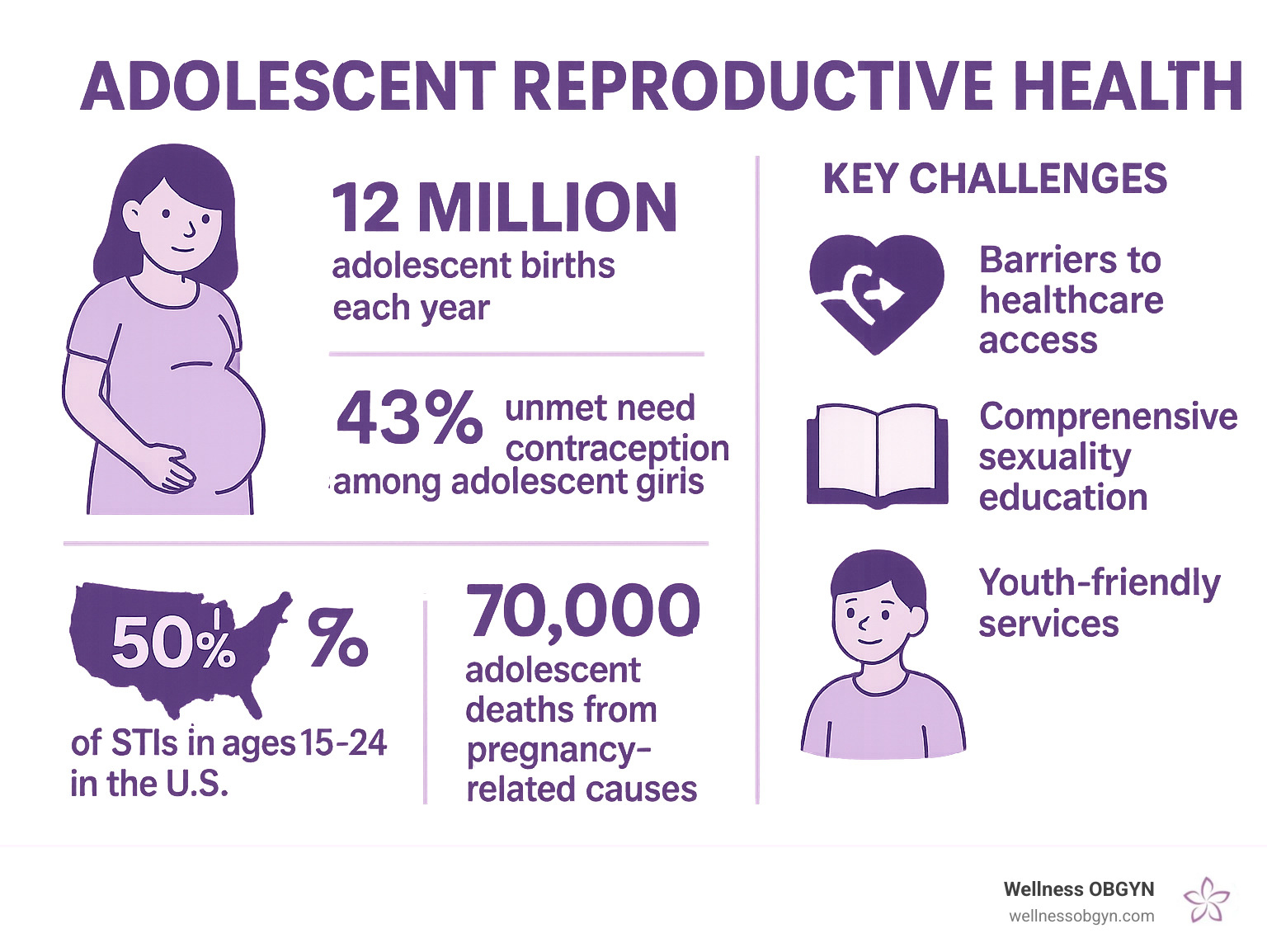
The statistics are striking: 12 million adolescent girls give birth each year globally, while 43% of adolescent girls who want to avoid pregnancy have an unmet need for modern contraception. In the United States alone, young people aged 15-24 account for half of the 20 million new STI cases annually.
One in five people worldwide is an adolescent, making this the largest youth generation in history. Yet many face significant barriers to accessing reproductive health information and care. These challenges can have lasting impacts on education, economic opportunities, and overall well-being.
Creating youth-friendly environments that provide accurate information, confidential services, and non-judgmental support is essential. When adolescents have access to comprehensive reproductive health resources, they’re empowered to make informed decisions that benefit them throughout their lives.
I’m Dr. Cheryl Twu, founder of Wellness OBGYN in Honolulu, and I’ve spent over a decade providing comprehensive women’s healthcare from adolescence through menopause. My experience in both high-volume hospital settings and personalized practice has shown me how crucial it is to establish strong adolescent reproductive health foundations early, using both evidence-based medicine and holistic approaches to support young people through this vital developmental stage.
Understanding the Journey: Puberty, Development, and Health
The teenage years are a bridge between childhood and adulthood, bringing a whirlwind of changes that can feel overwhelming. Adolescent reproductive health isn’t just about physical changes; it’s about supporting young people through this transformative period.
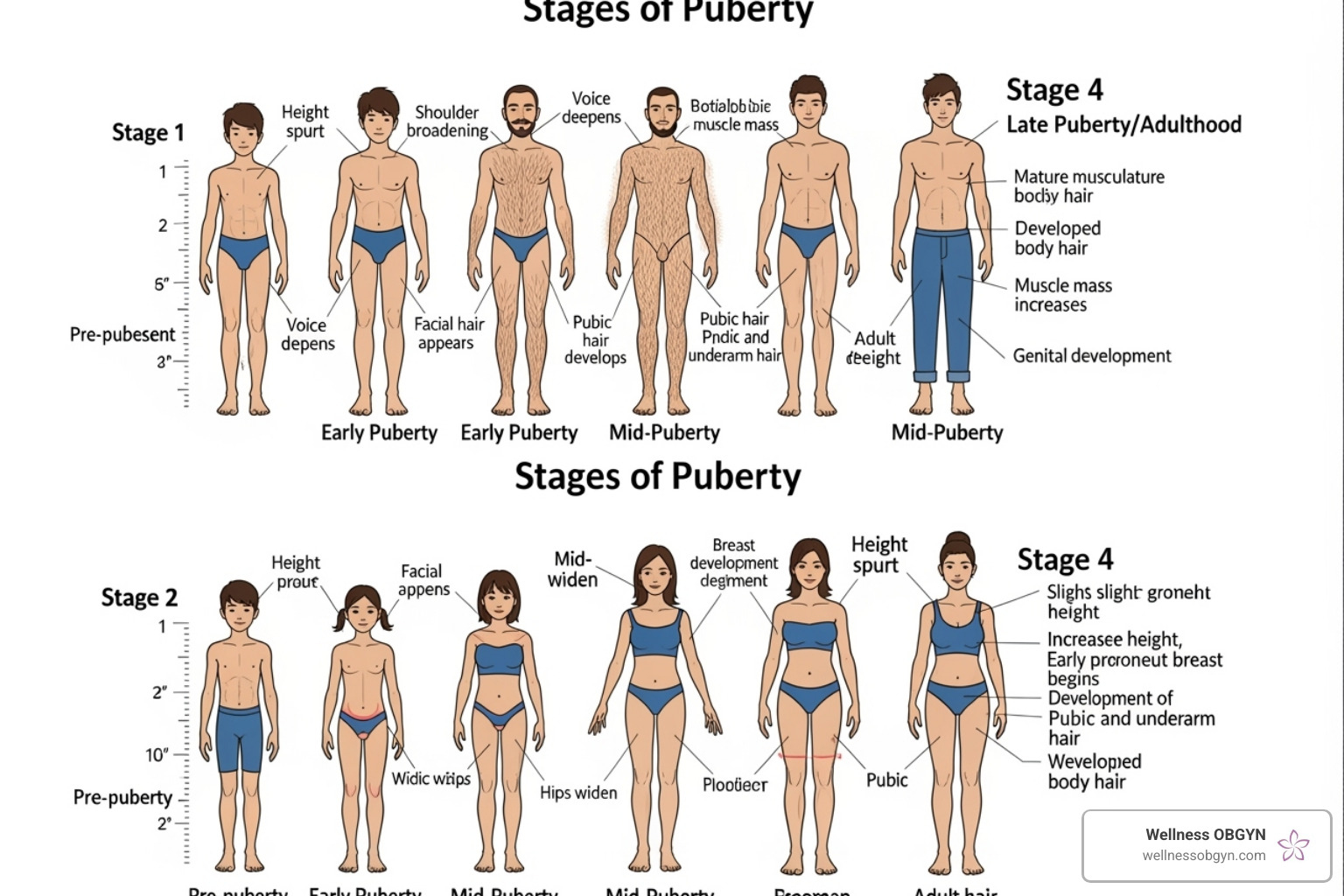
Puberty is the starring role, driven by hormonal changes that develop primary and secondary sexual characteristics. For girls, this includes menstruation, breast development, and body hair growth. Boys experience voice deepening, facial hair growth, and changes in their reproductive organs. Without proper preparation, these changes can be confusing or scary.
These physical changes can leave teenagers feeling like strangers in their own bodies. Body literacy is crucial for helping them understand what’s happening and why. Knowing what to expect builds confidence and reduces anxiety.
The emotional shifts are just as significant. Teenagers explore their identity, steer complex social relationships, and experience romantic feelings. This identity exploration is a healthy and necessary part of growing up, making it the perfect time to discuss healthy relationships and the importance of consent.
Our goal is to ensure young people have the knowledge and confidence to steer this process safely and successfully.
The Importance of Adolescent Reproductive Health
Think of adolescence as laying the foundation for a house. If you get it right, everything that follows has a solid base. Sexual health education during these years isn’t just about preventing problems—though pregnancy prevention and STI prevention are certainly important.
What we’re really talking about is building healthy habits that will serve young people for decades. When teenagers understand their bodies, recognize warning signs, and know when to seek help, they’re setting themselves up for better health throughout their adult lives. This knowledge helps them make informed decisions about relationships, family planning, and their overall well-being.
The lifelong health impact of what happens during adolescence can’t be overstated. Young people who receive comprehensive reproductive health education and support are more likely to have healthier relationships, better educational outcomes, and greater economic opportunities. They’re also more likely to seek preventive healthcare as adults.
At Wellness OBGYN, we understand that every teenager’s journey is unique. That’s why our approach focuses on creating a comfortable, judgment-free environment where young people can ask questions and get accurate information.
More info about our approach to adolescent care
Factors Influencing SRH Outcomes
Adolescent reproductive health outcomes aren’t just about individual choices; they’re shaped by a complex web of factors.
Socioeconomic status is a major factor, as resources affect access to healthcare and education. Gender norms and cultural influences can also support or hinder healthy development, either empowering young people or limiting their access to information.
Family support makes a huge difference. Open, honest conversations encourage responsible decisions. Peer pressure is also a powerful force, which can be positive when peers are well-informed.
Access to education is a game-changer. It develops critical thinking and opens doors to opportunities, which can delay early sexual activity and increase contraceptive use.
This is why we believe in a comprehensive approach. You can’t address adolescent reproductive health effectively without considering all these interconnected factors. It’s not enough to just treat symptoms—we need to understand and address the whole picture.
Key Challenges in Adolescent Reproductive Health
Despite growing awareness, young people worldwide still face significant adolescent reproductive health challenges that can impact their health and future opportunities.
Unintended pregnancy is a pressing concern. Adolescents face higher health risks than older mothers and often experience educational disruptions that have lasting effects on their economic opportunities.
The burden of sexually transmitted infections is also staggering. Many adolescents contract STIs due to a lack of information, access to services, or the inability to negotiate safer sex, leaving them vulnerable to preventable infections.
Early marriage robs young girls of their childhood and autonomy, forcing them into premature sexual activity and childbearing. This increases their risk of health complications and domestic violence and perpetuates cycles of poverty.
A widespread lack of comprehensive information leaves young people vulnerable to misinformation and risky behaviors. This knowledge gap makes preventable problems seem inevitable.
Sexual coercion adds another layer of complexity. When young people cannot freely make decisions about their own bodies, all other prevention efforts become less effective. Creating environments where consent is understood and respected is fundamental to improving adolescent reproductive health outcomes.

Global and Regional SRH Statistics
The numbers tell a sobering story. Globally, 12 million adolescent girls give birth each year. This highlights how widespread adolescent pregnancy remains, particularly where access to education and healthcare is limited.
Even more heartbreaking, an estimated 27,000 maternal deaths occur annually among adolescent girls aged 15-19 in low- and middle-income countries. For many, pregnancy becomes a leading cause of death—a preventable tragedy.
Nearly 43% of young women who want to avoid pregnancy don’t have access to modern contraception. This “unmet need” reveals a critical gap in our healthcare systems.
In the United States, adolescents aged 15-24 account for half of the 20 million new STI cases each year, underscoring their vulnerability.
The HIV epidemic continues to disproportionately affect young people, with almost 6,000 youth between ages 15 and 24 becoming infected each day worldwide. Young women are particularly at risk.
Tragically, an estimated 70,000 adolescents die annually from pregnancy and childbirth-related causes. Each death represents a failure of our systems to protect young people.
These statistics represent real young people whose potential is cut short by preventable circumstances. Investing in comprehensive adolescent reproductive health services and education can save lives.
Data on investing in adolescent SRH
Specific Needs of Vulnerable Youth
While all adolescents deserve comprehensive support, some face additional challenges requiring specialized care.
LGBTQ+ youth often encounter barriers like discrimination from healthcare providers, making them hesitant to seek services. They need inclusive healthcare with culturally competent providers and health education that reflects their experiences. Integrating mental health support is also crucial, as this group faces higher rates of depression and anxiety.
Youth in humanitarian settings—those affected by conflict or displacement—face dramatically increased reproductive health risks. The collapse of social structures leaves them vulnerable to violence and exploitation. They often have limited access to contraception or STI prevention, even as their risk of unintended pregnancy and infection may be higher.
Mental health support is critical for all vulnerable youth. Adolescents dealing with unintended pregnancies, STIs, or sexual violence often struggle with trauma and anxiety. Without proper mental health care, these experiences can have lasting impacts.
At Wellness OBGYN, we recognize that effective adolescent reproductive health care must address both physical and emotional needs. We are committed to creating safe, welcoming environments where all young people can receive the care they need without fear of judgment.
More on creating a safe space for all patients
Accessing Care: Finding Support and Overcoming Barriers
When young people understand they need reproductive health support, actually getting that help can feel overwhelming. The path to care is often filled with obstacles that can seem impossible to steer alone.
Many teenagers worry about stigma and embarrassment when discussing intimate health topics. The fear of judgment from adults or healthcare providers can be paralyzing, especially when clinics don’t feel welcoming or safe. Cost creates another significant hurdle – without insurance or money for services, many young people simply go without care.
Transportation poses real challenges too, particularly for those in rural areas or without supportive parents to help them get to appointments. But perhaps the biggest concern is confidentiality. Adolescents often fear their parents will find out about their sexual activity or health concerns, even though all 50 states allow minors to consent to STI services without parental involvement.
The maze of legal rights and parental consent laws adds confusion to an already stressful situation. While teenagers have certain healthcare rights, especially for STI testing and treatment, laws about contraception and other adolescent reproductive health services vary by state, creating uncertainty and fear.

What are Youth-Friendly Health Services?
The good news is that healthcare designed specifically for young people can overcome these barriers. “Youth-friendly” health services share key qualities that make all the difference in a teenager’s experience.
Confidentiality stands at the heart of youth-friendly care. When adolescents trust that their conversations and medical information will stay private, they’re much more likely to seek help. Many states protect minors’ confidentiality for services like STI testing and treatment.
Privacy in the physical space matters too – from waiting areas where friends won’t overhear conversations to consultation rooms that feel safe and secure. Respectful and non-judgmental care means healthcare providers listen actively without criticism, regardless of a young person’s sexual activity or lifestyle choices.
Culturally responsive services recognize that diverse backgrounds influence health decisions. Comprehensive care offers everything from counseling on delaying sexual activity to contraception, STI prevention and treatment, and healthy relationship guidance. Providers often screen for broader concerns using approaches like the HEADSSS assessment (Home, Education/Employment, Activities, Drugs, Sexuality, Suicide and Depression, Safety).
Affordable and accessible services remove financial barriers and consider transportation needs. Convenient hours work around school schedules and other commitments, making it actually possible for teenagers to get the care they need.
When these elements come together, young people feel empowered to seek support, leading to much better health outcomes. Understanding the importance of trust and privacy is fundamental to our approach.
Overcoming Barriers to Adolescent Reproductive Health Services
Breaking down barriers to adolescent reproductive health services requires creative solutions that meet young people where they are.
Comprehensive sexuality education proves incredibly effective at empowering teenagers with accurate information. Unlike abstinence-only programs, comprehensive education that includes information about both abstinence and contraception actually helps delay sexual activity while increasing contraceptive use when young people do become sexually active.
Digital health platforms and telehealth offer confidential ways for teenagers to access information and services. Online resources, mobile apps, and virtual appointments reduce geographical barriers and privacy concerns, making support more accessible than ever before.
School-based health centers bring services directly to familiar environments where young people already spend their time. These centers can provide everything from counseling to contraception right within the school setting, removing transportation and scheduling barriers.
Community outreach programs play a vital role in reaching underserved populations and building trust within communities. Publicly supported family planning centers demonstrate this impact powerfully – in 2014, nearly one million women younger than 20 received contraceptive services from these centers, preventing an estimated 232,000 pregnancies.
These efforts show how accessible, confidential services can dramatically improve adolescent reproductive health outcomes. When we remove barriers and create welcoming environments, young people can focus on making healthy choices for their futures.
Information on family planning
Building a Supportive Network for Healthy Futures
Supporting adolescent reproductive health isn’t a solo mission—it takes a village. Think of it as building a safety net made up of parents, communities, schools, healthcare providers, and policymakers, all working together to help young people steer this important time in their lives.
When families feel comfortable talking openly about health and relationships, when communities create welcoming spaces free from judgment, and when policies protect young people’s rights to information and care, amazing things happen. Adolescents feel supported, make healthier choices, and grow into confident adults who understand their bodies and relationships.
The magic happens when all these pieces work together. It’s like a well-orchestrated symphony where each player has an important part, and when they’re all in harmony, young people have the best chance to thrive.

The Role of Parents and Guardians
Let’s be honest—talking to your teenager about sex can feel awkward. But here’s the thing: you’re still one of the most trusted voices in their life, even when it doesn’t feel that way. Research shows that most teens actually want to hear from their parents about these topics, even if they roll their eyes during the conversation.
The key is starting early and keeping the conversation going. You don’t need to have “the talk”—instead, think of it as many small talks that build on each other over time. This makes these topics feel normal rather than taboo.
Being open and honest means using real words for body parts and giving accurate information. Your teen can probably tell when you’re uncomfortable or being vague, which might make them less likely to come to you with questions later.
Most importantly, listen without judgment. When your child asks a question or shares something with you, take a breath before responding. They’re trusting you with something important. Using correct terms for anatomy and body functions helps them communicate clearly with healthcare providers and shows that these topics aren’t shameful.
You want to be a trusted source of information. In a world full of confusing messages from social media and peers, your steady, reliable guidance matters more than you might think.
How Healthcare Providers Can Help
At Wellness OBGYN, we know that being a teenager talking to an adult about intimate health topics can feel overwhelming. That’s why we’ve made it our mission to create a space where young people feel genuinely welcome and respected.
Comprehensive counseling is at the heart of what we do. This means we talk about everything—from healthy relationships and communication skills to practical information about preventing pregnancy and STIs. We never assume what a young person knows or doesn’t know, and we tailor our conversations to meet each individual where they are.
When it comes to contraception options, we believe knowledge is power. We discuss all available methods, including long-acting options like IUDs and implants that can be great choices for teens. We also talk about dual protection—using methods that prevent both pregnancy and STIs—because comprehensive protection is smart protection.
STI screening and treatment is another crucial part of our care. Given that young people aged 15-24 account for half of new STI cases, regular screening is essential. We make sure these services are completely confidential and accessible.
Most importantly, we focus on building trust. Our team understands that when teenagers feel respected and heard, they’re much more likely to seek care when they need it and to be honest about their concerns and questions.
Explore our approach to women’s wellness
Legal and Human Rights Frameworks
Adolescent reproductive health isn’t just about medical care—it’s about fundamental human rights. International frameworks like the Convention on the Rights of the Child recognize that young people have the right to health information, privacy, and protection from discrimination.
In the United States, all 50 states allow minors to consent to STI testing and treatment without parental permission. However, laws around other reproductive health services can vary by state, which sometimes creates confusion for both teens and their families.
The reality is that denying young people access to information or services based on their age often backfires. Research consistently shows that comprehensive education and accessible services don’t encourage sexual activity—they help young people make safer, more informed decisions when they do become sexually active.
The Role of Communities and Policymakers
Communities play a powerful role in shaping how comfortable young people feel seeking help and information. When neighborhoods, schools, and community organizations work together to reduce stigma around sexual health topics, it creates an environment where teens feel safe asking questions.
Peer education programs can be particularly effective because teenagers often trust information from other young people. When trained peer educators share accurate information in schools or community centers, it can reach teens who might not otherwise access traditional healthcare settings.
School-based health centers represent another vital resource, offering services in a familiar environment where teens spend most of their time. These centers can provide everything from counseling to contraception right where young people are.
Policymakers have the power to create lasting change by strengthening health systems and ensuring youth-friendly services are available and funded. This includes investing in comprehensive sexuality education, supporting accessible contraception programs, and enacting laws that protect young people from early marriage and discrimination.
When policymakers ensure equitable access, they address the real barriers that prevent some teens from getting care—things like transportation, cost, and cultural barriers. This is especially important for vulnerable populations who face additional challenges.
The bottom line is simple: when families, healthcare providers, communities, and policymakers all work together, young people get the support they need to make healthy decisions that will benefit them for life.
Conclusion: Investing in a Healthy Future
When we prioritize adolescent reproductive health, we’re not just addressing a medical issue – we’re making one of the most powerful investments possible in our collective future. Every young person who receives accurate information, compassionate care, and genuine support during their formative years carries that empowerment with them for life.
The ripple effects are remarkable. When adolescents understand their bodies and feel confident making informed decisions about their health, they’re more likely to stay in school, pursue their dreams, and build healthier relationships. They become adults who seek preventive care, communicate openly with their partners, and eventually pass this knowledge on to their own children.
The cost of inaction is simply too high. We’ve seen the statistics – the 12 million adolescent births annually, the 43% of girls with unmet contraception needs, the disproportionate burden of STIs among young people. These aren’t just numbers; they represent millions of young lives that could be dramatically improved with the right support at the right time.
But here’s what gives me hope: when communities, families, healthcare providers, and policymakers work together, the change is incredible. I’ve witnessed how adolescent reproductive health programs can change entire communities, breaking cycles of poverty and creating generations of healthier, more empowered individuals.
Creating lasting change requires all of us. Parents need to start those important conversations early and often. Schools must provide comprehensive, age-appropriate education. Healthcare systems need to offer truly youth-friendly services that respect confidentiality and dignity. And communities must challenge harmful stigmas while celebrating healthy choices.
For families in Honolulu navigating this crucial journey, Wellness OBGYN is here to provide the personalized, compassionate care your adolescent deserves. We understand that every young person is unique, with their own questions, concerns, and needs. Our approach combines evidence-based medicine with the warmth and respect that makes all the difference during these pivotal years.
Together, we can ensure that every adolescent has the foundation they need for a lifetime of health and happiness. The investment we make today in adolescent reproductive health will pay dividends for generations to come.