
Why Your Abnormal Pap Results Don’t Mean Panic
Receiving an abnormal pap follow up call can be overwhelming, but it’s important to know that most abnormal results are not cancer. They simply mean some cellular changes in your cervix need a closer look. The key is understanding that these results often indicate treatable precancerous changes, and many low-grade issues resolve on their own.
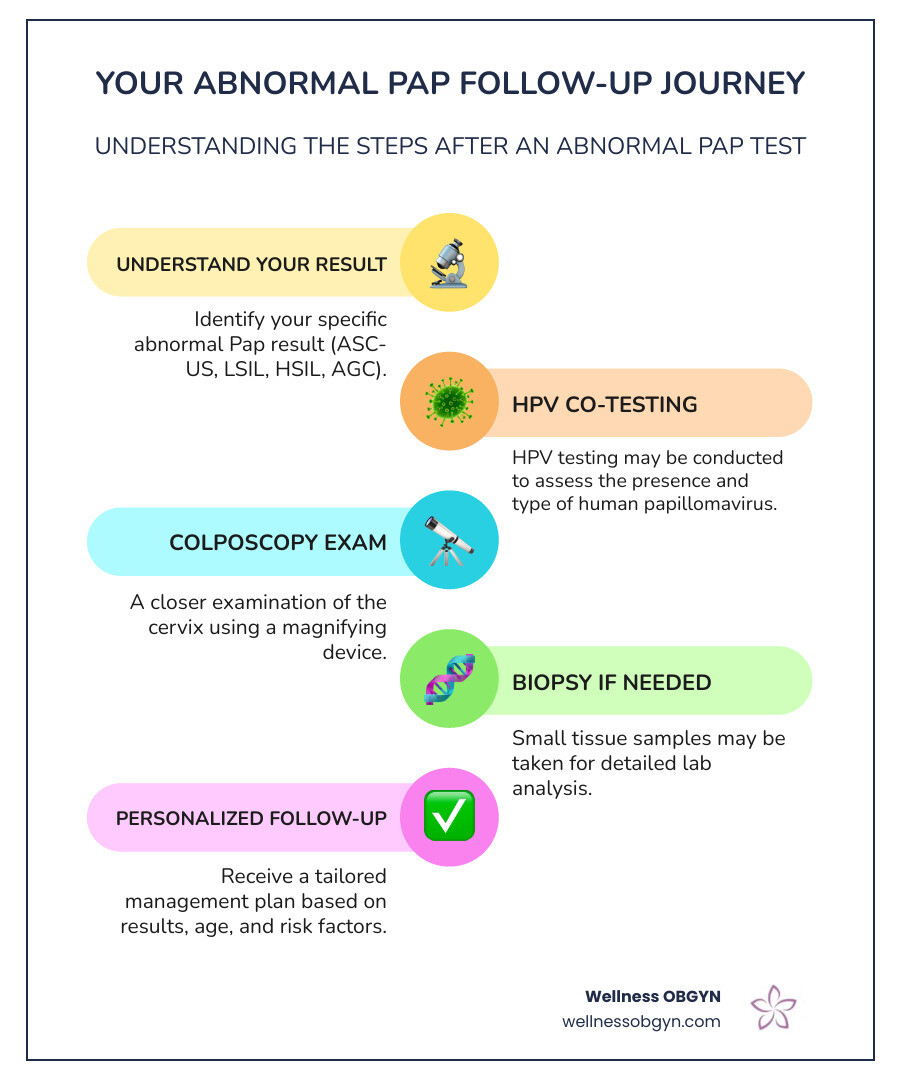
Your follow-up journey is a clear, step-by-step process. It starts with reviewing your specific result type (like ASC-US or LSIL) and may include HPV testing to assess risk. Depending on the findings, next steps could be a colposcopy (a closer examination with a magnifying device), a possible biopsy, or simply watchful waiting with a repeat Pap test in 6-12 months. For more significant changes, treatment procedures like LEEP are highly effective.
As Dr. Cheryl Twu, I’ve guided countless patients through this process. My approach combines evidence-based medicine with compassionate support to ensure you feel informed and empowered. Most abnormal results are manageable with proper care.
The Pap Test: Your First Step in Cervical Health
A Pap test is a crucial screening tool for your long-term health. This simple test collects a small sample of cervical cells to check for changes, allowing us to catch potential problems years before they become serious. This makes cervical cancer one of the most preventable cancers.
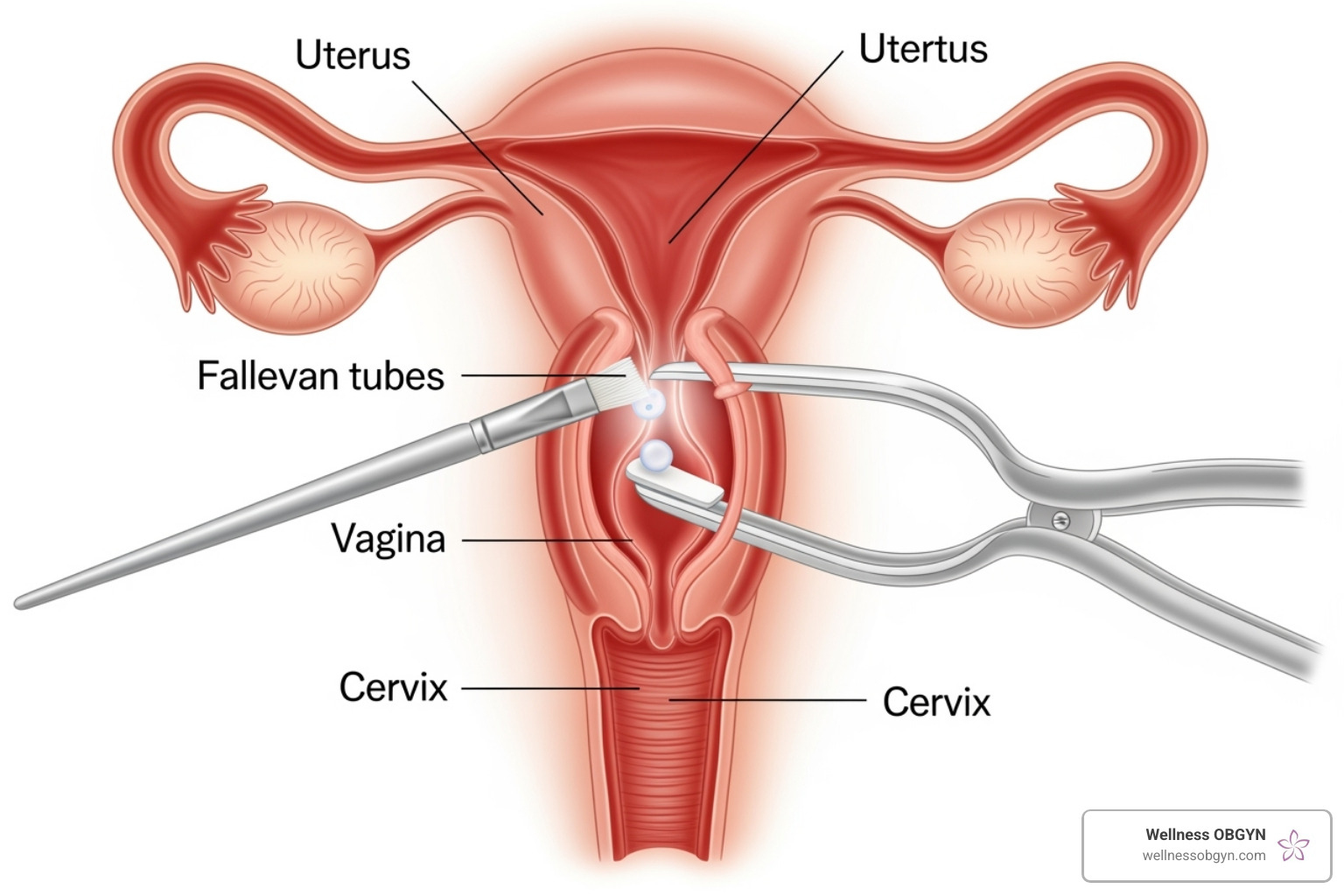
During the test, cells are collected and sent to a lab for examination. If anything looks unusual, we begin the abnormal pap follow up process, but an abnormal result is not a cause for immediate alarm.
Why Regular Screening is Essential
Regular screening is essential because cervical cancer develops slowly, often over several years. This gives us a large window to detect and treat changes early. Most issues begin with a persistent HPV infection that causes cellular changes, which is what a Pap test screens for.
Screening guidelines are age-based: a Pap test every three years for ages 21-29, and for ages 30-65, either a Pap test every three years or co-testing (Pap + HPV test) every five years. We create personalized screening schedules for those with higher risk factors, such as a history of abnormal results or a weakened immune system. This custom approach is central to our care. Learn more about our full range of services and how we support you at every stage of life.
Understanding HPV and Its Role
Human Papillomavirus (HPV) is the primary cause of most abnormal Pap results. It’s extremely common, but only certain high-risk HPV types (like 16 and 18) are linked to cervical cancer. Low-risk types are not. If your Pap test is abnormal, we often perform HPV reflex testing on the same sample to check for high-risk strains. A positive high-risk HPV result helps explain the cell changes and guides your abnormal pap follow up plan. A negative result often means the changes are temporary and you can return to regular screening. We follow updated ASCCP risk-based management consensus guidelines, ensuring your follow-up is custom to your specific risk level based on both your results and health history.
Decoding Your Abnormal Pap Test Result
An abnormal Pap test result can be unsettling, but it’s crucial to remember that it is not a cancer diagnosis. It simply means some cervical cells appear different and require a closer look. Pathologists use the standardized Bethesda System to classify these findings, which guides your abnormal pap follow up plan.

Common Abnormal Findings Explained
Here is a brief explanation of common abnormal findings:
- Atypical Squamous Cells of Undetermined Significance (ASC-US): The most common finding. Cells are slightly abnormal, but the cause is unclear. It could be HPV or minor irritation. These changes often resolve on their own.
- Low-Grade Squamous Intraepithelial Lesion (LSIL): Mild cellular changes are present, usually caused by HPV. Your body’s immune system often clears these changes without treatment.
- High-Grade Squamous Intraepithelial Lesion (HSIL): More significant changes that have a higher chance of progressing to cancer if left untreated. This is not cancer, but it requires intervention.
- Atypical Glandular Cells (AGC) & Adenocarcinoma in situ (AIS): These are less common but more serious findings involving glandular cells. They require careful and prompt evaluation as they can indicate advanced precancerous changes.
What Do These Results Mean for You?
Your follow-up plan depends on your specific result. For low-grade changes like ASC-US and LSIL, we often use a “watch and see” approach with repeat testing, as your body can often heal itself. For high-grade changes like HSIL, AGC, or AIS, we typically recommend a colposcopy for a closer look. These are precancerous cells that we can treat to prevent cancer from ever developing.
Catching these changes early is the goal of screening. We are here to guide you through any female reproductive health issues with personalized care.
The Diagnostic Journey: What is a Colposcopy?
If your Pap test is abnormal, the next step is often a colposcopy. This is a diagnostic procedure, not just a screening, that gives your doctor a magnified view of your cervix. It helps pinpoint the exact location and significance of any abnormal cells. A colposcopy is typically recommended for results like LSIL, HSIL, or ASC-US with a positive high-risk HPV test. The goal is to get a clear picture to create your best abnormal pap follow up plan.
What to Expect During a Colposcopy and Biopsy
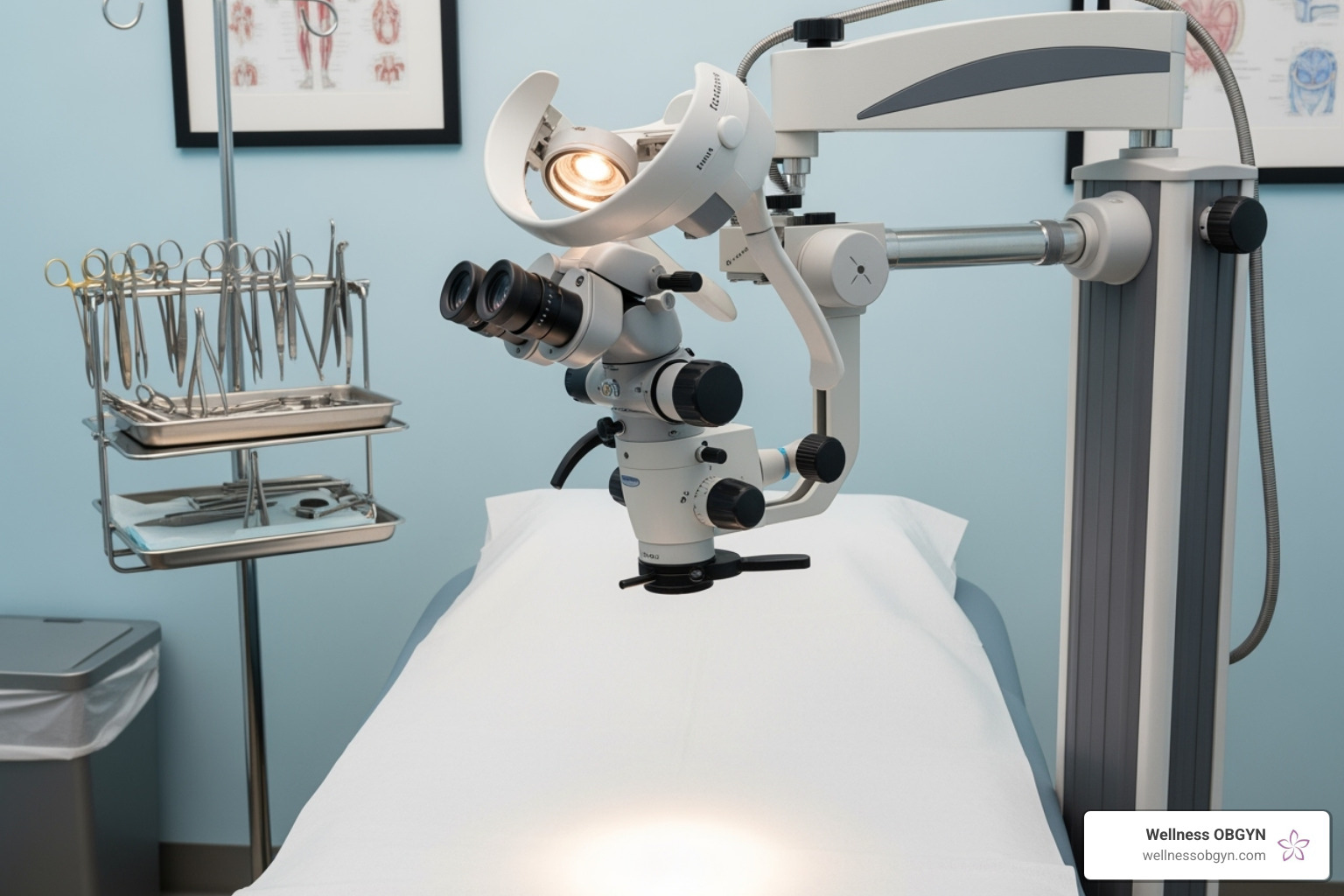
The procedure takes 10-20 minutes and is similar to a Pap test. After a speculum is inserted, a mild acetic acid (vinegar) solution is applied to your cervix. This highlights abnormal cells by turning them white. The colposcope, a magnifying instrument, remains outside your body to provide a detailed view. At Wellness OBGYN, we may use advanced systems like the DYSIS digital colposcopy system for improved precision.
If suspicious areas are seen, a tiny tissue sample (biopsy) is taken. This may feel like a brief pinch or cramp. Sometimes, an endocervical curettage (a gentle scraping of the cervical canal) is also performed. Discomfort is minimal, and you might have light spotting for a day or two. For more information, see the American College of Obstetricians and Gynecologists provides helpful resources.
Understanding Biopsy Results: CIN Grades
Biopsy samples are graded using the Cervical Intraepithelial Neoplasia (CIN) system:
- CIN 1 (mild dysplasia): Low-grade changes affecting the surface layer. These often resolve on their own as your body clears the HPV infection.
- CIN 2 (moderate dysplasia): Changes go deeper into the cervical tissue. Treatment is usually recommended to prevent progression.
- CIN 3 (severe dysplasia/carcinoma in situ): Precancerous changes affecting nearly all layers of the tissue. Treatment is necessary to prevent progression to cancer.
Your CIN grade is the roadmap for your personalized abnormal pap follow up, determining whether monitoring or active treatment is the best course of action.
Your Abnormal Pap Follow Up: Treatment and Management
After your colposcopy and biopsy, we create a personalized abnormal pap follow up plan together. At Wellness OBGYN, we practice collaborative care, considering your diagnosis, age, health history, and personal goals. Your plan may involve watchful waiting or active treatment, and we will walk through all options so you can make a confident decision.
Specific Abnormal Pap Follow Up for ASC-US and LSIL
For low-grade changes like ASC-US and LSIL, the body often heals itself, especially in younger women. This is called spontaneous resolution. Your age and HPV status guide our approach.
- Ages 21-24 with ASC-US or LSIL: We typically recommend a repeat Pap test in one year. HPV is common in this age group and usually clears on its own, so we avoid aggressive treatment to protect future fertility.
- Ages 25+ with ASC-US: We start with HPV testing. A positive result for high-risk types (especially 16 or 18) usually leads to a colposcopy. A negative result means we can recheck in three years.
- Ages 25+ with LSIL: Management is similar, often leading to colposcopy if high-risk HPV is present.
Treatment Options for High-Grade Changes (HSIL/CIN 2/3)
For high-grade changes (HSIL, CIN 2, or CIN 3), we recommend treatment to remove the abnormal cells and prevent progression to cancer. The goal is to remove affected tissue while preserving healthy tissue.
- Loop Electrosurgical Excision Procedure (LEEP): Our most common treatment. A thin, electrically heated wire loop removes the abnormal tissue in a quick outpatient procedure.
- Cone Biopsy (Conization): Removes a cone-shaped piece of tissue. This is for larger areas or those extending into the cervical canal. It can be done with a scalpel (Cold Knife) or a LEEP loop.
- Cryotherapy and Laser Therapy: Less common options that use extreme cold or light energy to destroy abnormal cells.
We will discuss the best option for you based on your specific case and future pregnancy plans.
Navigating Abnormal Pap Follow Up During Pregnancy
An abnormal Pap result during pregnancy can be managed safely. Cervical changes progress very slowly, so our approach is conservative to protect you and your baby. We typically delay colposcopy and almost always postpone treatment until after delivery. Biopsies are done only if absolutely necessary. We will monitor you closely during pregnancy and plan your follow-up for after delivery, as many changes resolve on their own postpartum. For more information, see Cancer Research UK’s guidance on pregnancy and abnormal cervical cells.
Decoding Your Abnormal Pap Test Result
Receiving an abnormal Pap test result can be stressful, but it’s important to remember it does not mean you have cancer. It simply indicates some cervical cells look unusual and need a closer look. Pathologists use the Bethesda System to report findings, which helps guide your abnormal pap follow up.
Common Abnormal Findings Explained
Here’s a breakdown of common terms you might see on your report:
- Atypical Squamous Cells of Undetermined Significance (ASC-US): The most frequent abnormal result. The cause of the mild cell changes is unclear and may be due to HPV, infection, or inflammation. It often resolves on its own.
- Low-Grade Squamous Intraepithelial Lesion (LSIL): Indicates mild cell changes, typically caused by an HPV infection. These low-grade changes (CIN 1) often go away without treatment.
- High-Grade Squamous Intraepithelial Lesion (HSIL): A more significant finding of moderate to severe cell changes (CIN 2 or CIN 3). These cells have a higher chance of progressing to cancer if not treated.
- Atypical Glandular Cells (AGC): Abnormal glandular cells from the cervical canal that require further investigation.
- Adenocarcinoma in situ (AIS): A serious precancerous condition in the glandular tissue that requires prompt treatment.
- Cervical cancer cells: A very rare finding in regularly screened individuals, indicating cancer cells have been identified.
What Do These Results Mean for You?
Your follow-up plan is guided by your specific result. For low-grade changes like ASC-US and LSIL, we often monitor with repeat testing, as the body frequently clears the infection. For high-grade changes like HSIL, AGC, and AIS, a colposcopy is typically recommended to get a definitive diagnosis and plan treatment. Early identification allows us to intervene long before cancer develops. At Wellness OBGYN, we address all female reproductive health issues with compassion and expertise.
The Diagnostic Journey: What is a Colposcopy?
Following an abnormal Pap test, particularly with high-grade changes, a colposcopy is the usual next step in your abnormal pap follow up journey. This diagnostic procedure provides a magnified view of your cervix to identify the location, size, and severity of abnormal areas.
What to Expect During a Colposcopy and Biopsy
A colposcopy is an in-office procedure lasting 10-20 minutes. Here’s what to expect:
- Positioning: You’ll lie back as you do for a Pap test.
- Visualization: A speculum is inserted, and a mild vinegar solution (acetic acid) is applied to the cervix to make abnormal areas stand out.
- Examination: A colposcope, a lighted magnifying instrument, is used to examine your cervix from outside your body.
- Biopsy (if needed): If suspicious areas are found, a small tissue sample is taken, which may cause a brief pinch or cramp. An endocervical curettage (ECC), a sampling from the cervical canal, may also be performed.
Post-procedure, you may have minimal discomfort, light spotting, or a dark discharge for a day or two. For more details, consult the Abnormal Cervical Cancer Screening Test Results FAQs from ACOG.
Understanding Biopsy Results: CIN Grades
Biopsy results are classified using the Cervical Intraepithelial Neoplasia (CIN) grading system:
- CIN 1 (mild dysplasia): Low-grade changes affecting about one-third of the cervical lining. They are often caused by HPV and usually resolve without treatment.
- CIN 2 (moderate dysplasia): Changes involve about two-thirds of the lining. Treatment is often recommended to prevent progression.
- CIN 3 (severe dysplasia/carcinoma in situ): Abnormal cells affect nearly the full thickness of the lining. Though not cancer, it is a high-grade precancerous lesion that requires treatment to prevent progression to invasive cancer.
Your CIN grade is critical for guiding your abnormal pap follow up, helping us decide between continued monitoring or a procedure to remove the abnormal tissue.
Your Abnormal Pap Follow Up: Treatment and Management
We create your personalized abnormal pap follow up plan through shared decision-making. We’ll discuss your diagnosis, past results, and HPV status to decide between watchful waiting or active treatment, ensuring the plan aligns with your health goals.
Specific Abnormal Pap Follow Up for ASC-US and LSIL
For low-grade changes like ASC-US and LSIL, we often recommend “watchful waiting,” as the body’s immune system frequently clears the underlying HPV infection, especially in younger individuals.
- Ages 21-24: We typically suggest a repeat Pap test in one year, as young immune systems are very effective at clearing HPV, and we want to avoid unnecessary procedures.
- Ages 25+: For ASC-US, we start with HPV testing. If high-risk HPV (especially types 16/18) is found, a colposcopy is recommended. For LSIL, colposcopy is often the next step. If low-grade changes are confirmed, we monitor with annual Pap tests for three years.
Treatment Options for High-Grade Changes (HSIL/CIN 2/3)
For high-grade changes (HSIL, CIN 2, or CIN 3), we recommend active treatment to remove the precancerous cells. This is a preventive measure to stop cancer before it starts.
- Loop Electrosurgical Excision Procedure (LEEP): The most common method. A thin, electrically heated wire loop precisely removes the abnormal tissue in our office under local anesthesia.
- Cold Knife Conization (cone biopsy): Used for larger or deeper areas of abnormal tissue, this procedure removes a cone-shaped section of the cervix and is done in an outpatient surgical setting.
- Cryotherapy or Laser Therapy: Alternative treatments that freeze or vaporize abnormal cells, suitable for certain cases.
We will help you choose the best treatment based on the size and location of the abnormal area and your future pregnancy plans.
Navigating Abnormal Pap Follow Up During Pregnancy
If you have an abnormal Pap result during pregnancy, rest assured that management is safe for both you and your baby. Since cervical changes progress slowly, we can be conservative.
We typically delay colposcopy and postpone treatment until after delivery. Biopsies are performed only when absolutely necessary. Many pregnancy-related hormonal changes can make cells appear abnormal, and these often resolve postpartum. We will plan a postpartum follow-up 6-8 weeks after delivery to reassess the situation. This approach ensures a safe pregnancy while addressing any persistent issues later. For more details, you can reference Cancer Research UK’s guidance on pregnancy and abnormal cervical cells.